
Introduction
Despite the rise of digital communication, faxing remains deeply embedded in healthcare workflows. From sharing medical records to sending prescriptions and referrals, fax is still widely used because of its perceived simplicity and legal acceptance.
However, what many healthcare providers don’t realize is that faxing is not automatically HIPAA compliant. In fact, it introduces multiple risks from misdirected faxes to unauthorized access that can expose Protected Health Information (PHI).
Failing to address these risks can result in:
- Data breaches
- Legal penalties
- Loss of patient trust
Healthcare organizations can face fines of up to $50,000 per violation if HIPAA rules are not followed properly. This is where a HIPAA fax risk assessment becomes essential. In this guide, we’ll walk you through what a HIPAA fax risk assessment is, common fax-related risks, a step-by-step risk assessment process, and best practices to ensure compliance
What is a HIPAA Fax Risk Assessment?
A HIPAA fax risk assessment is a structured process used to identify vulnerabilities in fax communication, evaluate risks associated with transmitting PHI, and implement safeguards to ensure compliance.
Under the HIPAA Security Rule, healthcare organizations are required to continuously assess risks and implement administrative, physical, and technical safeguards. Faxing falls under this requirement because it involves the transmission of sensitive patient data.
Why Faxing is Risky in Healthcare
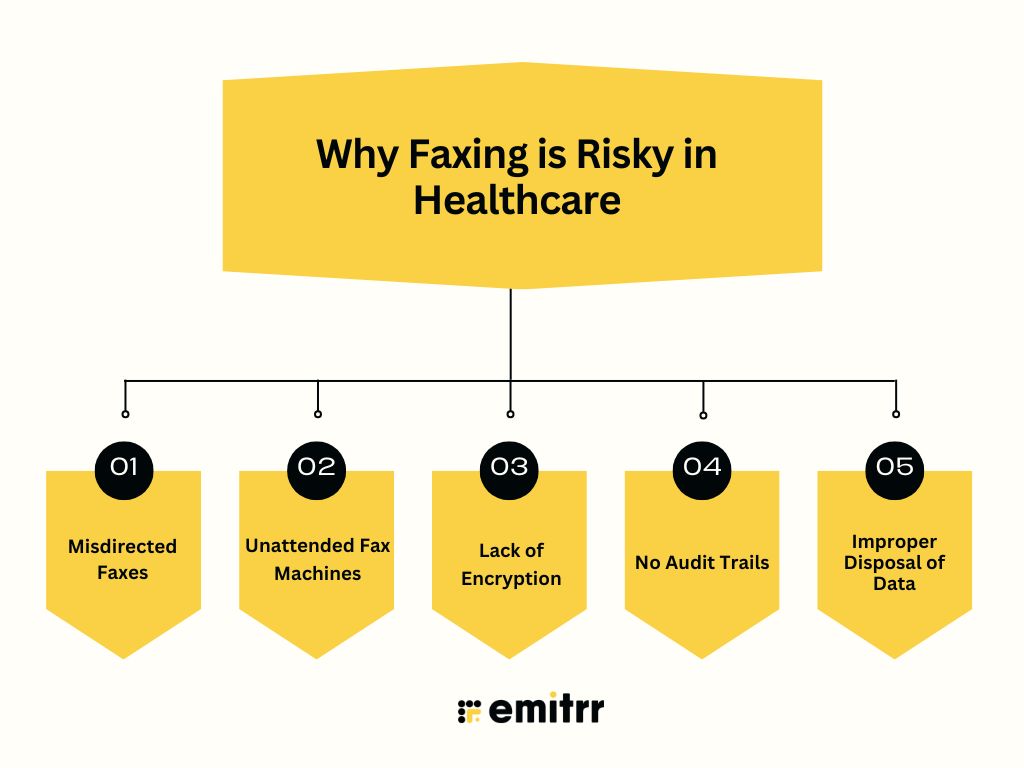
Many healthcare providers believe that faxing is inherently secure, but that assumption only holds true when strict safeguards are followed. In reality, traditional faxing methods can expose sensitive patient information and lead to serious compliance issues. Below are some often-overlooked risks associated with faxing in healthcare:
Misdirected Faxes
One of the most frequent causes of HIPAA violations is sending PHI to the wrong fax number. A small mistake, such as entering a single incorrect digit, can result in confidential patient data being delivered to an unintended recipient. Since fax transmissions are immediate, there is little opportunity to retrieve or correct the error once it has occurred.
Unattended Fax Machines
Fax machines placed in common or unsecured areas can create privacy risks. When incoming faxes are printed and left in open trays, they may be viewed or taken by unauthorized individuals. This lack of controlled access increases the chances of PHI being exposed without the organization’s knowledge.
Lack of Encryption
Traditional fax systems typically do not use encryption to protect data during transmission. As a result, sensitive information being sent via fax can potentially be intercepted or accessed by unauthorized parties. This makes faxing less secure compared to modern digital communication methods that rely on encrypted channels. These risks become even more significant when clinics rely on fax for prescription refill requests, where delays, missing documentation, and manual processing can directly impact patient care and medication access.
No Audit Trails
Many conventional fax systems do not maintain detailed records of activity. Without proper audit trails, healthcare organizations cannot effectively monitor who sent a fax, when it was transmitted, or who accessed the received documents. This lack of visibility makes it difficult to investigate incidents or demonstrate compliance during audits.
Improper Disposal of Data
Outdated fax machines, stored documents, and even internal hard drives can retain sensitive information if not disposed of properly. Printed faxes that are discarded without shredding or devices that are not securely wiped can lead to unintended exposure of PHI, posing long-term security risks.

Step-by-Step Guide to Conduct a HIPAA Fax Risk Assessment
Let’s break this down into a practical, actionable process:
Step 1: Define the Scope of Your Assessment
Start by identifying:
- All fax systems (traditional + cloud-based)
- Departments using fax
- Locations where fax machines are installed
Note: Don’t forget remote or hybrid setups.
Step 2: Identify Where PHI is Used in Faxing
Determine what type of PHI is being faxed and by whom. Map the data flow from sender to receiver. This helps identify potential exposure points in faxing PHI securely.
Step 3: Identify Threats and Vulnerabilities
Break risks into categories:
Internal Risks
- Staff errors
- Lack of training
- Improper handling
External Risks
- Unauthorized access
- Data interception
Process Gaps
- No verification before sending
- No audit logs
Step 4: Evaluate Current Security Measures
Assess what safeguards you already have:
- Are fax numbers verified before sending?
- Are cover sheets used?
- Are systems encrypted?
- Do you maintain logs?
Document both:
- Technical controls (encryption, authentication)
- Non-technical controls (policies, training)
Step 5: Assess the Likelihood of Each Risk
Assign a probability level:
- High
- Medium
- Low
Step 6: Assess the Impact of Each Risk
Evaluate potential consequences:
- Financial penalties
- Legal consequences
- Operational disruption
- Reputational damage
Step 7: Assign Risk Levels
Combine likelihood and impact to assign risk levels. Focus on high-risk issues first. This ensures efficient HIPAA risk management.
Step 8: Implement Risk Mitigation Measures
Once risks are identified, take action:
- Introduce safeguards
- Update workflows
- Improve training
Step 9: Document Everything
Record all risks, actions, and policies in detail. Documentation is required for audits and compliance. It supports your HIPAA fax compliance checklist.
Step 10: Review and Update Regularly
HIPAA requires continuous monitoring. Conduct assessments:
- Annually
- After system upgrades
- After any incident
Key Safeguards to Reduce HIPAA Fax Risks
Here are the most effective ways to secure fax communication:
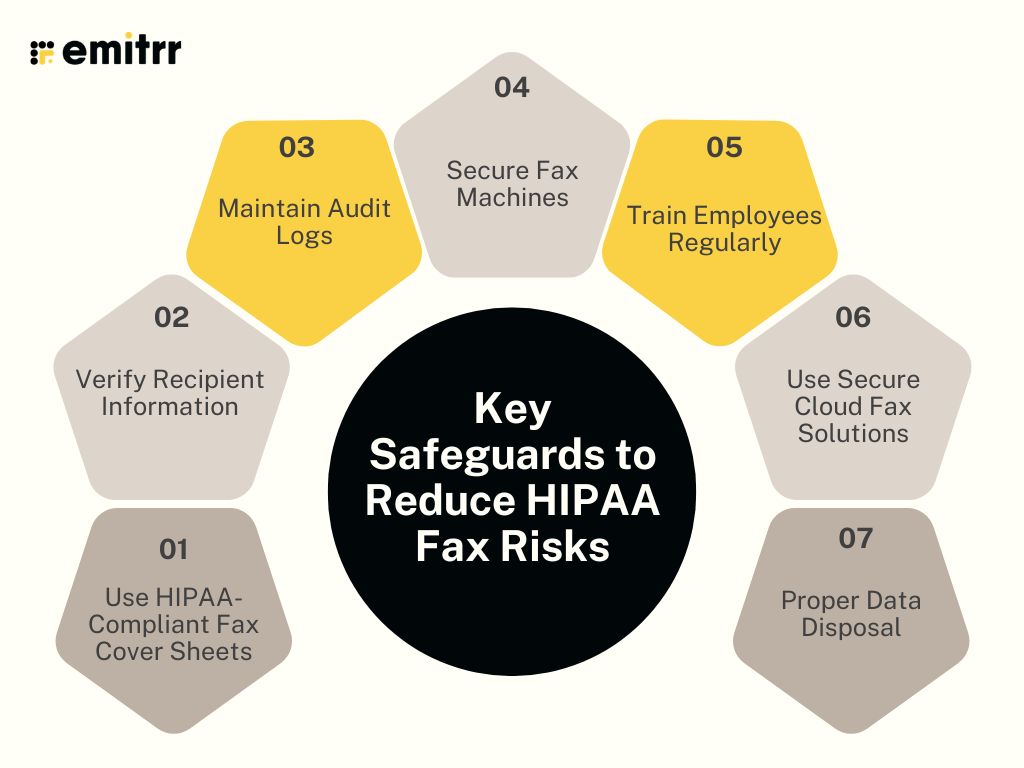
Ensuring secure faxing in healthcare requires more than just using a fax machine—it involves implementing the right processes, tools, and staff training. Below are key best practices to help maintain HIPAA compliance while minimizing risks:
Use HIPAA-Compliant Fax Cover Sheets
Fax cover sheets play an important role in protecting sensitive data. They typically include sender and receiver information along with a confidentiality disclaimer, which alerts unintended recipients to handle the information appropriately. Using these cover sheets is a simple yet effective step toward HIPAA-compliant faxing.
Verify Recipient Information
Before sending any PHI, it is essential to carefully confirm the recipient’s fax number. Even minor input errors can result in data being sent to the wrong party. Verifying details every time helps avoid misdirected faxes and strengthens secure fax healthcare communication.
Maintain Audit Logs
Keeping detailed audit logs of all fax activities is critical for compliance. These logs record key information such as timestamps, sender details, and transmission history. Having this data readily available supports monitoring, accountability, and investigations, making it a core part of HIPAA fax compliance.
Secure Fax Machines
Physical security is just as important as digital safeguards. Fax machines should be located in restricted or supervised areas where only authorized personnel can access them. This reduces the risk of unauthorized individuals viewing or handling PHI and enhances overall fax security in healthcare systems.
Train Employees Regularly
Human error is one of the leading causes of data breaches. Regular training sessions ensure that staff understand HIPAA regulations and proper faxing procedures. Educated employees are less likely to make mistakes, making training a crucial factor in achieving HIPAA compliance success.
Use Secure Cloud Fax Solutions
Modern cloud-based fax solutions offer advanced features such as encryption, secure access controls, and activity tracking. These solutions eliminate many of the vulnerabilities associated with traditional fax machines and significantly improve secure fax healthcare systems.
Proper Data Disposal
Disposing of fax-related data securely is essential to prevent unauthorized access. Physical documents should be shredded, and digital storage devices must be properly wiped before disposal. Following these practices ensures long-term protection of PHI and supports ongoing HIPAA fax compliance.
HIPAA Fax Risk Assessment Checklist
Use this quick checklist:
✔ Identify all fax systems
✔ Map PHI flow
✔ Identify risks
✔ Evaluate safeguards
✔ Assign risk levels
✔ Implement controls
✔ Train staff
✔ Maintain logs
✔ Document everything
✔ Review regularly
Common Mistakes to Avoid
- Assuming fax is automatically compliant
- Skipping risk assessments
- Not using cover sheets
- Ignoring employee training
- Failing to maintain audit logs
These mistakes are responsible for most fax-related HIPAA violations.
Benefits of Conducting a HIPAA Fax Risk Assessment
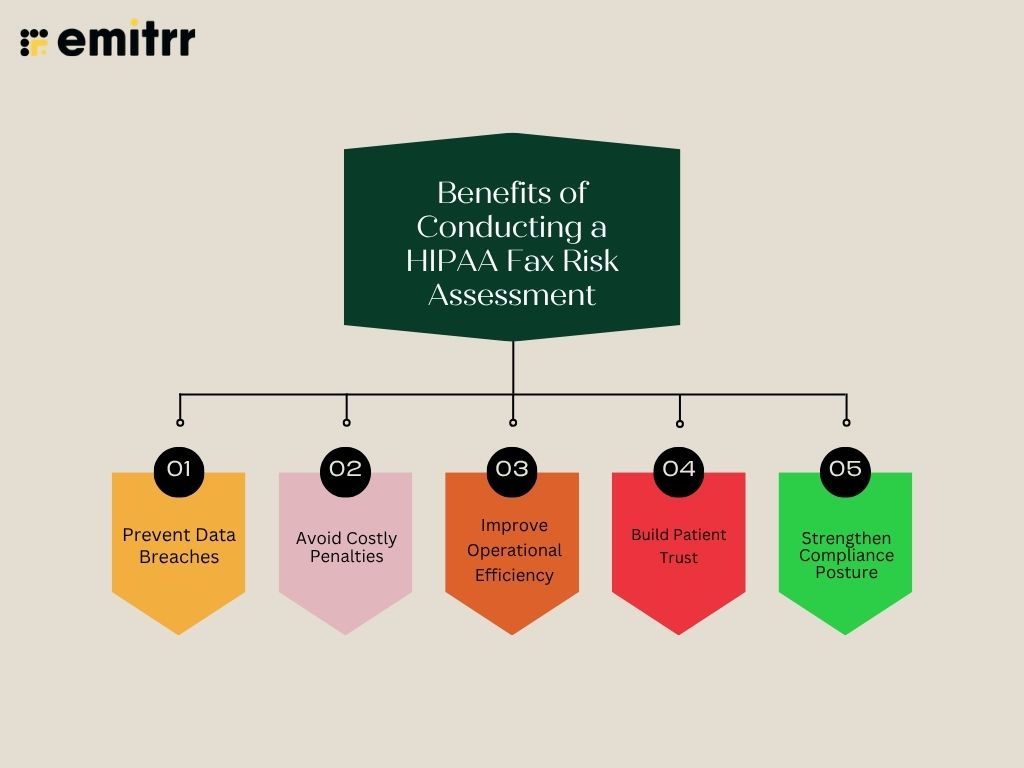
Conducting a thorough HIPAA fax risk assessment is essential for healthcare organizations that want to protect patient data and stay compliant. It not only helps identify weaknesses but also improves overall communication processes. Here are the key benefits:
Prevent Data Breaches
A HIPAA fax risk assessment helps uncover potential vulnerabilities in your faxing processes before they turn into serious security incidents. By proactively identifying gaps, healthcare providers can take corrective actions to safeguard PHI and reduce the likelihood of data breaches.
Avoid Costly Penalties
Non-compliance with HIPAA regulations can lead to significant financial penalties and legal complications. Performing regular assessments minimizes these risks by ensuring that your faxing practices align with compliance standards, helping you avoid unnecessary fines and liabilities.
Improve Operational Efficiency
Assessments often highlight inefficiencies in existing workflows, such as manual processes or outdated systems. Addressing these issues can streamline operations, reduce human errors, and make fax communication more efficient across the organization.
Build Patient Trust
When patients know that their sensitive information is handled securely, it increases their confidence in your practice. A strong focus on data protection through regular assessments demonstrates your commitment to privacy, helping build long-term patient trust.
Strengthen Compliance Posture
Regular risk assessments ensure that your organization remains prepared for audits and regulatory checks at any time. By continuously monitoring and improving your processes, you maintain a strong compliance posture and stay aligned with evolving HIPAA requirements.
How Emitrr Helps Ensure HIPAA-Compliant Faxing
If you want to minimize or completely eliminate the risks associated with traditional faxing, adopting a secure platform like Emitrr can make a significant difference. It not only enhances data security but also simplifies communication workflows for healthcare providers. Here’s how Emitrr supports HIPAA-compliant faxing:
Encrypted, Secure Faxing
Emitrr uses advanced encryption protocols to protect data during transmission. This ensures that sensitive patient information remains secure and inaccessible to unauthorized parties, strengthening overall secure fax healthcare systems.
Built-in Audit Logs
The platform automatically records all fax-related activities, including timestamps, users, and document history. These built-in HIPAA audit trails provide full visibility and accountability, making it easier to maintain and demonstrate HIPAA fax compliance.
Automated Workflows
Emitrr reduces manual intervention by automating routine faxing tasks. This minimizes the risk of human error, improves consistency, and enhances operational efficiency across your communication processes.
Easy Integration with EHR Systems
Emitrr seamlessly integrates with existing EHR systems, allowing healthcare providers to send and receive faxes directly within their workflow. This eliminates the need for switching between systems and ensures smoother, more efficient operations.
HIPAA-Compliant Communication Tools
Beyond faxing, Emitrr offers a suite of secure communication tools designed specifically for healthcare. These tools help ensure that all patient interactions remain compliant with HIPAA regulations while improving engagement and responsiveness.
Conclusion
Faxing continues to play an important role in healthcare communication, but relying on it without proper safeguards can expose organizations to significant risks. From misdirected faxes to a lack of encryption and audit trails, even small gaps in your process can lead to serious compliance violations. This is why conducting a HIPAA fax risk assessment is not just recommended, it’s essential. It helps you identify vulnerabilities, implement the right safeguards, and ensure your processes align with regulatory requirements.
Taking a proactive approach is key. Regular assessments, ongoing staff training, and upgrading to modern, secure technologies can go a long way in protecting sensitive patient information. When it comes to PHI, even a minor error can result in major consequences, both financially and reputationally.
If you’re ready to eliminate faxing risks and simplify compliance, Emitrr offers a secure, HIPAA-compliant communication platform with encrypted faxing, audit logs, and seamless EHR integrations.
Book a demo with Emitrr today and take the first step toward safer, smarter healthcare communication.
Frequently Asked Questions
A HIPAA fax risk assessment is a process used to evaluate the security and compliance of your faxing systems. It helps identify vulnerabilities in how PHI is transmitted, received, stored, and disposed of, ensuring alignment with HIPAA regulations.
Yes, faxing can be HIPAA compliant, but only when proper safeguards are in place. This includes using secure fax systems, encryption, access controls, and audit logs to protect patient information during transmission and storage.
Common risks include misdirected faxes, lack of encryption, unattended fax machines, absence of audit trails, and improper disposal of sensitive documents. These issues can lead to unauthorized access to PHI and potential HIPAA violations.
Healthcare organizations should conduct a HIPAA fax risk assessment at least once a year or whenever there are significant changes in systems, processes, or regulations. Regular assessments help maintain continuous compliance.
Audit logs track all fax-related activities, including who sent or received a fax and when. They are essential for monitoring, accountability, and investigating any potential security incidents, making them a key component of HIPAA compliance.
Providers can reduce the risk by double-checking recipient information, using pre-programmed numbers, implementing confirmation steps, and using secure digital fax solutions that validate recipient details before sending.
Yes, secure cloud fax solutions offer advanced features like encryption, access controls, and automated tracking. These features significantly reduce the risks associated with traditional faxing and improve overall compliance.
A HIPAA-compliant fax cover sheet should include sender and recipient details, a confidentiality disclaimer, and instructions for unintended recipients. This helps minimize the risk of unauthorized disclosures.
Emitrr provides encrypted faxing, built-in audit logs, automated workflows, and seamless EHR integrations. These features help healthcare organizations reduce risks, improve efficiency, and maintain full HIPAA fax compliance.

 4.9 (400+
reviews)
4.9 (400+
reviews)