
Introduction
Ten years ago, finding a doctor looked very different.
Someone might ask a friend for a recommendation, flip through a local directory, or simply visit the nearest clinic.
Today, almost every patient starts somewhere else:
Google.
Whether they’re looking for a dentist, pediatrician, physical therapist, dermatologist, urgent care center, or specialty hospital, their first step is usually searching online.
- “Dentist near me”
- “Urgent care open now”
- “Best pediatrician in Chicago”
- “Physical therapy clinic near me”
Now imagine you’re a healthcare organization with 15 locations across a city.
One clinic appears at the top of Google. Another doesn’t appear at all.
The result?
The first location gets a steady stream of appointment requests, while the second struggles, even though both provide the same quality of care.
That’s the power of Local SEO for healthcare.
Many healthcare organizations spend thousands of dollars every month on ads while overlooking one of the most valuable long-term growth channels: search engine optimization for healthcare.
Unlike paid advertising, where visibility disappears as soon as you stop spending, healthcare SEO helps your locations attract patients consistently over time.
Whether you’re running a growing dental group, a physical therapy network, a dermatology practice, or a multi-location hospital system, investing in local SEO for healthcare can help every location become easier to discover when patients are actively searching for care.
In this guide, you’ll learn:
- What Local SEO is (without the technical jargon)
- Why it matters more than ever for multi-location healthcare organizations
- The biggest challenges healthcare brands face online
- Proven strategies to improve local visibility
- Tools that make Local SEO easier
- How solutions like Emitrr can support your strategy
Let’s start with the basics.
Chapter 1: What Is Local SEO for Healthcare?
Let’s begin with a simple question.
What is SEO?
SEO (Search Engine Optimization) is the process of helping your website appear higher on Google when people search for something related to your services.
For example, imagine you own a physical therapy clinic.
A potential patient searches:
“Physical therapist for knee pain”
If your website appears on the first page, there’s a much higher chance they’ll visit your site and book an appointment.
If you’re on page three?
Most people will never even know you exist.
That’s why businesses across every industry invest in SEO—and healthcare is no exception.
You’ll often hear terms like medical SEO, healthcare SEO, medical practice search engine optimization, or SEO for medical practices. While the wording changes, the goal is the same: helping patients find your healthcare organization online.
What Is Local SEO?
Now let’s add one important word:
Local.
Local SEO focuses on helping your practice appear when someone searches for healthcare in a specific area.
For example:
- Dentist near me
- Cardiologist in Dallas
- Pediatrician in Seattle
- Orthopedic clinic in Phoenix
Notice something?
The patient isn’t just looking for information. They’re looking for a provider near them.
Google understands this and tries to show nearby clinics, practices, and hospitals before anything else. That’s why you’ll often see a map and three business listings before the regular website results.
For healthcare organizations, this is where many new patients come from.
Why Every Location Needs Its Own Online Presence
This is where multi-location healthcare organizations often struggle.
Imagine a dental group with:
- 12 locations
- 25 dentists
- Different services at each clinic
If every location shares the same generic webpage, Google has a hard time understanding which clinic serves which community.
Now imagine each location has:
- Its own webpage
- Accurate address
- Phone number
- Office hours
- Photos
- Patient reviews
- Service information
Now Google knows exactly which location to recommend when someone nearby searches.
Instead of one website trying to rank everywhere, every location has its own opportunity to attract local patients.
That’s one of the biggest differences between basic medical website SEO and a well-planned Local SEO strategy for growing healthcare organizations.
Chapter 2: Why Local SEO Matters More Than Ever
Here’s a question every healthcare leader should ask:
When someone in your service area searches for the care you provide today… can they actually find you?
If the answer is “I’m not sure,” then you’re already losing potential patients.
Let’s see why.
Patients Don’t Search the Way They Used To
Healthcare has changed. So has patient behavior. Years ago, patients relied on referrals from family, friends, or their primary care physician Those referrals still matter, but they’re often just the starting point.
Today, even after receiving a recommendation, many people will Google the provider before making a decision.
For example: Sarah’s friend recommends a pediatrician. Before booking, Sarah searches:
- Reviews
- Office photos
- Directions
- Services
- Website
- Appointment options
If she can’t find enough information, or finds outdated information, she may choose another provider.
In other words, your online presence often becomes your first impression, even when the patient came through a referral.
Every Day, Patients Search With Local Intent
People don’t usually search for: “Best dentist in America.”
They search for:
- Dentist near me
- Pediatrician in Austin
- Physical therapist near downtown Denver
- Walk-in clinic open now
Look at the search volume in the image below to see the difference yourself:
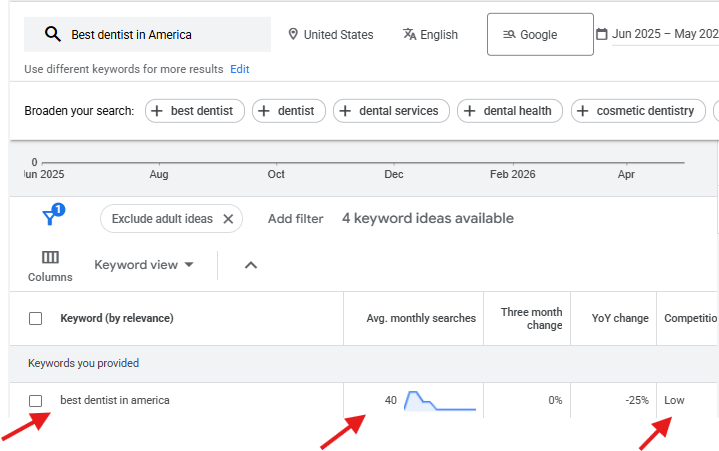
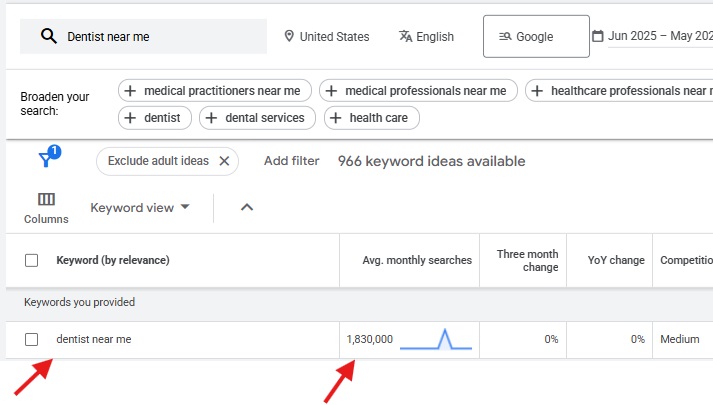
These are called high-intent searches because the patient is actively looking for care.
If your organization appears at that moment, you have a much greater chance of earning the appointment.
If you don’t appear, your competitor probably will.
The Cost of Being Invisible Online
Let’s do a simple thought experiment.
Imagine you operate 20 physical therapy clinics across Texas.
Every month, thousands of people search for things like:
- “Physical therapist near me”
- “Sports injury clinic”
- “Back pain treatment near me”
Now ask yourself:
How many of those patients actually find your clinics?
If only 5 out of your 20 locations appear prominently in search results, the other 15 are likely missing out on patients, not because they’re less qualified, but because they’re less visible.
This is one of the biggest challenges for multi-location healthcare organizations.
The quality of care may be excellent across every location. But if patients can’t find a location online, they can’t choose it. Local SEO helps close that visibility gap.
Google Is the New Front Door
Think about your physical clinic for a moment.
You probably invest in:
- Clean waiting rooms
- Helpful front-desk staff
- Clear signage
- Convenient parking
Why?
Because first impressions matter.
Today, Google is often your first waiting room.
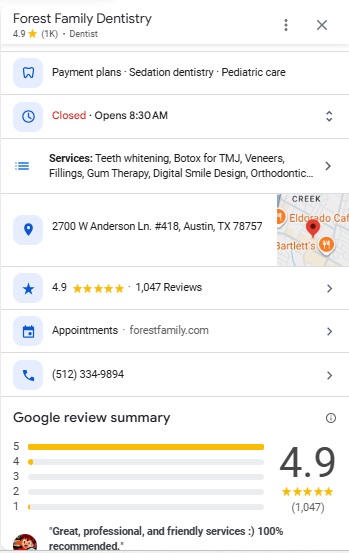
Before patients ever step into your clinic, they see:
- Your Google Business Profile
- Your reviews
- Your photos
- Your website
- Your office hours
- Your services
If that information is incomplete, outdated, or hard to find, patients may move on before they even contact you.
In many cases, your online presence influences the decision before your team ever gets the opportunity to speak with the patient.
Local SEO Builds Trust Before the First Appointment
Healthcare is different from many other industries. Patients aren’t just buying a product. They’re trusting someone with their health.
That’s why people naturally look for signals that help them feel confident. For example, imagine you’re searching for a new dermatologist.
You find two clinics.
Clinic A
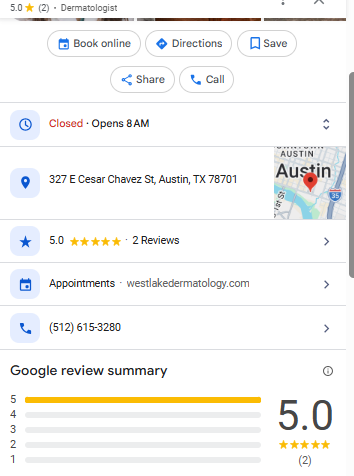
- 15 reviews
- No recent photos
- Website looks outdated
- No information about providers
Clinic B
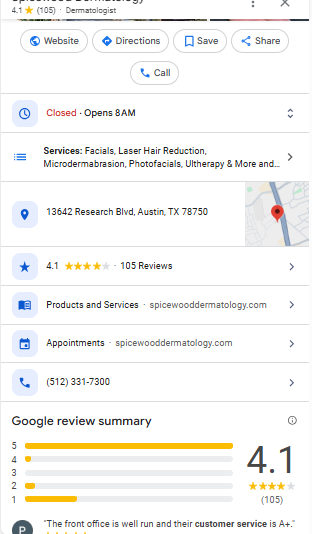
- 350 recent reviews
- Professional photos
- Helpful website
- Clear list of services
- Easy online booking
Which clinic would you trust? Most people choose Clinic B, even if they’ve never heard of it before.
That’s one of the biggest benefits of healthcare SEO. It isn’t just about helping patients find you. It’s about helping them choose you.
Why Local SEO Is a Better Long-Term Investment Than Only Running Ads
Many healthcare organizations rely heavily on paid advertising. There’s nothing wrong with that.
In fact, Google Ads can be incredibly effective, especially for new locations or seasonal campaigns. But here’s the catch. The moment you stop paying, your visibility disappears. Local SEO works differently.
Imagine this:
A dental practice spends $5,000 every month on ads. Every month they receive appointments. Then they pause the campaign. The appointments immediately slow down.
Now imagine another practice invests in improving its website, Google Business Profiles, patient reviews, and local content.
It takes a few months.
But eventually, they begin ranking organically for searches like:
- Dentist near me
- Family dentist in Charlotte
- Emergency dental clinic
Those rankings continue bringing patients, even when they’re not paying for every click.
That’s why many healthcare organizations use this strategy:
- Paid ads for short-term growth
- Local SEO for long-term growth
Together, they create a more sustainable patient acquisition strategy.
Every Location Deserves the Chance to Rank
One mistake many multi-location healthcare organizations make is treating all locations the same online.
Imagine a pediatric group with 30 clinics. If every location shares the same generic webpage and limited information, Google has very little context about each clinic.
Now compare that with an organization where every location has:
- Its own webpage
- Accurate business information
- Provider details
- Local patient reviews
- Community-specific content
Now every clinic has the opportunity to rank for searches in its own neighborhood. Instead of one location doing all the work, every location becomes a source of new patient growth.
That’s one of the biggest advantages of investing in local SEO for healthcare.
AI Is Changing How Patients Discover Healthcare Providers
Google isn’t the only place patients search anymore.
Many people now ask AI assistants questions like:
- “Who are the best pediatricians near me?”
- “Find a dentist open this Saturday.”
- “What’s the highest-rated orthopedic clinic nearby?”
These tools don’t just look at one website. They pull information from multiple trusted sources across the web.
That means organizations with:
- Accurate business information
- Strong reviews
- Helpful content
- Well-maintained websites
are more likely to be recommended, whether someone is searching on Google or asking an AI assistant.
While traditional search is still incredibly important, building a strong online presence today also prepares your organization for the future of patient search.
The Bottom Line
Local SEO isn’t just a marketing tactic.It’s part of the patient experience.
When patients can easily find the right location, trust the information they see, and book an appointment without friction, everyone wins.
For multi-location healthcare organizations, Local SEO isn’t about helping one clinic rank higher. It’s about making sure every location has an equal opportunity to attract patients and grow.
Chapter 3: Challenges Multi-Location Healthcare Organizations Face
If Local SEO were only about creating a website, every healthcare organization would be ranking on the first page of Google.
But for organizations with multiple locations, things get much more complicated.
What works for a single dental office doesn’t necessarily work for a healthcare organization with 25 clinics across different cities. Let’s look at some of the biggest challenges.
Challenge #1: Managing Multiple Google Business Profiles
One clinic.
One Google Business Profile.
Simple.
Now imagine managing:
- 12 dental practices
- 30 urgent care centers
- 75 physical therapy clinics
Each location needs:
- Correct address
- Updated phone number
- Business hours
- Holiday hours
- Photos
- Services
- Appointment links
- Patient reviews
Now multiply that by dozens, or even hundreds, of locations. Without a clear process, it’s easy for information to become outdated or inconsistent.
Challenge #2: Inconsistent Business Information
Let’s say one location is listed as:
ABC Women’s Health
Another directory says:
ABC Women’s Health Center
- Another lists an old phone number.
- Another has the wrong opening hours.
- To patients, this creates confusion.
To Google, it creates uncertainty.
The more consistent your business information is across the web, the easier it is for search engines to trust that information.
Challenge #3: Every Location Starts Looking the Same
This is one of the most common mistakes we see.
Organizations create one page and simply swap out the city name.
For example:
- “Dental Clinic in Dallas”
- “Dental Clinic in Houston”
- “Dental Clinic in Austin”
Everything else stays exactly the same. That doesn’t help patients, and it doesn’t help Google understand what makes each location unique.
Each location serves a different community.
- Different providers.
- Different services.
- Different patient needs.
Your website should reflect that.
Challenge #4: Managing Reviews at Scale
Reviews are one of the strongest trust signals for healthcare organizations. Now imagine tracking them across 40 locations. Some locations receive reviews regularly. Others receive almost none.
Some reviews get responses. Others sit unanswered for months.
Without a consistent review strategy, the patient experience, and your online reputation,bcan vary dramatically from one location to another.
This is where many organizations begin looking for platforms that can automate review requests and centralize reputation management.
Challenge #5: Maintaining a Consistent Brand Across Every Location
Patients should have the same experience whether they visit your clinic in Miami or Dallas. But online, that’s not always the case.
One location might have:
- Professional photos
- Hundreds of reviews
- An updated website
- Online booking
While another has:
- No profile photo
- Incorrect office hours
- Outdated services
- No reviews
Even though they’re part of the same organization.
This creates an inconsistent patient experience and weakens your overall brand.
Local SEO isn’t just about ranking higher, it’s also about creating consistency across every patient touchpoint.
Challenge #6: Limited Marketing Resources
Most healthcare organizations don’t have a dedicated marketer for every location.
Instead, they have one small marketing team trying to support:
- 10 locations
- 20 locations
- Sometimes even 100+ locations
That means they’re responsible for:
- Website updates
- Google Business Profiles
- Reviews
- Social media
- Paid advertising
- Email campaigns
- Events
- Analytics
Adding Local SEO to that list can feel overwhelming. The key isn’t doing everything manually. It’s building repeatable systems and using tools that help automate routine tasks.
Challenge #7: Measuring Success Across Multiple Locations
Here’s another common problem. A healthcare organization might know:
“We received 2,000 appointments this month.”
But they don’t know:
- Which locations generated the most website traffic?
- Which clinic ranks highest on Google?
- Which location receives the most reviews?
- Which pages bring in the most appointment requests?
- Which clinics need improvement?
Without location-level reporting, it’s difficult to know what’s working and where to focus your efforts.
The Good News
Every one of these challenges is solvable. The organizations that consistently rank well aren’t necessarily the biggest. They’re usually the ones that have built a repeatable Local SEO process.
Let’s look at what that process actually involves.
Chapter 4: 10 Proven Local SEO Strategies for Multi-Location Healthcare Organizations
If you’re feeling overwhelmed, don’t worry. You don’t need to do everything at once. Think of Local SEO like building a house. You start with the foundation, then improve it step by step.
Here are the ten strategies that have the biggest impact.
1. Optimize Every Google Business Profile
If Local SEO had a starting point, this would be it.
Every location should have its own complete and up-to-date Google Business Profile.
That means:
- Correct business name
- Address
- Phone number
- Office hours
- Website
- Appointment link
- Categories
- Services
- Photos
Think of your Google Business Profile as your digital storefront.
For many patients, it’s the first thing they’ll see before visiting your website.
2. Create a Dedicated Page for Every Location
Imagine you have clinics in:
- Dallas
- Austin
- Houston
Instead of one page saying:
“We have clinics across Texas.”
Create individual pages like:
- Dallas Physical Therapy Clinic
- Austin Physical Therapy Clinic
- Houston Physical Therapy Clinic
Each page should include:
- Address
- Phone number
- Embedded map
- Providers at that location
- Services offered
- FAQs
- Testimonials
- Nearby landmarks
This helps both patients and search engines understand exactly what each location offers.
3. Keep Your Business Information Consistent Everywhere
Your Name, Address, and Phone Number (often called NAP) should be exactly the same wherever your business appears online.
That includes:
- Apple Maps
- Bing
- Healthcare directories
- Insurance directories
- Yelp
- Healthgrades
Even small differences can create confusion.
For example:
❌ Suite 200 vs Ste. #200
❌ (555) 123-4567 vs 5551234567
While these seem minor, consistency builds trust for both patients and search engines.
4. Collect More Patient Reviews
Reviews influence two important things:
- Whether patients trust your organization.
- How visible you are in local search.
Instead of asking for reviews only occasionally, make it part of your patient journey.
For example:
Patient completes their appointment.
↓
Receives a thank-you text.
↓
Gets a friendly request to leave a review.
Simple systems like this can dramatically increase review volume over time.
5. Build Helpful Local Content
Many healthcare organizations only talk about themselves. Patients care about their problems.
Instead of writing:
“We’re the best orthopedic clinic.”
Create helpful content like:
- When Should You See an Orthopedic Specialist?
- Common Causes of Shoulder Pain
- How Physical Therapy Helps After Knee Surgery
Helpful content builds trust and gives patients another way to discover your organization through search.
6. Make Your Website Mobile-Friendly
Think about the last time you searched for something nearby. You probably used your phone.
Your patients do the same.
If your website:
- Loads slowly
- Has tiny text
- Is difficult to navigate
- Makes booking an appointment frustrating
Many visitors will leave before taking any action. A fast, mobile-friendly website isn’t just good for SEO, it’s good for patients.
7. Improve Website Speed
Patients don’t like waiting. Neither does Google. Even a few extra seconds of loading time can increase the chances of someone leaving your website.
Simple improvements like compressing images, removing unnecessary code, and choosing reliable hosting can make a noticeable difference.
8. Earn Local Backlinks
Think of backlinks as recommendations from other websites.
For example:
- Local hospitals
- Universities
- Community organizations
- Chambers of commerce
- Healthcare associations
When trusted organizations link to your website, it strengthens your online authority.
Focus on earning quality links rather than chasing large quantities.
9. Monitor Performance Regularly
Local SEO isn’t something you set up once and forget.
Every month, review:
- Website traffic
- Google Business Profile views
- Phone calls
- Direction requests
- Appointment bookings
- Keyword rankings
- Review growth
Tracking these metrics helps you understand what’s improving and where more work is needed.
10. Think Long-Term
This may be the most important strategy of all. Local SEO isn’t an overnight fix. It’s a long-term investment.
Organizations that consistently improve their online presence month after month are usually the ones that dominate local search over time.
Instead of chasing quick wins, focus on building a strong foundation that continues delivering results for years.
Quick Recap
If you’re just getting started, focus on these five priorities first:
- Optimize every Google Business Profile
- Create a page for every location
- Collect more patient reviews
- Keep business information consistent
- Improve your website experience
These five steps alone can make a significant difference in your local visibility.
Chapter 5: Recommended Local SEO Tools
The good news? You don’t need dozens of expensive tools to improve your Local SEO.
In fact, many of the essentials are completely free.
Here’s a breakdown of tools that can help.
| Purpose | Recommended Tool | Why It Matters |
| Manage Google listings | Google Business Profile | Control your business information and appear in Google Maps. |
| Track website traffic | Google Analytics | See how visitors find and interact with your website. |
| Monitor search performance | Google Search Console | Discover which keywords bring people to your site and identify technical issues. |
| Keyword research | Ahrefs or Semrush | Find the search terms your potential patients are using. |
| Manage business listings | BrightLocal | Keep your business information consistent across directories. |
| Audit website SEO | Screaming Frog | Identify broken links, duplicate content, and technical SEO issues. |
| Improve page speed | Google PageSpeed Insights | Find opportunities to make your website load faster. |
| Generating reviews | Emitrr | Automate review generation process with Emitrr |
Do You Need Every Tool?
No.
If you’re just starting out, focus on:
- Google Business Profile
- Google Analytics
- Google Search Console
These three tools provide a strong foundation and are enough to begin improving your Local SEO.
As your organization grows, you can invest in more advanced tools based on your needs.
Chapter 6: How Emitrr Helps Strengthen Your Local SEO Strategy
By now, you might be wondering:
“Can software actually help with Local SEO?”
The answer is yes, but probably not in the way you think.
Local SEO isn’t just about keywords or ranking higher on Google. It’s about creating a better patient experience. And one of the biggest factors that influences your online visibility is something every healthcare organization already has:
Patient communication.
Let’s see how.
1. Generate More Patient Reviews Automatically
Reviews are one of the strongest trust signals for both patients and search engines. The challenge?
Most healthcare organizations don’t consistently ask for them. That’s where automation can make a huge difference.
For example:
A patient finishes their appointment.
↓
Instead of relying on your front desk to remember, Emitrr automatically sends a personalized text message thanking the patient and inviting them to leave a review.
A simple workflow like this can help every location collect reviews consistently, without creating extra work for your staff.
2. Create a Better Patient Experience
Imagine calling a clinic and no one answers.
Or sending a message and waiting two days for a response.
Frustrating, right?
Now imagine a clinic that:
- Responds quickly
- Answers common questions automatically
- Confirms appointments instantly
- Makes communication easy
Patients notice the difference.
A better experience often leads to:
- Happier patients
- Better reviews
- More referrals
- Stronger online reputation
While these aren’t direct ranking factors, they support the overall trust and engagement that successful Local SEO strategies depend on.
3. Simplify Communication Across Multiple Locations
Managing communication for one clinic is manageable. Managing it for 25 or 50 locations is a different story.
A centralized communication platform helps ensure every location follows the same process for:
- Appointment reminders
- Patient texting
- Review requests
- Follow-ups
This consistency strengthens your brand and creates a more reliable patient experience across every location.
4. Save Staff Time So They Can Focus on Patients
Front desk teams already have a lot on their plates.
- Phone calls.
- Appointment scheduling.
- Insurance questions.
- Patient check-ins.
Adding review requests or follow-up messages to that list isn’t always realistic.
By automating repetitive communication, your staff can spend more time helping patients instead of completing manual administrative tasks.
The Bottom Line
Software alone won’t improve your Local SEO.
But software that helps you deliver a better patient experience, collect more reviews, and communicate consistently can support many of the activities that contribute to long-term Local SEO success.
Think of Emitrr as an enabler, not a shortcut.
Frequently Asked Questions
Local SEO is the process of improving your online visibility so patients can find your healthcare organization when searching for nearby services on Google and other search engines. It focuses on optimizing each location so it appears in local search results and Google Maps.
Yes, Traditional SEO focuses on improving visibility nationally or globally. Local SEO focuses on helping your organization rank in a specific geographic area, making it especially important for healthcare providers who serve local communities.
Because each location serves a different community. Optimizing every clinic individually helps each one appear in local searches, attract nearby patients, and compete more effectively in its own market.
Local SEO for healthcare is a long-term strategy. Some improvements, like updating your Google Business Profile, can have an impact within a few weeks. More competitive improvements, such as building authority, improving rankings, and increasing organic traffic, often take several months of consistent effort. The key is consistency, not quick wins.
They’re different strategies. Paid advertising provides immediate visibility but stops delivering results when your budget ends. Local SEO takes longer to build but can continue driving organic patient traffic over time. Many healthcare organizations use both together.
Yes, every physical location should have its own optimized Google Business Profile with accurate business information, reviews, photos, and office hours. This gives each clinic the opportunity to appear in local search results.
Treating every location the same. Using duplicate location pages, inconsistent business information, or neglecting reviews can make it harder for individual clinics to perform well in local search.
No, AI is changing how people discover healthcare providers, but it still relies on accurate, trustworthy information from across the web. A strong Local SEO strategy helps ensure your organization is well-positioned for both traditional search engines and AI-powered search experiences.

 4.9 (400+
reviews)
4.9 (400+
reviews)