
 4.9 (400+
reviews)
4.9 (400+
reviews)
Introduction to VOIP For Nonprofits
Did you know that nonprofits waste up to 30% of their budget on outdated phone systems? For organizations that rely on donations and operate on strained budgets, that’s far from ideal, especially in 2025. It’s time for nonprofits to consider switching to VoIP service providers.
VoIP offers faster communication, lower costs, and automated workflows. You connect over the internet, spend less on phone bills, and focus more on your mission.
The VoIP market has skyrocketed in recent years, valued at USD 44.99 billion in 2023 and projected to grow at a CAGR of 12.9% from 2024 to 2030. With hundreds of platforms now available, choosing the right one can be overwhelming.
We’ve done the research and compared the top VoIP options to help you find the one that fits your team size, tech stack, and most importantly, your budget. Let’s break them down, one by one!
How VoIP Providers Help Nonprofits
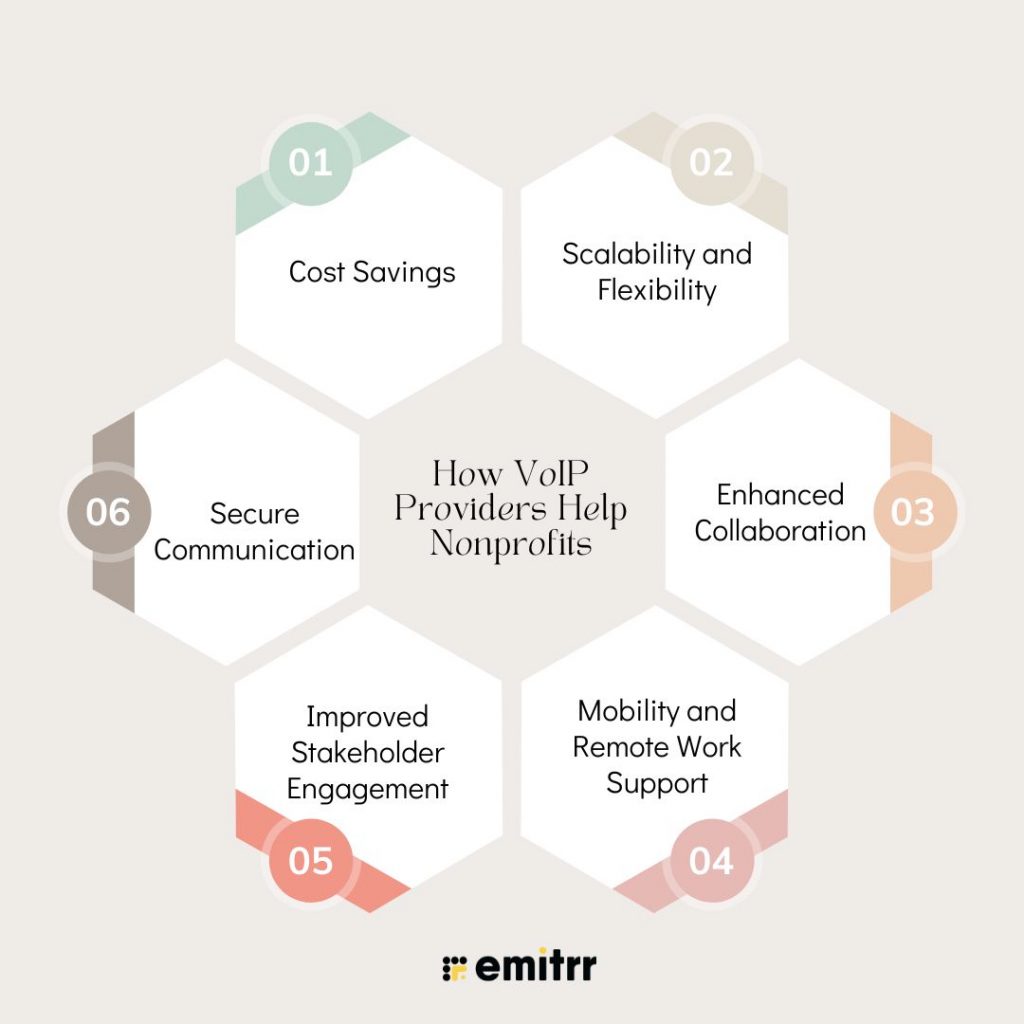
VoIP, as a strategic resource, empowers nonprofits to connect, collaborate, and contribute to the social good more efficiently by streamlining communication. Here’s how it delivers tangible benefits for your cause.
1. Cost Savings
With VoIP, communication costs come down by as much as 50% when compared to conventional nonprofit phone systems. Nonprofits are therefore able to channel funds effectively into critical programs and undertakings, while ditching the expensive hardware or wiring costs. Many VoIP providers offer plans starting as low as $15 per user per month, with unlimited domestic calls and no setup fees. Even international calls are inexpensive, charged at pocket-friendly per-minute rates.
2. Scalability and Flexibility
Nonprofits evolve constantly, and VoIP services grow apace. If you need additional lines for a fundraising campaign, you can add them in a matter of minutes, and when it’s time to scale down after a big event, you can remove them just as easily. Cloud-based VoIP services don’t require hardware upgrades, making it ideal for nonprofits with volatile requirements. VoIP, with its scalability, keeps your nonprofit incredibly lean and adaptable to shifting market scenarios.
3. Enhanced Collaboration
VoIP enables a unified, centralized communication ecosystem, allowing everyone — from staff, donors, to volunteers — to interact and stay aligned with long-term objectives. Features like video conferencing, team messaging, file sharing, and shared call inboxes help nonprofits ensure everyone harnesses consistent data, collaborates in real-time, and never misses a beat. VoIP adoption has led to better collaboration for 91% of organizations, giving them an edge in advancing their mission.
4. Mobility and Remote Work Support
VoIP keeps your team connected from anywhere, making it ideal for today’s hybrid work environments. With mobile apps and softphones, staff can make and receive calls on their smartphones or laptops, ensuring seamless communication whether they’re working remotely or on the move. Many VoIP platforms support BYOD (Bring Your Own Device) policies, helping organizations cut down on hardware costs. As hybrid work becomes the norm for a growing number of companies, VoIP’s mobility ensures your nonprofit can stay responsive and connected, anytime, anywhere.
5. Improved Stakeholder Engagement
VoIP platforms take the edge in multi-channel, personalized communication, helping nonprofits connect with donors and volunteers in the way that suits them best. Be it an SMS, a video call, or AI-powered call analytics, VoIP helps enable engaging, meaningful, and timely outreach across platforms. Integrated with CRMs like Salesforce and DonorPerfect, many VoIP software solutions in the market can automate personalized messages such as, “Sarah, your $100 gift helped 20 families!” This kind of tailored communication boosts engagement by 20–40%, strengthening loyalty and long-term support for your cause.
6. Secure Communication
Security isn’t optional for nonprofits handling sensitive donor data. Leading VoIP providers offer features like end-to-end encryption, multi-factor authentication, and full compliance with regulations such as GDPR and HIPAA to safeguard user-sensitive data and avoid its misuse. These measures significantly reduce the risk of data breaches and help maintain the trust of your stakeholders. Unlike traditional nonprofit phone services, VoIP allows for regular security updates, ensuring your communications remain protected at all times.
Also, you can watch this video to get a quick overview of pros and cons of VoIP so that you have a better idea of this technology:
Features to Look For in Nonprofits VoIP Providers
Handpicking the most suitable VoIP provider means prioritizing a battery of features that aligns with your nonprofit’s. Here’s what to look for to maximize your advantage.
1. Call Management and Routing
Effective call handling is crucial for nonprofit success. Auto-attendants provide professional menus to guide callers. Interactive Voice Response (IVR) systems direct callers to the appropriate department, reducing wait times. Smart routing prioritizes urgent donor calls by connecting them to experienced staff members. Voicemail-to-email and call forwarding features ensure no message is missed, especially during high-volume campaigns.
2. Mobile and Remote Access Features
Nonprofits with globally distributed teams require flexible communication solutions. Mobile apps and browser-based softphones allow staff to manage calls from any location, such as fundraising events or remote workspaces. Providers offering full feature parity between desktop and mobile platforms ensure seamless transitions. Bring Your Own Device (BYOD) support reduces hardware costs, making it ideal for budget-conscious organizations.
3. Integration with CRM and Donor Management Tools
Seamless integration with CRM systems, such as Salesforce or DonorPerfect, enables personalized donor outreach. Syncing call data with donor profiles increases campaign engagement by 20-40%. Automated workflows minimize manual data entry, allowing staff to focus on mission-critical tasks.
4. Multi-Channel Communication Support
It’s 2025, and donors and volunteers expect consistent, frictionless communication across multiple channels. VoIP providers offering voice, SMS, video, and team messaging within a single platform create a unified experience, making them a must-have over those who don’t. This supports diverse outreach, such as sending SMS event reminders or hosting video briefings, to strengthen stakeholder engagement. Nonprofit-focused tools provide affordable versatility compared to more expensive platforms like Nextiva.
5. Ease of Use and Admin Control
Nonprofits often lack dedicated technology teams, making intuitive VoIP interfaces essential. Drag-and-drop dashboards and user-friendly admin controls enable non-technical staff to manage users, settings, and call flows efficiently. Quick setup processes and customizable branded templates save time and promote consistent communication.
6. Customer Support and Onboarding Services
Reliable 24/7 customer support through chat, email, or phone, combined with comprehensive onboarding resources like webinars and live training, ensures smooth adoption. For nonprofits, it’s vital to have. Responsive support and dedicated account managers resolve issues quickly, minimizing disruptions and allowing nonprofits to focus on their mission.
7. Security and Compliance
Protecting donor data is an indispensable, non-negotiable requirement for nonprofits. VoIP service providers must deal with security concerns with an all-hands-on-deck approach and offer end-to-end encryption, fraud detection, and compliance with regulations such as GDPR, HIPAA, and TCPA. Regular security updates and high uptime of 99.99% build trust with stakeholders by ensuring sensitive information remains secure in a digital-first world.

How to Choose the Right VoIP Provider for Nonprofits?
Selecting the perfect VoIP provider requires a thoughtful approach. Follow these steps to ensure your choice aligns with your nonprofit’s mission and budget.
1. Assess Your Organization’s Communication Needs
First, map your communication workflows. Do you need strong donor communication features, coordination of volunteers, or both? Consider team size, whether the team works remotely, and how often campaigns are run. For example, a smaller nonprofit may put emphasis on lower expenses, while an international one needs international calling. List all pain points, such as costs being too high, calls dropping, and so forth, as guiding tools for your search.
2. Evaluate Provider Reputation and Reliability
Choose VoIP providers with proven track records. Search extensively and track down numbers that reflect their experience, capabilities, and clientele. Validate via user reviews and service feedback. A rating above 4 is considered ideal and positions a brand’s name as an industry leader. Check for user reviews on platforms like Capterra. Head to the official websites and look into case studies for their real-world successes. Taking these measures will help a nonprofit partner with the best and dodge a bullet if any.
3. Compare Pricing and Service Plans
Budgets are a critical factor, dictating choices, and must never be overlooked. Before jumping the gun, examine plans for the monthly/annual fee, price per user, and any additional or hidden expenses, if any. The rule of thumb is to select a VoIP platform with free trials, facilitating hands-on evaluation of features, usability, and compatibility. While choosing the providers, ensure the pricing plans scale with growth and include essential features without any surprises.
4. Ensure Integration with Existing Tools
A VoIP software that offers seamless integration with multiple platforms and works well in sync with a nonprofit’s existing systems is an indisputable choice. As you sift through choices, make sure to assess compatibility with your current CRM, donor management tools, and productivity apps. Avoid VoIP service providers that charge a fee for every level of scalability or require manual data entry, as this defeats the purpose of saving time.
5. Verify Security and Compliance Standards
For nonprofits leveraging user data, security has been upheld as sacrosanct. Pick your provider that tackles security with meticulous detail and offers features like end-to-end encryption and industry compliance with GDPR, HIPAA, or TCPA. It’s equally important to assess whether multi-factor authentication is in place and how quickly the team pushes out security updates.
6. Test Customer Support Responsiveness
Customer service is either a dealmaker or a deal-breaker in any business relationship. From the prospects, choose the one with agile, highly responsive customer care. Try testing the provider’s response times by availing trials using chats or emails. Remember: with slow or limited assistance, your nonprofit can run into critical situations like downtime and campaign disruptions.
7. Review Hardware Compatibility and Setup Requirements
Minimize upfront costs by choosing providers that support your existing technology landscape and communication protocols. VoIP solutions should complement your nonprofit’s current hardware setup, whether you’re using softphones, desktop computers, or traditional desk phones. Ensure the setup process is straightforward and doesn’t demand extensive IT expertise.
8. Look for Trial Periods or Satisfaction Guarantees
Test before committing. Most providers offer 14–30 day free trials, giving your team time to evaluate features, usability, and overall fit with your nonprofit’s workflow. Open-source platforms offer indefinite testing at no cost, ideal for tech-savvy teams. Satisfaction guarantees, like money-back policies, add an extra layer of confidence to your decision.
Must-Have Integrations for Nonprofit VoIP Software
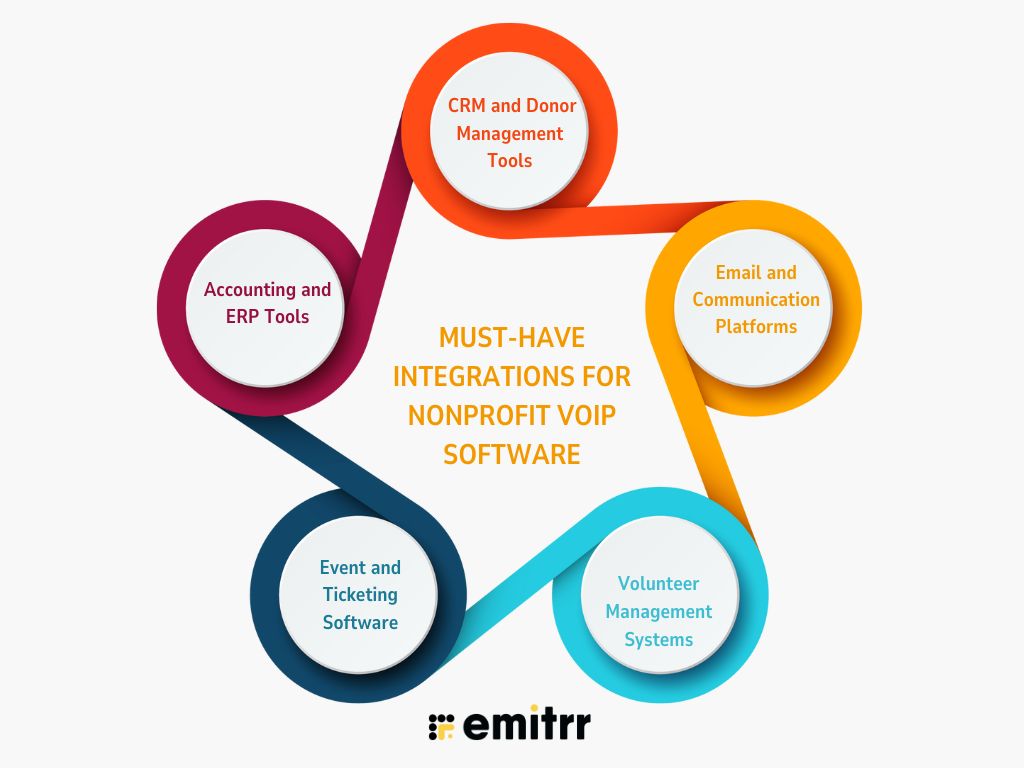
1. CRM and Donor Management Tools
For nonprofits, integrating your VoIP system with a CRM or donor management allows professionals to automatically log calls, track donor interactions, and keep their contact details in one place. It spells ease for nonprofits since they’re able to view the entire engagement cycle in a tap of a button. Tools like Salesforce and DonorPerfect can sync with the VoIP system, so that every call gets recorded and makes up a small part of an avalanche of data that helps streamline communication several notches above.
2. Email and Communication Platforms
VoIP software, when working in harmony with tools like Mailchimp, or even Gmail, makes follow-up as easy as ABC. After a call with a donor or a volunteer, you can automatically send a thank-you or a reminder about an upcoming event. Plus, if you’re knee-deep into a big, extensive email campaign, you can track who’s responding by phone, making it easier to see what’s working and what’s not. Integration with email or communication platforms plays a cardinal role in keeping your communication in a healthy, organized state.
3. Volunteer Management Systems
Managing volunteers over the phone gets way easier when your VoIP system talks to tools like VolunteerLocal or SignUpGenius. From volunteer recruitment to coordination, such integrations facilitate optimized workflows, reduce manual follow-ups, and ensure better volunteer engagement. This means no manual check-ins or frustrating spreadsheets culture. Just smoother, more streamlined management from top to bottom.
4. Event and Ticketing Software
If your nonprofits run events, integrating your VoIP system with platforms like Eventbrite and GiveSmart is a boss move. People can call in to register, ask questions, or even buy tickets, and all that information drips in and gets stored right into your event dashboard. The result? Better end-to-end organization and management of events. Such integrations go a long mile in saving time, reducing no-shows, and making tracking attendance a whole lot simpler.
5. Accounting and ERP Tools
When your VoIP system connects with accounting software like QuickBooks or Blackbaud, it helps keep your finances tight. Every donation that comes in over the phone gets logged straight into your books and aids in automated financial tracking, reporting, and planning. You always know where your moolah’s going or coming from. Audits become way less stressful. Clarity helps in better allocation of resources.
Top VoIP Provider for Nonprofits
The market is saturated with VoIP service providers, all promising the moon and the stars. However, our experts rolled up their sleeves, did the research, and gleaned real insights to create a listicle featuring the best VoIP providers right now. Here’s what we’ve discovered.
1. Emitrr

Emitrr is an AI-powered, user-friendly, all-in-one VoIP services provider that’s both powerful and easy to use. With its slew of features that guarantee crystal-clear calls, cost savings, and effortless set-up, it’s steadily climbing the charts of popularity and increasingly being adopted by nonprofits. It unifies voice, SMS, and web chat, making it an unmissable choice for nonprofits of all sizes.
Key Features
- Two-way voice and SMS with AI-powered automation
- Seamless integration with Salesforce, DonorPerfect, and HubSpot
- Automated call routing and voicemail-to-email
- Nonprofit-specific compliance tools (TCPA, GDPR)
- 24/7 support with dedicated account managers
- Mobile app for remote access
- Analytics for call performance and donor engagement
Pros & Cons
- Pros: Intuitive interface, nonprofit discounts, robust CRM integration, high uptime (99.99%).
- Cons: Limited international calling options, advanced analytics require higher tiers.
Pricing
- Basic: $15/user/month (up to 500 contacts)
- Growth: $25/user/month (up to 2,000 contacts)
- Premium: $45/user/month (up to 5,000 contacts)
- 20% nonprofit discount available.
User Reviews
“Emitrr has transformed our donor and volunteer outreach. Two-way SMS, Salesforce integration, and AI-powered call automation save us hours. The 24/7 support and nonprofit discount are major pluses. Only downside: limited international calling.”
“Easy setup and intuitive UI. CRM integration and voicemail-to-email are helpful. Analytics are solid, though advanced reports need a Premium upgrade. Great uptime and value with a nonprofit discount.”
2. RingFree
Second to Emitrr is RingFree, a cloud-based VoIP solution tailored for small to mid-sized businesses. It facilitates seamless communication operations for nonprofits by offering voice, video, and chat functionalities accessible via mobile and web apps. Ringfree emphasizes scalability, allowing easy addition or removal of extensions without fees.
Key Features
- Unlimited domestic calls and SMS
- Video conferencing and team messaging
- Integration with Salesforce, Microsoft 365, and Google Workspace
- AI-powered call transcription and analytics
- Custom call routing and IVR
- Mobile and desktop apps
- 99.99% uptime guarantee
Pros & Cons
- Pros: Extensive integrations, robust collaboration tools, reliable service.
- Cons: Higher starting costs, steep learning curve for non-tech users.
Pricing
- Core: $20/user/month
- Advanced: $30/user/month
- Premium: $40/user/month
- Nonprofit discounts available upon request.
User Reviews
“Unlimited calls/SMS, video conferencing, and AI transcriptions have improved outreach and internal comms. Works well with Microsoft 365. Initial learning curve, but solid once set up.”
“Scalable and call quality is great. Easy extension setup and IVR routing are helpful. Interface isn’t very intuitive and pricing is high. Best for orgs with tech support.”
3. Jitsi
Jitsi is an open-source platform offering secure video conferencing and VoIP services. It supports multiple protocols, including SIP and XMPP, and provides features like screen sharing, call encryption, and conference calls. Users can host meetings on their own servers or use the free hosted version at meet.jit.si.
Key Features
- Free voice and video calls
- Customizable via open-source code
- Mobile and browser-based access
- End-to-end encryption
- Basic call routing and conferencing
- No CRM integration out of the box
- Community-driven support
Pros & Cons
- Pros: Free, highly customizable, secure.
- Cons: Requires technical expertise, limited support, no native CRM integration.
Pricing
- Free (self-hosted)
- Hosted plans start at $10/month via third-party providers.
User Reviews
The best part is feeling secure because the titles of the rooms can be randomized words and it just feels like only people that need to be involved would ever think of. Sometimes you lose connection or cannot hear someone that needs to reload the browser.
4. Telzio
Telzio provides cloud-based business phone services with unlimited users and premium features included. Their platform supports web, mobile, and desk phone integrations, enabling users to manage calls from any device. Telzio emphasizes ease of setup with intuitive call flows and offers HIPAA-compliant services. They also provide dedicated account managers and robust customer support.
Key Features
- Unlimited domestic calls
- Mobile app and softphone support
- Call routing, IVR, and voicemail-to-email
- Integration with Google Workspace and Zapier
- 99.99% uptime
- Live chat and email support
- Customizable call flows
Pros & Cons
- Pros: Easy setup, budget-friendly, scalable.
- Cons: Limited CRM integrations, fewer advanced features.
Pricing
- Starter: $10/user/month
- Pro: $15/user/month
- Enterprise: Custom pricing
- 10% nonprofit discount.
User Reviews
“Reliable and free VoIP for internal use. No CRM features. Tech skills needed for custom setup.”
“Free and encrypted, but lacks integrations. Requires IT help. Best for internal use, not donor outreach.”
5. Votacall
Votacall delivers hosted VoIP solutions designed for businesses seeking reliable communication systems. Their services include features like voicemail-to-email, mobile integration, and call analytics. Votacall assigns project managers to ensure smooth implementation and offers 24/7 support.
Key Features
- Advanced call routing and analytics
- Integration with Salesforce and Microsoft Teams
- Mobile and desktop apps
- End-to-end encryption and HIPAA compliance
- 24/7 support with onboarding
- Omnichannel support (voice, SMS, chat)
- 99.999% uptime
Pros & Cons
- Pros: Top-tier security, comprehensive features, excellent support.
- Cons: Higher costs, overkill for small nonprofits.
Pricing
- Essential: $25/user/month
- Professional: $35/user/month
- Enterprise: Custom pricing
- Nonprofit discounts available.
User Reviews
“HIPAA-compliant with strong support and analytics. Great for large teams, though the cost is high.”
“Packed with features, but overkill for small teams. Excellent support, better suited for larger orgs.”
6. KrispCall

KrispCall is a cloud-based VoIP platform known for its simplicity and global reach. It’s especially useful for nonprofits with international communication needs, offering virtual numbers in over 100 countries. With powerful call management, unified inboxes, and real-time analytics, KrispCall stands out for remote and distributed nonprofit teams.
Key Features
- Unified callbox for calls, messages, and voicemail
- Virtual numbers in 100+ countries
- Call recording, forwarding, and IVR
- CRM integration with HubSpot, Pipedrive, and Zoho
- Mobile and web apps
- Multi-user management with role-based access
Pros & Cons
- Pros: Global reach, intuitive UI, affordable international calling.
- Cons: Limited advanced automation, basic reporting in lower tiers.
Pricing
- Starter: $15/user/month
- Essential: $30/user/month
- Enterprise: Custom pricing
User Reviews
“Virtual numbers and unified inbox are excellent for global reach. Interface is clean; reporting is basic at lower tiers.”
“Good international features and CRM support. Easy to manage, but limited automation without upgrades.”
7. Nextiva
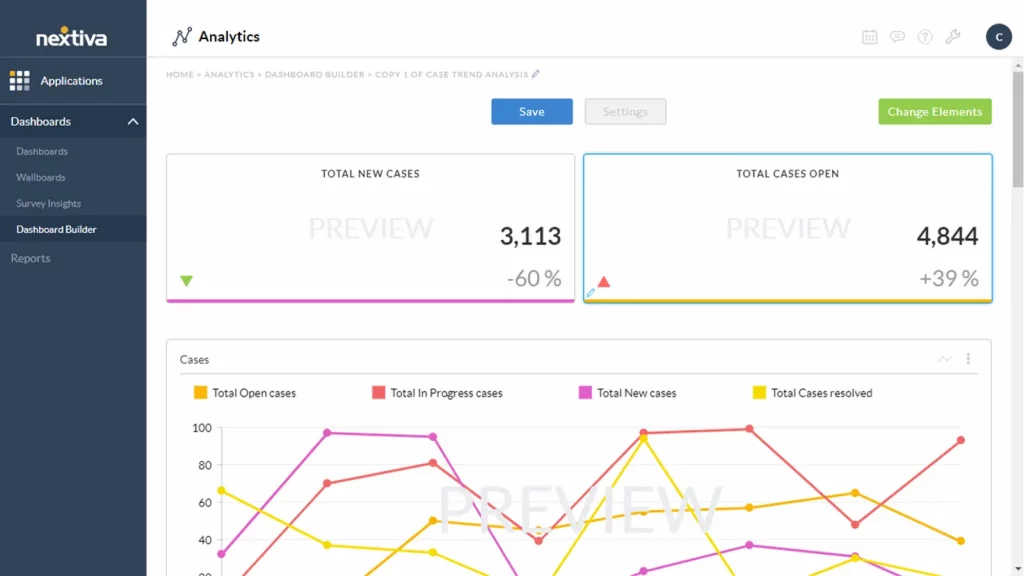
Nextiva is a comprehensive VoIP platform offering voice, video, messaging, and collaboration tools in one ecosystem. With a reputation for reliability and user-friendly interfaces, it’s a top choice for nonprofits looking to streamline operations without sacrificing quality.
Key Features
- Unlimited calling within the U.S. and Canada
- Auto-attendant, call recording, and voicemail-to-email
- Integration with CRM tools and productivity suites
- Team collaboration via chat and video
- Real-time analytics and call monitoring
- 24/7 customer support
Pros & Cons
- Pros: Easy setup, excellent uptime, robust features.
- Cons: Premium features can be expensive, limited free trial.
Pricing
- Essential: $23.95/user/month
- Professional: $27.95/user/month
- Enterprise: $37.95/user/month
User Reviews
“Combines calls, chat, and meetings. CRM integration and team tools work great. Reliable with nonprofit pricing.”
“Easy setup and solid support. Real-time analytics are helpful. Advanced features need higher-tier plans.”
8. 8×8

8×8 offers a powerful VoIP and unified communications platform suited for nonprofits needing scalability, security, and international reach. With advanced analytics, call recording, and AI-powered tools, 8×8 is trusted by many mission-driven organizations globally.
Key Features
- Unlimited calling to 40+ countries
- Integrated video conferencing and team chat
- Real-time call analytics and quality management
- Advanced call center capabilities
- Microsoft Teams and Salesforce integration
- End-to-end encryption
Pros & Cons
- Pros: Excellent global calling, strong integrations, secure.
- Cons: Complex plans, higher learning curve for small teams.
Pricing
- Express: $15/user/month
- X2: $24/user/month
- X4: $44/user/month
User Reviews
“Unlimited calling in 40+ countries. Seamless Teams integration. Some learning curve but worth it.”
“Feature-rich and secure. Setup is complex for small orgs. Great for teams with tech capacity.”
9. Vonage

Vonage Business Communications is a reliable VoIP platform that caters to nonprofits looking for flexibility and mobility. It includes voice, SMS, video, and integrations that help organizations stay connected across teams and donors.
Key Features
- Unlimited calling and SMS
- Call forwarding, voicemail, and virtual receptionist
- App integrations with Salesforce, Google Workspace, and Microsoft 365
- Desktop and mobile apps
- API access for custom solutions
- High reliability and scalability
Pros & Cons
- Pros: Versatile plans, API flexibility, solid call quality.
- Cons: Add-ons can raise costs, UI feels dated to some.
Pricing
- Mobile: $19.99/user/month
- Premium: $29.99/user/month
- Advanced: $39.99/user/month
User Reviews
“Mobile and desktop apps work great. Easy integration with Google and Salesforce. Reliable and tailored nonprofit pricing.”
“Strong calling and SMS features. Advanced tools cost extra. Good support; watch your budget.”
10. Aircall

Aircall is a cloud-based VoIP system built for teams, making it ideal for nonprofits that need collaboration and donor management features. With deep CRM integrations and real-time monitoring, it helps enhance donor engagement and streamline team communication.
Key Features
- Voice, SMS, and call commenting features
- Integration with Salesforce, HubSpot, and Intercom
- Real-time dashboard and analytics
- Custom call routing, IVR, and call tagging
- Desktop and mobile apps
- 99.99% uptime
Pros & Cons
- Pros: Rich integrations, user-friendly, fast setup.
- Cons: Pricier than alternatives, limited offline support.
Pricing
- Essentials: $30/user/month
- Professional: $50/user/month
- Custom: Tailored pricing
User Reviews
“Excellent Salesforce/HubSpot integration. Tags and comments improve teamwork. Clean interface and strong support.”
“Powerful tools and dashboards. Costs can add up for small teams. Best for larger or fast-growing orgs.”
Why is Emitrr the Best VoIP Provider for Nonprofits?
Emitrr sticks out as the ultimate VoIP solution for nonprofits, combining affordability, functionality, and nonprofit-specific features. Here’s why it’s your best choice.
1. Affordable and Accessible
Starting at $15 per user per month, with a special 20% discount for nonprofits, Emitrr will even fit into the tightest of budgets. From domestic calls to SMS and more, it does not impose hidden charges the way that many pricey providers like Votacall are apt to do for predictable costing. Free trials allow for no-risk entry, along with zero setup fees.
2. Comprehensive Communication Tools
Emitrr’s all-in-one platform includes voice, SMS, video, and web chat, streamlining donor and volunteer outreach. AI-powered features like automated call routing and voicemail transcription save time, while customizable templates maintain your nonprofit’s voice. No other provider matches this versatility at this price point.
3. Reliable Service with High Uptime
With a 99.99% uptime guarantee, Emitrr ensures your calls never drop even during peak campaigns. Nonprofits like environmental groups report 35% fewer missed connections compared to traditional systems, keeping your mission on track.
4. Seamless Integrations for Efficiency
Emitrr integrates effortlessly with CRMs like Salesforce and DonorPerfect, syncing call data for personalized outreach. Automated workflows reduce manual tasks, letting staff focus on impact. Unlike Jitsi, which lacks native integrations, Emitrr streamlines your tech stack.
5. Tailored for Nonprofit Needs
Emitrr’s nonprofit-specific features, like TCPA-compliant SMS and donor-focused analytics, address unique challenges. Its intuitive interface requires no IT expertise, and 24/7 support ensures small teams stay productive. No provider is more attuned to nonprofit realities.
Frequently Asked Questions
For small nonprofits, Emitrr is the standout choice, offering affordable plans starting at just $15 per user per month, with a 20% nonprofit discount. Its intuitive platform requires no technical expertise, making it perfect for lean teams. Features like automated call routing and seamless CRM integration with Salesforce and DonorPerfect streamline donor outreach and volunteer coordination.
The cloud-based setup ensures quick activation, and a 30-day free trial lets you test all tools risk-free. Emitrr’s focus on affordability and ease of use empowers small nonprofits to maximize impact without stretching budgets, making it the ideal VoIP solution.
It is true that VoIP cuts down telecom charges by up to 50% and releases funds for more mission-critical programs. Unlike the conventional way of telecoming, VoIP does away with expensive hardware and maintenance while charging low rates on a per-minute-call basis even for international calls. Emitrr offers plans starting at $15 per user per month for domestic calls, with nonprofit discounts to help save thousands annually.
Yes, VoIP is highly secure for nonprofits handling sensitive donor data. Providers like Emitrr and Votacall offer end-to-end encryption, multi-factor authentication, and compliance with GDPR, HIPAA, and TCPA regulations. Emitrr’s nonprofit-specific security tools simplify adherence to legal standards, reducing risks of data breaches. Regular software updates and fraud detection protect against threats, ensuring stakeholder trust.
The greatest-known nonprofits’ foremost CRM systems like Salesforce, DonorPerfect, and Hubspot are integrated with Emitrr for broader donor communication. Call data now syncs with donor profiles, allowing for specific campaigns such as personalized thank-you messages-and engagement rises by 20-40%. Automated workflows also relieve the staff from manual tasks of data entry to put greater focus on mission-driven tasks.
Nonprofits can launch with Emitrr in minutes, thanks to its cloud-based, hardware-free setup. No complex installations or IT expertise are needed. Simply sign up, configure your account, and start calling. The intuitive dashboard lets non-technical staff manage features like call routing and SMS campaigns effortlessly. A 30-day free trial allows you to test all tools, from CRM integrations to mobile apps, risk-free.
Emitrr leads with the best nonprofit discounts, offering a 20% reduction on all plans, starting at $15 per user per month. This makes it more budget-friendly than competitors, which offer limited or case-by-case discounts. Emitrr’s transparent pricing includes unlimited domestic calls and SMS, with no hidden fees, ensuring cost predictability. The 30-day free trial evokes no setup cost, reducing all financial barriers.
Conclusion
Choosing the right VoIP provider is a pivotal step for nonprofits aiming to enhance communication, cut costs, and amplify impact. Emitrr emerges as the clear leader, offering affordable plans, comprehensive tools, and nonprofit-tailored features like CRM integration and compliance support. Its intuitive platform, reliable uptime, and dedicated support empower organizations of all sizes to connect with donors, volunteers, and communities effortlessly.
Don’t settle for outdated phone systems that drain your budget. Embrace VoIP to transform how your nonprofit operates. Start with Emitrr’s 30-day free trial today and discover how it can power your mission with efficiency and heart. Your supporters are waiting—make every conversation count!