

Introduction
A speech therapy session produces more than a note. It produces a worksheet the caregiver needs at home, a video clip demonstrating a specific exercise, and a progress update a parent wants before the next session, none of which a plain clinical note captures well. An EMR for speech therapy has to move comfortably between clinical documentation and caregiver-facing material, and it has to do this without forcing a small practice or solo SLP into hospital-grade complexity they don’t need and can’t afford.
Unlike surgical or procedure-heavy specialties, speech therapy’s core operational challenge isn’t scheduling complexity or authorization tracking; it’s secure, lightweight communication with parents and caregivers who are managing a child’s or adult client’s progress between sessions, often over telepractice, and often on a tight practice budget. Choosing the wrong system means either overpaying for features built for a hospital rehab department or underpaying for something that cannot securely share a video with a parent. This guide covers the challenges that are specific to speech therapy practices, the features that actually matter, how leading systems compare, and how to evaluate vendors before signing.

AI Summary
- The defining speech therapy EMR requirement is secure, easy caregiver communication, sharing worksheets, videos, and progress updates with parents without pushing them into insecure personal messaging apps.
- The most significant blocker is a mismatch between platform complexity and small-practice economics: many SLPs run solo or small practices where a hospital-grade system’s cost and complexity outweigh its benefit.
- Media and file sharing (secure video, worksheets, progress materials) is the single most important feature category, distinct from most other specialties’ documentation-first priorities.
- Integration diligence should focus on telepractice reliability and whether secure authentication for caregivers is frictionless enough that non-technical parents will actually use it.
- Practices should prioritize platforms genuinely built for therapy caseloads (SLP, OT, PT, or mental health) over general medical EHRs, since general systems rarely handle caregiver-facing media sharing well.
Which EMR for Speech Therapy Is Right for You? TL;DR
| EMR | Best Suited For | Key Strengths | Potential Consideration |
| TheraPlatform | Speech therapy and multidisciplinary therapy practices | Therapy documentation, telehealth, scheduling, billing, and patient management | Practices should evaluate whether its workflow depth matches their specialty needs |
| Spry PT | Rehabilitation and therapy practices | Clinical documentation, scheduling, and therapy practice management | Primarily positioned around PT, so SLP-specific workflows should be assessed |
| WebPT | Growing rehabilitation and speech therapy practices | Documentation, scheduling, billing, and practice management | Its broader rehabilitation focus may require evaluating speech-specific customization |
| Clinic Note | Independent therapy practices | Therapy documentation, scheduling, and administrative workflows | Practices should assess its integration and automation capabilities |
| ClinicSource | Multidisciplinary rehabilitation practices | Documentation, scheduling, billing, and reporting | May offer broader rehabilitation functionality than speech-specific features |
| Ambiki | Speech-language and pediatric therapy practices | SLP-focused workflows, documentation, scheduling, billing, and collaboration | Particularly suited to therapy practices with pediatric or multidisciplinary workflows |
| HelloNote | Therapy practices seeking integrated practice management | Scheduling, documentation, billing, patient management, and telehealth | Practices should compare specialty workflow depth and scalability |
What Makes an EMR Right for Speech Therapy?
Speech therapy practices, especially pediatric ones, operate with a caregiver as an active participant in care rather than a peripheral contact. A parent needs to receive the home exercise worksheet, watch a demonstration video of a specific articulation drill, and report back on progress between sessions, all of which involves exchanging files and messages that a standard appointment reminder system was never built to handle. The right EMR treats this caregiver relationship as central: secure messaging and media sharing need to be as easy to use as a text message, without exposing protected health information over an insecure channel. Because many SLP practices are solo or small, cost sensitivity matters more here than in higher-revenue procedural specialties, so the right platform balances real caregiver-communication capability against a price point that makes sense for a small caseload.
Key Barriers in Speech Therapy Practices
Secure sharing of videos, worksheets, and progress materials without a proper channel
Speech therapists routinely want to share a demonstration video, a printable worksheet, or a written progress update with a caregiver between sessions. If the practice’s only options are an insecure personal messaging app or email, this creates a real privacy risk with protected health information, and if the EMR’s own media-sharing tools are clunky or absent, therapists end up working around the system rather than through it. Practices should verify how the EMR handles secure file and media exchange specifically, not just whether a generic attachment feature exists.
Parent/caregiver communication treated as an afterthought rather than a core workflow
Many general therapy EHRs are built primarily around the clinician-to-client relationship and treat caregiver communication as a secondary feature. For a pediatric-heavy SLP practice, this is backwards: the caregiver is often the one managing scheduling, completing patient intake forms, and reinforcing home practice. Practices should verify whether the EMR’s messaging and portal tools are actually designed for caregiver use, with appropriately simple authentication and clear communication about who is receiving what.
Telepractice workflows that are bolted on rather than integrated
Some platforms offer teletherapy as an add-on video tool loosely connected to documentation, rather than a fully integrated experience where the session, the note, and any shared materials live in one place. This creates friction: therapists switch between systems mid-session, or documentation happens separately from the actual telepractice visit. Practices delivering a meaningful share of care via telepractice should verify how tightly video, documentation, and material sharing are actually connected.
File and media management that does not scale with caseload
A therapist working with a full pediatric caseload accumulates a real volume of worksheets, videos, and progress materials across many clients. If the EMR’s file management is disorganized or storage-limited, finding the right material for the right client becomes its own administrative burden. Practices should verify storage limits and how easily materials can be organized and reused across a caseload.
Small-practice cost sensitivity against feature-heavy platforms
Many speech therapy practices are solo or very small, and per-provider pricing that makes sense for a busy multi-provider clinic can be disproportionately expensive for a one- or two-person practice. Practices should model actual per-provider cost against their real caseload size rather than assuming a feature-rich platform is worth the premium regardless of scale.
Must-Have EMR Features for Speech Therapy
- Speech therapy-specific documentation templates: Makes it easier to document evaluations, treatment sessions, goals, interventions, and progress using workflows designed for speech-language therapy.
- Secure caregiver messaging: Enables therapists and staff to communicate securely with parents and caregivers about appointments, treatment updates, and follow-up needs.
- Secure media and file sharing: Allows practices to securely share relevant therapy materials, documents, and other files with patients or caregivers.
- Integrated telepractice: Supports virtual speech therapy sessions within the same workflow, reducing the need to manage separate platforms for remote care.
- Progress tracking and reporting: Helps therapists monitor goals, treatment outcomes, session progress, and changes over time while creating reports for caregivers or other providers.
- Digital intake forms: Simplifies patient onboarding by allowing families to complete demographic, clinical, consent, and other intake information electronically.
- Patient and caregiver portal: Gives patients and caregivers convenient access to appointments, communications, documents, and other relevant information.
- Straightforward scheduling with reminders: Makes it easier to manage recurring therapy appointments and automatically remind patients or caregivers about upcoming sessions.
- Billing support appropriate to practice size: Provides billing and claims tools that can support independent therapists as well as larger speech therapy practices.
- Mobile access for therapists: Supports documentation and material sharing during or immediately after sessions, including home, school, or community-based visits.
Best EMRs for Speech Therapy: Detailed Analysis
- TheraPlatform
- Spry PT
- WebPT
- Clinic Note
- Clinic Source
- Ambiki
- HelloNote
| EMR | Primary Specialty Orientation | Practice Type | Documentation Approach | Care Delivery Support |
| TheraPlatform | Multidisciplinary therapy | Individual and group practices | Therapy-focused | In-person and telehealth |
| Spry PT | Rehabilitation and physical therapy | Therapy practices | Structured clinical documentation | Primarily in-person care |
| WebPT | Rehabilitation therapy | Small to large therapy organizations | Rehabilitation-focused | In-person and digital workflows |
| Clinic Note | Therapy | Independent and small practices | Therapy-specific notes | Clinic-based and remote workflows |
| ClinicSource | Multidisciplinary rehabilitation | Therapy organizations | Structured therapy documentation | Primarily clinic-based |
| Ambiki | Speech-language and pediatric therapy | SLP and multidisciplinary pediatric practices | Specialty-oriented therapy documentation | In-person and collaborative care |
| HelloNote | Therapy | Individual and group practices | Therapy-focused documentation | In-person and telehealth |
1. TheraPlatform
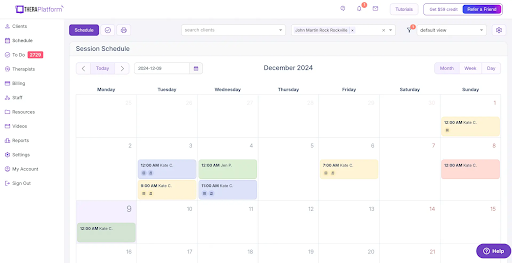
TheraPlatform is a therapy-focused EMR and practice management software designed to support speech therapists and other therapy providers. It combines clinical documentation, scheduling, telehealth, billing, and patient management tools, making it a practical option for practices evaluating an EMR for speech therapy.
With TheraPlatform, practices can use Emitrr to automate appointment reminders, confirmations, follow-ups, and patient outreach. This can help speech therapy teams reduce repetitive communication while keeping patients engaged throughout their care journey.
2. Spry PT
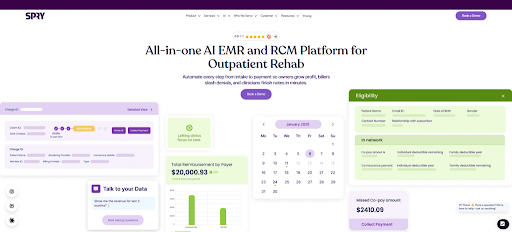
Spry PT is a therapy-focused EMR designed to support rehabilitation practices with clinical documentation, scheduling, patient management, and practice workflows. Its broader therapy capabilities can make it worth considering for practices comparing an EMR for speech therapy.
Practices using Spry PT can use Emitrr to streamline appointment reminders, cancellations, follow-ups, and other patient communication. Automated outreach can help therapy teams reduce manual calls and keep patients informed between visits.
3. WebPT
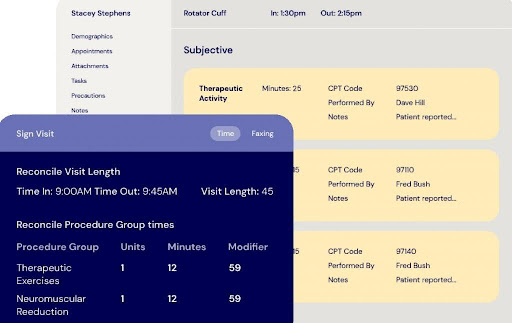
WebPT is a rehabilitation-focused EMR and practice management platform built primarily for physical, occupational, and speech therapy practices. It supports documentation, scheduling, billing, patient engagement, and other operational workflows, making it a well-known option for practices researching speech therapy EMR software.
WebPT users can work with Emitrr to automate patient communication around appointments, reminders, follow-ups, and reactivation campaigns. This allows staff to maintain consistent outreach while spending less time on repetitive communication tasks.
4. Clinic Note
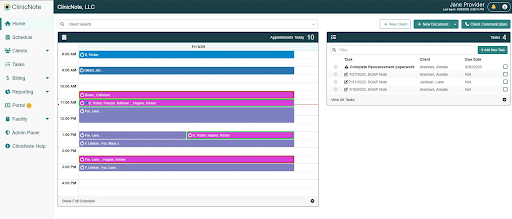
Clinic Note is a therapy-focused documentation and practice management platform designed to help providers manage clinical notes, scheduling, patient records, and administrative workflows. Its focus on therapy documentation makes it a relevant option for practices looking for speech therapy EHR capabilities.
With Clinic Note, Emitrr can support communication workflows such as appointment reminders, confirmations, follow-ups, and patient engagement. These automations can help speech therapy practices maintain patient communication without adding to staff workload.
5. ClinicSource
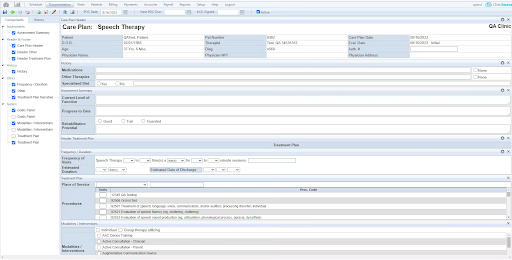
ClinicSource is a therapy practice management and EMR platform designed for rehabilitation providers, including speech-language pathologists. It combines documentation, scheduling, billing, reporting, and other practice management functions, making it an option for organizations comparing an EMR for speech therapy.
Practices using ClinicSource can pair it with Emitrr to automate routine patient outreach, including appointment reminders, follow-up messages, and notifications. This can help teams improve communication while keeping administrative workflows more manageable.
6. Ambiki
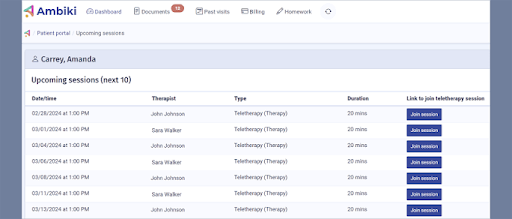
Ambiki is a therapy-focused practice management and EMR platform designed for speech-language pathologists, occupational therapists, and other pediatric therapy professionals. It provides tools for documentation, scheduling, billing, collaboration, and practice management, making it a strong option for practices evaluating the best EMR for speech therapists.
Ambiki can be complemented by Emitrr for automated appointment reminders, patient follow-ups, missed-appointment outreach, and other communication workflows. This helps therapy teams stay connected with families while reducing the amount of manual outreach required from staff.
7. HelloNote
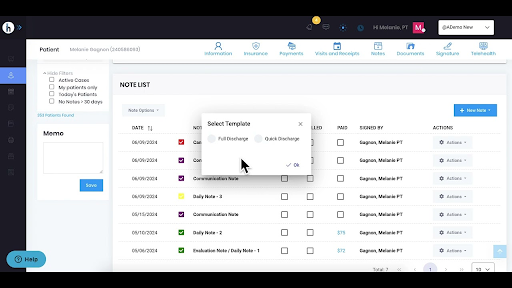
HelloNote is a therapy practice management and EMR platform designed to support therapists with scheduling, documentation, billing, patient management, and telehealth workflows. Its focus on therapy practices makes it relevant for providers looking for speech therapy EMR software that can support both clinical and administrative needs.
Practices using HelloNote can use Emitrr to automate appointment confirmations, reminders, follow-ups, and patient communication. This can help speech therapists maintain consistent engagement with patients and caregivers while reducing repetitive administrative tasks.
How Emitrr Works Alongside Your Speech Therapy EMR
Emitrr is not an EMR and does not replace clinical documentation, telepractice, billing, or treatment records within your speech therapy EHR. Instead, it works as a communication and workflow layer that helps speech therapy practices simplify caregiver outreach, appointment communication, and secure information sharing.
- Secure media sharing with caregivers: Therapists can use secure, OTP-protected links to share worksheets, videos, session materials, and progress information with parents or caregivers. Attachments can remain organized within conversation threads, giving families easier access without requiring a separate app.
- Remote-first communication: HIPAA-compliant two-way texting and mobile access allow therapists to communicate with families from a business number, which can be especially useful for remote or hybrid speech therapy practices.
- Digital forms and intake: Digital forms can collect caregiver-provided intake information before an evaluation or first session. Where the EHR supports structured field mapping, information can be routed into the appropriate workflow; otherwise, staff can review and enter the information manually.
- Appointment reminders and check-ins: Automated text messages can remind families about upcoming sessions, confirmations, cancellations, and simple post-session check-ins. This can help reduce missed appointments without adding more manual work for therapists.
- Reusable communication templates: Practices can create templates for session summaries, home-practice instructions, reminders, and common caregiver messages. This reduces repetitive typing while keeping communication consistent across therapists.
- Simple caregiver authentication: Secure links and OTP-based access can make it easier for parents to access sensitive materials without requiring another application or a complicated portal login for every interaction.
- Small-practice flexibility: For practices evaluating speech therapy EMR software, Emitrr’s smaller VoIP options and SMS credit bundles can provide a more usage-based communication model that may fit solo therapists and small practices.
- EMR integration: When an EMR for speech therapy supports the necessary API capabilities, communication or form activity can be connected to the appropriate patient workflow. If the EHR has limited or read-only integration, staff may need to manually transfer information rather than assuming it will automatically populate the clinical record.
For practices comparing the best EMR for speech therapists, Emitrr can complement the clinical system by handling the communication layer around it. Book a demo to see how Emitrr can work alongside your speech therapy EHR and simplify caregiver communication.
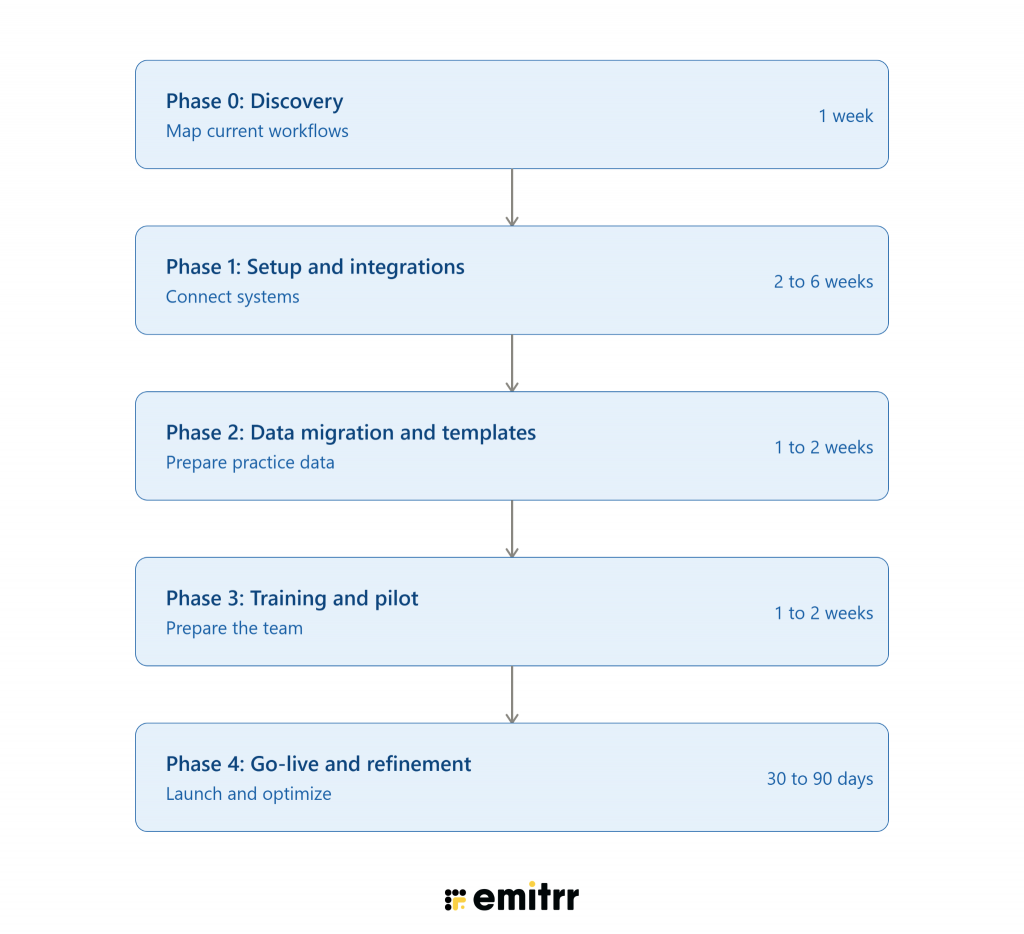
EMR Implementation Roadmap
Key Takeaways
- Speech therapy EMR selection should prioritize secure caregiver communication and media sharing over procedural or scheduling complexity that this specialty typically does not need.
- Telepractice integration depth matters significantly for practices delivering virtual care, and should be evaluated for how tightly video, documentation, and materials connect.
- Small-practice cost sensitivity is a real evaluation factor; per-provider pricing built for larger clinics can be disproportionately expensive for a solo SLP.
- Caregiver portal usability, not just the presence of a portal, determines whether families actually engage with shared materials and communication.
- General medical EHRs rarely handle caregiver-facing media sharing well, and practices should prioritize platforms built specifically for therapy caseloads.
FAQs
The best EMR for speech therapists should support speech-specific documentation, goal and progress tracking, scheduling, teletherapy, caregiver communication, digital forms, billing, and secure file sharing. The right choice depends on practice size, patient population, and workflow needs.
Speech therapy EMR software should include customizable therapy templates, treatment and goal tracking, digital intake forms, scheduling and reminders, telepractice, secure messaging, caregiver portals, billing, and mobile access.
Pricing varies based on the number of therapists, patients, locations, features, billing capabilities, telehealth requirements, and integrations. Many cloud-based platforms offer subscription pricing that can be more practical for smaller practices.
Yes. Many therapy-focused EMRs include integrated telehealth or telepractice capabilities, allowing speech therapists to conduct remote sessions while managing documentation and scheduling within the same platform.
Yes. Therapy-focused systems can help therapists track treatment goals, session notes, outcomes, and progress over time. This makes it easier to monitor whether patients are meeting their individualized therapy goals.
It is not legally required in every situation, but an EMR can significantly simplify documentation, scheduling, billing, patient management, and recordkeeping. A speech therapy-specific platform can also better accommodate therapy goals and recurring treatment workflows.
Yes. Emitrr can work alongside a speech therapy EMR as a communication and automation layer for appointment reminders, caregiver messaging, digital forms, follow-ups, and secure information sharing. Integration capabilities depend on the specific EHR and its available APIs.
Conclusion
An EMR for speech therapy needs to succeed at a different job than most specialty EHRs: making secure caregiver communication and media sharing as simple as the personal messaging tools families already use, without exposing protected health information along the way. The blockers that matter most in this specialty center on caregiver communication treated as an afterthought, telepractice bolted on rather than integrated, and pricing that does not fit the small-practice economics common in speech therapy. Evaluate vendors on caregiver portal usability and secure media sharing specifically, and confirm pricing scales sensibly for your practice size.
Emitrr can complement this environment by giving therapists a simple, secure channel for day-to-day caregiver communication that sits between sessions; book a demo now to see how it fits alongside your EMR.

 4.9 (400+
reviews)
4.9 (400+
reviews)