
Introduction
Healthcare professionals spend a significant portion of their time documenting patient interactions, clinical findings, treatment plans, and follow-up instructions. Medical transcription plays a critical role in transforming spoken clinical information into structured medical documentation that can be stored, shared, and used for ongoing patient care.
However, because these recordings and transcripts often contain Protected Health Information (PHI), healthcare providers must ensure that their transcription tools comply with the Health Insurance Portability and Accountability Act (HIPAA). Using non-compliant speech-to-text tools can expose patient data to serious security risks and legal penalties.
This is where HIPAA-compliant transcription software becomes essential. These platforms combine secure speech-to-text technology, strong encryption, compliance safeguards, and healthcare-specific workflows to ensure that patient information remains protected.
In this comprehensive guide, we’ll explore everything you need to know about HIPAA-compliant transcription software, including its features, benefits, requirements, and how healthcare organizations can choose the best secure transcription solution for their needs.
AI Summary
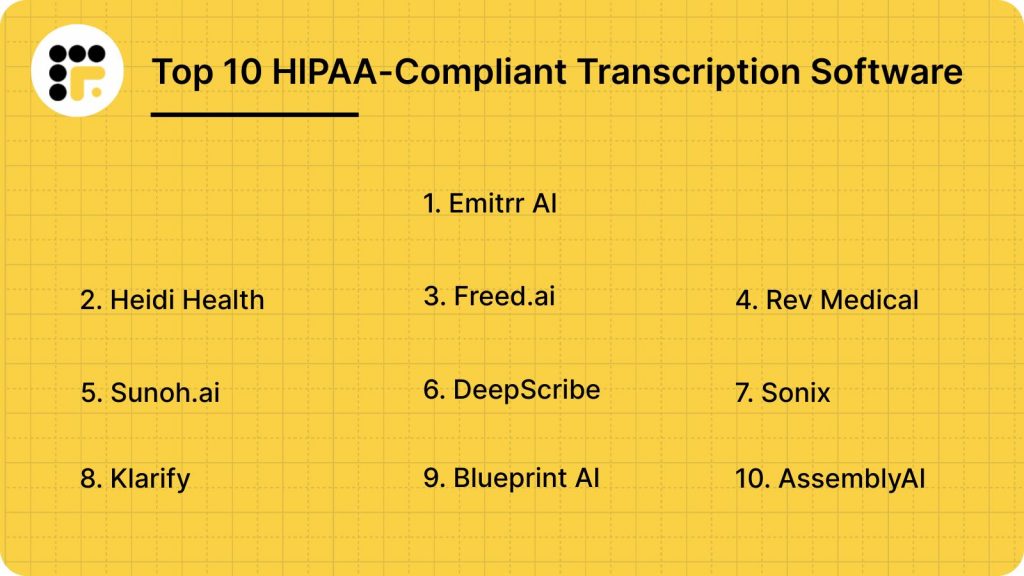
HIPAA-compliant transcription software is becoming an essential tool for modern healthcare organizations. By converting clinical conversations into structured documentation securely, these solutions help providers reduce manual charting, protect patient data, and improve operational efficiency. However, not all transcription tools are built with healthcare workflows in mind. Some focus only on speech-to-text conversion, while others provide deeper capabilities such as structured note generation, EHR integrations, and workflow automation.
Platforms like Freed.ai, DeepScribe, and Heidi Health primarily focus on clinical documentation and AI-generated notes. Meanwhile, developer-focused solutions like AssemblyAI provide transcription APIs for building custom healthcare tools. General transcription platforms such as Sonix may support transcription needs but often lack healthcare-specific automation and integrations.
If your goal is not just transcription but complete practice communication and workflow automation, Emitrr stands out as a powerful solution. It combines HIPAA-compliant AI transcription, two-way patient texting, VoIP automation, appointment scheduling, reminders, and integrations with 500+ tools into a single platform. This unified approach helps healthcare providers streamline both documentation and patient communication while maintaining strict HIPAA compliance.
What Is HIPAA-Compliant Transcription Software?
HIPAA-compliant transcription software is a specialized medical transcription solution designed to convert audio recordings into written text while meeting strict HIPAA security and privacy standards.
Unlike standard speech-to-text tools, HIPAA-compliant medical transcription software ensures that sensitive patient data is handled securely throughout the entire transcription workflow, from recording and processing to storage and sharing.
These tools are commonly used by:
- Hospitals
- Private medical practices
- Mental health providers
- Telehealth platforms
- Clinics and outpatient centers
- Healthcare call centers
- Medical billing teams
They help clinicians document patient visits, telehealth consultations, therapy sessions, and dictations efficiently while maintaining HIPAA compliance and PHI protection.
Understanding Protected Health Information (PHI)
Before diving deeper into transcription software, it’s important to understand Protected Health Information (PHI). PHI includes any data that can identify a patient and is related to their health condition, treatment, or payment for healthcare services.
Common examples of PHI include:
- Patient names
- Addresses
- Phone numbers
- Dates of birth
- Medical record numbers
- Diagnosis details
- Treatment plans
- Prescription information
- Lab results
- Insurance information
When clinicians dictate patient notes or record consultations, this information is often captured in the audio files. Therefore, transcription tools must protect PHI at every stage of processing.
Using a regular transcription app or an AI transcription tool that does not offer HIPAA safeguards can expose sensitive patient data and violate compliance requirements.
Why HIPAA Compliance Matters in Transcription
Healthcare organizations handle extremely sensitive data daily. If transcription software is not HIPAA compliant, it can expose patient information to cyber threats, data breaches, or unauthorized access.
Risk of PHI Exposure and Data Breaches
Non-compliant transcription tools often lack essential safeguards such as end-to-end encryption, secure user authentication, HIPAA audit trails, and strict access controls. Without these protections, audio files and transcripts may be intercepted, improperly stored, or accessed by unauthorized individuals. Even a single breach can expose thousands of patient records, resulting in long-term damage.
Legal and Financial Consequences
Violating the Health Insurance Portability and Accountability Act (HIPAA) can trigger severe penalties enforced by the U.S. Department of Health and Human Services (HHS). Fines can range from thousands to millions of dollars, depending on the severity and level of negligence involved. In addition to regulatory penalties, healthcare organizations may face civil lawsuits, class action claims, and costly settlements.
Reputational Damage and Loss of Patient Trust
Trust is foundational in healthcare. Patients disclose deeply personal information with the expectation that it will remain confidential. If transcription records are exposed due to non-compliant software, patients may lose confidence in the organization’s ability to safeguard their data. Rebuilding credibility after a data breach can take years and may result in lost patients, negative reviews, and long-term brand damage.
Increased Security Risks with Consumer Tools
Many free or general-purpose speech-to-text platforms are not designed for healthcare environments. Some store recordings on unsecured servers, lack Business Associate Agreements (BAAs), or reserve the right to use audio data for AI training. Using such tools for clinical documentation can unintentionally expose PHI and create compliance gaps.
Operational and Compliance Gaps
Beyond immediate security risks, non-compliant transcription solutions often lack proper documentation, audit logging, and role-based permissions. This makes it difficult to demonstrate compliance during audits or regulatory reviews. Healthcare organizations must be able to prove that PHI access is controlled, monitored, and traceable.
Key Requirements of HIPAA-Compliant Transcription Software
Not all transcription tools are designed for healthcare environments. A HIPAA-compliant speech-to-text platform must include specific safeguards to ensure patient data protection.
Strong Encryption and Data Security
One of the most important features of secure transcription software is end-to-end encryption. HIPAA-compliant platforms typically include encryption for stored data for data transmission, secure cloud infrastructure, and protected servers and storage systems. These safeguards ensure that patient recordings and transcripts cannot be accessed by unauthorized parties.
Business Associate Agreement (BAA)
A Business Associate Agreement (BAA) is mandatory when a third-party vendor handles PHI on behalf of a healthcare organization. A HIPAA-compliant transcription vendor must sign a BAA that outlines responsibilities for protecting PHI, data security measures, breach notification requirements, and compliance obligations. Without a BAA, using a transcription service for healthcare documentation may violate HIPAA regulations.
Access Controls and Authentication
HIPAA requires strict access controls to ensure that only authorized users can view patient information. Compliant transcription platforms typically include role-based access permissions, multi-factor authentication (MFA), secure user authentication, activity monitoring, and audit logs. These features help healthcare organizations maintain full control over who can access transcripts and recordings.
Medical Terminology and Clinical Accuracy
Generic transcription software often struggles with complex medical terminology, clinical abbreviations, and healthcare workflows. HIPAA-compliant transcription software is typically optimized for medical vocabulary and clinical documentation, ensuring higher accuracy in transcripts.
Workflow Integration
Modern healthcare environments rely heavily on integrated systems. The best HIPAA-compliant medical transcription tools offer seamless integration with EHR, PMS, telehealth platforms, patient communication systems, and more. This integration allows clinicians to automatically upload transcripts into patient records, improving workflow efficiency.
Device Compatibility and Accessibility
Healthcare providers often document patient encounters in various environments such as clinics, hospitals, or remote telehealth sessions. HIPAA-compliant transcription platforms typically support:
- Web applications
- Mobile devices
- Tablets
- Desktop systems
This flexibility allows providers to dictate notes anytime while maintaining compliance.

Core Features to Evaluate Before Choosing Software
Use this checklist when comparing tools:
- End-to-End Encryption: Ensures that audio files and transcripts are encrypted during transmission and storage so unauthorized parties cannot access them. This protects PHI from interception, hacking, or data leaks.
- BAA Availability: A Business Associate Agreement (BAA) legally binds the vendor to comply with HIPAA regulations. Without a signed BAA, using the service for PHI can put your organization at compliance risk.
- Role-Based Access Controls: Limits access to transcripts based on user roles within your organization. This ensures only authorized staff can view, edit, or download sensitive patient information.
- Medical Terminology Support: The software should accurately recognize clinical terms, drug names, and specialty-specific vocabulary. This reduces documentation errors and improves overall clinical accuracy.
- Turnaround Time: Refers to how quickly audio files are converted into completed transcripts. Faster turnaround supports timely documentation, billing, and patient follow-ups.
- Integration with Telehealth and EHR Systems: Seamless integration allows transcripts to automatically sync with HIPAA-compliant telehealth platforms and EHR systems. This reduces manual work and ensures complete, centralized patient records.
- Audit Logs and Compliance Reporting: Tracks who accessed, edited, or exported transcripts and when. These logs help demonstrate compliance during audits and investigations.
- Export and Formatting Options: Provides flexibility to download transcripts in multiple formats compatible with different systems. Proper formatting ensures documentation meets clinical and administrative standards.
- Scalability for Your Practice Size: The solution should handle growing transcription volume as your practice expands.
Top HIPAA-Compliant Transcription Software Solutions
| Software | Primary Focus | HIPAA Compliant | Real-Time Transcription | Structured Clinical Notes | EHR Integration | Workflow Automation | Best For |
| Emitrr | AI transcription + patient communication + automation | Yes | Yes (Live + Missed Call) | Yes | 500+ integrations | Advanced triggers & automation | Clinics wanting documentation + full practice automation |
| Heidi Health | AI medical scribe | Yes | Yes | Yes | Standard integrations | Basic automation | Providers focused on documentation only |
| Freed.ai | AI medical scribe | Yes | Yes | Yes (SOAP) | Limited | No workflow automation | Solo clinicians wanting simple AI scribe |
| Rev Medical | AI + human transcription | By request | No | Raw transcripts only | Manual entry | No | Providers needing transcript files |
| Sunoh.ai | Ambient AI scribe | Yes | Yes | Yes | Native to eClinicalWorks | No | eClinicalWorks users |
| DeepScribe | Ambient AI medical scribe | Yes | Near real-time | Yes | Major EHRs | No | Multi-specialty clinics |
| Sonix | General transcription | Not by default | No | No | No | No | General-purpose transcription |
| Klarify | Clinical documentation | Yes | Session-based | Yes | Export-based | No | Providers needing structured notes |
| Blueprint AI | Behavioral health documentation | Yes | Session-based | Yes (SOAP/DAP/BIRP) | Manual export | No | Therapy & behavioral health |
| AssemblyAI | Developer transcription API | HIPAA-eligible | Yes | Via API models | API-based | Custom build | Health tech companies |
Key Differences at a Glance
Full Practice Automation
Only Emitrr combines:
- AI medical transcription
- 2-way patient texting
- VoIP automation
- Appointment scheduling
- Workflow triggers
- CRM/EHR integrations
Most others focus purely on documentation.
Best for Behavioral Health
- Blueprint AI (therapy-focused templates)
- Freed.ai (simple SOAP generation)
- DeepScribe (multi-specialty ambient scribe)
Best for Enterprise / Developers
- AssemblyAI (API-based custom builds)
Best for eClinicalWorks Users
- Sunoh.ai (native integration)
Best for Basic Transcription Only
- Sonix
- Rev Medical
Best HIPAA-Compliant Transcription Software
1. Emitrr
Emitrr Overview
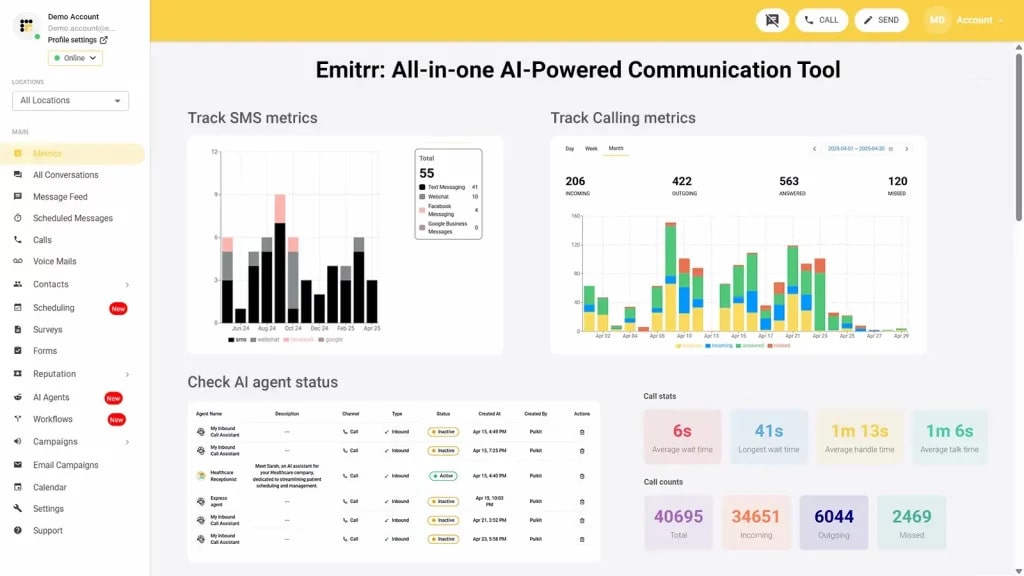
Emitrr is a comprehensive HIPAA-compliant communication, transcription, and practice automation platform that unifies AI transcription, voice/SMS communication, scheduling, reminders, and workflow automation for healthcare and service businesses. Unlike standalone medical scribes, Emitrr combines clinical note capture with patient communications and operational efficiency.
Key Features
- HIPAA-Compliant AI Medical Transcription: Automatically converts clinical conversations into accurate medical notes while adhering to strict HIPAA privacy standards. This ensures protected health information (PHI) is handled securely throughout the transcription process.
- End-to-End Audio + Text Encryption: Encrypts recordings and transcripts both during transmission and while stored in the system. This pRev Medicalents unauthorized access and protects sensitive patient data from cyber threats.
- Two-Way Secure SMS & VoIP Voice Call Automation: Enables encrypted messaging and voice communication between providers and patients through a secure platform. Automated responses and routing improve communication efficiency without compromising compliance.
- Real-Time and Missed-Call Transcription: Transcribes live conversations instantly and converts missed calls into readable summaries. This ensures no critical patient communication is lost or overlooked.
- Call Summaries and Role-Based Access: Generates concise summaries of calls for quick review and documentation. Access to these records is restricted based on user roles to maintain data security and accountability.
- EHR & CRM Integrations (500+ Tools): Seamlessly connects with electronic health record and customer management systems to sync data automatically. This reduces manual entry and keeps patient information centralized and up to date.
- Appointment Scheduling + Auto Reminders: Automates booking, confirmations, and reminder notifications to reduce no-shows. Patients can schedule conveniently while providers maintain organized calendars.
- Workflow Automation (Triggers & Actions): Uses rule-based triggers to automate follow-ups, notifications, and task assignments. This streamlines administrative processes and improves overall operational efficiency.
Emitrr Pros
- Reduces staff workload significantly – By automating repetitive tasks like answering FAQs and managing appointments, staff can focus on higher-priority patient/customer interactions.
- Prevent double bookings and manual errors – Real-time slot adjustments based on provider availability and buffer rules eliminate scheduling conflicts.
- Improves booking experience for customers – Instant, no-login booking links allow users to book without waiting on hold or calling the front desk.
- Ensures after-hours coverage without extra staffing – The AI agent works 24/7, handling inquiries and bookings even outside business hours, ensuring no lead is missed.
- Reduces call abandonment during peak hours – By communicating wait times and offering SMS as an option, callers are less likely to hang up.
- Delivers a personalized experience for every caller – New callers are guided to provide the necessary info, while returning ones are routed intelligently.
- Respond better with self-evolving AI: Emitrr’s SMS AI agent self-evolves with every conversation it has. Over time, your AI will start drafting better, contextually aware responses.
Emitrr Pricing
Emitrr’s AI pricing starts at $99 a month. You can get in touch with Emitrr’s team to get a custom quote and to pay for only the features you require.
Emitrr Integration
The best appointment scheduling software with AI receptionist offers seamless integration with 500+ tools, including:
- Healthcare tools (Athenahealth, Dentrix, Eaglesoft, and more)
- CRM tools (Hubspot, Mailchimp, Salesforce, Zapier, and more)
- Calendar tools (Google Calendar, Microsoft Calendar, and more)
Emitrr Rev Medicaliews & Ratings
Emitrr has a rating of 4.8/5 on Capterra, and here’s what users are saying about it:
“I LOVE Emitrr. The support you get is wonderful, the app is easy to use and they have been incredibly responsive. As a small business, we needed a messaging platform that wouldn’t break the bank and this meets all our needs (and then some) without making us feel overwhelmed. We came from Podium (had a terrible experience with them) and feel so valued at Emitrr!”
Source: Capterra
Emitrr Support Channels
- Email: support@emitrr.com
- Live chat: Chat with a representative
- Phone: +1 (210) 941-4696
- FAQs/forum: Browse FAQs or forum
- SMS: Text for help
- Knowledge base: Access helpful guides
2. Heidi Health
Heidi Health Overview
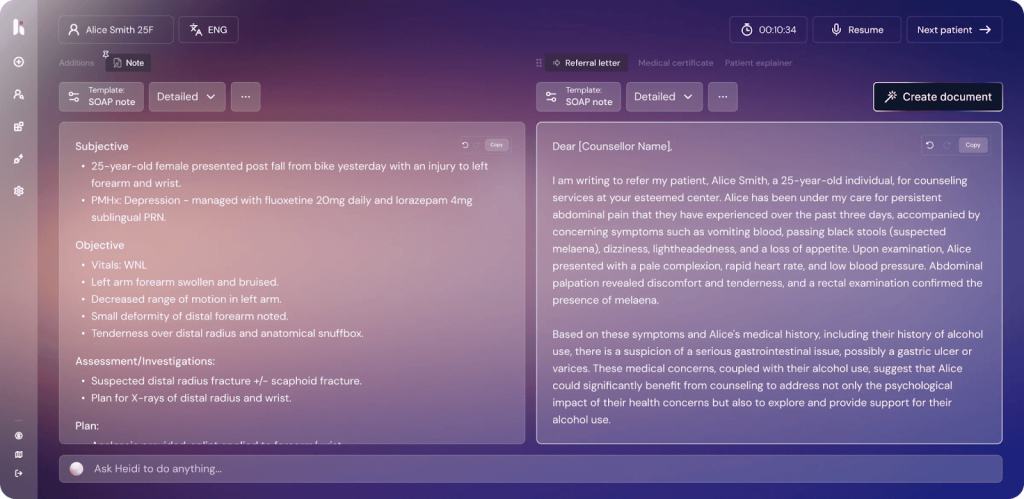
Heidi Health is an AI-powered medical scribe that captures clinician-patient interactions and converts them into structured clinical notes. It focuses on documentation automation, reducing charting time for clinicians.
Heidi Health Key Features
- Automated Call Answering: Handles all incoming calls intelligently, provides instant responses to common client queries, and routes calls to the appropriate staff member, ensuring seamless communication and reducing staff workload.
- Appointment Scheduling: Automatically books, confirms, and reschedules appointments based on real-time availability, sending reminders to clients to minimize no-shows and optimize clinic efficiency.
- Post-Visit Follow-Ups: Sends automated messages after appointments to check on patient recovery, share instructions, and collect feedback, enhancing client engagement and satisfaction.
- AI Transcription of Consultations: Automatically converts patient consultations into accurate text using advanced speech recognition. This reduces manual note-taking and ensures conversations are properly documented.
- Structured Clinical Note Generation: Organizes transcripts into clear sections such as history, assessment, and plan. Structured formatting improves readability and simplifies EHR documentation.
- Multiple Language Support: Recognizes and transcribes conversations in various languages to support diverse patient populations. This enhances communication and expands accessibility for multilingual practices.
- Customizable Templates: Allows providers to create and use specialty-specific documentation templates. Custom formats ensure consistency and align notes with clinical workflows.
- HIPAA + International Compliance: Meets U.S. healthcare privacy standards while also supporting global data protection regulations. This ensures secure handling of patient information across regions.
- Standard EHR Integrations: Connects directly with leading electronic health record systems for seamless data transfer. Integration reduces duplicate entries and keeps records centralized and updated.
Heidi Health Pros
- User-friendly interface makes onboarding and daily operations effortless for clinic staff.
- Efficient customer support ensures the quick resolution of questions or technical issues.
- Provides access to core transcription features without strict usage caps on basic notes.
- Accurately transcribes conversations in multiple languages to accommodate diverse patient populations.
Heidi Health Cons
- Integration with some U.S.-based EHR systems may be basic, requiring manual copy-paste of notes.
- Limited SMS automation may restrict interactive client communication options.
Performance is typically stronger during structured clinical visits with clear terminology. - More complex, free-flowing narrative discussions may require additional Medical review and editing.
Heidi Health Pricing
- Free Plan ($0/month): Includes unlimited consults, unlimited dictation, 10 Pro actions, and basic customer support—ideal for small veterinary clinics starting with automated call management.
- Pro Plan ($799/month, billed annually): Adds custom templates, unlimited Pro actions, unlimited AI documents, and priority customer support—perfect for individual veterinarians needing advanced automation and workflow efficiency.
- Together Plan ($1,199/month, billed annually per user): Includes everything in Pro, plus team template sharing, multi-team management, and enhanced priority support designed for veterinary teams requiring collaboration and scalable automation.
- Enterprise Plan (Custom Pricing): Tailored solutions with multi-team management, coding workflows, SSO, and system integration—ideal for large veterinary organizations needing fully customized AI answering services.
Heidi Health Rating
Here’s what customers are saying about Heidi Health:
“I have been using Heidi for several months and have not found any downside except maybe that it doesn’t have a dedicated app (but pulling up the website on your phone will give you an easy and clean mobile format that can be used).”
Heidi Health Support
- Phone
- Chat
- Live
3. Freed.ai
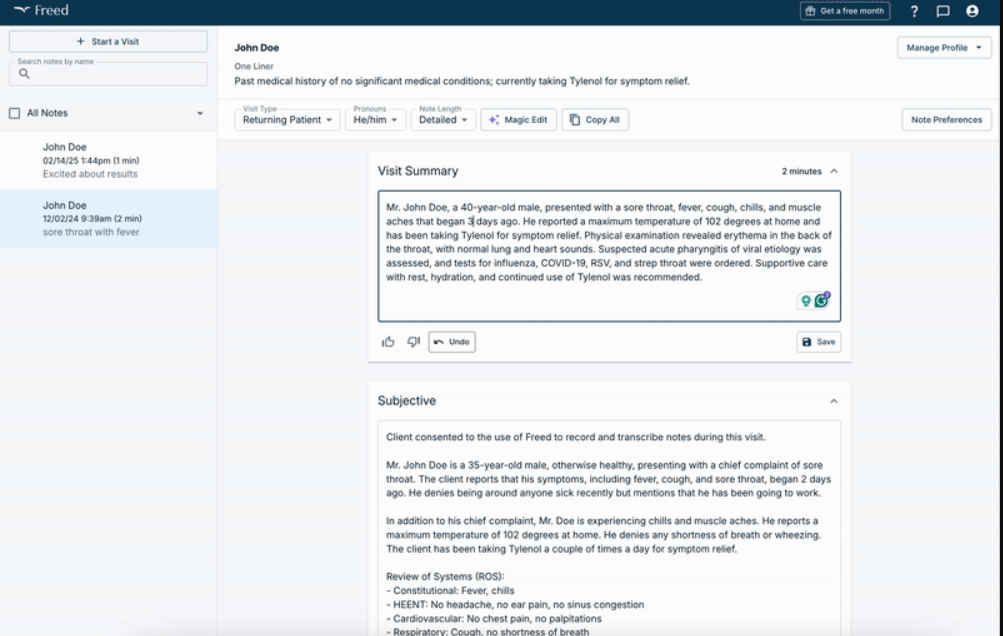
What is Freed.ai?
Freed.ai is an AI-powered HIPAA-compliant medical scribe software that is built to simplify clinical documentation by automatically converting doctor-patient conversations into structured SOAP notes. Let’s take a quick look at it:
Freed.ai Features
- Automatic transcription: Captures visit audio and instantly produces structured notes.
- Medical terminology database: Tailors transcription to medical terminology for fields like family medicine, psychiatry, pediatrics, and more.
- Speech recognition: Learns from clinician edits and adapts over time, improving accuracy and context handling.
Freed.ai Pros
- Highly accurate & fast: Claimed to reduce documentation time by up to 80–90%, with clean, SOAP-ready notes.
- User-friendly interface: Clean design with minimal setup, avoiding medical dictation complexity.
- HIPAA-compliant & secure: This AI medical transcription platform meets data protection standards and supports real-time note export.
Freed.ai Cons
- Limited EHR integration: Notes must be manually copied or moved until full integration rolls out.
- Performance in noisy settings: Accuracy may drop in crowded or multi-speaker environments.
- Editing constraints: Fewer in-app editing tools, requiring the use of external systems for Rev Medicalisions.
Freed.ai Pricing
- ~$99/month per clinician
- 7-day free trial available
- Group/custom pricing for 2-9+ clinicians
Freed.ai Rating
Here’s what customers are saying about Freed.ai:
“I have been using Freed in my primary care practice for about a year. Freed was really easy to use and self explanatory. I was completely blown away by the technology of Freed. The AI abstracts the important information while taking out the conversational talk between me and the patient. Even medical terminology is spelled correct. Freed has helped me save sooo much time charting I no longer have to chart at home!”
Freed.ai Support
- Email & help documentation
- Live trial support
- FAQs & onboarding resources
4. Rev Medical Medical
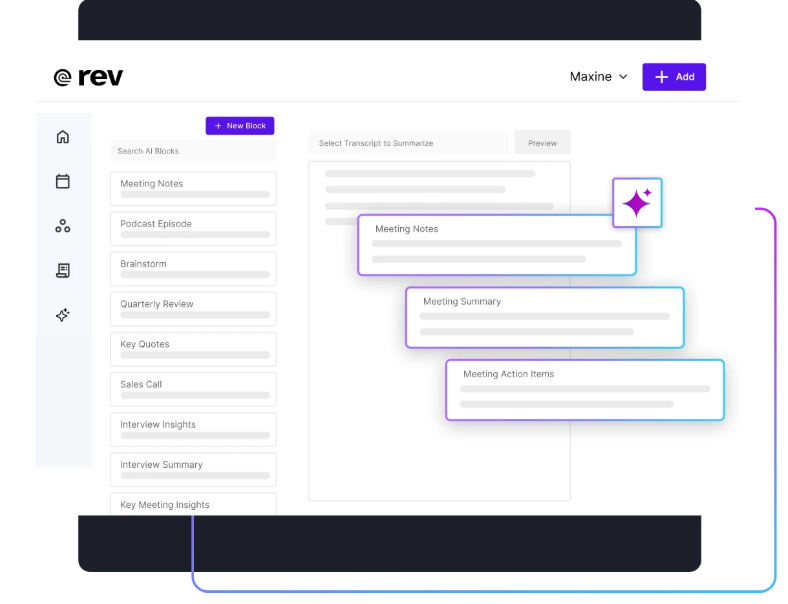
What is Rev Medical?
Rev Medical is a popular software for medical transcription that offers both AI-powered and human transcription services. While not built exclusively for healthcare, Rev Medical is often used by medical professionals who need accurate transcripts for consultations, interviews, or recorded dictation. However, it doesn’t create structured clinical notes or integrate with EHR systems out of the box.
Rev Medical Features
- AI and human transcription options: Choose between fast, low-cost AI transcription or highly accurate human-generated transcripts.
- Multi-format upload support: Upload audio or video files in various formats via desktop or mobile.
- HIPAA compliance (available by request): Medical transcription with privacy protection for qualified users.
Rev Medical Pros
- Fast turnaround: AI transcripts are available within minutes; human transcription usually within 12–24 hours.
- High accuracy: Human transcription delivers up to 99% accuracy for recorded notes or interviews.
- User-friendly interface: Easy upload, tracking, and download through web or app.
Rev Medical Cons
- Not built for live clinical scribing: This software for medical transcription doesn’t work in real time or generate SOAP-formatted notes automatically.
- Manual EHR entry required: You’ll need to copy/paste or format transcripts yourself.
- HIPAA coverage requires special setup: Not all users automatically receive HIPAA-compliant services, you must request and qualify for it.
Rev Medical Pricing
There are three pricing plans:
- Basic
- Pro
- Enterprise
Rev Medical Rating & Rev Medicaliews
Rev Medical has a 4.7-star rating on Capterra.
Here’s what customers are saying about Rev Medical Medical
“Rev Medical (Temi) is a great product if you don’t mind editing a little.”
“Very good. We’ve used Rev Medical for it seems like. Very happy with the product and experience”
Rev Medical Customer Support Channels
- Email/Help Desk
- FAQs/Forum
- Knowledge Base
- Phone Support
5. Sunoh.ai
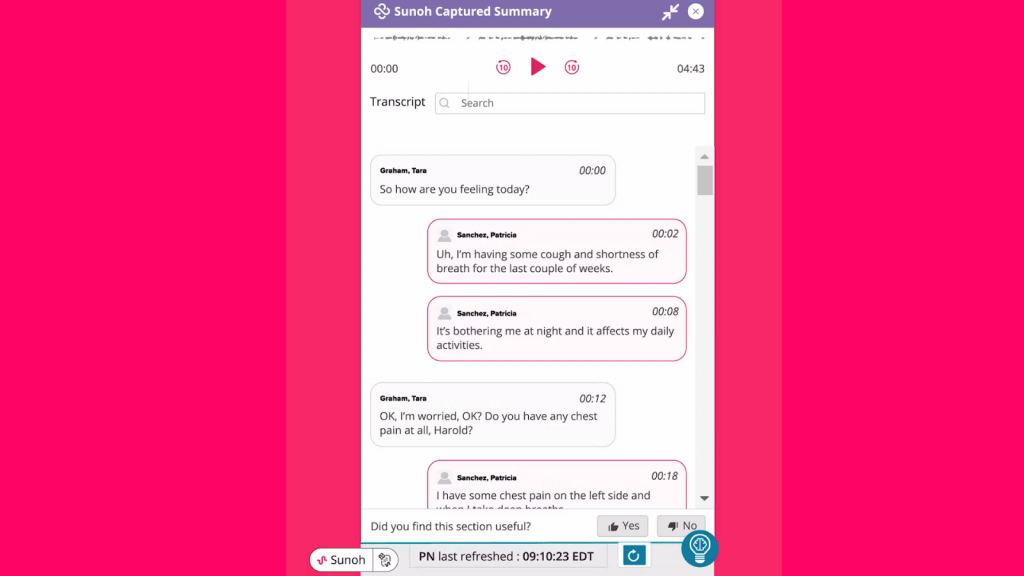
What is Sunoh.ai?
Sunoh.ai is an ideal AI medical scribe developed by eClinicalWorks. It is specifically designed to help healthcare providers document patient encounters without manual typing or dictation. Though Sunoh.ai is well-suited for users of the eClinicalWorks ecosystem, it may not be the right fit for clinics using other EHR platforms.
Sunoh.ai Features
- Ambient clinical scribing: Captures natural conversations and converts them into ready-to-review SOAP notes.
- EHR integration: This AI medical scribe seamlessly syncs with eClinicalWorks, enabling direct note insertion.
- Multi-specialty support: Trained to handle terminology for family medicine, internal medicine, pediatrics, and more.
Sunoh.ai Pros
- Hands-free workflow: No need to dictate or type, just start the encounter and let the med scribe handle documentation.
- Designed for clinicians: Built specifically for the pace and language of medical visits.
- Native EHR integration: Eliminates the need to switch between tools or manually transfer notes.
Sunoh.ai Cons
- Locked to eClinicalWorks: Currently only works within the eClinicalWorks EHR system.
- Early in the market: As a newer tool, this med scribe still be evolving in terms of speed, editing features, or specialty depth.
Sunoh.ai Pricing
There are three pricing plans:
- Pro
- Business
- Custom
Sunoh.ai Integrations
- athenaOne
- Epic
- eClinicalWorks
Sunoh.ai Customer Support Channels
- Email/Help Desk
- FAQs/Forum
Sunoh.ai Rating & Reviews
Sunoh.ai has a 4.1-star rating on Capterra.
Here’s what customers are saying about Sunoh.ai
“better recently since updates the hpi notes are much better, the sunoh recording doesn’t time out or not give me a recording like it used to before where I wouild lose the information”
“It’s an excellent tool for all physicians and mid levels. Makes charting easier, more complete, more accurate, and helps us to actually listen to our patients instead of worrying about charting.”
6. DeepScribe
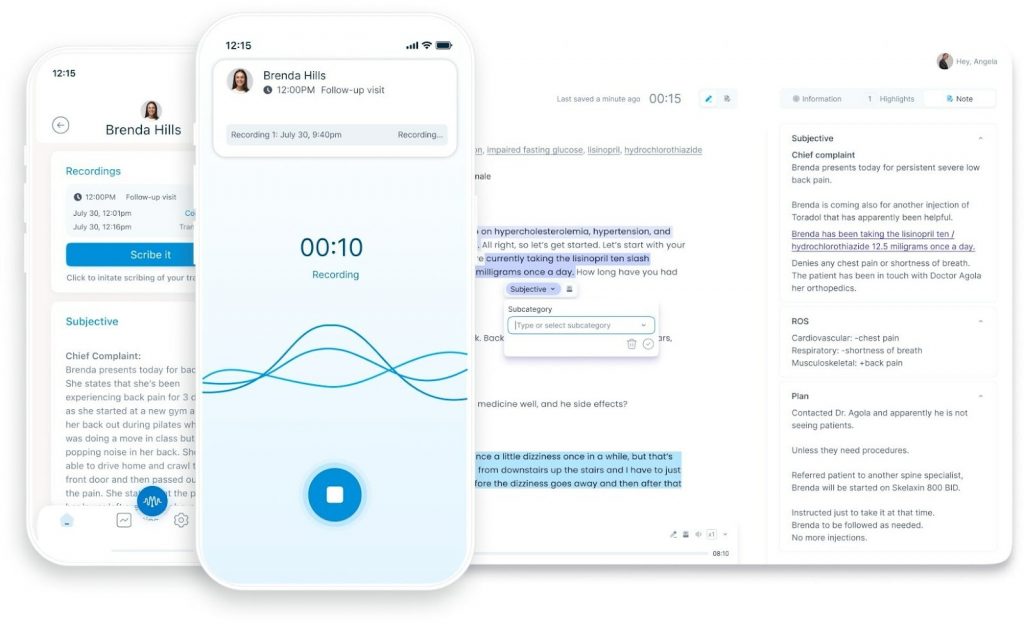
What is DeepScribe?
DeepScribe is an AI-powered ambient medical scribe designed to reduce the time clinicians spend on documentation. It passively listens to conversations during patient visits and generates structured SOAP notes, which can be reviewed and inserted directly into the EHR. It is built with HIPAA compliance, offers integration with major EHRs, and supports a wide range of medical specialties from family medicine to behavioral health.
This medical transcription platform also continuously learns from user interactions, which helps improve note quality over time. However, DeepScribe isn’t without drawbacks. Initial onboarding can take a few weeks, depending on the clinic’s needs. Some users have also reported that turnaround time can vary, especially when edits are required. And while real-time scribing is available, some notes may still require review before finalization, which adds a step for busy providers.
DeepScribe Features
- Ambient AI scribing: Automatically listens and generates notes without requiring voice commands or manual input during visits.
- EHR integration: Works with major EHR platforms, pushing finalized notes directly into patient records.
- Specialty-specific language models: Recognize terminology across various medical fields, reducing manual corrections.
DeepScribe Pros
- Reduces documentation time: This medical transcription platform helps providers finish notes during the workday, often before the next patient.
- Hands-free workflow: No need for typing or dictating; the AI runs in the background.
- Improves work-life balance: Cuts down on after-hours charting and late-night EHR sessions.
DeepScribe Cons
- Onboarding can take time: Implementation and training of this medical transcription tool may require 2–4 weeks, depending on setup.
- Inconsistent turnaround: Some notes may need manual review, delaying finalization.
- Not fully real-time in all cases: Certain encounters might not generate notes instantly, requiring follow-up verification.
DeepScribe Pricing
- Contact support
DeepScribe Integrations
- athenaOne
- DrChrono
- AdvancedMD EHR
- eClinicalWorks and more!
DeepScribe Customer Support Channels
- Email/Help Desk
- FAQs/Forum
- Chat
DeepScribe Rating & Reviews
DeepScribe has a 4.6-star rating on Capterra.
“I have had a great experience with deepscribe. They have very helpful staff.”
“Sometimes the AI does not transcribe complete notes and have to reprocess them. Cannot make corrections on the schedule if make mistake Cannot perform on mobile devices the full software function”
7. Sonix
What is Sonix?
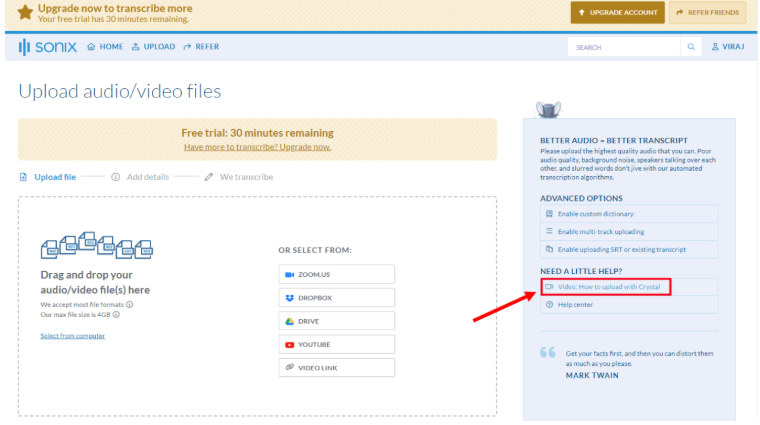
Sonix is an AI-driven transcription platform designed for fast, multi-language audio and video transcription. While it’s not built specifically for healthcare, many professionals use it for documentation, research, and note capture. Sonix stands out for its speed, clean interface, and broad language support, making it a flexible option for providers who need to transcribe patient interviews, voice memos, or consults across different languages.
Sonix Features
- Multi-language AI transcription: Supports over 40 languages and accents, with time-stamped transcripts and speaker labeling.
- In-browser transcript editor: Edit transcripts directly inside the platform with playback syncing.
- Audio & video upload options: Transcribe from MP3, MP4, Zoom recordings, or even YouTube links.
Sonix Pros
- Fast & accurate for general speech: Delivers transcripts within minutes, with high accuracy for clear recordings.
- Supports global use: Excellent for multilingual practices or clinics with non-English-speaking patients.
- Searchable transcripts: Quickly find keywords or phrases across entire audio libraries.
Sonix Cons
- Not built for medical use: May struggle with clinical terms, abbreviations, or specialty language.
- No EHR integration: Requires manual copy-paste if used in a healthcare setting.
- No HIPAA compliance by default: Not suitable for handling PHI unless special agreements are in place.
Sonix Pricing
There are three pricing plans:
- Standard
- Premium
- Enterprise
Sonix Customer Support Channels
- Email/Help Desk
- FAQs/Forum
- Knowledge Base
- Chat
Sonix Rating & Reviews
Sonix has a 4.9-star rating on Capterra.
“My overall experience is excellent, they are quite transparent when you’re making purchases and the easy of use is paramount”
“I wish there was a little more control over how SRT subtitles are exported, especially the ability to automatically split subtitles at the end of sentences. Also, it would be nice if Sonix could better identify speakers automatically.”
8. Klarify
What is Klarify?
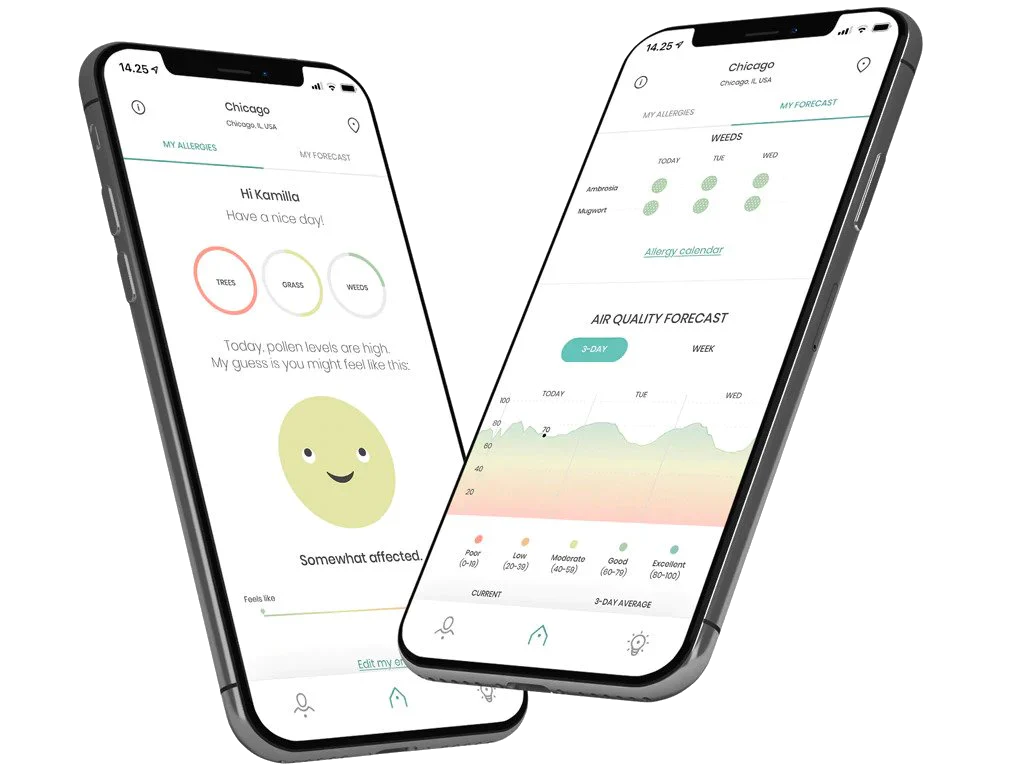
Klarify is an AI-powered clinical documentation platform built specifically for healthcare providers who want structured, compliant, and efficient note generation. Unlike general transcription tools, Klarify focuses on transforming patient conversations into clinically relevant documentation that aligns with medical workflows.
The platform is designed to reduce documentation burden by converting consultations into structured notes that can be reviewed, edited, and transferred into EHR systems. Klarify is positioned as a healthcare-first solution rather than a generic transcription tool.
Klarify Features
- AI-powered clinical note generation: Converts patient-provider conversations into structured medical notes.
- Specialty-focused documentation templates: Designed to align with clinical workflows and medical terminology.
- HIPAA-compliant data handling: Built for secure handling of PHI with encryption protocols.
- Structured note formats: Supports SOAP-style and structured clinical documentation outputs.
- Workflow export options: Allows copying/exporting notes into EHR systems.
Klarify Pros
- Healthcare-specific design: Built for clinical use rather than general transcription.
- Structured documentation output: Reduces time spent formatting notes.
- Compliance-focused: Designed to meet healthcare privacy standards.
Klarify Cons
- Limited communication tools: No built-in patient texting, call automation, or appointment workflows.
- EHR integration depth may vary: In many cases, providers still need to review and manually push notes into their systems.
- Less suited for enterprise-scale automation: Primarily focused on documentation rather than full practice automation.
Klarify Pricing
Klarify typically offers:
- Custom Pricing Plans
- Per-provider subscription models (varies by clinic size)
- Enterprise or multi-provider packages available upon request
Note: Exact pricing is generally provided after consultation.
Klarify Rating & Reviews
It has 4.0 stars on Capterra
Here’s what customers are saying about this platform:
“It can be a bit difficult to create result but the result is really simple to understand.”
“I use this product to provide simplified vision of my project for my customers. They can play with all the interactions in the mobile / tablet application and they really like it. It improves sales.”
Klarify Customer Support Channels
- Email Support
- Help Center / Knowledge Base
- Onboarding Assistance
- Enterprise support (for larger organizations)
9. Blueprint AI
What is Blueprint AI?
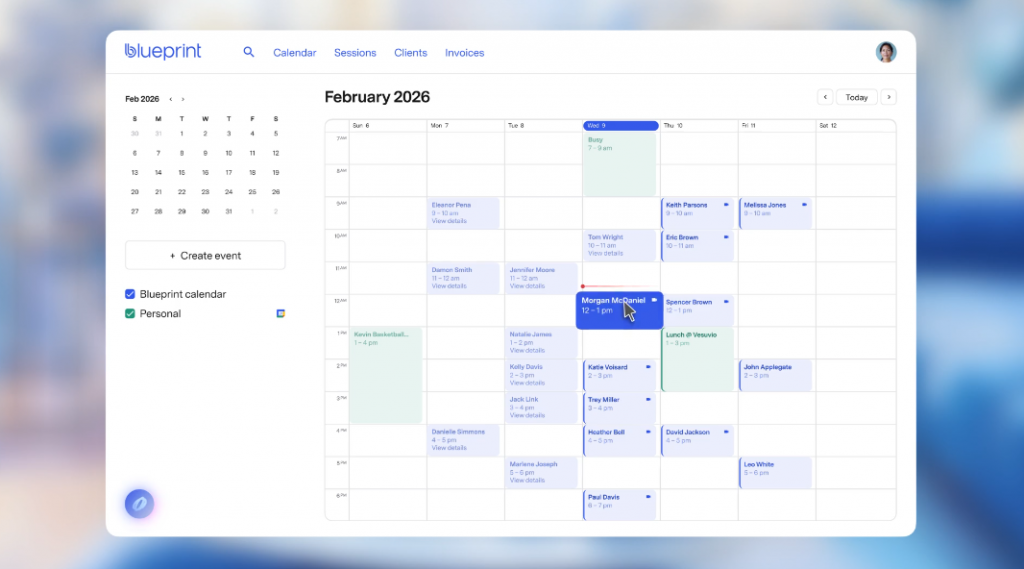
Blueprint AI is an AI-powered clinical documentation assistant tailored primarily for behavioral health and therapy practices. It focuses on converting session audio into structured clinical notes that align with therapy documentation standards (e.g., SOAP, DAP, BIRP) while maintaining HIPAA compliance. Blueprint AI is designed to reduce the manual burden of charting after client sessions.
Unlike general transcription services, Blueprint AI is optimized for mental and behavioral health workflows, capturing context, clinical impressions, and session insights rather than just raw text.
Blueprint AI Features
- AI-Generated Therapy Notes: Converts session recordings into structured clinical documentation.
- Behavioral Health Templates: Built-in support for SOAP, DAP, BIRP, and other therapy-specific formats.
- HIPAA-Compliant Processing: Secure handling of PHI with encryption and compliance safeguards.
- Context-Aware Summarization: Recognizes clinical intent, themes, and therapeutic interventions.
- Export/Copy-Paste Integration: Easy output for pasting into EHRs or clinical documentation systems.
Blueprint AI Pros
- Tailored to Behavioral Health: Templates and workflows match therapy documentation standards.
- Reduces Charting Time: Transforms session audio into usable clinical notes quickly.
- HIPAA-Compliant: Designed for secure healthcare documentation with appropriate safeguards.
Blueprint AI Cons
- Limited Practice Communication Tools: No SMS messaging, call automation, or scheduling features.
- Basic Integrations: Exports typically require manual transfer to EHR/clinical systems.
- Niche Focus: Best suited for therapy/behavioral health rather than broader multi-specialty clinical documentation.
Blueprint AI Pricing
Blueprint AI typically uses custom or subscription-based pricing depending on practice size and usage. Precise pricing is usually provided upon request or during a demo.
Blueprint AI Integrations
- EHR export (copy/paste or upload)
- Practice management systems (manual workflows)
- Note export formats (PDF, text, clinical templates)
Specific integrations depend on practice setup and connection options shared during onboarding.
Blueprint AI Ratings & Reviews
Reviews and Ratings are not available for this medical transcription software on platforms like Capterra and G2.
Blueprint AI Customer Support Channels
- Email support
- Knowledge base/documentation resources
- Onboarding assistance
- Practice-specific help (via support request)
10. Assembly AI
What is AssemblyAI?
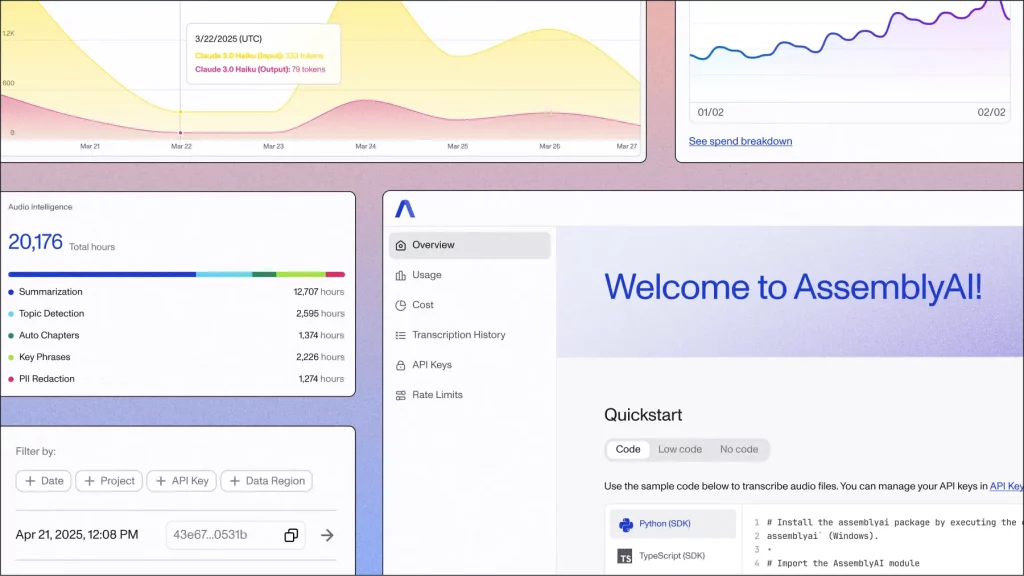
AssemblyAI is a developer-centric AI speech-to-text platform that provides HIPAA-eligible transcription APIs for building custom healthcare and clinical documentation solutions. Rather than offering a hosted end-user product like many medical scribe tools, AssemblyAI enables developers and health tech companies to embed powerful AI transcription, summarization, and analysis directly into applications, telehealth platforms, and EHR workflows.
While AssemblyAI itself isn’t a full clinical documentation suite, its API powers HIPAA-compliant transcription engines, speaker diarization, and medical speech interpretation, making it ideal for organizations that want to build custom, integrated documentation systems with advanced AI capabilities.
AssemblyAI Features
- HIPAA-eligible transcription API: Build secure speech-to-text pipelines for PHI-sensitive audio.
- Real-time & batch transcription: Supports streaming and file-based processing.
- Medical speech recognition: Optimized for clinical language and terminology.
- Speaker diarization & timestamps: Distinguishes multiple voices and provides alignment.
- Summarization & intent extraction: API models that can generate condensed meeting or consult summaries.
- Custom workflow integration: Embed into telehealth, clinical, or operational systems.
AssemblyAI Pros
- Developer flexibility: Can be tailored for custom healthcare workflows and documentation requirements.
- Scalable architecture: Cloud-based API supports large volumes and enterprise usage.
- Advanced AI tooling: Includes additional capabilities such as medical intent recognition and summarization.
AssemblyAI Cons
- Not a standalone clinical product: Requires developers to build a front-end or workflow.
- No built-in user interface: Not suitable “as is” for clinicians without an application wrapper.
- Implementation effort required: Integration into EHRs or practice systems depends on development resources.
AssemblyAI Pricing
Pricing is usage-based, typically billed per minute or per API call for transcription and additional features such as summarization or diarization. Exact costs vary by usage volume and whether enterprise/HIPAA-compliance tiers are selected.
AssemblyAI Integrations
Integration through APIs into:
- Telehealth platforms
- EHR/EMR systems
- Custom clinical documentation apps
- Communication and voice systems
Note: Integrations depend on the application built by the customer using the API.
AssemblyAI Ratings & Reviews
AssemblyAI doesn’t have a traditional consumer review rating like end-user tools, but developer and enterprise feedback highlight its accuracy, flexibility, and reliability in AI speech processing.
AssemblyAI Customer Support Channels
- Email support
- Developer documentation & SDK guides
- API reference library
- Community forums/developer Slack spaces
How HIPAA-Compliant Transcription Software Works
Understanding how transcription platforms work can help healthcare organizations implement them effectively.
Step 1: Recording Patient Conversations
Clinicians capture audio through:
- Voice dictation
- Patient consultations
- Therapy sessions
- Telehealth appointments
- Clinical notes
Step 2: Secure Upload or Live Processing
The recorded audio is securely uploaded to the transcription platform or processed in real time through encrypted channels.
Step 3: Speech-to-Text Processing
Advanced AI and speech recognition engines convert the audio into text while recognizing medical terminology. Some platforms also provide speaker identification and timestamps.
Step 4: Editing and Review
Healthcare professionals review and edit transcripts to ensure accuracy before finalizing documentation.
Step 5: Export to Clinical Systems
Once finalized, transcripts can be exported to:
- Electronic health records
- Patient documentation systems
- Medical billing workflows
- Secure storage archives
This process helps streamline healthcare documentation while maintaining compliance.
Benefits of HIPAA-Compliant Transcription Software
Healthcare providers who implement secure, HIPAA-aligned transcription systems gain both clinical and operational advantages. Beyond protecting patient data, these solutions improve efficiency, accuracy, and regulatory readiness across the organization.
Reduced Administrative Burden
Manual note-taking and after-hours documentation contribute significantly to clinician burnout. Secure transcription tools automate much of this process, reducing time spent typing and allowing providers to concentrate more on patient interactions and care delivery.
Improved Documentation Accuracy
HIPAA-compliant transcription platforms are built with medical vocabularies and specialty-specific language models. This leads to clearer, more precise clinical notes, minimizing misunderstandings, billing errors, and the need for repeated corrections.
Enhanced Data Security
Compliant systems use encryption, controlled access permissions, and secure storage environments to protect protected health information (PHI). These safeguards reduce the risk of data breaches and unauthorized access to sensitive medical records.
Faster Clinical Workflows
With near real-time transcription and structured documentation outputs, patient records can be completed more quickly. This accelerates charting, supports timely billing, and ensures care teams have up-to-date information when making decisions.
Better Compliance Management
Built-in audit trails and detailed access logs help organizations track how patient information is handled. This makes it easier to demonstrate regulatory compliance during audits and reduces exposure to penalties or corrective actions.
Common Challenges & How to Overcome Them
Adopting HIPAA-compliant transcription software can significantly improve operations, but implementation often comes with practical hurdles. Addressing these challenges proactively ensures smoother adoption and long-term success.
Staff Resistance to New Tools
Team members may hesitate to adopt new technology due to comfort with existing workflows or fear of added complexity. Overcome this by offering hands-on training, highlighting time-saving benefits, and involving clinicians early in the decision-making process to build buy-in.
Balancing Speed with Accuracy
While fast transcription is valuable, rushing the process can lead to documentation errors. To manage this, use medical-optimized AI engines combined with a structured review process clinicians can quickly verify and finalize notes without compromising accuracy.
Ensuring Correct Role Permissions
Improper access controls can create compliance risks or internal data exposure. Implement clear role-based access policies from the start, regularly review user permissions, and restrict sensitive information to only those who genuinely require it.
Training Users on HIPAA Policies
Even the most secure system can fail if users are unaware of compliance responsibilities. Provide ongoing HIPAA training, clear documentation guidelines, and periodic refreshers to ensure staff understand how to handle PHI properly within the transcription workflow.
Best Practices for Using HIPAA-Compliant Transcription Software
Implementing secure transcription software is only part of the equation; using it correctly ensures maximum efficiency, accuracy, and compliance. The following best practices help healthcare organizations get the most value from their system.
Dictate as Soon as Possible After Visits
Recording notes immediately after patient encounters improves accuracy and reduces forgotten details. Prompt dictation also pRev Medicalents documentation backlogs and keeps patient records current and complete.
Use Clear Section Cues (“Subjective,” “Assessment,” etc.)
Structuring dictation with clear headings helps the transcription system organize content properly. Using standardized clinical sections improves readability, consistency, and integration with EHR templates.
Regularly Audit Access Logs
Reviewing system activity logs ensures only authorized personnel are accessing patient records. Routine audits help identify unusual behavior early and support compliance during regulatory reviews.
Update Role Permissions as Staff Changes
When employees join, leave, or change roles, access permissions must be updated immediately. Maintaining accurate role-based controls reduces security risks and prevents unauthorized exposure of PHI.
Frequently Asked Questions
No. Most general speech-to-text tools are not designed for healthcare environments. HIPAA compliance requires encryption, access controls, audit logs, and a Business Associate Agreement.
Yes. If the transcription vendor processes or stores PHI, a Business Associate Agreement is required under HIPAA regulations.
No. Transcription software is typically used alongside EHR systems to generate documentation that can be stored within patient records.
AI transcription can be safe if the platform offers HIPAA compliance, encrypted storage, secure infrastructure, and a signed BAA.
Conclusion
Accurate clinical documentation is essential for delivering high-quality healthcare and maintaining regulatory compliance. However, manual documentation can be time-consuming and inefficient for healthcare providers.
HIPAA-compliant transcription software provides a secure and efficient solution by converting medical dictations and patient conversations into structured documentation while protecting sensitive patient information.
With features such as end-to-end encryption, secure speech-to-text processing, access controls, and EHR integration, these platforms help healthcare organizations improve productivity, maintain compliance, and enhance patient care.
If you are looking for a solution that goes beyond basic transcription and combines AI-powered clinical documentation with secure patient communication, scheduling, and workflow automation, Emitrr offers an all-in-one HIPAA-compliant platform designed to streamline both documentation and operations. Want to know more? Book a demo now!!


 4.9 (400+
reviews)
4.9 (400+
reviews)