
Introduction
A staggering 20–30% of specialist referrals never result in a completed appointment, leaving patients without care, referring physicians without closure, and specialists with empty slots they could have filled. For most practices, referral intake, the process of receiving, validating, and routing referrals from other providers into a scheduled visit, is still running on a patchwork of faxes, phone calls, and manual data entry. That patchwork is exactly where referrals get lost.
In 2026, AI voice agents for referral intake are stepping in to close that gap. These systems can answer referral calls from other providers’ offices, extract structured data from referral faxes, verify insurance and patient information, route the referral to the correct specialist or department, and keep both the patient and the referring provider updated throughout — all without a referral coordinator manually chasing every step. This guide evaluates the top 10 AI voice agents and referral intake automation platforms in 2026, with a focus on what actually matters for this use case: EHR-native referral routing, document/fax intelligence, closed-loop communication with referring providers, and healthcare-grade compliance.
How We Evaluated These Apps
To build this guide, we evaluated 10 AI voice agents and referral-intake automation platforms against the criteria that matter most for this specific workflow: referral routing intelligence (can it triage by specialty, urgency, and location?), EHR/referral-data integration depth, document and fax processing capability, closed-loop communication with referring providers and patients, HIPAA compliance and BAA availability, and pricing transparency.
We treat “referral management” claims skeptically. Many platforms market generic “patient intake” or “scheduling” capabilities as referral solutions without offering the specific things referral intake requires: the ability to ingest a referral from an external fax or EHR feed, extract the referring physician’s details and clinical reason, validate completeness, route based on specialty/urgency/location rules, and close the loop back to the referring office once the patient is seen.
Our evaluation involved reviewing vendor documentation, product demonstrations, independent testing reports, and user feedback from G2, Capterra, Trustpilot and Reddit. Compliance tiers, pricing, and integration depth change frequently in this market, always confirm current terms directly with any vendor before deployment.
AI Summary
- AI voice agents automate referral intake by answering calls, collecting patient and referring-provider information, and routing referrals without manual intervention.
- They help reduce referral leakage, automate repetitive administrative tasks, improve patient communication, and accelerate scheduling workflows.
- The best AI voice agents integrate with EHR systems, support HIPAA compliance, provide AI-powered call summaries, and intelligently route referrals based on specialty, insurance, provider availability, or urgency.
- Emitrr is the best choice for healthcare organizations because it combines AI voice, referral routing, AI fax processing, EHR integrations, SMS follow-ups, and healthcare-grade compliance in a single platform.
- Hyro and Syllable AI are excellent options for large health systems that need enterprise-scale referral routing and deep EHR integrations.
- DeepCura is a strong choice for practices looking to combine referral intake with AI scribing and billing automation.
- Smaller practices can consider My AI Front Desk or Brilo.ai for affordable, quick-to-deploy referral intake automation.
- Before choosing a platform, evaluate its referral-routing capabilities, EHR integration depth, document and fax intelligence, human handoff, reporting features, and long-term scalability.
AI Voice Agents for Referral Intake at a Glance (TL;DR)
| Platform | Referral Routing Logic | EHR/Referral Integration | HIPAA/BAA | Best For |
| Emitrr | Rule-based, by specialty/urgency/location | Native (Athenahealth, eClinicalWorks, Tebra) + AI fax/document extraction | Included, no extra fee | Practices needing built-in referral routing, fax intelligence, and closed-loop provider updates |
| DeepCura | Template-based intake routing | Native EHR documentation; bundled with scribe/billing | Included | Practices wanting referral intake bundled with ambient scribing and billing |
| Syllable AI (ActiumHealth) | Enterprise routing across multi-site networks | Deep EHR/scheduling integration, real-time sync | Enterprise HIPAA/SOC 2 | Large health systems needing 100% QA coverage at scale |
| Infinitus | Routes both patient intake and payer-side referral/auth calls | Enterprise EHR + payer system integration | Enterprise compliance | Organizations where referrals require payer authorization calls too |
| Cognigy (NiCE) | Deterministic, auditable routing logic | Deep EHR integration, on-prem option | HIPAA, SOC 2, ISO 27001 | Large regulated health systems needing auditable referral decision paths |
| My AI Front Desk | Basic routing to department/staff | Via Zapier only | HIPAA-compliant | Small practices wanting the lowest-cost referral intake entry point |
| Brilo.ai | Configurable intelligent escalation | API integration; no native EHR write | HIPAA, SOC 2 (verify BAA) | Practices wanting fast, affordable deployment without enterprise contracts |
| Hyro AI | Specialty/insurance/location matching at scale | Native Epic, Cerner, Athenahealth | Enterprise HIPAA | Large health systems with hundreds of providers and complex specialty matching |
| Retell AI | Configurable via API/Pathways | API-based; no native EHR connector | Self-service BAA on standard plans | Teams wanting HIPAA compliance without an enterprise sales process |
| Synthflow | No-code flow-based routing | Native Google/Outlook; EHR at Enterprise tier | Gated behind the Enterprise tier | Non-technical teams are able to commit to an enterprise contract |
A note on this table: “Referral intake” is a narrower, more specialized capability than general patient scheduling or FAQ-answering. Several platforms here are healthcare-intake generalists rather than referral-specialists — confirm a vendor can actually ingest, validate, and route a referral (not just book an appointment) before committing.
What Is an AI Voice Agent for Referral Intake?
An AI voice agent for referral intake is a sophisticated conversational AI platform designed to handle inbound phone calls related to patient referrals. Unlike basic automated phone systems, these agents use natural language processing (NLP) and machine learning (ML) to understand spoken language, engage in human-like conversations, and perform specific tasks.
How it Works: When a referral call comes in, the AI voice agent answers immediately. It greets the caller, understands their intent (e.g., making a referral, inquiring about a referral), and then guides them through a structured conversation to collect all necessary information. This typically includes:
- Patient demographics (name, date of birth, contact information)
- Referring provider details
- Insurance information
- Reason for referral and specialty requested
- Any available clinical notes or diagnostic information
The AI is programmed with specific business rules and workflows. It can verify insurance eligibility, check provider availability, and determine the correct department or specialist to route the referral to. Once all required data is collected, the AI can automatically create a task or patient record within the practice’s Electronic Health Record (EHR) or Customer Relationship Management (CRM) system. It can also send automated SMS confirmations to the patient, informing them that their referral has been received and outlining the next steps.
Crucially, these AI agents are designed to automate administrative tasks and accelerate workflows, not to make clinical decisions or approve referrals. Their role is to ensure accuracy, consistency, and speed in the initial data capture and routing process.
Why Referral Intake Is the Highest-ROI AI Voice Use Case
Referral intake is a perfect storm of high administrative workload and highly structured conversations, making it an ideal candidate for AI voice agent automation. The sheer volume of referrals, coupled with critical industry challenges, creates a compelling case for adopting this technology.
- Referral Volume: Hospitals, specialty clinics, imaging centers, behavioral health practices, and multi-specialty groups often manage hundreds, if not thousands, of referrals weekly. Each referral typically requires the collection of identical, structured information before care can begin. This constant influx of data demands significant administrative resources.
- Staffing Shortages: The healthcare industry continues to grapple with significant staffing shortages, particularly in administrative roles. This makes it increasingly difficult for practices to manage high referral volumes efficiently without overburdening existing staff.
- Missed Referrals: When referral calls go to voicemail or faxes pile up unprocessed, patients may seek care elsewhere. This “referral leakage” directly translates to lost revenue and reduced patient access.
- Fax Overload: Despite advancements in technology, fax machines remain a stubborn fixture in many healthcare settings for receiving referrals. Managing, sorting, and processing these faxes is a manual, error-prone, and time-consuming task.
- Administrative Costs: The manual labor involved in processing referrals—opening faxes, making phone calls, verifying insurance, scheduling, and data entry- incurs substantial administrative costs. Automating these tasks with AI can lead to significant savings.
By automating the initial stages of referral intake, AI voice agents can alleviate these pressures, improve patient flow, capture more revenue, and free up valuable human resources for more complex, patient-facing tasks.
Why Do You Need an AI Voice Agent for Referral Intake?
Referral Leakage Is a Massive, Quiet Revenue and Care Problem
Industry estimates suggest 20–30% of referred patients never complete their appointment. Every lost referral is a patient who doesn’t get the specialist care they were sent for, and a specialist visit that never generates revenue. Most leakage happens in the gap between “referral received” and “patient scheduled,” exactly where AI automation has the most impact.
Referrals Arrive Through Fragmented, Inconsistent Channels
Referrals show up as faxes, phone calls, EHR messages, and patient walk-ins, often on the same day, with no single system tracking all of them. Without centralized intake, referrals get lost, duplicated, or delayed while staff hunt across systems.
Manual Data Entry Introduces Errors and Delays
Front-desk and referral coordination staff manually re-key referring physician details, patient demographics, and clinical notes from faxes and calls into the EHR, a process prone to transcription errors and missing fields that trigger time-consuming follow-up calls.
Specialty and Urgency Routing Requires Judgment at Scale
An urgent neurology referral needs to be prioritized differently than a routine annual consult. At single-location practices, a coordinator can apply judgment manually; at multi-location or multi-specialty practices, that judgment needs to scale consistently, which is where rule-based AI routing helps.
Referring Providers Expect Closed-Loop Communication
A referring physician who never hears back about what happened to their patient is less likely to refer again. Automated status updates, referral received, appointment scheduled, consultation completed, protect the referral relationship and the steady stream of future referrals it represents.
24/7 Capture Matters for Urgent Referrals
A referral that arrives after hours or during a high-volume period shouldn’t sit untouched until the next business day, especially when urgency is clinically meaningful.
How AI Voice Agents Streamline Referral Intake
AI voice agents transform the traditional, often chaotic, referral intake process into a smooth, automated, and efficient workflow. Here’s a step-by-step look at how they achieve this:
- Answer Incoming Calls Instantly: The AI answers every referral call immediately, 24/7, eliminating busy signals and long hold times. This ensures no potential referral is missed, even outside of business hours.
- Verify Patient Information: The agent engages the caller in a natural conversation to collect essential patient details like name, date of birth, phone number, and insurance provider.
- Capture Referral Details: The AI systematically gathers information about the referral itself, including the referring provider, the specialty or service requested, the diagnosis or reason for referral, and preferred locations or physicians.
- Apply Business Rules: Based on pre-programmed logic, the AI can perform initial checks. This might include verifying if the requested service is covered by the patient’s insurance, confirming if the referring physician is in-network, or checking basic provider availability.
- Create EHR Task/Record: Once the necessary information is gathered and validated, the AI securely transmits the data to the practice’s EHR or CRM system. It can automatically generate a structured task, a new patient case, or a referral record, populating relevant fields and reducing manual data entry for staff.
- Notify the Patient via SMS: Immediately after the call, the AI can send an automated text message to the patient confirming receipt of their referral. This message can include details about next steps, required documents, or instructions on when to expect a follow-up call from the practice.
- Route to the Right Team: For complex cases or when human intervention is required, the AI can intelligently route the referral to the appropriate staff member or department based on specialty, urgency, or other defined criteria.
- Provider Review and Follow-Up: The structured data and tasks created by the AI provide referral coordinators or schedulers with all the information they need to efficiently review, schedule, and manage the patient journey. The AI can also be configured for automated follow-up reminders or to collect additional information if needed.
This end-to-end automation significantly reduces the manual workload, minimizes errors, speeds up patient access to care, and improves the overall patient and provider experience.
Common Referral Intake Challenges AI Solves
AI voice agents are specifically designed to tackle the most persistent and costly challenges in healthcare referral intake:
- High Manual Workload: Referral coordinators often spend hours sifting through faxes, emails, and portal submissions, manually transcribing information into multiple systems. AI automates this data capture and entry, freeing up staff time.
- Slow Turnaround Times: Manual processes lead to delays. AI’s immediate response and automated data processing drastically reduce the time from initial contact to patient scheduling, minimizing referral leakage and improving patient satisfaction.
- Data Fragmentation: Referral information frequently exists in disparate systems, faxes, emails, paper forms, and various digital platforms. AI acts as a centralizing force, capturing data in a structured format that can be directly integrated into core systems like the EHR.
- Phone Bottlenecks: Practices struggle with phone tag and overloaded phone lines. AI answers every call, ensuring consistent communication and reducing the frustration associated with trying to reach the right person.
- Inconsistent Triage: Different staff members might interpret referral requirements differently, leading to errors in routing or missed eligibility checks. AI applies standardized rules consistently for every referral.
- Compliance Concerns: Sensitive Protected Health Information (PHI) can be mishandled through insecure communication channels. HIPAA-compliant AI agents ensure data is captured and transmitted securely.
- After-Hours Coverage: Many practices lack adequate staffing for after-hours calls. AI provides 24/7 coverage, ensuring that referrals received outside of business hours are captured and processed without delay.
Must-Have Features in a Referral Intake AI Voice Agent
When evaluating AI voice agents for referral intake, several key features are crucial for ensuring effectiveness, security, and seamless integration into your practice’s operations.
- HIPAA Compliance and BAA: This is non-negotiable. The AI solution must be fully HIPAA compliant, and the vendor must be willing to sign a Business Associate Agreement (BAA) to ensure the privacy and security of Protected Health Information (PHI).
- EHR Integration: Seamless integration with your existing EHR system is vital. This allows for automated creation of tasks, patient records, or referral workflows directly within the EHR, eliminating manual data re-entry.
- Structured Data Capture: The AI must be capable of capturing referral information in a structured format, not just free-text notes. This structured data is essential for accurate routing, task creation, and reporting.
- Multilingual Support: For practices serving diverse patient populations, the ability to conduct intake conversations in multiple languages (e.g., Spanish, Mandarin, Vietnamese) is a significant advantage.
- AI Summaries: The ability for the AI to provide concise summaries of the captured referral information can help human staff quickly grasp the key details, saving review time.
- Intelligent Routing: The AI should be able to apply business rules to route the referral to the correct department, specialist, or staff member based on criteria such as insurance, specialty requested, or provider availability.
- Analytics and Reporting: Robust reporting capabilities are needed to track key metrics like call volume, successful intakes, referral sources, and processing times. This data is crucial for performance monitoring and optimization.
- Human Handoff: While automation is key, the system must include a seamless escalation path to a live agent or staff member for complex queries, urgent situations, or when the caller explicitly requests human interaction.
- SMS Follow-Up Automation: Automated SMS confirmations and follow-ups to patients enhance engagement, reduce no-shows, and inform patients about the next steps in their care journey.
- Scalable Concurrent Call Handling: The AI must be able to handle a high volume of simultaneous calls without degradation in performance, ensuring that large practices or those experiencing call surges are adequately supported.
- EHR read/write integration: The platform should pull patient and referring-provider data from your EHR and push scheduled appointments and referral status back into it.
- Multi-location routing: For practices with multiple sites, the system should be able to route a referral to the most appropriate location, not just the one that received the fax.
- Rule-based routing by specialty, urgency, and location: The system should assign referrals automatically, not just book generic appointments.
- Document/fax intelligence (OCR + IDP): Since a large share of referrals still arrive by fax, the ability to extract structured data from scanned or faxed documents not just live calls is essential.
- Incomplete-referral filtering: The system should flag missing insurance or clinical information before a referral consumes coordinator time.
Top 10 AI Voice Agents for Referral Intake: In-Depth Comparison
- Emitrr
- DeepCura
- Syllable AI
- Infinitus
- Cognigy
- My AI Front Desk
- Brilo AI
- Hyro AI
- Retell AI
- Synthflow
1. Emitrr (Best for Built-In Referral Routing, Fax Intelligence, and Closed-Loop Communication)
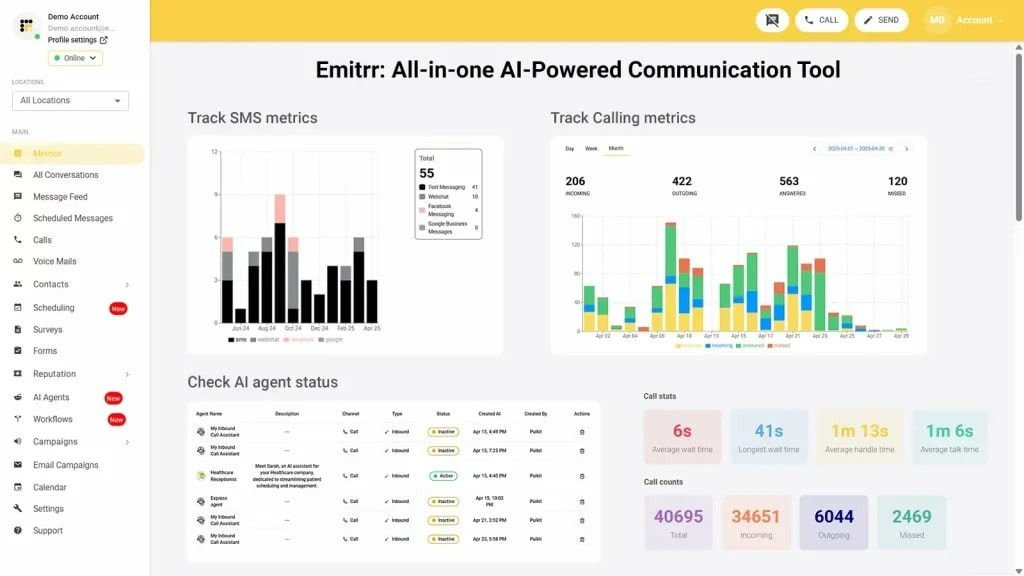
Ideal For: Healthcare practices and specialty clinics that want referral intake, AI fax and document processing, EHR routing, and closed-loop communication with referring providers in one platform.
Emitrr Overview
Emitrr is purpose-built for healthcare referral management, helping practices automate referral intake from faxes, calls, and EHRs. It uses AI to extract referral information, intelligently route referrals based on specialty, urgency, or location, and automatically keep both patients and referring providers informed throughout the referral process.
Emitrr Key Features
- AI Fax Routing; and Intelligent Document Processing to automatically extract referral details from faxed documents.
- Rule-Based Referral Routing by specialty, urgency, provider, or clinic location.
- Incomplete Referral Detection that flags missing insurance or patient information and triggers automated follow-ups.
- Automated Two-Way Patient Communication through SMS for scheduling, confirmations, and rescheduling.
- Closed-Loop Referring Provider Updates that automatically notify providers when referrals are received, scheduled, and completed.
Emitrr Pros
- Purpose-built referral routing for healthcare rather than generic appointment scheduling.
- AI fax processing eliminates manual referral data entry.
- Native integrations with Athenahealth, eClinicalWorks, Tebra, and other leading EHRs.
- Closed-loop communication strengthens referring-provider relationships.
- Referral reporting tracks referral volume, turnaround time, and conversion rates.
- HIPAA compliance and Business Associate Agreement (BAA) included.
Emitrr Cons
- Healthcare businesses pay an additional setup fee to unlock advanced automation
- AI capabilities require upgrading to the Pro plan
- Multi-party group chat threading is still evolving
- Enterprise pricing requires contacting sales
When NOT to Choose Emitrr
Choose another solution if you are not a healthcare practice or do not require AI-powered referral routing, fax intelligence, or referring-provider communication.
Emitrr Pricing
Calling and VoIP plans start around $20–25 per user/month, while HIPAA-enabled Professional plans range from approximately $25–30 per user/month. Bundled plans with VoIP, SMS, AI automation, and integrations start at around $149/month, and the AI Voice Agent starts at approximately $99 for 1,000 minutes.
- MailChimp
- Denticon
- AthenaHealth
- Zapier
- Salesforce
- HouseCall Pro
- + 500 more!!
Emitrr Rating
Capterra: 4.6/5 (June 2026)
Emitrr Support Channels
- Email Support
- Phone Support
- Live Chat
- Knowledge Base
- Customer Success Team
Watch this quick YouTube video below to see how Emitrr AI Voice Agent automates call handling, appointment booking, and patient communication.
2. DeepCura (Best All-in-One Referral Intake + Scribe + Billing)
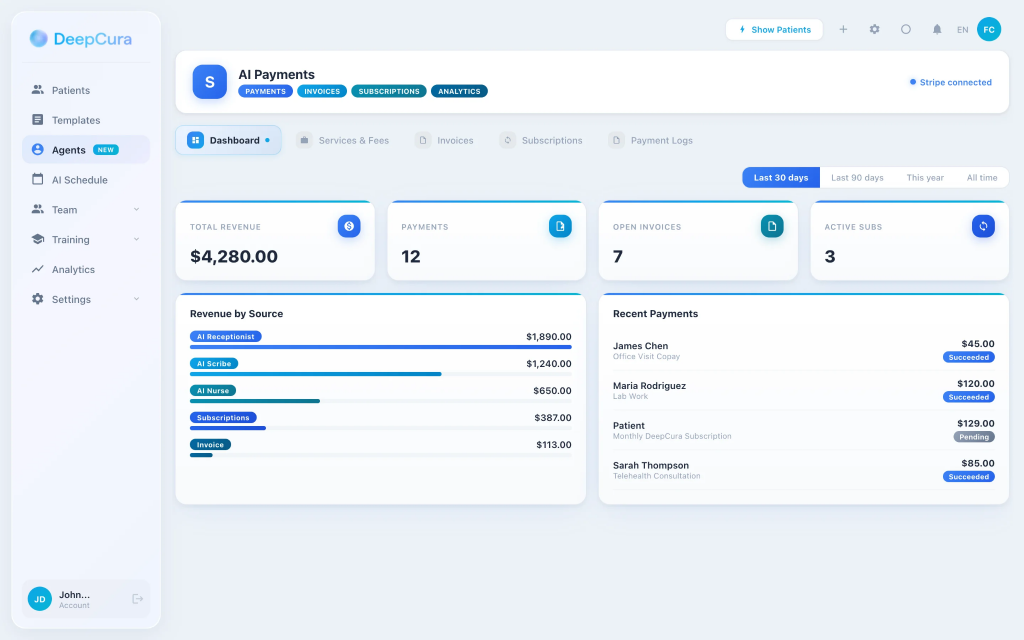
Ideal For: Medical practices looking for a single AI platform that combines referral intake, patient communication, ambient AI scribing, billing automation, and EHR documentation.
DeepCura Overview
DeepCura brings together multiple AI healthcare workflows into one platform. Along with AI-powered referral intake, it offers AI fax processing, ambient medical scribing, billing automation, and EHR documentation, making it a strong option for practices that want to replace several standalone healthcare tools with a single subscription.
DeepCura Key Features
- AI Receptionist with dedicated referral and new patient intake templates.
- Live SMS fallback when voice capture fails during patient calls.
- Never-Loop AI that avoids repeatedly asking patients the same questions.
- Mid-call sharing of intake forms and patient portal links.
- AI Fax Agent for processing referral documents automatically.
DeepCura Pros
- Combines referral intake, AI scribing, billing, and documentation in one solution.
- Offers 16 premium AI voice options for more natural patient interactions.
- Live SMS fallback helps reduce abandoned referral calls.
- Supports existing business phone numbers.
- Quick deployment using healthcare-focused templates.
DeepCura Cons
- Per-provider pricing can become expensive for larger organizations.
- EHR integration depth varies by healthcare system.
- Less customizable than developer-focused AI platforms.
- Smaller review footprint compared to established healthcare vendors.
When NOT to Choose DeepCura
Avoid DeepCura if you need enterprise-level referral routing, highly customized EHR workflows, or support for large hospital networks.
DeepCura Pricing
Starts at $129 per provider/month with all features included. Free trial available without a credit card.
DeepCura Integrations
- EHR Documentation Systems
- Existing Business Phone Numbers
- AI Fax Processing
DeepCura Rating
G2: 4.6/5
DeepCura Support Channels
- Email Support
- Product Documentation
- Customer Success
- Onboarding Assistance
3. Syllable AI AI (Best for Enterprise Health System Referral Intake)
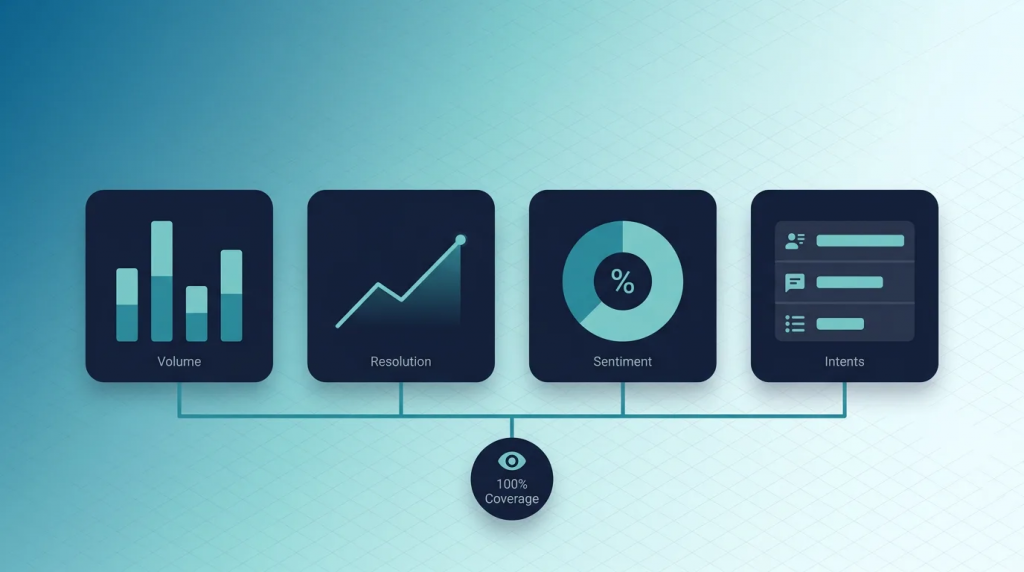
Ideal For: Large health systems, multi-location hospital networks, and enterprise healthcare organizations that need AI-powered referral intake with deep EHR integration, enterprise-scale automation, and comprehensive quality monitoring.
Syllable AI Overview
Syllable AI’s ActiumHealth platform is built specifically for enterprise healthcare organizations that need to automate referral intake while maintaining high compliance standards. It integrates directly with EHR and scheduling systems, analyzes 100% of patient interactions for quality assurance, and helps hospital networks manage referral workflows consistently across multiple locations.
Syllable AI Key Features
- Direct EHR and scheduling system integration with real-time synchronization.
- Conversation intelligence and quality assurance across 100% of patient interactions.
- Enterprise-scale referral call handling for high-volume healthcare networks.
- Referral routing across multiple hospitals, clinics, and specialty departments.
- HIPAA and SOC 2 compliant infrastructure.
Syllable AI Pros
- Designed specifically for enterprise healthcare organizations.
- Reviews every patient interaction instead of small quality assurance samples.
- Real-time EHR integration accelerates referral processing.
- Strong compliance and security framework.
- Handles large referral volumes across multi-location health systems.
Syllable AI Cons
- Quote-based enterprise pricing with no self-service plans.
- Longer implementation compared to SMB-focused platforms.
- More complex than necessary for smaller healthcare practices.
- Requires dedicated implementation and onboarding teams.
When NOT to Choose Syllable AI
Avoid Syllable AI if you’re a small or mid-sized healthcare practice that needs quick deployment or doesn’t require enterprise-scale referral management.
Syllable AI Pricing
Custom enterprise pricing. Contact the sales team for a personalized quote.
Syllable AI Integrations
- Enterprise EHR systems
- Scheduling platforms
- Clinical workflow systems
- Hospital information systems
Syllable AI / ActiumHealth Rating (Source)
Enterprise healthcare platform with proven large-scale deployments. Public review volume on G2 and Capterra is limited due to its enterprise-focused customer base.
Syllable AI / ActiumHealth Support Channels
- Dedicated Account Manager
- Enterprise Implementation Team
- Technical Support
- Customer Success
- Product Documentation
4. Infinitus (Best for Referrals Requiring Payer-Side Authorization Calls)
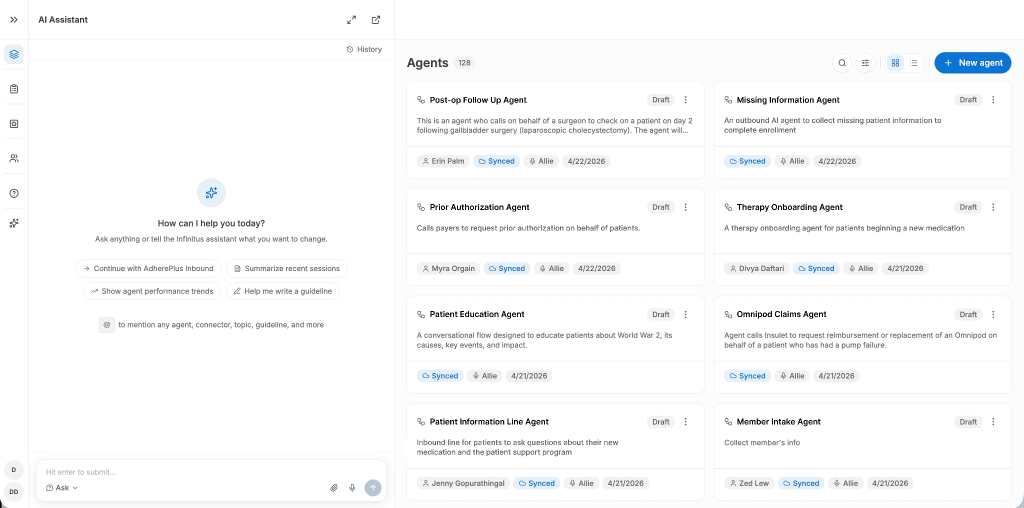
Ideal For: Health systems, specialty pharmacies, and enterprise healthcare organizations that need to automate both referral intake and insurance authorization workflows.
Infinitus Overview
Infinitus is an enterprise AI Voice Agent that automates both patient-facing referral intake and payer-facing administrative calls. Unlike traditional referral automation platforms, it also handles insurance verification, prior authorization, and claims follow-up, helping healthcare organizations remove one of the biggest bottlenecks in specialist referral workflows.
Infinitus Key Features
- Automated payer calls for benefits verification and prior authorization.
- AI-powered patient referral intake automation.
- Claims follow-up automation.
- Enterprise-scale healthcare workflow automation.
- Proven deployment across major healthcare providers and payer organizations.
Infinitus Pros
- Automates both patient and payer communication.
- Reduces delays caused by insurance authorization.
- Supports large enterprise healthcare organizations.
- Documented improvements in productivity and call completion speed.
- Trusted by leading healthcare providers and insurance organizations.
Infinitus Cons
- Enterprise-only pricing.
- Not designed for small or independent medical practices.
- Best suited for organizations with significant payer communication requirements.
- Less valuable for practices focused solely on referral scheduling.
When NOT to Choose Infinitus
Choose another platform if your primary challenge is referral routing and scheduling rather than insurance verification or prior authorization.
Infinitus Pricing
Custom enterprise pricing available upon request.
Infinitus Integrations
- Enterprise EHR systems
- Payer platforms
- Healthcare workflow systems
- Claims management solutions
Infinitus Rating (Source)
G2: 3.9/5
Infinitus Support Channels
- Enterprise Customer Success
- Technical Support
- Implementation Team
- Training Resources
- Documentation
5. Cognigy / NiCE (Best for Enterprise, Auditable Referral Routing Logic)
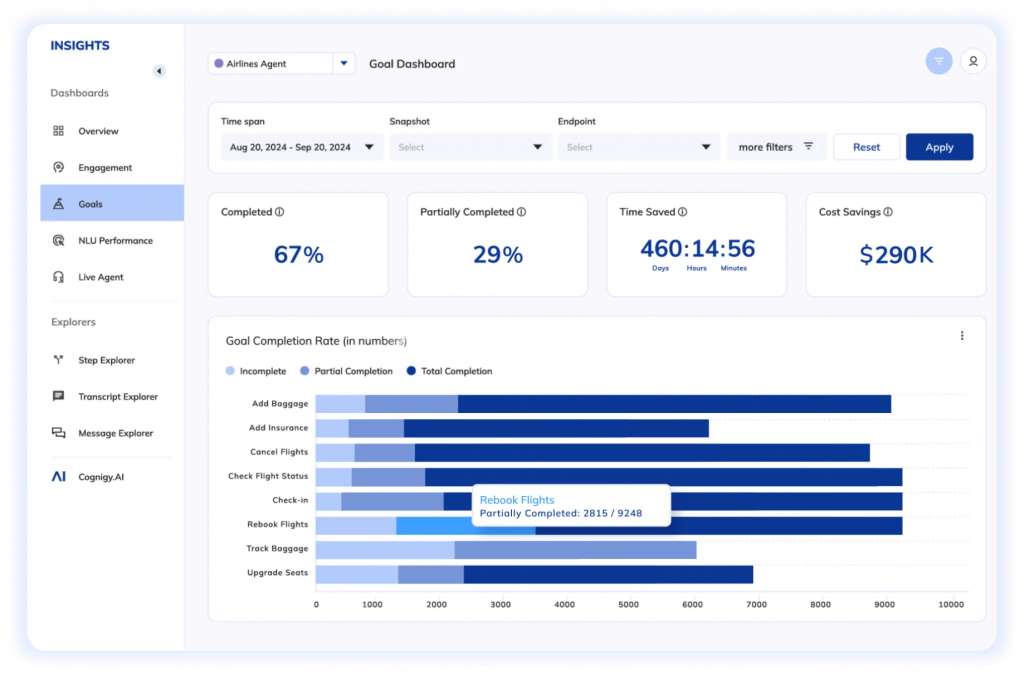
Ideal For: Large hospital systems and healthcare networks that require highly governed, auditable referral routing with enterprise-grade conversational AI.
Cognigy / NiCE Overview
Cognigy, together with NiCE, delivers enterprise conversational AI that emphasizes governance, compliance, and auditable referral workflows. Its visual workflow builder enables healthcare organizations to create referral routing logic that can be fully reviewed and reproduced for compliance purposes, making it ideal for highly regulated healthcare environments.
Cognigy / NiCE Key Features
- Visual workflow builder for referral routing.
- Auditable decision trees for compliance.
- Voice bots for referral intake and appointment management.
- Support for more than 100 languages.
- On-premise deployment option.
- Enterprise-grade EHR integration capabilities.
Cognigy / NiCE Pros
- Fully auditable referral routing logic.
- Extensive multilingual support.
- Recognized Gartner Magic Quadrant Leader.
- Strong integration ecosystem.
- On-premise deployment for organizations with strict security requirements.
Cognigy / NiCE Cons
- Enterprise contracts typically start above $300,000 annually.
- Multi-month implementation process.
- Requires engineering resources for workflow development.
- More functionality than most smaller healthcare organizations require.
When NOT to Choose Cognigy / NiCE
Avoid Cognigy if you’re a small or mid-sized healthcare practice that doesn’t require enterprise governance, multilingual support, or highly customized referral workflows.
Cognigy / NiCE Pricing
Enterprise pricing starts at approximately $300,000 per year. Contact the sales team for a customized quote.
Cognigy / NiCE Integrations
- Enterprise EHR systems
- On-premise deployments
- Healthcare workflow platforms
- SOC 2, HIPAA, and ISO 27001 compliant environments
Cognigy / NiCE Rating (Source)
G2: 4.6/5
Cognigy / NiCE Support Channels
- Enterprise Customer Support
- Technical Documentation
- Professional Services
- Implementation Team
- Customer Success
6. My AI Front Desk (Best Affordable SMB Referral Intake)
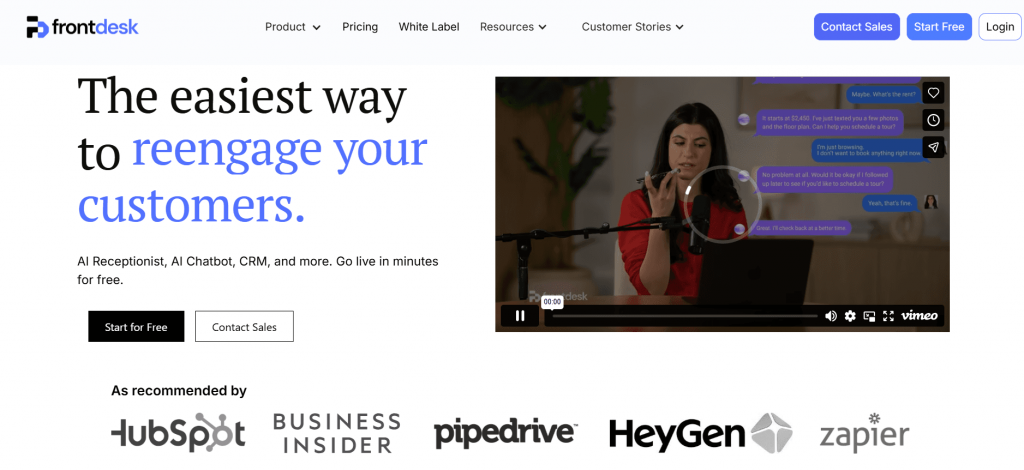
Ideal for: Small and mid-sized clinics, dental practices, and specialty healthcare providers looking for an affordable AI referral intake solution with HIPAA-compliant AI phone answering and bilingual support.
My AI Front Desk Overview
My AI Front Desk is an affordable AI Voice Agent for referral management that helps healthcare practices automate referral intake, answer calls 24/7, and route patients to the appropriate department. As an AI Answering Service, it reduces missed referral opportunities while providing bilingual support and unlimited parallel call handling. It is ideal for smaller practices that need reliable AI Call Automation Software without investing in expensive enterprise platforms.
My AI Front Desk Key Features
- 24/7 AI call answering with intelligent referral call routing.
- Native English and Spanish bilingual support.
- Zapier integration with 9,000+ applications for scheduling and CRM connectivity.
- Unlimited simultaneous call handling during busy referral periods.
- Quick deployment in approximately 10 minutes.
My AI Front Desk Pros
- One of the most affordable AI Voice Agents for healthcare referral automation.
- Built-in bilingual support makes it suitable for diverse patient populations.
- Fast implementation using existing business phone numbers.
- Unlimited concurrent calls prevent referral calls from reaching voicemail.
- Simple setup makes it ideal for small practices with limited IT resources.
My AI Front Desk Cons
- No native EHR integration; relies on Zapier for workflow automation.
- Referral routing capabilities are less advanced than healthcare-focused enterprise platforms.
- Language support is limited to English and Spanish.
- Smaller customer review base compared to established AI referral platforms.
When NOT to Choose My AI Front Desk
Choose another platform if you require native EHR integrations, AI fax processing, specialty-based referral routing, or advanced healthcare workflow automation.
My AI Front Desk Pricing
Here’s a quick overview of My AI Front Desk pricing plans:
- Free: $0/month
- Business-in-a-Box: $99/month (or $79/month when billed annually)
- Partner / Enterprise: Custom Pricing
My AI Front Desk Integrations
- Zapier (9,000+ integrations)
- Scheduling platforms
- CRM applications
- Business productivity tools
My AI Front Desk Rating
G2: 4.8/5
Newer platform with a growing review base. It is primarily recognized for affordability, ease of setup, and reliable AI phone answering for small healthcare practices.
My AI Front Desk Support Channels
- Email support
- Help Center
- Live onboarding resources
- Online documentation
7. Brilo.ai (Best for Fast, Affordable HIPAA-Compliant Deployment)
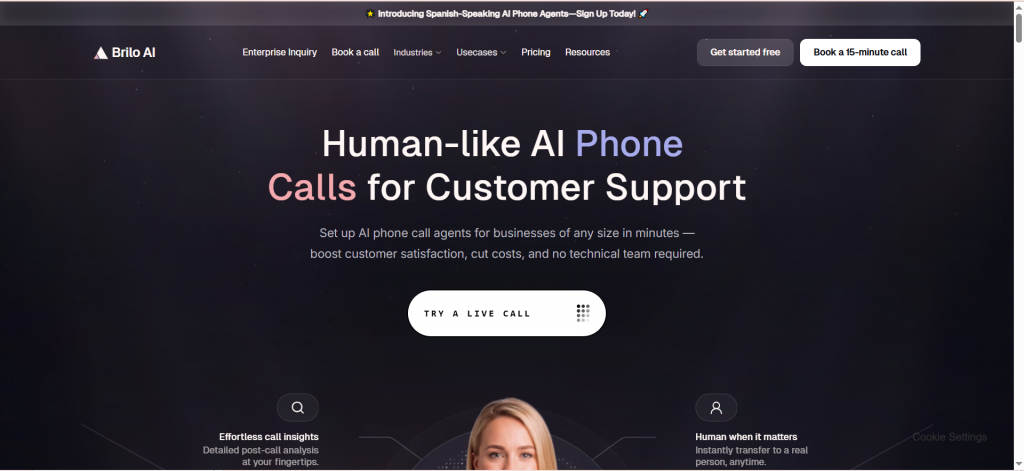
Ideal for: Healthcare organizations that need a HIPAA-compliant AI Voice Agent for referral intake with same-day deployment and transparent pricing.
Brilo.ai Overview
Brilo.ai is an AI Voice Agent for Phone Call Automation designed to help practices automate referral intake, patient communication, and appointment workflows without lengthy implementation. Unlike many enterprise healthcare solutions, Brilo.ai offers transparent pricing, multilingual AI conversations, and rapid deployment, making it an attractive AI Call Automation Software for practices that want to go live quickly.
Brilo.ai Key Features
- Structured AI referral intake for demographics, insurance, and referral details.
- Intelligent escalation for calls requiring staff intervention.
- AI training using existing website content and FAQs.
- API integration for scheduling and workflow updates.
- Multilingual support across more than 45 languages.
Brilo.ai Pros
- Deployment can be completed within minutes.
- Transparent pricing without lengthy enterprise negotiations.
- Excellent multilingual capabilities for diverse patient populations.
- Complete call transcripts support auditing and compliance.
- HIPAA-compliant infrastructure with SOC 2 certification.
Brilo.ai Cons
- Native EHR booking requires middleware.
- Not built specifically for referral management workflows.
- Clinical terminology requires additional customization.
- Healthcare organizations should verify HIPAA documentation and execute a BAA before deployment.
When NOT to Choose Brilo.ai
Skip Brilo.ai if your organization requires direct EHR scheduling, advanced healthcare referral workflows, or native specialty-specific referral routing.
Brilo.ai Pricing
Here’s a quick overview of Brilo.ai pricing plans:
- Free: $0/month (10 minutes/month)
- Pro: $149/month (600 minutes)
- Growth: $499/month (2,500 minutes)
- Custom: Contact Sales (5,000+ minutes)
Brilo.ai Integrations
- API integrations
- Scheduling software
- CRM systems
- Third-party workflow automation platforms
Brilo.ai Rating (Source)
G2: 5/5
Brilo.ai Support Channels
- Email support
- Knowledge base
- Documentation
- Customer onboarding
- Technical support
8. Hyro AI (Best for Large Health Systems with Complex Specialty Matching)
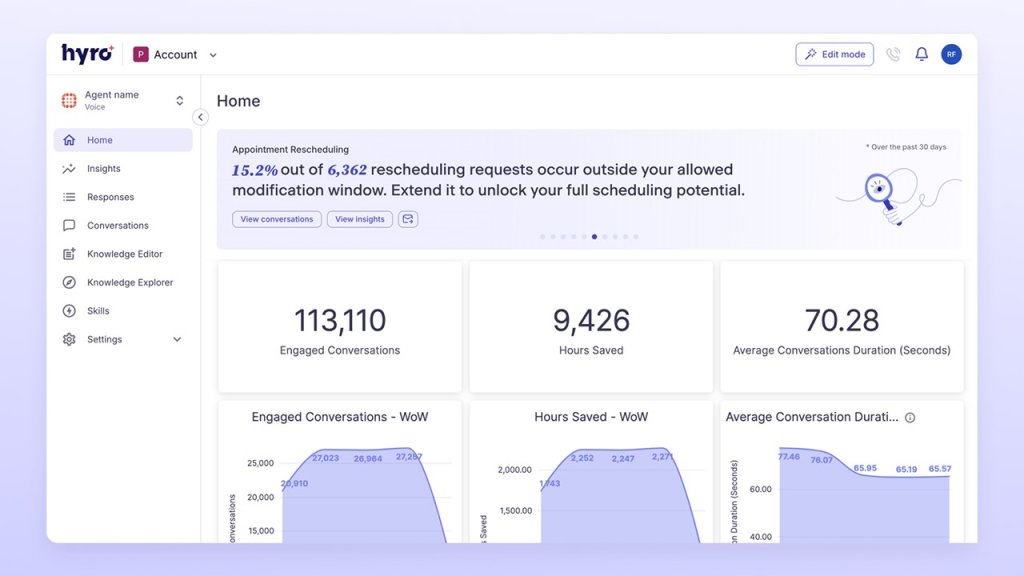
Ideal for: Enterprise hospitals and multi-specialty health systems that require sophisticated AI referral routing, provider matching, and large-scale patient access automation.
Hyro AI Overview
Hyro AI is a healthcare-focused AI Voice Agent that automates referral intake, patient scheduling, and provider matching using conversational AI. As an enterprise-grade AI Phone Agent, it connects directly with leading EHR platforms and intelligently matches patients based on specialty, insurance, location, and provider availability. It is one of the strongest AI Voice Agents for Phone Call automation, designed specifically for large healthcare networks.
Hyro AI Key Features
- AI-powered provider matching by specialty, insurance, location, and availability.
- Native Epic, Cerner, and Athenahealth integrations.
- Automatically generated healthcare knowledge base.
- Omnichannel deployment across phone, SMS, web, and mobile.
- Real-time PHI security during conversations.
Hyro AI Pros
- Purpose-built for healthcare organizations.
- Excellent provider matching for complex referral workflows.
- Native EHR integrations streamline scheduling.
- Proven enterprise results with reduced call abandonment and wait times.
- Faster implementation compared to manually configured enterprise systems.
Hyro AI Cons
- Enterprise pricing is expensive for small practices.
- No publicly available pricing.
- Limited public review volume.
- Focuses primarily on patient access rather than payer authorization workflows.
When NOT to Choose Hyro AI
Hyro is not ideal for independent practices or smaller clinics that need affordable referral automation without enterprise complexity.
Hyro AI Pricing
Hyro AI does not publicly disclose its pricing. Organizations must contact the their sales team for a customized Hyro AI pricing based on deployment size, integrations, and anticipated call volume.
Hyro AI Integrations
- Epic
- Cerner
- Athenahealth
- Voice systems
- SMS
- Mobile applications
- Web platforms
Hyro AI Rating
Limited publicly available ratings across major review platforms.
Hyro AI Support Channels
- Dedicated Customer Success Manager
- Technical support
- Documentation
- Enterprise onboarding
- Training resources
9. Retell AI (Best for HIPAA Compliance Without an Enterprise Contract)
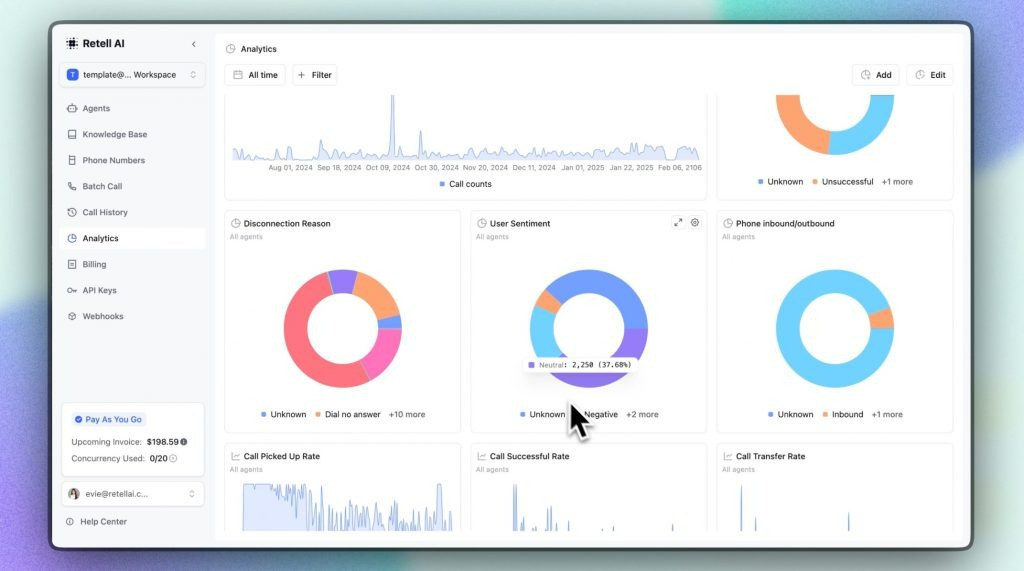
Ideal for: Healthcare organizations seeking a flexible AI Voice Agent with self-service HIPAA compliance and customizable referral workflows.
Retell AI Overview
Retell AI is a developer-friendly AI Voice Agent for Phone Call Automation that allows healthcare organizations to build custom referral intake workflows while maintaining HIPAA compliance. Unlike many enterprise-only platforms, Retell AI offers self-service BAAs, API access, and no-code tools, making it an attractive AI Call Automation Software for organizations wanting flexibility without long enterprise sales cycles.
Retell AI Key Features
- Self-service HIPAA BAA request portal.
- No-code builder alongside full API and SDK access.
- PII redaction for transcripts and recordings.
- Warm transfers with complete conversation history.
- SOC 2 Type II, GDPR compliance, and optional on-premise deployment.
Retell AI Pros
- HIPAA compliance without requiring enterprise contracts.
- Highly customizable AI referral workflows.
- Strong encryption and configurable data retention.
- Supports both no-code users and developers.
- Handles millions of AI-powered calls monthly across thousands of organizations.
Retell AI Cons
- No native EHR integrations.
- Referral workflows require configuration.
- Overall pricing depends on telephony, LLM, and voice engine usage.
- Healthcare-specific workflows are not available out of the box.
When NOT to Choose Retell AI
Choose another platform if you need prebuilt healthcare referral workflows with native EHR integrations instead of building custom AI call flows.
Retell AI Pricing
Retell AI pricing uses a pay-as-you-go model with no platform subscription fee:
- AI Voice Agents: Around $0.07–$0.08 per minute for voice agent usage.
- AI Chat Agents: Around $0.002+ per message.
- Telephony: ~$0.015 per minute when using Retell’s telephony stack.
- Phone Numbers: ~$2 per number/month.
- SMS Enablement: ~$20/month (optional).
- Concurrency Add-ons: ~$8/month for extra active call slots.
- Free Trial Credits: $10 free credit (~60 minutes) to test the platform.
Pricing can vary by voice engine, model selection, and telephony choice. At higher enterprise volumes, negotiated per-minute rates can drop below standard pay-as-you-go.
Retell AI Integrations
- API integrations
- Custom EHR integrations
- CRM systems
- Telephony providers
- Backend workflow platforms
Retell AI Rating
G2: 4.5/5
Retell AI Support Channels
- Email support
- Discord community
- Documentation
- Enterprise Slack support
- Developer resources
10. Synthflow AI (Best for Non-Technical Teams Able to Commit to Enterprise Compliance)
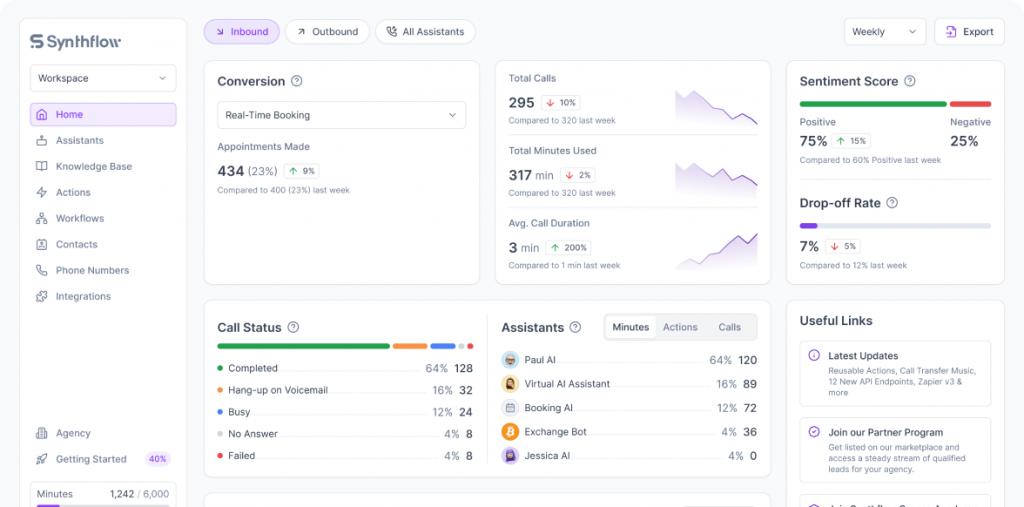
Ideal for: Healthcare organizations wanting a no-code AI Voice Agent for referral intake while planning for enterprise-level HIPAA compliance.
Synthflow AI Overview
Synthflow AI is a no-code AI Voice Agent for Phone Call Automation that enables healthcare teams to build referral intake and patient communication workflows without coding. Its intuitive visual builder, natural voice quality, and calendar integrations make it a strong AI Phone Answering Service for non-technical users, although HIPAA compliance is only available under enterprise plans.
Synthflow AI Key Features
- No-code visual workflow builder.
- Native Google Calendar and Outlook integrations.
- Enterprise-grade HIPAA, SOC 2, and ISO 27001 compliance.
- Multi-region deployment and role-based access.
- Real-time analytics and reporting dashboards.
Synthflow Pros
- Extremely easy for non-technical users.
- Fast deployment with visual workflow creation.
- Natural AI voice conversations improve caller experience.
- Comprehensive compliance capabilities under enterprise plans.
- Helpful onboarding resources and documentation.
Synthflow Cons
- HIPAA compliance is restricted to Enterprise plans.
- Limited EHR integrations compared to healthcare-focused solutions.
- Usage costs may become expensive at higher call volumes.
- Some customers report slower support after onboarding.
When NOT to Choose Synthflow AI
Avoid Synthflow if you require HIPAA-compliant referral automation immediately without upgrading to an Enterprise plan or need deep native EHR integrations.
Synthflow AI Pricing
- Pro plans begin with usage-based pricing (approximately $0.225/minute)
- Enterprise pricing available upon request
Synthflow AI Integrations
- Google Calendar
- Outlook Calendar
- Enterprise EHR integrations
- CRM platforms
- Workflow automation tools
Synthflow AI Rating
G2: 4.6/5
Synthflow AI Support Channels
- Email support
- Help Center
- Documentation
- Video tutorials
- Customer onboarding
- Technical support
Which AI Voice Agent for Referral Intake Is Right for You?
| Your Situation | Best Choice | Why |
| Practice needing built-in referral routing, fax intelligence, and closed-loop updates | Emitrr | Purpose-built referral routing, AI fax/document processing, native EHR sync |
| Wanting referral intake bundled with scribing and billing in one subscription | DeepCura | Six bundled AI agents at a flat per-provider price |
| Large health system needing 100% QA coverage and real-time EHR sync | Syllable AI (ActiumHealth) | Enterprise scale, every interaction audited for compliance |
| Referrals routinely stalled on payer authorization, not just intake | Infinitus | Only platform automating both patient intake and payer-side calls |
| Large regulated health system needing auditable routing decisions | Cognigy (NiCE) | Deterministic, reproducible routing logic for compliance review |
| Small practice wanting the lowest-cost basic routing | My AI Front Desk | $65/month, bilingual, fast setup |
| Wanting fast, affordable deployment without enterprise sales cycles | Brilo.ai | Live in minutes, transparent pricing, 45+ languages |
| Large health system with hundreds of providers needing specialty matching | Hyro | Native Epic/Cerner/Athenahealth, proven enterprise results |
| Wanting HIPAA compliance without an enterprise contract | Retell AI | Self-service BAA portal on standard plans |
| Non-technical team able to commit to an enterprise contract | Synthflow | No-code builder, full compliance bundle at Enterprise tier |
Why Choose Emitrr for Referral Intake Automation?
Referral intake is more than simply answering calls, it requires collecting accurate patient information, routing referrals to the right provider, integrating with the EHR, and keeping patients and referring physicians informed throughout the process. Emitrr brings all of these capabilities together in a healthcare-first platform built specifically for medical practices.
Purpose-Built for Healthcare
Unlike general-purpose AI voice platforms, Emitrr is designed exclusively for healthcare organizations. It supports referral intake workflows while maintaining HIPAA compliance and fitting seamlessly into existing clinical operations.
Intelligent Referral Capture
Emitrr’s AI voice agent answers referral calls around the clock, identifies the caller’s intent, and captures structured information such as patient demographics, insurance details, referring provider, specialty requested, referral reason, and preferred location. This standardizes every referral before it reaches staff.
EHR-Connected Workflow Automation
Where integrations are available, Emitrr creates referral tasks, patient cases, and workflow records directly inside the EHR. Staff no longer need to manually transfer information between phone calls, faxes, and clinical systems, reducing administrative effort and minimizing data-entry errors.
AI Summaries and Complete Documentation
Every referral conversation is automatically recorded, transcribed, summarized, and stored. Staff can review concise AI-generated summaries instead of listening to lengthy recordings, helping them process referrals faster while maintaining a complete audit trail.
Intelligent Routing and Human Handoff
Emitrr applies configurable business rules to automatically route referrals based on specialty, insurance, provider availability, clinic location, or urgency. When human intervention is required, calls can be transferred to the appropriate department or team while preserving the conversation context.
Multi-Channel Patient Communication
Beyond voice, Emitrr automatically sends SMS confirmations, secure document requests, scheduling links, and referral status updates. Patients remain informed throughout the referral journey, while practices manage all conversations from a shared SMS inbox.
Built for Enterprise Healthcare
Emitrr supports multi-location healthcare organizations with centralized administration, department-level routing, reporting dashboards, shared inboxes, webhooks, workflow automation, and enterprise analytics, making it suitable for both growing practices and large health systems.
Healthcare-Grade Security and Compliance
Emitrr supports HIPAA compliance with Business Associate Agreements (BAAs), encrypted communications, secure storage, audit logging, and configurable AI guardrails to help organizations protect patient information while automating referral operations.
Key Takeaways
- Referral leakage — referred patients who never complete their appointment — affects an estimated 20–30% of referrals, and most of that loss happens in the fragmented gap between referral receipt and scheduling.
- The strongest referral-intake platforms do more than answer calls: they extract data from faxes and documents, apply rule-based routing by specialty/urgency/location, and close the loop with referring providers automatically.
- EHR integration depth and document/fax processing capability are the two biggest differentiators between a true referral-intake platform and a generic patient-intake or scheduling tool.
- HIPAA/BAA posture varies widely: some platforms include it standard (Emitrr, DeepCura, My AI Front Desk, Retell AI), others gate it behind enterprise contracts (Synthflow, Cognigy) or require it to be specifically requested and verified (Brilo.ai).
- Enterprise platforms (Syllable AI, Cognigy, Hyro, Infinitus) deliver real scale and auditability but require six-figure budgets and multi-month implementations — they make sense for large health systems, not independent practices.
- AI should accelerate referral routing and communication, not replace clinical judgment about referral appropriateness — that authority stays with providers.

Frequently Asked Questions
An AI voice agent for referral intake is a conversational AI system designed to receive, validate, and route referrals sent from one healthcare provider to another. It can answer calls from referring offices, extract data from faxed referrals, verify completeness, route the referral to the correct specialist or department based on specialty and urgency, and keep both the patient and referring provider updated throughout the process.
General patient intake covers new patients calling a practice directly to schedule or ask questions. Referral intake specifically handles referrals arriving from other providers — which involves extracting referring physician details, validating clinical documentation, applying specialty/urgency-based routing rules, and closing the loop back to the referring office. Not every patient-intake platform is built to handle this workflow well.
Referrals typically arrive through a patchwork of channels — fax, phone, email, EHR feeds, and patient portals — without a unified system. This fragmentation, combined with manual data entry errors and inconsistent routing judgment, causes an estimated 20–30% of referrals to never result in a completed appointment.
It depends on the vendor and plan. Some platforms, like Emitrr, DeepCura, My AI Front Desk, and Retell AI, include HIPAA compliance and a signed BAA on standard plans. Others, like Synthflow and Cognigy, gate HIPAA compliance behind enterprise contracts. Always confirm current BAA terms directly with a vendor before handling any PHI in production — compliance requirements and vendor offerings evolve.
Yes, for routine, well-defined cases, AI can apply rule-based routing by specialty, urgency, and location automatically. However, complex cases (ambiguous specialty needs, missing critical clinical information, or urgent/high-risk referrals) should still be flagged for staff or provider review rather than routed fully autonomously.
AI voice agents can automatically notify referring providers when a referral is received, when the patient is scheduled, and ideally when the visit is completed — without requiring referral coordinators to manually track and follow up on every case. This closed-loop communication helps maintain strong referral relationships over time.
Conclusion
Referral intake sits at one of the most consequential and most neglected junctions in healthcare operations. Every lost referral is a patient who doesn’t get the specialist care they were sent for, and a provider relationship that quietly erodes when the loop never closes. While enterprise platforms like Syllable AI, Cognigy, Hyro, and Infinitus are well-suited for large health systems, Emitrr stands out for practices and growing healthcare organizations with its healthcare-first AI voice automation, HIPAA-compliant workflows, EHR integrations, and seamless patient communication capabilities.
Ready to streamline your referral intake process? Book a personalized demo with Emitrr and see how AI can help you automate referrals, improve care coordination, and ensure every referral turns into an appointment.

 4.9 (400+
reviews)
4.9 (400+
reviews)