

Introduction
Podiatry sits at an odd intersection: it’s surgical enough to need real procedure documentation and authorization tracking, but also runs on a steady stream of recurring visits, diabetic foot checks, wound care, orthotic follow-ups that look more like a primary care cadence than a surgical specialty. An EMR for podiatrists has to handle both without forcing the practice to choose. Add durable medical equipment (DME) workflows, referral-heavy intake from primary care and endocrinology, and a documentation load that still leans heavily on faxed records from other providers, and it becomes clear why a generic ambulatory EMR checklist misses most of what actually matters to a podiatry practice.
The referral and fax dependence in particular sets podiatry apart. Many practices still receive a meaningful share of new patient information, prior imaging, referral letters, and insurance authorizations by fax, and turning that into structured chart data is a manual, error-prone process if the EMR does not support some form of document automation. Combine that with authorization tracking for DME and surgical procedures, and podiatry’s evaluation criteria look distinct from most other outpatient specialties. This guide covers the blockers specific to podiatry, the features that matter across procedural and recurring care, how leading systems compare, and how to evaluate vendors before signing.

AI Summary
- The defining podiatry EMR requirement is supporting both procedural, authorization-heavy episodes (surgery, DME) and steady recurring visits (diabetic foot checks, wound care) within the same documentation and scheduling system.
- The most significant blocker for many practices is fax dependence for referrals and prior records, since manual transcription from faxed documents is slow and error-prone without OCR or structured data extraction support.
- Authorization and DME tracking is the most operationally important feature category, since podiatry billing depends heavily on getting these details right to avoid denials.
- Integration diligence should focus on whether the EHR’s API supports real write-back for scheduling and referral data, or whether communication and referral tools are limited to manual, read-only workflows.
- Small podiatry practices should prioritize straightforward documentation and billing, while growing groups should prioritize referral automation, DME tracking depth, and multi-location scheduling.
Which EMR for Podiatrists Is Right for You? TL;DR
| EMR | Best suited for | Key strengths | Potential consideration |
| NextGen Healthcare | Small and growing podiatry practices | Podiatry-specific templates, AI documentation, practice management, patient engagement | Practices with more complex requirements should evaluate whether the available workflows match their needs |
| AdvancedMD | Podiatry practices wanting specialized documentation with integrated practice management | Podiatry templates, customizable care plans, scheduling, billing, and patient management | May require configuration for highly specialized or complex podiatric workflows |
| DrChrono | Mobile-first podiatry practices and smaller practices | Mobile charting, customizable templates, digital forms, e-prescribing, billing, and integrations | Practices needing deeply podiatry-specific workflows should verify template and workflow depth |
| Tebra | Independent and private podiatry practices | EHR, billing, scheduling, patient engagement, AI charting, and online scheduling | Broader private-practice positioning means specialty-specific requirements should be validated |
| athenahealth | Podiatry groups prioritizing connected EHR, billing, and interoperability | Specialty workflows, revenue cycle management, patient engagement, and broad interoperability | Practices should confirm the depth of podiatry-specific customization required |
| Practice Fusion | Small and independent podiatry practices | Podiatry-specific templates, customizable charting, imaging and lab connections, referrals | Better suited to smaller practices than complex multi-site organizations |
| PrognoCIS | Podiatry practices seeking specialty-specific workflows | Podiatry templates, image management, scheduling, billing, authorizations, and reporting | Practices should evaluate the interface and implementation experience against their workflow |
| eClinicalWorks | Podiatry practices needing a broad ambulatory platform | Podiatry workflows, interoperability, patient engagement, AI tools, and ASC capabilities | The breadth of the platform may require more configuration and training |
| Greenway Health | Independent, group, and multi-specialty podiatry practices | Specialty workflows, customizable templates, reporting, and ambulatory practice management | Practices should assess how closely the configuration matches their podiatry workflow |
| Epic Systems | Large organizations, health systems, and complex specialty networks | Enterprise-scale EHR, interoperability, extensive clinical capabilities, and health-system connectivity | Implementation, cost, and complexity can be significant for smaller independent podiatry practices |
Challenges for Podiatry Clinics
Fax dependence for referrals and prior records without OCR or structured data extraction
A meaningful share of new patient information in podiatry still arrives by fax: referral letters from primary care, prior imaging reports, and insurance authorization paperwork. This matters because referral volume directly drives new patient flow in podiatry, and slow, error-prone fax processing creates a real bottleneck at intake. Practices should verify whether the EMR or a connected tool supports fax ingestion with data extraction, and understand the accuracy limitations of OCR before relying on it without a review step.
DME and authorization tracking gaps that create billing denials
Durable medical equipment, orthotics, diabetic shoes, braces, and walking boots are a routine part of podiatry billing, and DME claims are frequently subject to specific authorization and documentation requirements. If the EMR does not track authorization status clearly alongside the order, practices risk billing for equipment that was never properly authorized, which leads to denials and delayed reimbursement.
Closed APIs and limited EHR write-back restricting outside referral and communication tools
Many podiatry-specific EHRs, particularly smaller or more established platforms, were not built with an open, public API for outside tools to connect to. This limits what referral management, communication, or reporting automation is realistically possible without manual data entry. Before buying, ask directly whether the vendor has a public API, a partner-only API, or no API at all, and get this in writing.
Procedure-specific scheduling and pre-op workflows that generic recurring-visit logic cannot support
Podiatry scheduling has to represent two very different visit types: quick, recurring visits (diabetic foot checks, callus or nail care) and longer procedural visits (in-office surgery, wound debridement) that may require pre-op instructions and different room or equipment setup. A scheduling module built only around uniform recurring visits will struggle to represent procedure-specific block lengths and pre-op communication sequences well.
Digital intake and referral forms that only upload as PDFs instead of mapping into structured fields
Even where digital patient intake exists, many podiatry EHRs do not map structured answers (symptom history, diabetic status, prior treatment) into discrete chart fields, instead storing forms as a static PDF attachment. This slows chart review and means clinical staff still manually transcribe key intake details into the note. Ask specifically whether intake and referral forms populate structured fields or only attach as a document.
Must-Have EMR Features for Podiatrists
- Podiatry-Specific Documentation: The best EMR for podiatrists should offer specialized SOAP note templates for common foot and ankle conditions and treatments. Structured documentation helps podiatrists reduce data entry and maintain consistent clinical records.
- Procedure Documentation: A podiatry EMR should make it easy to document procedures, treatments, findings, and follow-up requirements within the patient chart. This helps providers maintain accurate records while reducing repetitive documentation.
- Treatment Plan Management: The best EHR for podiatry should allow providers to create, update, and track treatment plans based on each patient’s condition. Connecting treatment plans with follow-ups and clinical documentation helps improve continuity of care.
- Insurance Eligibility and Authorization: Podiatry practices should look for EMR software that can verify insurance eligibility and track authorization requirements before treatment begins. Automated eligibility checks can help staff understand coverage and patient responsibility while reducing billing delays.
- DME Workflow and Authorization Tracking: A podiatry EMR should support DME documentation, authorization tracking, and related billing workflows when practices provide orthotics or other durable medical equipment. Keeping these details within the patient record can reduce manual tracking and missed authorization steps.
- Imaging Support: The best EMR for podiatrists should support imaging workflows for X-rays, bone scans, MRIs, and other diagnostic studies. Providers should be able to order studies, receive results, and access relevant images or documentation directly from the patient’s chart.
- Digital Intake and Structured Field Mapping: Digital intake forms should map patient information into structured EHR fields instead of requiring staff to manually re-enter data. This helps podiatry practices save time while improving the accuracy and completeness of patient histories.
- Referral Intake and Fax Handling: Podiatry EHR systems should simplify referral intake by organizing incoming referrals, documentation, and faxed records in one workflow. This makes it easier for staff to track referral volume and ensure patients move from referral to scheduled care.
- Billing and Claims Management: The best podiatry EMR should support medical billing, claims submission, denial management, and payment tracking. Integrated billing workflows can help practices improve clean claim rates, address denials faster, and maintain better visibility into revenue cycle performance.
- Recurring and Procedure-Specific Scheduling: Podiatry practices often manage recurring visits alongside procedure-specific appointments, making flexible scheduling essential. The right EMR should support recurring schedules while accounting for procedure duration, provider availability, and treatment requirements.
- Integrated e-Prescribing: An EMR for podiatrists should include integrated e-prescribing for medications and, where applicable, controlled substances. Electronic prescriptions can reduce errors, streamline pharmacy communication, and improve medication management.
- Lab Ordering and Results: Podiatry EHR software should allow providers to order tests through integrated laboratory networks and receive results electronically. This reduces manual coordination and keeps diagnostic information connected to the patient’s record.
- Patient Communication and Reminders: The best EHR for podiatry should support appointment reminders, confirmations, follow-ups, and other patient communication workflows. Automated messaging can reduce no-shows and minimize the amount of repetitive outreach handled by front-desk staff.
- Patient Portal: A patient portal can allow patients to complete forms, access relevant information, manage appointments, and communicate with the practice. This gives podiatry teams a centralized way to handle routine patient interactions outside the office.
- Real-Time Reporting and Analytics: Podiatry EMR systems should provide reporting on patient outcomes, authorization status, denial rates, referral volume, and revenue cycle performance. Actionable analytics help practices identify workflow bottlenecks and make better operational decisions.
- Mobile and Web Access: A web- and mobile-accessible podiatry EHR allows providers to review charts, documentation, medications, forms, and other information from different locations. This flexibility can be particularly useful for practices with multiple sites or providers who work across clinical settings.
- Support for imaging and diagnostic documentation: A good EMR keeps everything right inside the patient record, so your team isn’t jumping between systems during visits. When past images are easy to pull up and compare with new ones, clinical decisions become much clearer and treatment planning more confident.
- Integrated scheduling for procedures and follow-ups: Podiatry schedules are not always simple. You must be managing exams, procedures, post-op visits, and ongoing follow-ups. An EMR should handle all of this without confusion. Scheduling must stay flexible instead of being rigid. Staff should be able to see what’s coming next at a glance. This way, patients also get clearer expectations around their visits.
Best EMRs for Podiatrists: Detailed Analysis
- NextGen Healthcare
- AdvancedMD
- DrChrono
- Tebra
- Athenahealth
- Practice Fusion
- PrognoCIS
- eClinicalWorks
- Greenway Health
- Epic Systems
| EMR | Clinical & documentation | Practice operations | Notable workflow |
| NextGen Healthcare | Specialty templates and tools for documenting podiatry encounters and care plans. | Combines EHR, scheduling, billing, and practice management. | Useful for practices managing more complex podiatry workflows. |
| AdvancedMD | Customizable podiatry templates and clinical decision-support tools. | Integrates EHR, scheduling, billing, and practice management in one system. | Supports care coordination through APIs and data exchange. |
| DrChrono | Mobile charting, customizable templates, digital forms, and e-prescribing. | Scheduling, billing, authorizations, and documentation are connected. | A strong option for practices that prioritize mobile and flexible workflows. |
| Tebra | Supports digital documentation, AI-assisted notes, e-prescribing, and lab workflows. | Combines EHR, billing, scheduling, payments, and practice management. | Patient engagement is closely connected to day-to-day practice operations. |
| athenahealth | Configurable clinical documentation and specialty workflows. | Connects EHR, scheduling, billing, RCM, and authorization workflows. | Particularly useful for practices that need strong interoperability and connected care. |
| Practice Fusion | Podiatry templates, customizable notes, imaging connections, and referral tools. | Supports billing, eligibility, prior authorization, and digital intake. | Well suited to smaller practices looking for a straightforward, web-based workflow. |
| PrognoCIS | Podiatry-focused templates, macros, dictation, and image management. | Includes scheduling, billing, referrals, and authorization workflows. | Brings several podiatry-specific clinical and administrative tasks together. |
| eClinicalWorks | Supports specialty documentation and tools for faster clinical charting. | Offers EHR, practice management, billing, patient engagement, and broader interoperability. | Useful for practices that need a broad ambulatory care ecosystem. |
| Greenway Health | Customizable templates and specialty-oriented clinical workflows. | Supports practice management, reporting, scheduling, and billing. | Can accommodate independent, group, and multi-specialty practice environments. |
| Epic Systems | Extensive clinical documentation and specialty workflows across complex care settings. | Built for large-scale clinical, financial, and operational management. | Best suited to organizations that need enterprise-wide connectivity and interoperability. |
1. NextGen Healthcare
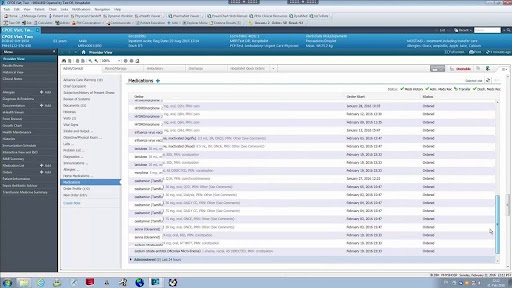
NextGen Healthcare works well if your podiatry clinic handles detailed exams, imaging, procedures, and ongoing care plans. It’s built for specialty practices, so it doesn’t feel limited when your cases get more complex. This means you can document detailed foot and ankle assessments, attach images, and track long-term treatment plans without jumping between systems. It’s especially helpful if your clinic is growing or adding providers.
2. AdvancedMD
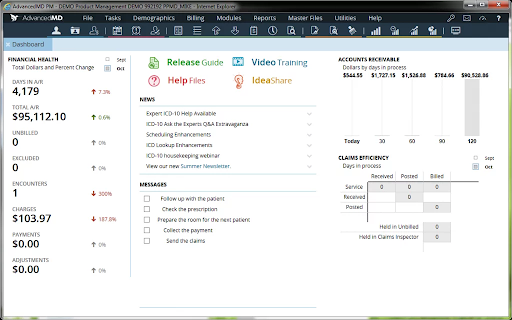
AdvancedMD allows teams to customise message templates and workflows so the system matches how they actually work. Scheduling, billing, and reporting are fully integrated, which reduces day-to-day friction. Providers can document care efficiently while billing runs in the background. Practice leaders get access to detailed reports that show patient flow and financial performance. This makes it easier to spot issues early. This makes AdvancedMD really well-suited for multi-provider or growing podiatry practices.
3. DrChrono
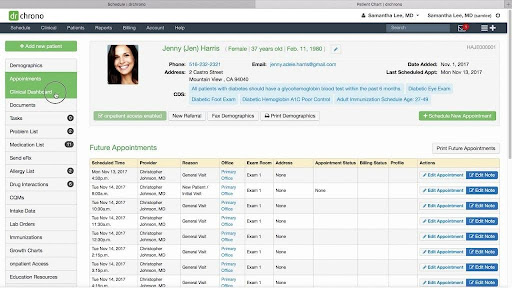
DrChrono can work well for you if you just want things to be simple. The system is easy to understand, so you won’t be wasting time figuring out where to click next. Charting feels quick and straightforward, even on busy days. It runs smoothly on desktops and tablets, which can give your team some flexibility during visits. Scheduling and billing are part of the same flow, so nothing feels disconnected. It’s a solid choice if you want an EMR that works silently in the background and lets you focus on patients.
4. Tebra
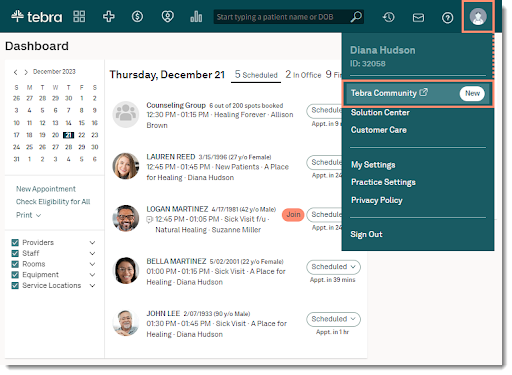
Tebra is often a go-to option for smaller podiatry practices. It focuses heavily on practice management and billing efficiency. Scheduling, documentation, and revenue cycle workflows are pretty simple to follow. The platform does not feel overwhelming, which makes adoption smoother for teams. Billing tools are simple and reliable, helping reduce errors. Many clinics appreciate that Tebra keeps things practical. Which is great if you want operational simplicity without unnecessary complexity.
5. Athenahealth
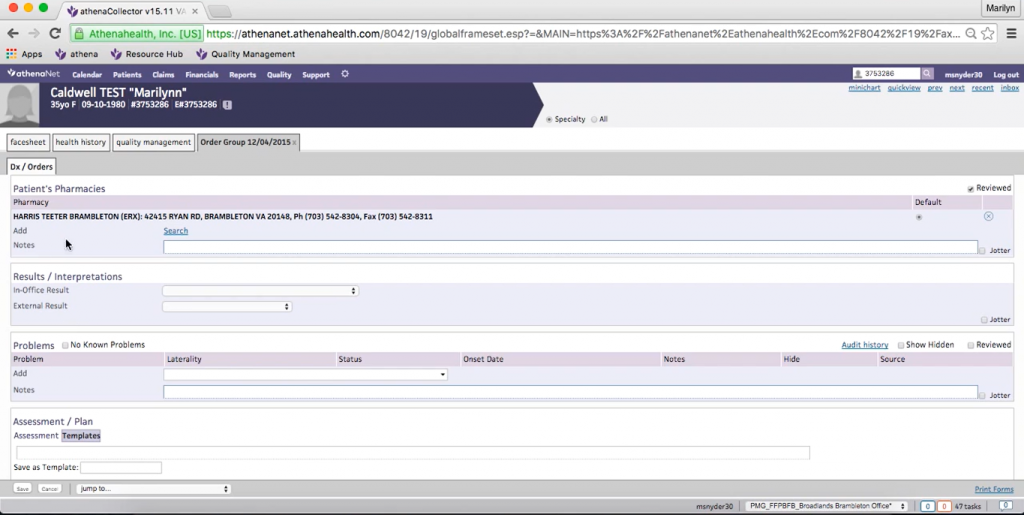
Athenahealth stands out if billing performance is a top priority for your podiatry clinic. Its large payer network helps simplify insurance checks and claims submission. For you, that means fewer claim rejections and smoother reimbursements while your clinical documentation stays organised.
6. Practice Fusion: Best for Lightweight, Independent Practices
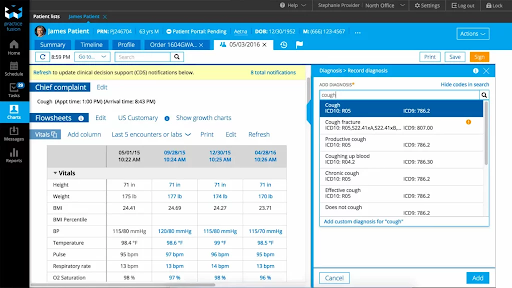
Practice Fusion can be a comfortable option if your podiatry clinic is smaller or independently run. It is cloud-based and fairly easy to get started with, so your team does not need weeks of training. Charting, e-prescribing, and everyday documentation feel straightforward, which helps keep your day moving. While it may not support very complex surgical workflows, it works well for routine podiatry visits and follow-ups. If you want something lightweight that still keeps patient records organised, this can be a practical choice.
7. PrognoCIS
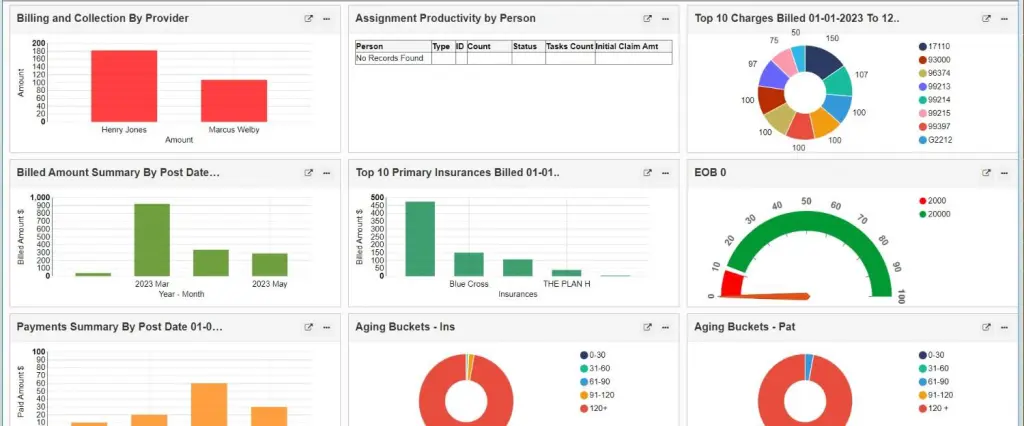
PrognoCIS is often chosen if you want more control over how your EMR works. For podiatry practices, it allows you to customise templates so they actually reflect how you examine and treat foot and ankle conditions. If you feel standard templates don’t quite match your workflow, this platform gives you more flexibility. It works well when your clinic has specific documentation needs that generic systems struggle to support.
8. eClinicalWorks
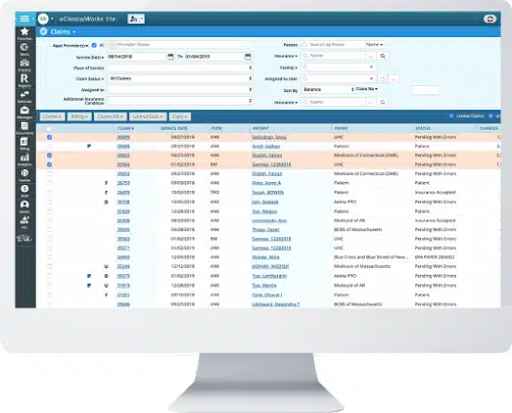
eClinicalWorks covers clinical documentation, billing, digital patient engagement, and reporting without forcing you to juggle multiple systems. For you, this means less switching between tools and more time spent actually treating patients. It also supports imaging, referrals, and follow-ups, which are a regular part of podiatry care. If your clinic is growing or has multiple locations, eClinicalWorks gives you a solid structure to scale without constant workflow changes.
9. Greenway Health

Greenway Health works well for podiatry practices that want consistency without too much complexity. It supports podiatry documentation, billing, and reporting while keeping workflows structured and predictable. For you, this means providers stay aligned and visits feel more uniform across the clinic. Reporting tools help you track productivity, patient volume, and revenue trends over time.
10. Epic Systems
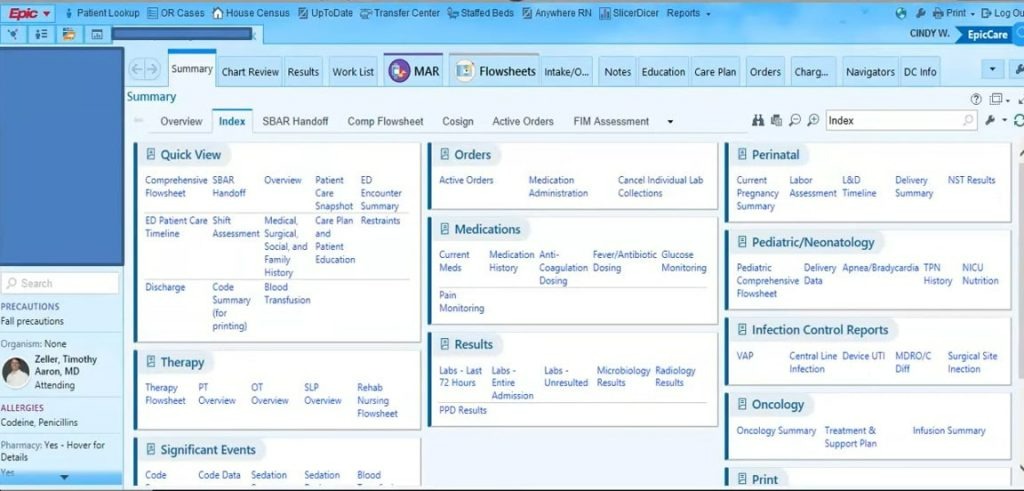
Epic is usually the right fit if your podiatry practice is part of a larger hospital or health system. If your patients move between orthopaedics, primary care, and surgical departments, Epic keeps everything connected under one patient record. That means complete visibility into the patient’s history without chasing information across departments. While it may feel too heavy for a small standalone clinic, it’s powerful when coordination matters most.
How Emitrr Works Alongside Your Podiatry EMR
Procedure-Specific Reminders
Emitrr can send appointment reminders and procedure-specific messages, including pre-op instructions and treatment follow-ups. Where the podiatry EHR exposes scheduling and procedure data through an API, these communications can be triggered from relevant appointment events.
Resource-Based Scheduling and Waitlists
When provider and procedure resource fields are available through the EHR, Emitrr can support schedule-aware communication and waitlist workflows. This can help practices contact patients when cancellations create newly available appointment slots.
Digital Intake and Pre-Op Forms
Practices can send intake and pre-op forms through SMS links before a visit or procedure. If the EHR supports structured field mapping, responses can flow into the chart; otherwise, completed forms can be provided as PDFs for staff to review and enter manually.
Missed-Call Text-Back
When patients call and cannot reach the practice, Emitrr can automatically send a text inviting them to continue the conversation. This helps podiatry practices capture missed opportunities and reduce the number of patients who remain waiting for a callback.
AI Voice and Triage
Emitrr’s AI voice capabilities can help handle incoming call volume and common patient questions, particularly around recurring follow-ups and routine communication. Complex scheduling or referral coordination should not be assumed to work automatically unless the podiatry EHR exposes the required information through an API.
Shared Communication Inbox
A shared inbox can bring two-way texts, missed-call responses, and other patient conversations into one workspace for front-desk teams. This gives staff greater visibility into patient communication without requiring them to manage conversations across multiple channels.
Referral and Fax Workflows
Emitrr can support communication around referral intake-related workflows, but it should not be treated as a replacement for fax ingestion, OCR, or referral data extraction. Practices should continue using their podiatry EHR or a dedicated document automation system for processing referral documents.
Integration Depends on the Podiatry EHR
The level of automation depends on whether the specific podiatry EHR provides a public or partner API. If the EHR is closed, Chrome extension or CSV-based workflows may support some communication tasks, but these are workarounds rather than native chart write-back.
Number Porting and 10DLC
Practices moving an existing business number to Emitrr can use number-porting support to maintain continuity with patients. For SMS communication at scale, 10DLC registration is generally required and should be completed before launching automated messaging campaigns.
Real-time EMR data synchronization with patient conversations
When communication tools aren’t connected to the EMR, details can easily get lost. Emitrr keeps patient calls, texts, and form responses aligned with the correct EMR records in real time. Staff doesn’t need to manually update multiple systems. Information stays accurate and complete. This reduces errors and saves valuable time for the team.
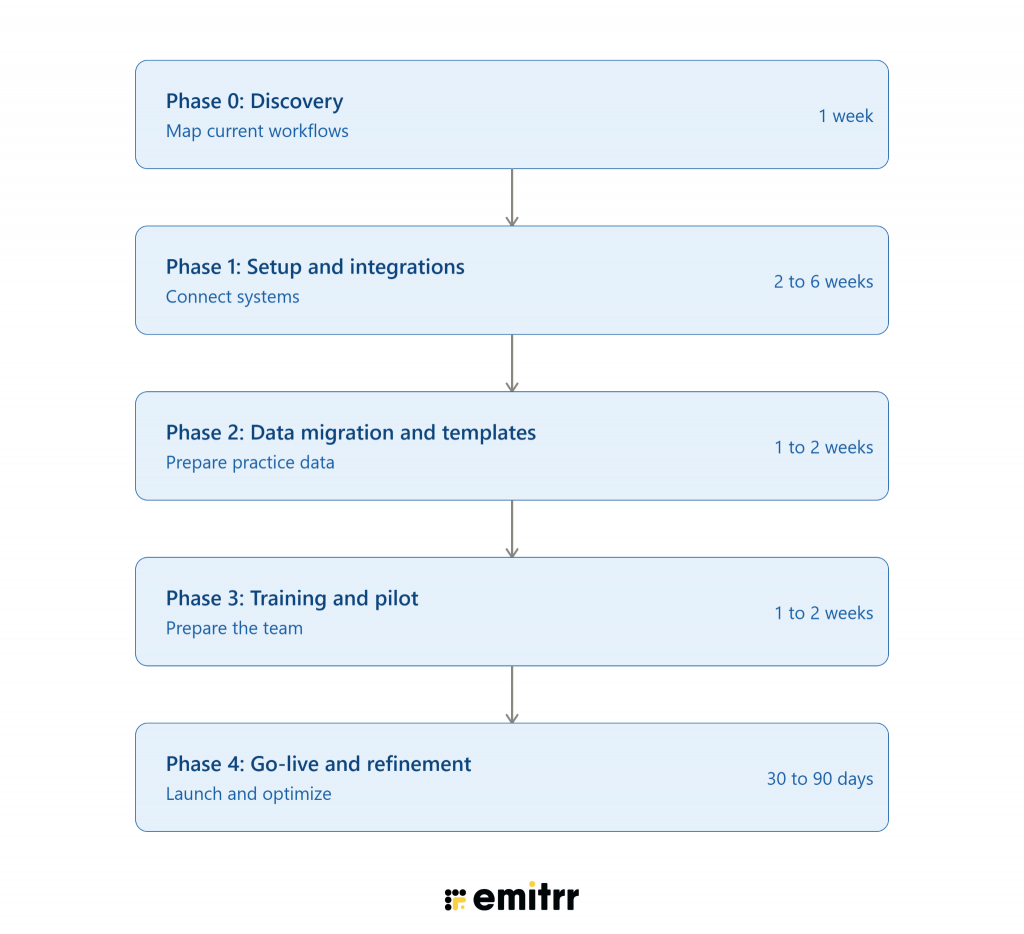
EMR Implementation Roadmap
Key Takeaways
- Podiatry EMR selection should be judged on how well a system handles both procedural, authorization-heavy episodes and steady recurring care within the same platform.
- Fax dependence for referrals and prior records is a distinctive blocker in podiatry, and practices should verify OCR or structured data extraction capability directly rather than assuming it exists.
- DME and authorization tracking is a critical feature category given how frequently podiatry billing depends on getting this documentation right to avoid denials.
- Closed or limited-API podiatry EHRs constrain how much referral and communication automation is realistically possible without manual workarounds.
- Implementation timelines depend heavily on referral and DME authorization data volume, and should be treated as planning ranges rather than guarantees.
FAQs
Yes! You can upload X-rays, wound images, and diagnostic notes directly into your patient charts, so everything stays easy to access during treatment and follow-ups.
They do. Podiatry EMRs are designed around procedure-heavy care, which means your treatments, surgeries, and visits can be coded accurately without extra manual work.
Yes. Emitrr works alongside your existing podiatry EMR to manage calls, texts, reminders, and follow-ups, helping you stay connected with patients without changing your core system.
Absolutely! Whether your practice focuses on routine foot care, wound management, or surgical cases, many podiatry EMRs support both medical and surgical workflows smoothly.
Emitrr can help you automate appointment reminders, confirmations, and follow-ups through calls and texts. This keeps your patients informed and significantly reduces no-shows without adding work for your team.
The cost of a podiatry EMR varies based on the number of providers, features, integrations, implementation, and billing requirements. Practices should compare subscription costs alongside expenses for data migration, training, support, and third-party integrations.
A podiatry group may consider a custom EMR when standard systems cannot support its specific clinical, DME, referral, billing, or multi-location workflows. A podiatry-specific EHR can provide greater control, but development and ongoing maintenance can require significant investment.
Conclusion
An EMR for podiatrists needs to support both procedural episodes involving authorizations and DME, and recurring care such as diabetic foot management. The biggest challenges often involve fax-dependent referrals, DME and authorization tracking, and limited APIs that restrict automation.
When evaluating the best podiatry EMR, test procedure documentation, DME workflows, referral handling, and authorization tracking through live demonstrations rather than relying on feature lists. You can also see how Emitrr works alongside your podiatry EMR to automate reminders, follow-ups, missed-call responses, and patient communication. Book a demo to see it in action.

 4.9 (400+
reviews)
4.9 (400+
reviews)