

Introduction
A primary care panel is a long game. The same patient who came in for a sinus infection this month is due for an annual wellness visit in six, a diabetic screening in nine, and a mammogram reminder somewhere in between, and none of that happens automatically unless the practice’s system actively tracks it. The best EMR for primary care isn’t the one with the flashiest documentation templates; it’s the one that can actually run population health at scale, flagging every patient who is overdue for a preventive service or has gone quiet on a chronic condition, and triggering outreach without a staff member manually combing through a patient list.
This is a genuinely comparative decision, and the market has real differences worth understanding before you shortlist vendors: some platforms are built specifically around independent primary care and direct primary care models, others are broad ambulatory systems that serve primary care as one specialty among many, and the tradeoffs between them show up most clearly in recall automation, chronic care management documentation, and how well refill and referral workflows are automated. This guide explains how to evaluate vendors for primary care specifically, compares leading systems on the criteria that actually matter, and helps you shortlist based on your practice’s structure.

AI Summary
- The defining requirement for the best EMR for primary care is population-health automation: the ability to identify and trigger outreach for patients overdue on preventive care or chronic disease management without manual list-building.
- The most significant blocker is bidirectional scheduling and messaging cost structure, since recall and reactivation campaigns depend on the EHR actually writing appointment changes back and on messaging economics that scale with panel size.
- Chronic care management (CCM) documentation and refill/referral rule automation are the most important feature categories, since these drive both quality metrics and daily staff workload in a primary care panel.
- Integration diligence should focus on whether the EHR can trigger recall workflows automatically from clinical data (last visit date, overdue screening) rather than requiring staff to manually generate patient lists.
- Vendor evaluation should weigh multi-location and shared-number communication needs alongside population health tools, since many primary care groups operate across more than one site.
Which EMR for Primary Care Is Right for You? TL;DR
| EMR | Best Suited For | Key Strengths | Potential Consideration |
| Elation Health | Independent primary care and value-based care practices | Primary care-focused workflows and longitudinal care support | May be less suitable for organizations needing highly complex enterprise workflows |
| NextGen Healthcare | Growing primary care and family medicine practices | Comprehensive EHR, practice management, scheduling, and patient engagement | Broader functionality may require more configuration |
| Epic | Large health systems and established medical groups | Extensive clinical capabilities and connected healthcare workflows | Implementation and complexity can be significant for smaller practices |
| Tebra | Independent and smaller primary care practices | EHR, practice management, billing, and patient engagement in one platform | Practices should evaluate whether its capabilities match more specialized workflows |
| Optimantra | Practices seeking an integrated cloud-based system | Clinical documentation, scheduling, billing, and patient management | Practices should assess customization and integration requirements |
| eClinicalWorks | Primary care and family medicine practices of varying sizes | Comprehensive ambulatory EHR, scheduling, telehealth, and patient engagement | The breadth of features may require training and workflow configuration |
| Cerbo | Direct primary care and independent practices | Customizable workflows and support for membership-based care models | Best suited to practices that align with its independent-practice approach |
What Makes an EMR Right for Primary Care?
Primary care is fundamentally longitudinal: the value of the relationship compounds over years, not visits, and the EMR’s job is to keep that longitudinal thread intact even as staff, schedules, and individual visits come and go. This means the evaluation criteria for “best EMR for primary care” should weight population health tools, the ability to query the entire patient panel for who is overdue on a preventive service or chronic disease check, heavily against generic documentation quality. It also means recall and reactivation are not optional nice-to-haves but core to how a primary care practice actually generates revenue and meets quality benchmarks: a system that cannot proactively flag and reach out to patients falling behind on care is asking staff to do that work manually, which does not scale past a small panel.
Key Barriers in Primary Care Practices
Bidirectional scheduling gaps that prevent recall campaigns from closing the loop
Recall and reactivation outreach only works if a patient’s response, confirming, requesting a different time, can flow back into the actual schedule without a manual step. If the EHR’s scheduling API is read-only or does not support appointment creation from an outside trigger, population health outreach generates interest that still requires a staff member to manually book every response, undermining the efficiency gain the campaign was meant to create. Practices should verify whether appointment creation, not just viewing, is actually supported through the integration.
Messaging and API costs that do not scale sensibly with panel size
Population health outreach at primary care panel scale, often thousands of patients, means messaging volume adds up quickly. If a vendor’s messaging or API costs are not transparent or do not scale in a predictable way, a recall campaign that looks affordable in a demo can become expensive in practice. Practices should model expected messaging volume against actual panel size before committing to a vendor’s pricing structure.
Multi-location and shared-number workflows that fragment patient communication
Primary care groups operating multiple locations, sometimes sharing staff or a phone system across sites, need communication that correctly attributes a message or call to the right location and provider. Where the EHR treats every location as functionally identical, or where a shared phone number creates confusion about which site a patient is trying to reach, front-desk coordination suffers. Practices should verify how the system handles location-specific routing and reporting.
Refill and referral rules that require manual triage rather than automated logic
A significant share of daily primary care staff workload is refill requests and referral coordination, both of which follow largely predictable rules (a stable chronic medication refill versus one requiring physician review, a routine referral versus an urgent one). If the EHR cannot apply rule-based logic to triage these requests automatically, staff spend time manually sorting requests that could largely route themselves. Practices should ask how refill and referral requests are triaged in the system and what, if anything, can be automated based on clinical criteria.
Must-Have EMR Features for Primary Care
When evaluating an EMR for primary care, practices should prioritize features that support preventive care, chronic disease management, scheduling, patient communication, and efficient day-to-day operations.
- Population health dashboards and recall triggers: Identifies patients overdue for preventive care, screenings, or chronic disease management without manual list-building.
- Annual Wellness Visit workflow support: Structures AWV documentation and medical billing requirements while helping staff manage these visits consistently.
- Chronic Care Management documentation: Tracks time-based CCM services and supports the documentation required for ongoing chronic disease management.
- Recall and reactivation campaign tools: Turns population health insights into patient outreach that encourages overdue patients to schedule and return for care.
- Refill and referral rule automation: Reduces manual staff work by streamlining routine refill requests, referral tasks, and other predictable administrative workflows.
- Bidirectional scheduling integration: Allows communication and outreach workflows to reflect appointment changes and, where supported, send scheduling updates back to the EMR.
- Multi-location reporting and communication routing: Helps primary care groups coordinate patient communication and operational reporting across multiple locations.
- Chronic disease-specific templates: Speeds documentation for common primary care conditions such as diabetes, hypertension, and cardiovascular disease.
- Patient portal with self-scheduling: Gives patients a convenient way to request appointments, manage routine needs, and access practice information while reducing phone volume.
- Value-based care and quality reporting: Helps practices track population-level measures and reporting requirements associated with MIPS, ACOs, and other value-based care programs.
- Integrated appointment scheduling and reminders: Connects appointments with patient records and automated reminders to reduce missed visits and simplify scheduling workflows.
- Telehealth integration: Supports secure virtual visits and remote patient management while keeping clinical information connected to the primary care workflow.
Best EMRs for Primary Care: Detailed Analysis
- Elation Health
- NextGen Healthcare
- Epic
- Tebra
- Optimantra
- eClinicalWorks
- Cerbo
| EMR | Primary Care Orientation | Practice Model | Scalability | Key Evaluation Area |
| Elation Health | Primary care-focused | Independent and value-based practices | Small to mid-sized | Longitudinal care workflows |
| NextGen Healthcare | Multi-specialty with strong ambulatory support | Independent and group practices | Mid-sized to large | Practice-wide workflow management |
| Epic | Enterprise healthcare | Health systems and large medical groups | Large | Connected clinical ecosystem |
| Tebra | Independent practice-focused | Small and independent practices | Small to mid-sized | Integrated practice operations |
| Optimantra | Multi-specialty | Independent and outpatient practices | Small to mid-sized | Cloud-based practice management |
| eClinicalWorks | Ambulatory and multi-specialty | Independent practices and medical groups | Small to large | Comprehensive ambulatory workflows |
| Cerbo | Direct primary care-focused | Membership and independent practices | Small to mid-sized | Customizable direct primary care workflows |
1. Elation Health
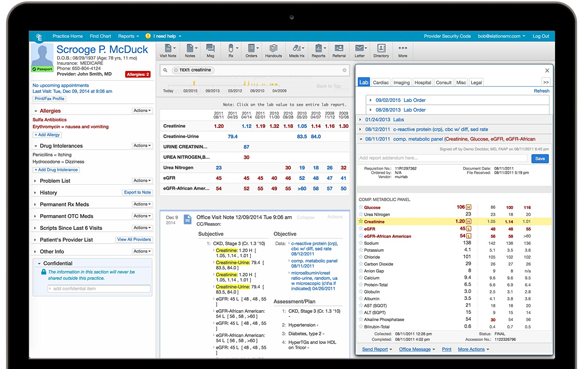
Elation Health is a primary care-focused EHR and practice management platform designed to support independent practices, value-based care, and longitudinal patient relationships. Its focus on primary care workflows makes it a strong option for practices researching the best EMR for primary care or a primary care EHR that supports clinical documentation and care coordination.
Practices using Elation Health can use Emitrr to streamline appointment reminders, follow-ups, recalls, and patient outreach. Automated communication can help primary care teams reduce administrative workload while keeping patients engaged between visits.
2. NextGen Healthcare
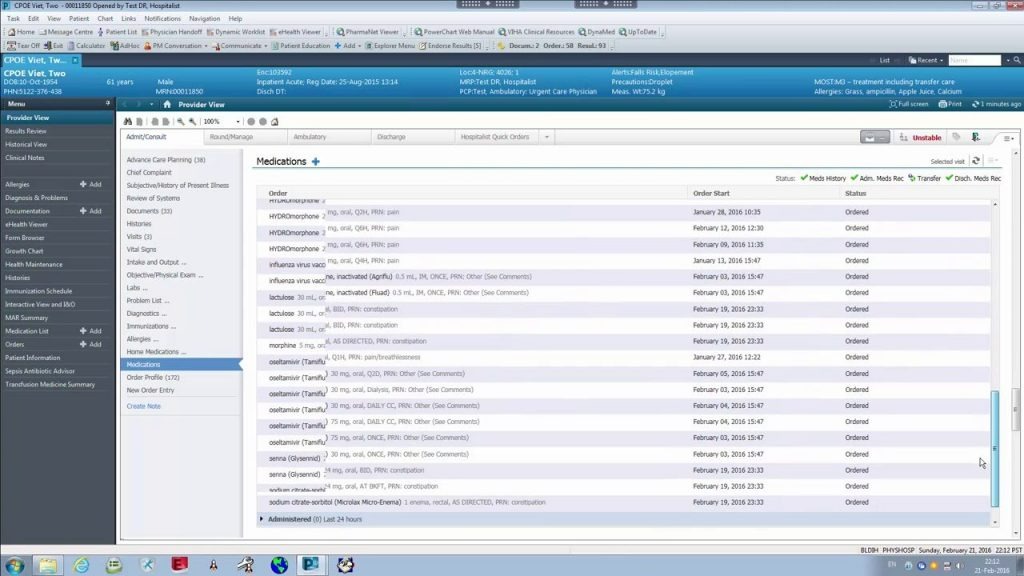
NextGen Healthcare is a comprehensive EHR and practice management platform designed to support ambulatory practices across specialties, including primary care and family medicine. It combines clinical documentation, scheduling, patient engagement, and practice management capabilities, making it a relevant option for practices comparing the best EMR for family practice and broader primary care needs.
Practices using NextGen Healthcare can use Emitrr to automate appointment reminders, confirmations, recalls, and follow-up communication. This can help family medicine teams maintain consistent patient outreach while reducing repetitive manual communication.
3. Epic
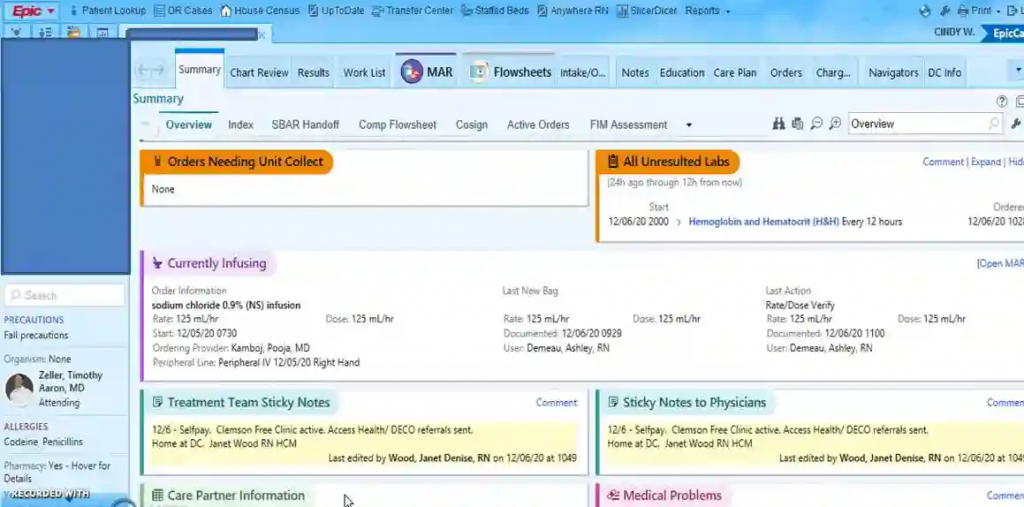
Epic is a widely used EHR platform that supports large health systems, hospitals, medical groups, and ambulatory practices, including primary care and family medicine. Its extensive clinical and administrative capabilities make it a strong consideration for organizations looking for the best EHR for primary care that can support complex, interconnected healthcare environments.
Emitrr can complement Epic by supporting patient communication workflows such as reminders, follow-ups, recalls, and outreach campaigns. This can help primary care teams manage high volumes of patient communication while keeping their core clinical workflows within Epic.
4. Tebra
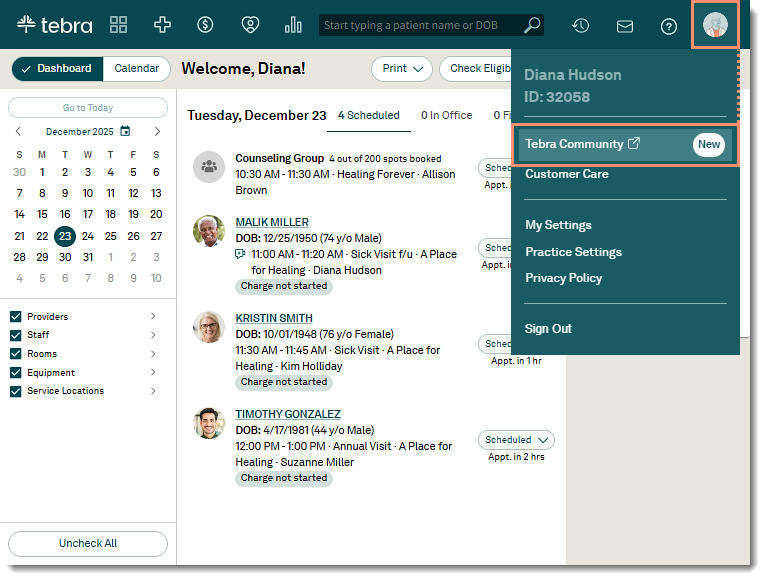
Tebra is an integrated EHR, practice management, and patient engagement platform designed primarily for independent healthcare practices. Its combination of clinical documentation, scheduling, billing, and patient communication makes it relevant for practices evaluating the best EHR for family practice or an EMR for direct primary care.
Practices using Tebra can use Emitrr to automate appointment reminders, confirmations, follow-ups, and patient reactivation campaigns. This can help independent primary care practices stay connected with patients without requiring staff to handle every outreach task manually.
5. Optimantra
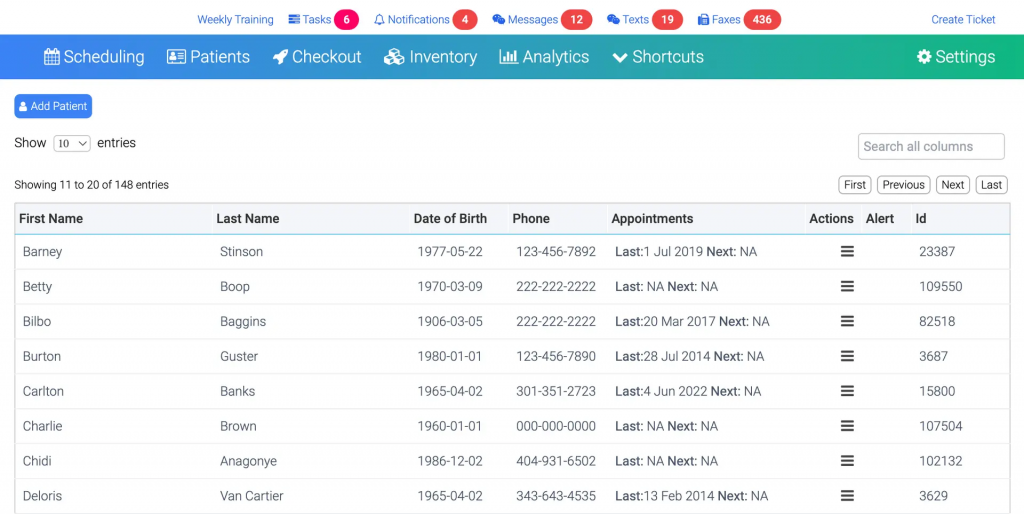
Optimantra is a cloud-based healthcare practice management and EHR platform designed to support clinical documentation, scheduling, billing, and patient management. Its broad functionality can make it an option for practices looking for an ehr for direct primary care or a family medicine EMR that combines clinical and administrative workflows.
With Optimantra, practices can use Emitrr to support appointment reminders, patient notifications, follow-ups, and other routine communication. Automated outreach can help primary care teams improve communication while allowing staff to focus on higher-value patient and administrative tasks.
6. eClinicalWorks
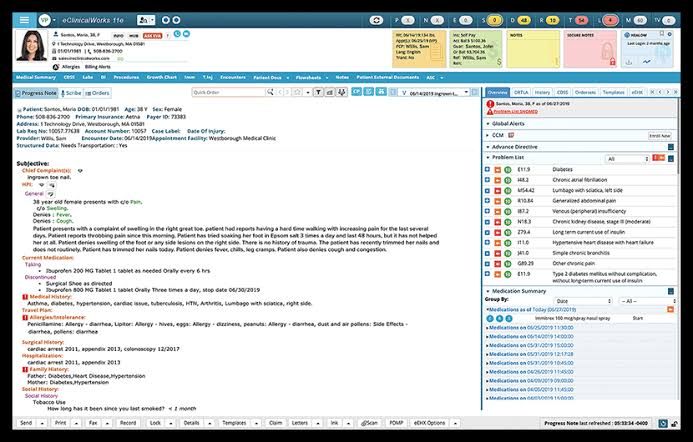
eClinicalWorks is a comprehensive ambulatory EHR and practice management software used by primary care, family medicine, and other medical practices. It provides tools for clinical documentation, scheduling, patient engagement, telehealth, and practice management, making it a common option for practices comparing a best EMR for primary care solution.
Practices using eClinicalWorks can integrate communication workflows with Emitrr to automate reminders, recalls, follow-ups, and patient outreach. This can help practices manage recurring communication needs while keeping patient care and documentation within their existing EHR primary care workflow.
7. Cerbo
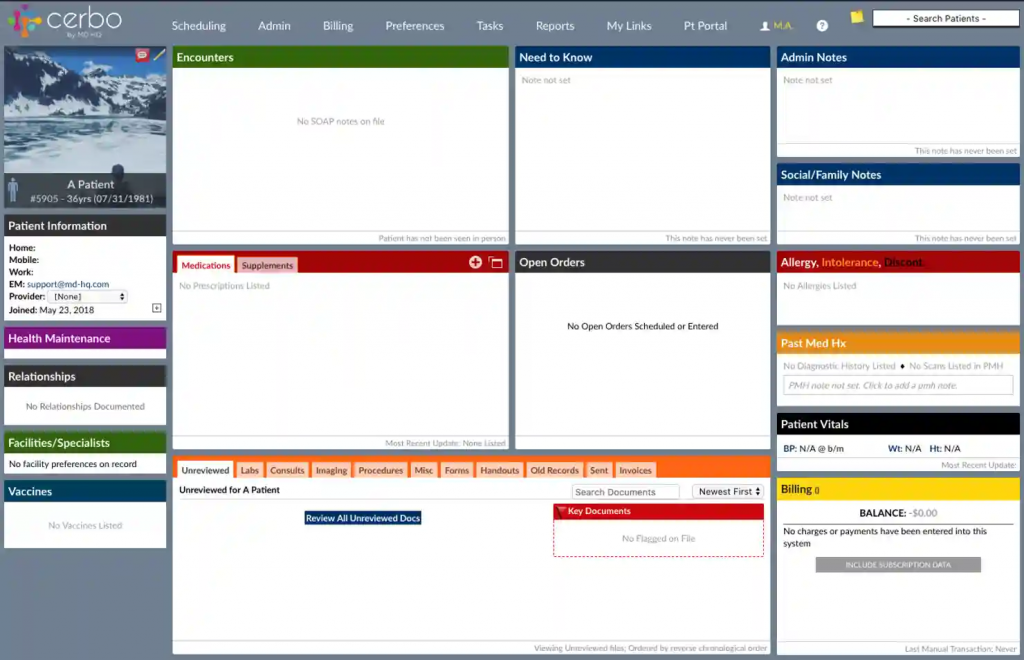
Cerbo is an EHR and practice management platform designed with independent and membership-based practices in mind, making it particularly relevant for direct primary care models. Its focus on customizable workflows, patient management, scheduling, and communication makes it worth considering for practices evaluating a direct primary care EHR or family medicine EMR.
Practices using Cerbo can use Emitrr to automate appointment reminders, follow-ups, patient check-ins, and other communication workflows. This can help direct primary care clinics maintain ongoing patient relationships while reducing the amount of manual outreach required from staff.
How Emitrr Works Alongside Your Primary Care EMR
Emitrr is not an EMR and does not replace clinical documentation, chronic care management, billing, or quality reporting within your primary care platform. It works alongside your existing system as a communication and automation layer for patient outreach, scheduling, recalls, referrals, and routine administrative workflows.
- Bidirectional booking and confirmations: Where the EHR supports scheduling write-back, Emitrr can help confirm, cancel, and update appointments based on patient responses. When write-back is unavailable, structured responses can be routed to staff for manual scheduling.
- Recall and population health outreach: Practices can use EHR-driven patient lists to automate patient recall, reactivation, and preventive-care campaigns. This is particularly useful for a primary care EHR managing large patient panels and recurring preventive care needs.
- Multi-location communication: Shared number management and location mapping can help multi-site practices maintain consistent patient communication while routing conversations to the appropriate location or team.
- Refill and referral automation: AI-assisted intake and digital forms can collect information for routine prescription refill requests and referrals, then organize those requests for the appropriate staff queue. Whether information writes directly into the EHR depends on the integration and available field mapping.
- Appointment reminders and missed-call recovery: Automated reminders can support routine and recall-driven appointments, while missed-call-to-text gives patients a quick way to reconnect when staff are unavailable.
- Cost-conscious communication: Credit-based SMS and per-user VoIP options allow practices to scale communication based on actual usage, making the model suitable for smaller practices evaluating an EMR for direct primary care or a direct primary care EHR.
EMR Implementation Roadmap
Key Takeaways
- The best EMR for primary care should be evaluated primarily on population health and recall automation, not general documentation quality.
- Bidirectional scheduling, not just read access, is the single most consequential integration detail for making recall and reactivation campaigns operationally useful.
- AWV and CCM documentation support directly affects both quality metrics and revenue, and should be verified with a live demo rather than a general feature claim.
- Refill and referral rule automation matters more in primary care than in many specialties, given the sheer daily volume of largely predictable requests.
- Multi-location communication routing matters for any primary care group operating more than one site or sharing staff across locations.
- Elation Health is generally the strongest fit for independent or direct primary care wanting a purpose-built, physician-friendly platform, while athenahealth, eClinicalWorks, and NextGen suit larger or multi-specialty-adjacent groups differently based on billing model and interoperability needs.
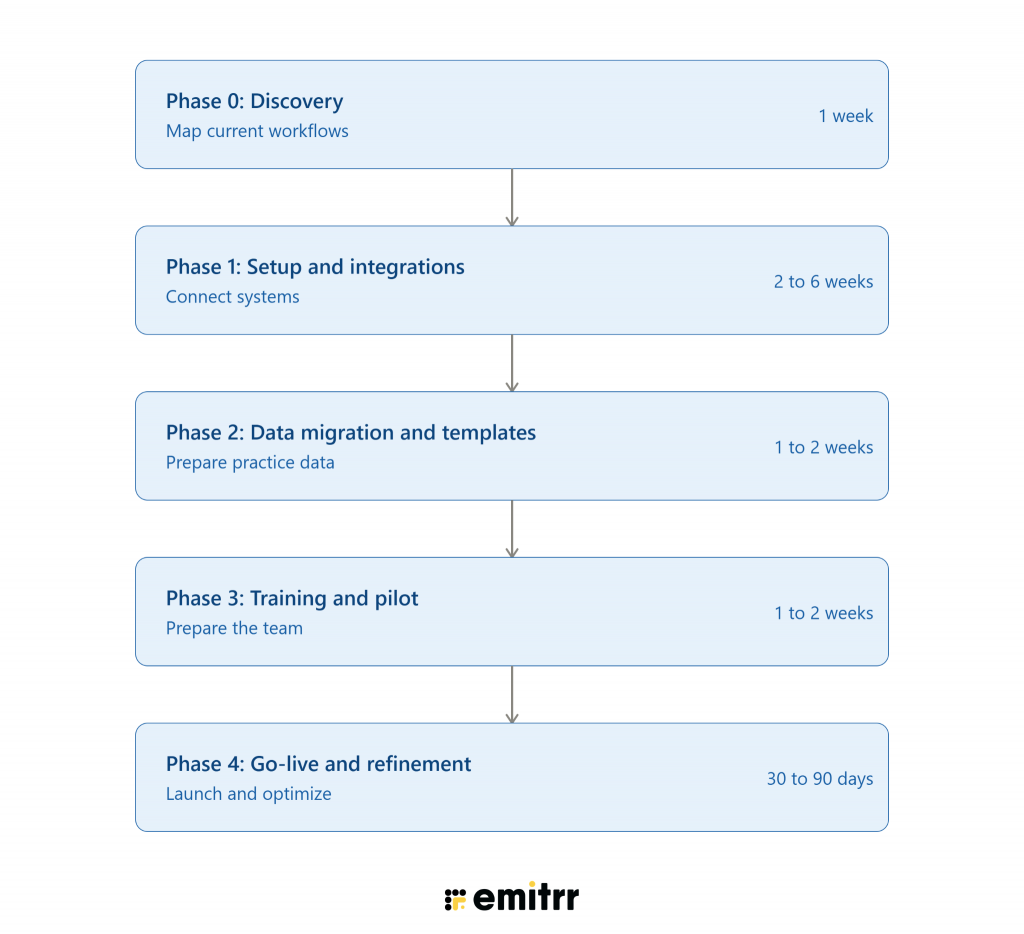
- Implementation timelines for primary care depend heavily on the volume of chronic disease and screening history being migrated for a full patient panel.
FAQs
The best EMR for primary care should support clinical documentation, scheduling, preventive care, chronic disease management, patient communication, billing, and reporting. The right choice depends on practice size, specialty needs, and care model.
A primary care EMR should include population health tools, recall management, chronic disease templates, appointment scheduling, patient portals, e-prescribing, billing, reporting, and telehealth capabilities.
The best EMR for family practice should handle a broad range of patient needs while supporting family medicine workflows such as preventive care, chronic disease management, referrals, medication management, and patient communication.
A direct primary care EHR is designed to support practices that operate through membership-based or subscription models. It typically emphasizes longitudinal patient relationships, flexible scheduling, communication, and streamlined practice management.
Primary care EMR pricing varies based on the number of providers, locations, features, integrations, implementation requirements, and support. Practices should compare both subscription costs and additional fees for services such as billing, telehealth, or integrations.
Yes. Many primary care EHRs can identify patients due for preventive care, wellness visits, screenings, or follow-ups. Practices can further automate outreach using communication platforms such as Emitrr.
Yes. Depending on the EHR's APIs and integration capabilities, communication software can support appointment reminders, recalls, follow-ups, referral intake, refill workflows, and other patient outreach.
While requirements vary by practice and jurisdiction, an EMR can help direct primary care practices organize patient records, documentation, scheduling, communication, and ongoing care management in one system.
Conclusion
The best EMR for primary care is defined by how well it turns population health insights into action. Practices should look for strong recall automation, bidirectional scheduling, CCM documentation, patient communication, and pricing that fits their practice model, whether independent direct primary care or a larger multi-provider group.
Emitrr can complement your existing EMR as a communication and automation layer, helping turn overdue-care lists into patient outreach, scheduled visits, and streamlined refill and referral workflows. Book an Emitrr demo to see how it can work alongside your specific primary care EMR.

 4.9 (400+
reviews)
4.9 (400+
reviews)