

Introduction
An internal medicine physician might see a patient with diabetes, hypertension, and early kidney disease in the same fifteen-minute visit, each condition carrying its own monitoring interval, medication rules, and documentation requirement. An EMR for internal medicine has to hold all of that complexity in a single chart without turning every visit into an hour of clicking through disconnected templates, and it has to support the rule-based logic, refill eligibility, last-visit intervals, and chronic care management time tracking that internal medicine runs on day to day.
Where this specialty’s evaluation criteria diverge most from general primary care is in the sheer density of concurrent chronic conditions per patient and the volume of clinical decision-making that happens outside the exam room: a nurse triaging a refill request against specific eligibility rules, a care coordinator tracking CCM minutes across a month, a physician reviewing lab results and deciding whether a medication needs adjusting before the next visit.
This guide covers the challenges that are specific to internal medicine, the features that matter for managing complex, multi-condition patients at scale, how leading systems compare, and how to evaluate vendors before committing.

AI Summary
- The defining internal medicine EMR requirement is rule-based clinical workflow support, applying consistent logic to refill eligibility, recall intervals, and chronic disease monitoring across a panel with high rates of multiple concurrent conditions.
- The most significant blocker is chronic care management (CCM) documentation complexity, since these time-based billing programs require precise, auditable tracking that many general EHRs handle poorly.
- Medication and refill eligibility logic is the most operationally important feature category, given how much daily internal medicine staff workload centers on triaging refill requests against clinical criteria.
- Integration diligence should focus on whether the EHR can expose structured clinical data (last visit, lab values, condition status) to trigger automated workflows, rather than requiring manual chart review for every triage decision.
- Practices should prioritize systems with strong multi-condition documentation and CCM tracking over generic ambulatory feature lists, since internal medicine’s complexity concentrates in exactly these areas.
Which EMR for Internal Medicine Is Right for You? TL;DR
| EMR | Best Suited For | Key Strengths | Potential Consideration |
| CureMD | Small to mid-sized internal medicine practices | Cloud-based EHR, practice management, scheduling, billing, and e-prescribing | Evaluate customization and integration requirements |
| Epic EHR | Large practices and health systems | Comprehensive clinical workflows, interoperability, reporting, and patient engagement | May involve greater implementation complexity |
| Practice EHR | Independent and ambulatory practices | EHR and practice management functionality with clinical and administrative tools | Confirm whether its feature depth matches complex practice needs |
| eClinicalWorks | Internal medicine and primary care practices managing complex, chronic, and longitudinal patient care | Comprehensive clinical documentation, chronic care management, population health, e-prescribing, patient engagement, telehealth, and integrated practice management | Its broad feature set can mean a steeper learning curve, and practices may still benefit from specialized communication automation for high-volume two-way outreach |
| Charm Health | Small practices and telehealth-oriented providers | EHR, telehealth, patient engagement, and practice management | Practices should evaluate scalability and workflow customization |
| Elation Health | Primary and longitudinal care practices | Strong continuity-of-care and clinical documentation capabilities | May be better suited to practices prioritizing longitudinal care workflows |
| athenahealth | Growing and larger ambulatory practices | EHR, practice management, patient engagement, and revenue cycle capabilities | Broader platform may require more extensive setup |
What Makes an EMR Right for Internal Medicine?
Internal medicine differs from general primary care in the density of concurrent chronic conditions per patient and the amount of clinical decision-making that happens between visits rather than during them. A single patient’s chart might carry active management plans for five or six conditions simultaneously, each with its own monitoring interval and medication logic, and much of the daily workload, refill requests, lab result review, CCM check-in calls, happens through channels other than the scheduled visit. The right EMR for this specialty applies consistent, rule-based logic to that in-between work: flagging a refill request that falls outside safe renewal criteria, tracking CCM minutes accurately enough to survive an audit, and surfacing a patient whose chronic condition has gone unmonitored past a safe interval. A system that only documents well during the visit itself is missing where much of internal medicine’s actual operational complexity lives.
Key Barriers for Internal Medicine Practices
Rule-based clinical automation gaps for refill and recall triage
Internal medicine generates a high volume of refill requests and recall triggers tied to specific clinical rules (a stable hypertension medication renewal versus one requiring blood pressure review, a diabetic patient overdue for an A1C check). If the EHR cannot apply this logic automatically and instead requires staff to manually review every request against clinical criteria, triage becomes a bottleneck that scales poorly as panel size grows. Practices should verify what rule-based automation actually exists versus what is described in marketing material but requires manual configuration effort to approximate.
CCM call tracking and documentation that does not meet audit-ready standards
Chronic care management billing requires precise time tracking and specific documentation elements, and this is an area where many general EHRs fall short, treating CCM as a generic note type rather than building the structured, auditable tracking these programs actually require. If documentation does not meet this standard, practices risk both under-billing (leaving CCM revenue uncaptured) and audit exposure if documentation cannot support what was billed. Practices should verify how CCM time and qualifying activities are tracked and whether the output would hold up to payer audit scrutiny.
Medication and refill eligibility logic that does not scale with panel complexity
Beyond simple renewal, internal medicine often needs to apply more nuanced eligibility logic: a refill that requires a recent lab value, a medication that needs review after a dosage change, a controlled substance requiring additional verification steps. If the EHR treats all refills identically rather than applying condition-specific logic, nurses and MAs end up manually reviewing requests that could largely self-triage based on clear criteria.
Multilingual communication gaps in a diverse patient population
Internal medicine practices, particularly in urban or diverse communities, often serve patients across multiple languages. If the EHR’s patient communication tools do not support reliable translation or language fallback, either through the EHR itself or a connected tool, non-English-speaking patients may receive lower-quality communication about their chronic care needs. Practices should verify what language support actually exists and understand its accuracy limitations rather than assuming automated translation is error-free.
High-volume triage without secure PHI-compliant communication channels
The daily volume of clinical messages, prescription refill requests, lab result questions, and medication concerns, in internal medicine is substantial, and if the practice’s default communication channel is not secure and PHI-compliant, both compliance risk and message-tracking quality suffer. Practices should verify that whatever channel handles this volume, whether native portal messaging or a connected communication tool, meets appropriate security standards.
Must-Have EMR Features for Internal Medicine
When evaluating an EMR for internal medicine, practices should prioritize features that support complex chronic care, medication management, patient communication, and ongoing monitoring. A strong internal medicine EMR should reduce administrative work while helping clinicians manage patients with multiple conditions efficiently.
- Multi-condition documentation templates: Supports the reality of patients carrying several concurrent chronic conditions in one visit note.
- CCM and RPM tracking: Captures time, activities, and documentation needed to support chronic care management and remote patient monitoring programs.
- Clinical decision support: Helps clinicians identify potential drug interactions, contraindications, abnormal results, and evidence-based care considerations.
- Rule-based refill triage: Reduces manual staff review of routine medication requests that can be evaluated using predefined clinical criteria.
- Condition-based recall automation: Identifies patients overdue for screenings, lab work, or chronic disease monitoring based on their specific conditions.
- Integrated billing and coding: Supports accurate coding for complex, multi-condition visits while helping reduce claim errors and administrative work.
- Lab result review and communication: Connects incoming lab results with clinical review and patient communication workflows.
- E-prescribing and medication management: Enables electronic prescriptions, medication tracking, allergy checks, and interaction alerts within the EHR for internal medicine.
- Secure patient messaging: Provides a PHI-compliant channel for handling routine questions, follow-ups, and high-volume patient communication.
- Patient portal with self-service requests: Lets patients request refills, access information, and manage routine interactions without relying entirely on phone calls.
- Telehealth integration: Supports virtual consultations and follow-ups while keeping relevant patient information connected to the internal medicine EMR.
- Multilingual communication support: Helps practices communicate with diverse patient populations more effectively.
- Chronic care and quality reporting: Tracks CCM compliance, chronic disease metrics, and other performance indicators important for practices evaluating the best internal medicine EMR or top internal medicine EMR.
Best EMRs for Internal Medicine: Detailed Analysis
- CureMD
- Epic EHR
- Practice EHR
- Cure MD
- Charm Health
- Elation Health
- Athenahealth
| EMR | Platform Type | Core Workflow Focus | Practice Scale |
| CureMD | Cloud-based EHR and practice management | Integrated clinical and administrative workflows | Small to mid-sized |
| Epic EHR | Enterprise EHR platform | Comprehensive care coordination and clinical management | Mid-sized to enterprise |
| Practice EHR | Cloud EHR and practice management | Ambulatory practice operations | Small to mid-sized |
| eClinicalWorks | Cloud-based EHR + Practice Management | Clinical documentation, scheduling, billing, e-prescribing, chronic care management, patient engagement, telehealth, and population health | Small to large-sized |
| Charm Health | Cloud healthcare platform | EHR, telehealth, and patient engagement | Small to mid-sized |
| Elation Health | Cloud-based EHR | Longitudinal and relationship-based care | Independent and primary care practices |
| athenahealth | Cloud-based healthcare platform | Connected EHR, practice management, and revenue cycle | Mid-sized to large |
1. CureMD
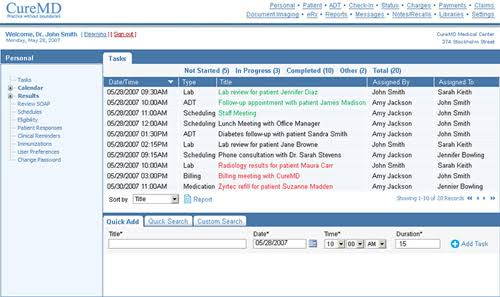
CureMD is a cloud-based EHR and practice management platform designed to support clinical documentation, scheduling, billing, e-prescribing, and patient engagement. Its broad ambulatory capabilities make it a practical option for practices evaluating an EMR for internal medicine with integrated clinical and administrative workflows.
Practices using CureMD can use Emitrr to automate appointment reminders, follow-ups, recalls, and routine patient notifications. This can help internal medicine teams reduce repetitive outreach while keeping communication organized around their existing workflows.
2. Epic EHR
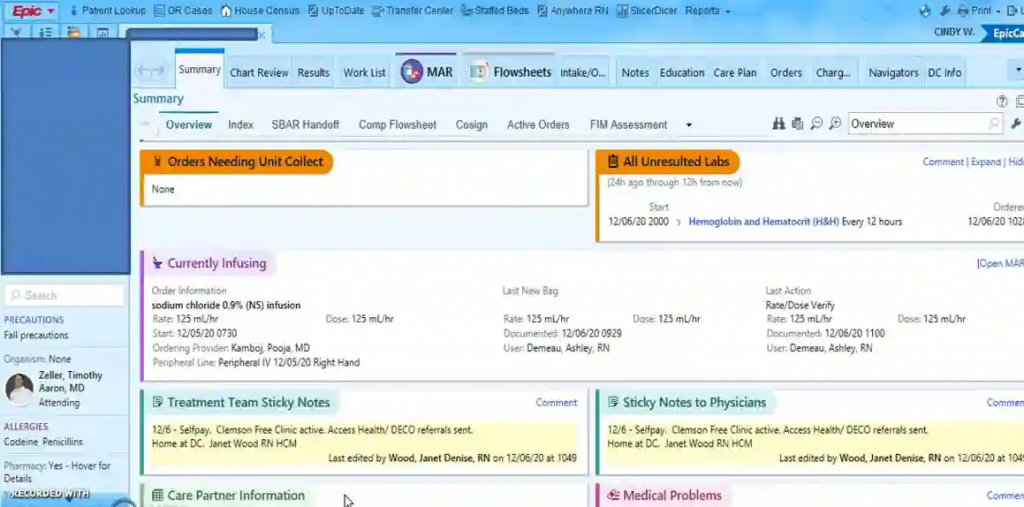
Epic is a comprehensive EHR platform used by healthcare organizations ranging from independent practices to large health systems. It provides extensive clinical documentation, scheduling, patient portal, care coordination, reporting, and interoperability capabilities, making it a strong consideration among top internal medicine EMR options.
With Epic, practices can use Emitrr to support patient communication such as appointment reminders, recalls, follow-ups, and outreach campaigns. This can help teams extend communication workflows while keeping clinical documentation and care management within Epic.
3. Practice EHR
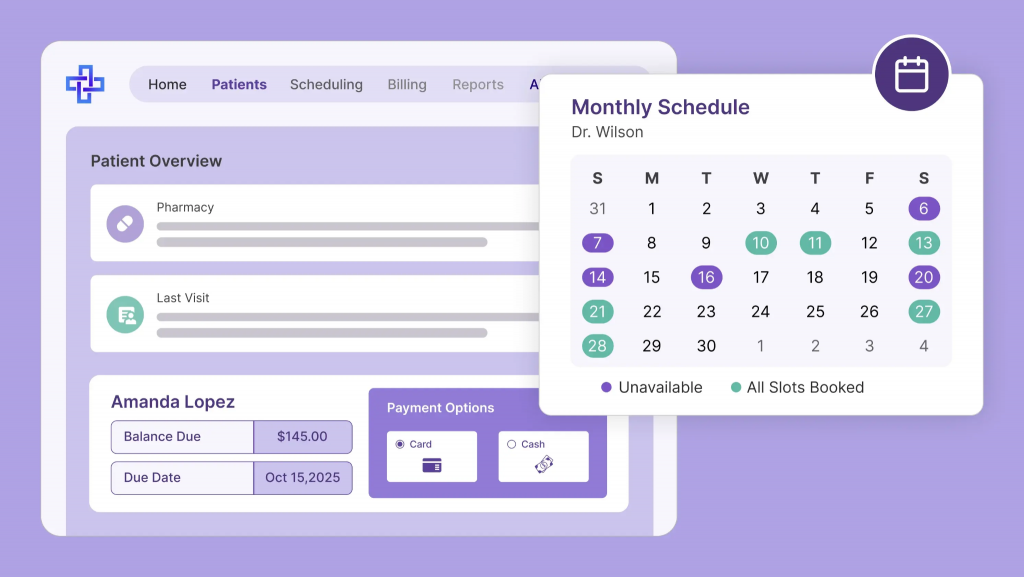
Practice EHR is a cloud-based healthcare platform that combines electronic health records with practice management functionality. It supports areas such as clinical documentation, scheduling, billing, e-prescribing, and patient management, making it an option for practices comparing internal medicine EMR software.
Practices can use Emitrr alongside Practice EHR to streamline appointment confirmations, reminders, follow-ups, and patient outreach. This can reduce manual communication work while allowing staff to continue managing clinical information within their core EHR.
4. eClinicalWorks
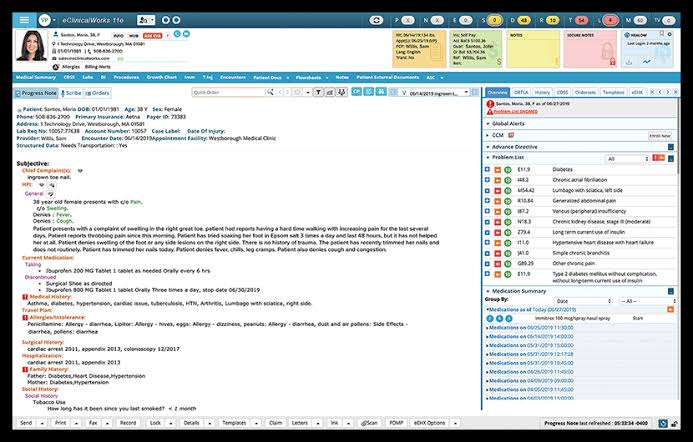
eClinicalWorks is a cloud-based EHR and practice management platform designed to support clinical documentation, scheduling, billing, e-prescribing, and patient engagement. Its broad ambulatory capabilities make it a practical option for practices evaluating an EMR for internal medicine, particularly those managing ongoing care, follow-ups, and multiple appointment types.
Practices using eClinicalWorks can use Emitrr to automate appointment reminders, two-way texting, follow-ups, recalls, no-show recovery, and routine patient notifications. The integration syncs patient and appointment data, helping internal medicine teams reduce repetitive outreach while keeping patient communication organized around their existing eClinicalWorks workflows.
5. Charm Health
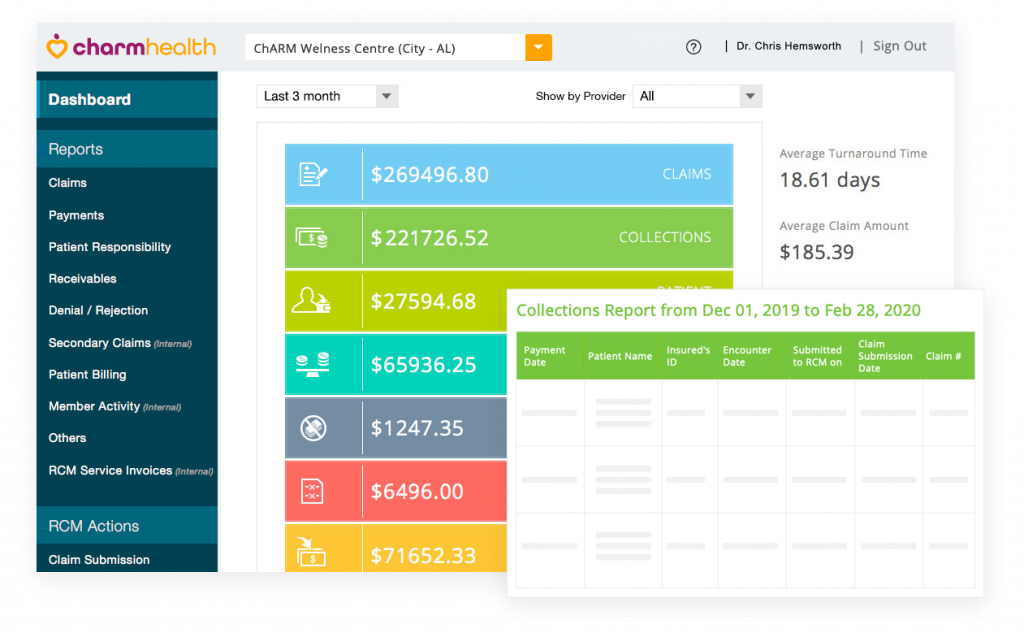
CharmHealth is a cloud-based healthcare platform offering EHR, practice management, telehealth, patient engagement, and related capabilities. Its broad feature set makes it a potential option for practices looking for an internal medicine EMR that can support both clinical care and practice operations.
Practices using CharmHealth can use Emitrr for automated reminders, patient follow-ups, recalls, and two-way communication. This can help internal medicine teams improve patient engagement while keeping clinical workflows within their existing EHR.
6. Elation Health
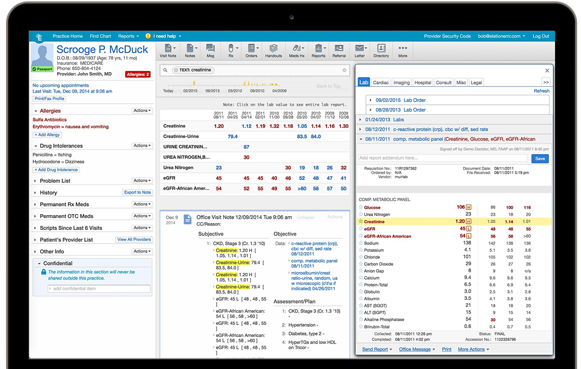
Elation Health is a cloud-based EHR designed around primary and longitudinal care, with tools for clinical documentation, care coordination, patient engagement, and practice workflows. Its focus on continuity of care makes it relevant for practices evaluating the best internal medicine EMR for ongoing patient management.
With Elation Health, Emitrr can support appointment reminders, preventive-care recalls, follow-ups, and patient outreach. Automated communication can help internal medicine practices stay connected with patients between visits while reducing manual outreach.
7. Athenahealth
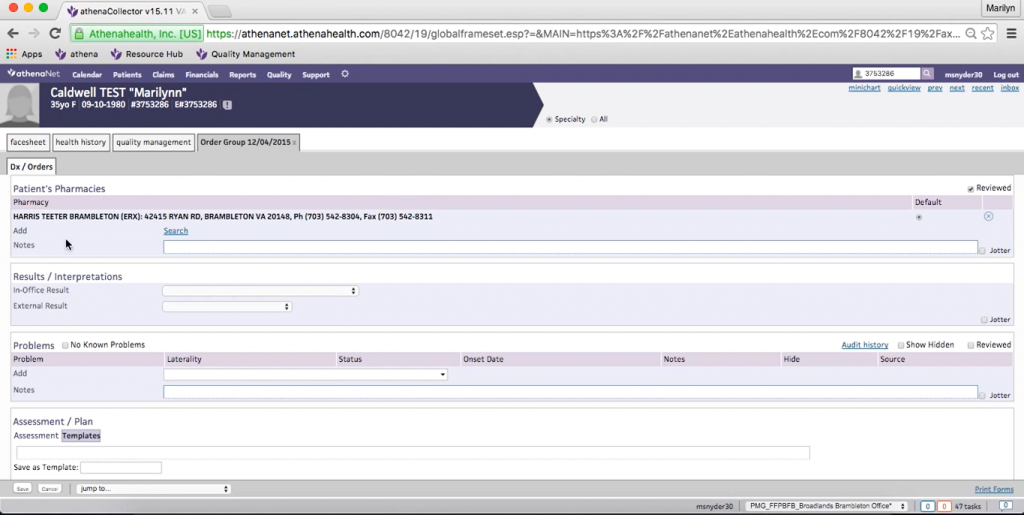
athenahealth provides cloud-based EHR, practice management, patient engagement, and revenue cycle capabilities for ambulatory healthcare organizations. Its connected approach makes it a consideration for practices seeking an EMR for internal medicine that can support clinical and administrative operations at scale.
Practices using athenahealth can use Emitrr to automate appointment reminders, recall campaigns, follow-ups, and other patient communication workflows. This can help reduce administrative communication workload while keeping patient engagement connected to existing internal medicine EMR workflows.
How Emitrr Works Alongside Your Internal Medicine EMR
Emitrr is not an EMR and does not replace clinical documentation, CCM tracking, or medical billing within your internal medicine EMR. It works as a communication and automation layer alongside an EHR for internal medicine, helping practices manage repetitive outreach, refill intake, recalls, and patient communication.
- Rule-driven care automation: Uses EHR data such as visit dates and conditions to trigger recalls and CCM outreach automatically.
- CCM call tracking: VoIP, call recordings, and transcripts can help document patient conversations and support CCM-related recordkeeping.
- Multilingual patient communication: Two-way translation and multilingual AI voice support can help practices communicate with diverse patient populations.
- Refill triage: AI can collect medication, pharmacy, and visit details before routing routine refill requests to clinicians for review.
- Secure patient texting: Secure Portal links allow practices to share sensitive information while routine updates can continue through SMS.
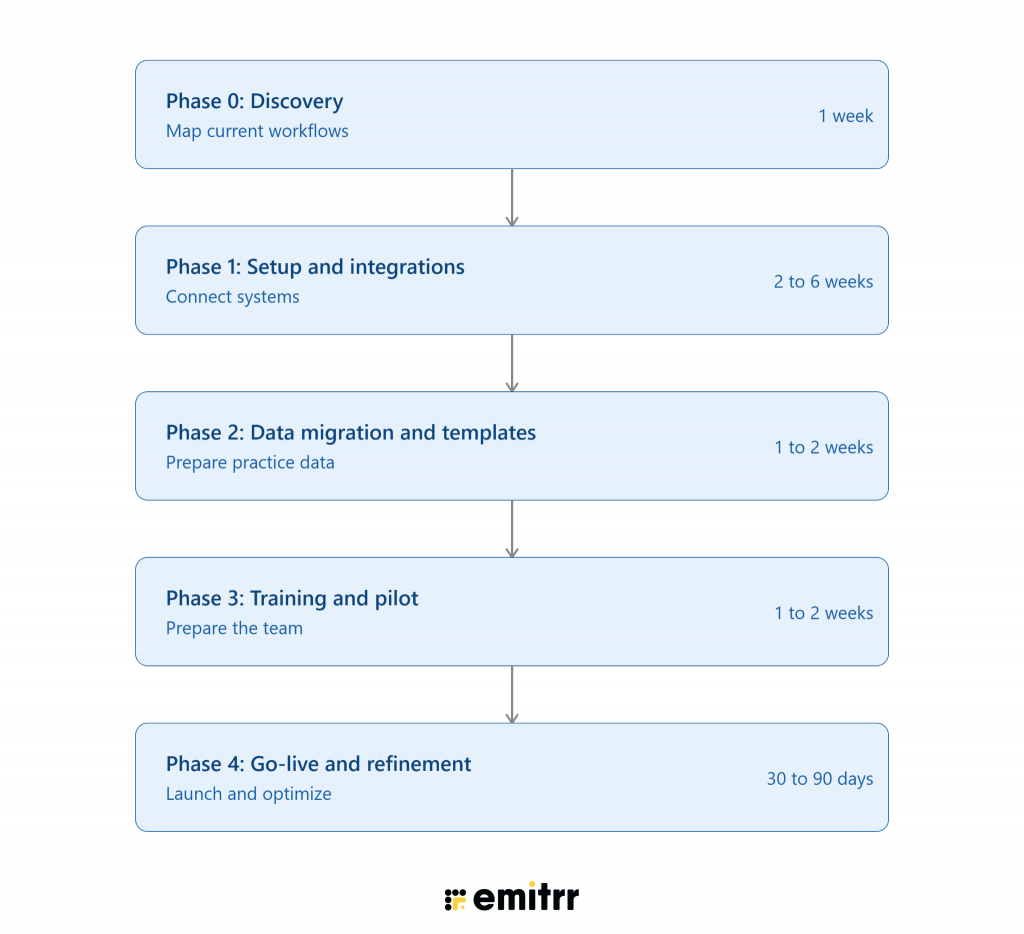
EMR Implementation Roadmap
Key Takeaways
- Internal medicine EMR selection should be judged on how well a system supports rule-based clinical automation for refills and recalls, not general documentation quality alone.
- CCM documentation depth is a distinctive and consequential need in this specialty, given the audit exposure poor time-tracking creates.
- Multi-condition documentation templates matter more here than in specialties where patients typically present with a single primary concern.
- Multilingual communication support is a meaningful evaluation factor for practices serving diverse patient populations, with accuracy limitations that should be understood rather than assumed away.
- Secure, high-volume PHI-compliant messaging is essential given how much of internal medicine’s daily workload happens outside the scheduled visit.
FAQs
An internal medicine EMR is software designed to manage clinical documentation, patient records, medications, scheduling, billing, and workflows for practices treating adult patients with complex or chronic conditions.
Key features include multi-condition documentation, e-prescribing, clinical decision support, lab integration, chronic care management, recall automation, billing and coding, secure messaging, patient portals, and reporting.
The best EMR depends on practice size, clinical workflows, budget, and integration needs. Practices should compare documentation, chronic care management, billing, interoperability, patient communication, and reporting capabilities before choosing a platform.
Yes. Many EHR platforms provide tools for care plans, patient outreach, time tracking, documentation, and reporting to support chronic care management workflows.
Most modern systems support electronic prescribing, medication reconciliation, allergy and interaction alerts, and medication history management, which are particularly important for patients managing multiple chronic conditions.
Many platforms provide connections to laboratories, pharmacies, imaging providers, and other healthcare systems. Practices should verify which specific integrations are available before implementation.
Automation across documentation, scheduling, billing, refills, recalls, and patient communication can reduce repetitive administrative work and help clinicians spend more time on patient care.
Telehealth can be valuable for follow-ups and chronic disease management, particularly for patients who have difficulty attending frequent in-person visits. Practices should evaluate whether virtual visits are built into the EHR or require a separate platform.
Compare each system against your practice size, patient volume, chronic-care workflows, documentation requirements, billing model, interoperability needs, patient communication capabilities, and implementation resources.
Conclusion
An EMR for internal medicine must support genuine clinical complexity, including patients with multiple chronic conditions, frequent between-visit decisions, and programs such as CCM that require accurate, auditable documentation. The key challenges often involve refill and recall triage, CCM tracking, and secure communication for multilingual patient populations. When evaluating an internal medicine EMR, practices should assess multi-condition documentation, CCM capabilities, secure messaging, and workflow automation to identify the best internal medicine EMR for their needs.
For practices comparing internal medicine EMR platforms, the right EHR for internal medicine should reduce administrative burden without compromising clinical workflows. Emitrr can complement your internal medicine EMR as a communication and automation layer for structured refill intake, patient recalls, and secure multilingual patient messaging.
See how Emitrr can work alongside your existing EHR. Book a demo today to explore the right workflow for your practice.

 4.9 (400+
reviews)
4.9 (400+
reviews)