

Introduction
Urgent care patients today have more choices than ever. From hospital-affiliated urgent care centers to independent clinics and retail health clinics, patients often decide where to go based on convenience, wait times, cost, and overall experience.
With this growing competition, urgent care clinics cannot rely only on walk-in visits. While attracting new patients is important, encouraging them to return for future care is equally critical. Clinics that focus on patient experience, accessibility, and consistent communication are more likely to see repeat visits over time.
To help you stay top-of-mind after every visit, this guide explores effective strategies to improve patient retention in urgent care and create a better overall experience.
AI Summary
- Urgent care patients often choose clinics based on convenience, responsiveness, and overall experience, which makes retention challenging.
- Missed calls, long waits, and lack of follow-ups are common reasons patients switch to another urgent care center.
- Simple steps like faster communication, smoother scheduling, and post-visit follow-ups are key patient retention strategies that can increase repeat visits.
- Measuring the patient retention rate helps clinics understand whether patients come back after their first visit.
- Emitrr helps urgent care clinics reduce communication gaps, simplify scheduling, and create a more seamless patient journey with AI automation that encourages repeat visits.
What Is Patient Retention in Urgent Care?
Patient retention in urgent care refers to a clinic’s ability to encourage people who have visited once to return to the same clinic the next time they need medical care. Instead of treating every visit as a one-time interaction, the goal is to create an experience that makes the clinic a patient’s preferred choice in the future.
For example, imagine someone visits an urgent care clinic for a minor injury. The check-in process is smooth, the staff communicates clearly, and after the visit, the clinic sends a follow-up message asking how they are feeling. The next time that person needs care for a flu, infection, or minor emergency, they are more likely to return to the same clinic because the previous experience felt easy and reliable.
Now consider the opposite scenario. A patient calls the clinic, but the call goes unanswered, waits a long time without updates, and never receives any follow-up after the visit. Even if the treatment was good, that patient may choose a different urgent care center next time.
Effective patient retention strategies, along with the right patient retention software, allow clinics to maintain consistent communication, simplify follow-ups, and deliver a reliable care experience that encourages people to return whenever they need urgent care again.

How to Calculate Patient Retention Rate in Urgent Care
Patient retention becomes clearer when clinics measure it regularly. This metric helps urgent care centers evaluate whether their patient retention strategies lead to repeat visits and stronger patient relationships.
A simple formula helps calculate patient retention rate:
Patient Retention Rate = [(Ending Patients − New Patients) ÷ Beginning Patients] × 100
This formula requires three numbers:
- Beginning Patient Number: Total number of patients at the start of the selected period
- New Patients: Number of new patients acquired during the period
- Ending Patient Number: Total number of patients at the end of the period
Example:
Suppose an urgent care clinic had 1,000 patients at the start of the year. During the year, the clinic added 300 new patients, and by the end of the year, the total patient count reached 1,100.
Using the formula: Patient Retention Rate = [(1100 − 300) ÷ 1000] × 100 = 80%
This result means the clinic kept 80% of its existing patients during that period.
Retention rates vary by practice type, but many clinics consider a 75–85% retention rate a strong benchmark. A lower rate may point to gaps in patient communication.
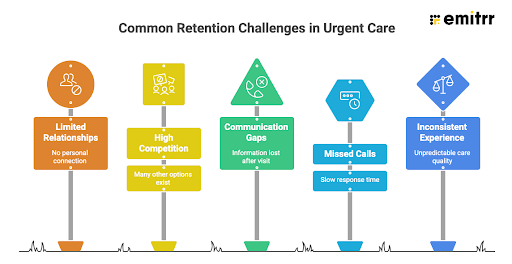
Common Retention Challenges in Urgent Care
Before improving loyalty and repeat visits, it’s important to understand what often prevents people from returning to the same clinic. Urgent care centers face several everyday challenges that can impact patient experience and make retention harder. Below are some of the most common issues clinics should be aware of when planning patient retention strategies.
1. Limited Patient Relationships
Unlike primary care providers, urgent care clinics typically see patients for one-time issues such as minor injuries, infections, or seasonal illnesses. After treatment, many patients simply move on with their lives and may not think about returning to the same clinic unless something reminds them of the positive experience.
For example, someone who visited for a sprained ankle may choose the nearest urgent care next time they get sick rather than returning to the previous clinic. Without consistent communication or follow-ups, clinics can easily lose that connection.
2. High Competition in the Area
In many cities, patients can choose from multiple urgent care centers, hospital-affiliated clinics, and retail health clinics within a short distance. When several options are available, patients often decide based on convenience, wait time, or online reviews.
This means even a satisfied patient might try another clinic next time if it appears closer, faster, or easier to contact.
3. Communication Gaps After the Visit
Once the visit is over, many urgent care clinics have little to no interaction with patients. There may be no patient follow-up messages, care reminder texts, or check-ins after treatment.
For instance, a patient treated for a minor infection might leave the clinic and never hear from it again. Without follow-ups or helpful communication, the clinic quickly fades from the patient’s memory, reducing the chances of repeat visits.
4. Missed Calls and Delayed Responses
Patients often call urgent care clinics to ask about wait times, insurance coverage, or treatment availability. When calls go unanswered or patients struggle to get quick responses, frustration can build quickly.
In many cases, patients simply move on to the next clinic that answers their call. Over time, missed communication opportunities can significantly impact efforts to improve patient retention in urgent care.
Missed patient calls costing you visits? Watch how Emitrr’s AI receptionist for healthcare answers every call and captures every opportunity
5. Inconsistent Patient Experience
Small issues during the visit, such as unclear instructions, long wait times without updates, or confusing check-in processes, can affect how people remember their experience.
For example, if a patient waits for a long time without communication about delays, they may assume the clinic is disorganized. Even if the medical care was good, the overall patient experience may discourage them from returning.
Why Patients Don’t Return to the Same Urgent Care
Check below for some of the most common reasons patients do not return to the same clinic.
| Reason | How It Affects Patients |
| Long Wait Times | If patients spend a long time waiting without updates, they may assume the clinic is inefficient. For example, a patient who waited over an hour for a minor issue may choose a different urgent care next time that promises faster service. |
| Difficulty Reaching the Clinic | When calls go unanswered or patients struggle to get quick responses, frustration builds quickly. A patient calling to ask about wait times or insurance coverage may simply move to another clinic that answers immediately. |
| No Follow-Up After the Visit | Patients often appreciate simple follow-ups after treatment. Without a quick check-in message or care reminder, the interaction ends abruptly, and the clinic may fade from the patient’s memory when they need care again. |
| Lack of Convenience | Patients today prefer easy scheduling, quick communication, and digital interactions. If contacting the clinic requires multiple calls or long hold times, they may choose a clinic that offers easier options. |
| Poor Overall Experience | Even small issues such as unclear instructions, rushed communication, or disorganized check-in processes can affect how patients remember their visit. These experiences can influence whether they return in the future. |
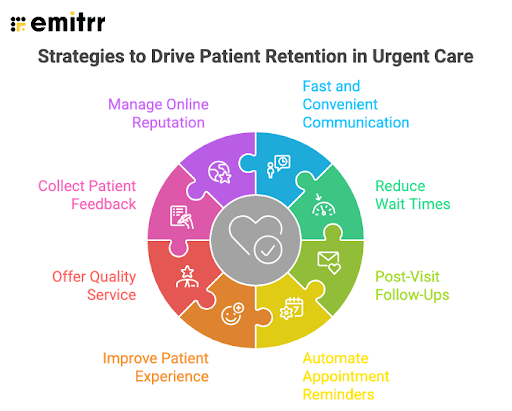
Strategies to Drive Patient Retention in Urgent Care
Urgent care clinics often focus heavily on attracting new patients, but long-term growth depends on whether those patients return for future visits. Below are some practical patient retention strategies that urgent care centers can implement to strengthen relationships and improve loyalty.
Provide Fast and Convenient Communication
Clear and timely communication plays a major role in patient loyalty. Patients expect quick responses when they call, text for healthcare, or reach out online. Clinics that respond quickly and communicate clearly make patients feel valued and supported. Effective communication throughout the patient journey helps build trust and encourages patients to return.
- Offer multiple communication channels such as phone, SMS, and email.
- Respond quickly to patient inquiries about wait times, services, or insurance.
- Use text messaging to share visit updates or important instructions.
- Ensure front-desk and call staff provide clear and helpful responses.
Reduce Wait Times with Better Scheduling
Long wait times are one of the most common reasons patients choose another urgent care clinic. When patients feel their time is respected, they are far more likely to return. Efficient online appointment scheduling and transparent communication about delays can significantly improve patient experience.
- Use online check-in or digital scheduling to reduce front-desk congestion.
- Avoid overbooking and distribute patient appointments more evenly.
- Provide real-time wait time updates when delays occur.
- Use queue management tools to help patients plan their visit.
No-shows and missed appointments slowing down your clinic? Watch how Emitrr fixes it.
Send Post-Visit Follow-Ups
A simple follow-up message after a visit can leave a lasting impression. Patients appreciate when clinics check in on their recovery or provide additional care instructions. Follow-up communication also reinforces trust and shows that the clinic cares about patient outcomes beyond the visit.
- Send a follow-up text or email to check on the patient’s condition.
- Provide medication reminders or recovery instructions.
- Offer a quick contact option if patients have additional questions.
- Share helpful health tips related to the patient’s visit.
Use Automated Appointment Reminders
Missed appointments and forgotten follow-ups can disrupt care and reduce patient engagement. Automated appointment reminders help patients stay on track with their care plan and improve clinic efficiency.
- Send automated SMS or email reminders before appointments.
- Allow patients to easily confirm, cancel, or reschedule.
- Include visit details such as time, location, and preparation instructions.
- Reduce no-shows while keeping patients connected with the clinic.
Improve Patient Experience and Service Quality
Patient retention often comes down to the overall experience during the visit. Patients are more likely to return when they feel respected, heard, and well cared for. A positive and smooth experience helps build long-term trust.
- Train staff to communicate clearly and treat patients with empathy.
- Simplify check-in, registration, and discharge processes.
- Provide clear explanations of diagnoses and treatment plans.
- Ensure a clean, organized, and welcoming clinic environment.
Collect and Act on Patient Feedback
Patient feedback provides valuable insights into what the clinic is doing well and where improvements are needed. Clinics that actively listen to feedback can quickly address issues and improve the patient experience.
- Send short surveys after visits to collect patient feedback.
- Monitor satisfaction trends and identify recurring concerns.
- Address negative feedback promptly and professionally.
- Use insights to improve clinic processes and communication.
Get access to free downloadable patient form PDFs that can be easily shared online with patients after their visit, helping urgent care clinics collect insights and improve their feedback process.
Strengthen Online Reputation and Reviews
Online reviews strongly influence where patients choose to seek care. Many patients check Google reviews or ratings before deciding which urgent care clinic to visit. A strong online reputation helps clinics attract new patients and encourage returning ones.
- Encourage satisfied patients to leave online reviews.
- Respond to both positive and negative reviews professionally.
- Monitor review platforms such as Google and healthcare directories.
- Highlight positive patient experiences on your website or social media.
How Emitrr Powers Patient Retention for Modern Urgent Care Clinics
Emitrr is an AI-powered, HIPAA-compliant patient communication and engagement platform known for streamlining interactions between healthcare practices and patients to deliver a more responsive and connected care experience.
For urgent care clinics, patient retention often depends on how easy it is for people to access care and communicate with the clinic. Delayed responses, missed calls, and manual intake processes can create friction in the patient journey and affect whether patients return in the future. Emitrr removes these barriers by simplifying communication and automating routine patient interactions.
The impact of this approach can be seen in the experience of NL Urgent Care. After implementing Emitrr, the clinic improved patient access to care, reduced missed appointments, and streamlined the patient intake process. Automation also reduced over 90 hours of repetitive administrative tasks, improved operational efficiency, and created a smoother experience for both staff and patients.
And, here’s how Emitrr supports urgent care clinics in implementing effective patient retention strategies.
AI-Powered Patient Communication
Emitrr’s AI-powered communication ensures that patients can reach the clinic whenever they need assistance. Instead of facing unanswered calls or delayed responses, patients receive quick and reliable replies to their inquiries with tools such as an AI chatbot for healthcare. This constant accessibility makes it easier for patients to get information about services, availability, or appointments without frustration. When patients know they can easily communicate with a clinic, they are more likely to return for future care.
Smart Scheduling and Appointment Management
Convenient scheduling plays a major role in patient retention. Emitrr simplifies appointment booking by making it easy for patients to schedule, confirm, or reschedule visits without lengthy phone calls. Automated reminders also reduce the chances of missed appointments while keeping patients informed about their upcoming visits. By removing common scheduling frustrations, clinics create a more convenient experience that encourages patients to choose the same urgent care center again.
Watch how Emitrr’s AI Scheduling Assistant simplifies appointment booking and reduces missed visits.
Automated Follow-Ups and Patient Communication
Staying connected after a visit helps clinics maintain stronger relationships with patients. Emitrr enables urgent care clinics to send timely follow-up messages, care instructions, or reminders after appointments through its AI SMS agent for healthcare. This ensures patients receive important updates and guidance without requiring manual outreach from staff. These follow-ups reassure patients that the clinic values their recovery and well-being even after the visit ends.
Review and Reputation Management
Online reputation has become one of the biggest factors influencing where patients seek care. Emitrr helps urgent care clinics build and maintain a strong reputation through Emitrr’s AI reputation management, which encourages satisfied patients to leave reviews after their visit. This helps clinics consistently generate fresh, authentic feedback from patients. Positive reviews improve credibility and influence people who are comparing urgent care options online. By actively monitoring feedback and strengthening their online presence, clinics can build greater trust and encourage more patients to return for future care.
Workflow Automation for Clinic Efficiency
Administrative workload often takes valuable time away from patient care. Emitrr reduces this burden by automating routine communication tasks that typically require manual effort. As staff spend less time on repetitive processes, they can focus more on patient interactions and delivering a better care experience. This shift from administrative work to patient care strengthens service quality and encourages patients to choose the same clinic for future visits.
Quick Takeaways for Improving Patient Retention in Urgent Care
- Patient retention in urgent care depends heavily on convenience, communication, and overall patient experience.
- Common issues like missed calls, long wait times, and a lack of follow-ups often lead patients to choose another clinic next time.
- Simple patient retention strategies such as faster responses, better scheduling, and post-visit communication can significantly increase repeat visits.
- Monitoring the patient retention rate helps clinics evaluate how effectively they retain existing patients.
- AI-driven tools like Emitrr help urgent care clinics automate communication, reduce administrative workload, and strengthen patient retention strategies.
Frequently Asked Questions
Urgent care clinics can improve patient retention by focusing on faster communication, convenient scheduling, post-visit follow-ups, and a consistent patient experience. Implementing effective patient retention strategies and communication tools also helps clinics stay connected with patients and encourage repeat visits.
Patient retention helps urgent care clinics build trust with patients, increase repeat visits, and maintain steady patient volume. Retaining existing patients is often more cost-effective than constantly acquiring new ones.
Some of the most effective patient retention strategies include reducing wait times, responding quickly to patient inquiries, sending follow-up messages after visits, using appointment reminders, and maintaining a strong online reputation.
Technology and AI-powered patient communication platforms like Emitrr help clinics automate reminders, follow-ups, and scheduling. These tools reduce communication gaps, improve patient access to care, and make it easier for patients to return to the same clinic when they need treatment again.


 4.9 (400+
reviews)
4.9 (400+
reviews)