
Introduction
Community Health Centers and Federally Qualified Health Centers (FQHCs) operate in one of healthcare’s most demanding environments. Every day, they balance high patient volumes, limited administrative resources, multilingual populations, complex care coordination, and strict reporting requirements, all while working to improve access to care for underserved communities. In this environment, every missed call, unanswered text, missed appointment, or delayed follow-up can directly impact patient outcomes and organizational performance.
That’s why more FQHCs are investing in patient communication software that goes far beyond appointment reminders. The right platform helps automate patient outreach, reduce no-shows, improve care coordination, support population health initiatives, streamline front-desk operations, and keep patients engaged throughout their care journey—all while integrating with existing EHRs and maintaining HIPAA compliance.
In this guide, we’ve reviewed the best patient communication software for FQHCs and Community Health Centers based on healthcare-specific functionality, multilingual communication, population health capabilities, ease of implementation, integrations, customer feedback, and overall value. Whether you’re looking to improve patient access, automate preventive care outreach, or support a growing multi-site health center network, this comparison will help you choose the right solution.

Why Do FQHCs Need Patient Communication Software?
Patient communication in an FQHC is fundamentally different from communication in a typical private practice. Beyond scheduling appointments, health centers must reach patients across multiple care programs, coordinate referrals, support chronic disease management, close preventive care gaps, and communicate with diverse populations that often face language, transportation, financial, or technology barriers.
Relying on manual phone calls, disconnected messaging tools, or one-way reminders simply isn’t sustainable. Staff spend hours confirming appointments, following up on referrals, answering routine questions, sending preventive care reminders, and trying to reconnect with patients who couldn’t be reached the first time. These repetitive tasks consume valuable administrative time while making it harder to provide timely care.
The right patient communication software for FQHCs helps automate these workflows without sacrificing the personal experience patients expect. Instead of chasing patients through manual outreach, health centers can proactively engage them with automated, multilingual communication delivered through their preferred channels.
A modern community health center communication platform can help FQHCs:
- Reduce patient no-shows with automated SMS, voice, and email appointment reminders.
- Improve patient access through online scheduling, self-service rescheduling, and missed-call text back.
- Deliver multilingual patient communication to better serve diverse communities.
- Automate preventive care reminders, vaccination campaigns, and chronic disease follow-ups to support population health management.
- Coordinate referrals, care transitions, and post-visit follow-ups with automated outreach.
- Enable two-way patient communication so patients can confirm appointments, ask questions, or request assistance without waiting on hold.
- Reduce front-desk workload by automating routine administrative tasks with AI-powered workflows.
- Integrate with leading EHRs and practice management systems to keep patient data and communication synchronized.
- Track outreach performance, appointment attendance, and patient engagement through centralized reporting and analytics.
Ultimately, the best patient engagement software for FQHCs doesn’t just improve communication, it strengthens patient access, supports care coordination, improves quality measure performance, and helps health centers deliver more equitable care at scale.
How We Evaluated These Platforms
Not every patient communication platform is built for the operational realities of Federally Qualified Health Centers. While many solutions offer appointment reminders or secure messaging, fewer support the multilingual outreach, care coordination, population health initiatives, and multi-site workflows that Community Health Centers depend on every day.
To identify the best patient communication software for FQHCs and Community Health Centers, we evaluated each platform using the criteria that matter most to health center leaders, operations teams, and patient access staff.
HIPAA Compliance & Business Associate Agreement (BAA)
Patient communication should never come at the expense of security. We prioritized platforms that offer HIPAA-compliant texting, voice, email, and patient messaging, along with Business Associate Agreements (BAAs), role-based permissions, audit logs, and secure handling of protected health information (PHI).
FQHC & Community Health Center Workflow Support
FQHCs manage far more than appointment scheduling. We evaluated how well each platform supports high-volume patient access, referral coordination, recall campaigns, care transitions, preventive care outreach, chronic disease follow-ups, and other workflows commonly used across Community Health Centers.
EHR/PMS Integrations
Disconnected systems create duplicate work and increase the risk of communication gaps. We favored platforms that integrate with leading EHRs and practice management systems, automatically syncing appointments, patient records, reminders, and communication history to reduce manual effort.
Multilingual Communication
Many Community Health Centers serve culturally and linguistically diverse populations. We assessed whether each platform supports multilingual patient communication through SMS, email, voice, and automated outreach to improve accessibility and patient engagement.
Population Health Capabilities
Preventive care outreach is a core responsibility for FQHCs. We looked for platforms that help automate vaccination campaigns, annual wellness reminders, chronic disease follow-ups, care gap notifications, recall campaigns, and other population health communication workflows.
Care Coordination Features
Effective communication extends beyond the primary care visit. We evaluated each platform’s ability to support referral reminders, post-discharge follow-ups, care team communication, patient navigation, and ongoing engagement across the continuum of care.
Ease of Implementation
Healthcare organizations need solutions that deliver value quickly without creating additional complexity. We considered implementation timelines, onboarding support, user experience, training requirements, and how easily front-desk teams and care coordinators can adopt the platform.
Reporting & Analytics
Understanding what’s working is essential for improving patient access and operational performance. We evaluated reporting capabilities such as appointment confirmation rates, no-show trends, outreach performance, communication analytics, and workflow insights that help FQHCs optimize patient engagement.
Customer Reviews (G2 & Capterra)
Real-world customer feedback provides valuable insight beyond feature lists. We reviewed verified ratings and user experiences on G2 and Capterra, paying close attention to ease of use, reliability, customer support, implementation experience, and overall satisfaction.
AI Summary
- Patient communication software helps FQHCs and Community Health Centers improve patient access, reduce no-shows, automate outreach, and strengthen care coordination while serving diverse and underserved populations.
- The best platforms combine HIPAA-compliant messaging, multilingual communication, automated appointment reminders, population health outreach, referral management, two-way texting, AI-powered automation, and EHR integrations to streamline patient engagement across the entire care journey.
- When evaluating software, prioritize FQHC-specific workflow support, multilingual capabilities, population health features, care coordination, interoperability, ease of implementation, and reporting, not just basic appointment reminders.
- This guide compares the 10 best patient communication software solutions for FQHCs and Community Health Centers based on healthcare functionality, compliance, workflow automation, integrations, customer reviews, and pricing.
- Whether you’re a single-site Community Health Center or a multi-location FQHC network, you’ll find a solution that helps improve patient engagement, operational efficiency, and health outcomes at scale.
Best Patient Communication Software for FQHCs at a Glance
| Platform | Best For | FQHC Workflow Support | HIPAA Compliant | Multilingual Messaging | Population Health Outreach | Referral & Care Coordination | Two-Way SMS | EHR Integrations |
| Emitrr | AI-powered patient communication & automation | ✅ | ✅ | ✅ | ✅ | ✅ | ✅ | 50+ integrations |
| Artera | Enterprise health systems & large FQHCs | ✅ | ✅ | ✅ | ✅ | ✅ | ✅ | Extensive |
| Relatient | Patient scheduling & access | ✅ | ✅ | Limited | ✅ | ✅ | ✅ | Extensive |
| Luma Health | Patient access & care navigation | ✅ | ✅ | Limited | ✅ | ✅ | ✅ | Extensive |
| Klara | Secure patient messaging | Partial | ✅ | Limited | Partial | Partial | ✅ | Extensive |
| Solutionreach | Patient engagement & recalls | Partial | ✅ | Limited | ✅ | Partial | ✅ | Extensive |
| OhMD | HIPAA-compliant patient messaging | Partial | ✅ | Limited | Partial | Partial | ✅ | Major EHRs |
| Updox | Document sharing & patient communication | Partial | ✅ | Limited | Partial | Partial | ✅ | Major EHRs |
| Weave | Phone system & patient communication | Partial | ✅ | Limited | Limited | Partial | ✅ | Major EHRs |
| PatientPop (Tebra) | Practice growth & patient engagement | Partial | ✅ | Limited | Partial | Partial | ✅ | Major EHRs |
How to Choose the Right Patient Communication Software for FQHCs
Choosing patient communication software for a Federally Qualified Health Center (FQHC) is not just about finding a tool that can send text reminders. Community health centers operate with complex patient populations, limited resources, multiple care programs, and strict compliance requirements.
The right FQHC patient communication platform should help health centers improve patient access, reduce administrative burden, increase appointment completion rates, support care coordination, and engage patients across their entire healthcare journey, without forcing teams to replace their existing EHR or rebuild workflows.
When evaluating patient communication software for FQHCs and community health centers, healthcare leaders should consider these key capabilities.
HIPAA Compliance & Security
Patient communication in FQHCs involves protected health information (PHI), making security and compliance non-negotiable.
The right patient communication software should support HIPAA-compliant messaging workflows and provide the safeguards required to protect sensitive patient data across every interaction.
Look for platforms that offer:
- HIPAA-compliant SMS and voice communication
- Business Associate Agreement (BAA) availability
- Secure handling of patient information
- Role-based access controls
- Audit trails and communication history
- TCPA-compliant messaging practices
- Secure patient consent management
For FQHCs, compliance is not just about avoiding risk. It is about ensuring patients can communicate with their care teams through convenient channels without compromising privacy.
A secure communication platform gives staff confidence that appointment reminders, outreach campaigns, care coordination messages, and patient follow-ups are handled safely.
FQHC & Community Health Center Workflow Support
Many patient communication tools are designed for private practices with simpler workflows. FQHCs need software built around the complexity of community healthcare delivery.
A strong FQHC patient communication platform should support workflows across:
- Multiple departments and service lines
- Primary care, behavioral health, dental, and specialty services
- New patient onboarding
- Appointment scheduling and confirmations
- Referral coordination
- Preventive care reminders
- Patient follow-ups
- Missed appointment recovery
The goal is to reduce manual work for front-desk teams while ensuring patients receive timely communication throughout their care journey.
For example, instead of staff manually calling hundreds of patients for reminders or outreach campaigns, automation can handle routine communication while teams focus on higher-value patient interactions.
EHR & Practice Management Integrations
FQHCs rely heavily on electronic health records (EHRs) and practice management systems to manage patient care. Patient communication software should connect with these systems instead of creating another disconnected workflow.
The right platform should integrate with commonly used FQHC EHR systems such as:
- eClinicalWorks
- NextGen Healthcare
- athenahealth
- Epic
- Greenway Health
- Other healthcare practice management platforms
Strong EHR integration enables:
- Automated appointment reminders based on real-time schedules
- Two-way patient communication linked with appointments
- Automated recall and follow-up campaigns
- Patient outreach triggered by clinical workflows
- Reduced duplicate data entry for staff
For community health centers managing thousands of patients, integration eliminates the operational burden of switching between multiple systems.
Multilingual Patient Communication
FQHCs serve some of the most diverse patient populations in healthcare. Language barriers can directly impact appointment attendance, preventive care participation, and health outcomes.
Patient communication software for community health centers should support multilingual engagement through:
- Automated appointment reminders in multiple languages
- Two-way patient messaging
- Translation support
- Personalized outreach campaigns
- Language preferences captured within workflows
Whether a patient needs a reminder in English, Spanish, or another commonly spoken language within the community, communication should feel accessible rather than like another barrier to care.
Better language accessibility helps FQHCs improve patient engagement while supporting health equity initiatives.
Population Health & Outreach Automation
FQHCs are responsible not only for treating patients who walk through their doors but also for improving outcomes across entire populations.
Patient communication software should help community health centers proactively reach patients who need preventive or follow-up care.
Key population health capabilities include:
- Preventive care reminders
- Care gap outreach
- Chronic care management communication
- Screening reminders
- Immunization campaigns
- High-risk patient outreach
- Automated follow-up sequences
Instead of relying on staff to manually identify and contact every patient overdue for care, automation helps FQHCs run scalable outreach programs.
This allows care teams to focus their time where human involvement matters most.
Care Coordination Capabilities
FQHC patients often interact with multiple providers, departments, and community resources. Effective communication is essential for keeping care teams aligned.
The right patient communication software should support care coordination through:
- Two-way communication between patients and staff
- Automated follow-up workflows
- Referral communication
- Care transition messaging
- Internal team visibility into patient interactions
For organizations managing medical, behavioral health, dental, and social care services, communication gaps can lead to missed appointments, delayed care, and poor patient experiences.
A centralized communication platform helps create a connected experience across the entire patient journey.
Reporting & Quality Measure Support
FQHCs operate under strict quality requirements, including Uniform Data System (UDS) reporting, patient access goals, and performance improvement initiatives. Patient communication software should provide reporting capabilities that help organizations understand whether communication efforts are improving outcomes.
Useful reporting features include:
- Appointment confirmation rates
- No-show trends
- Patient response rates
- Outreach campaign performance
- Communication activity by location or department
- Patient engagement metrics
These insights help FQHC leaders identify workflow gaps, optimize outreach strategies, and demonstrate improvements in patient engagement.
Scalability Across Multiple Locations
Many FQHCs operate multiple clinics, health centers, and service locations. Communication software should scale with organizational growth without creating fragmented workflows.
Look for platforms that support:
- Multiple locations under one account
- Centralized administration
- Location-specific workflows
- Standardized communication templates
- Organization-wide reporting
- Different user permissions
A scalable platform allows leadership teams to maintain consistency while giving individual clinics flexibility to manage their unique patient populations.
Customer Support & Implementation
Implementing new healthcare technology can be challenging, especially for organizations with limited IT resources.
The right patient communication software provider should offer:
- Dedicated implementation support
- EHR integration assistance
- Staff training
- Workflow customization
- Ongoing technical support
- Resources for adoption and optimization
For FQHCs, successful implementation is not just about deploying software. It is about ensuring front-desk teams, care coordinators, and administrators can use it effectively from day one. A strong technology partner helps community health centers improve communication without adding operational complexity.
Choosing patient communication software for an FQHC is ultimately about finding a platform that understands the realities of community healthcare. The right solution should improve access, reduce staff workload, support compliance, and help health centers engage more patients across every stage of care.
Top 10 Patient Communication Software for FQHCs
- Emitrr
- Artera
- Relatient
- Luma Health
- Klara
- Solutionreach
- OhMD
- Updox
- Weave
- Patientpop (Tebra)
1. Emitrr (Best Overall for FQHCs & Community Health Centers)
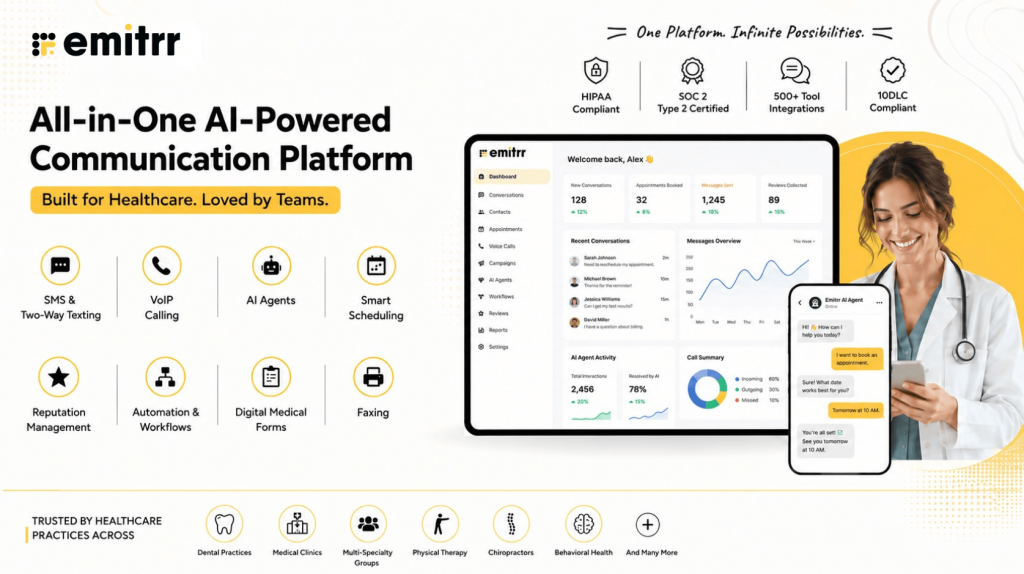
Ideal For: FQHCs, community health centers, and healthcare organizations looking for an all-in-one patient communication platform with automation, AI-powered workflows, two-way messaging, VoIP calling, and healthcare integrations.
Emitrr Overview
Emitrr is a healthcare communication platform built to help FQHCs improve patient access, reduce administrative workload, and create consistent communication workflows across the entire patient journey. Unlike basic texting tools, Emitrr combines patient messaging, voice communication, automation, and outreach capabilities in one platform.
For community health centers managing high patient volumes and diverse populations, Emitrr helps streamline everyday communication, from appointment reminders and patient follow-ups to preventive care outreach and care coordination workflows. Its healthcare-focused approach makes it easier for teams to engage patients while reducing repetitive manual tasks.
Emitrr Key Features
- AI Phone Answering: Let Emitrr’s AI handle incoming patient calls 24/7, answer common questions, route urgent conversations to the right team members, and help patients schedule, reschedule, or cancel appointments without adding workload to front-desk teams.
- Automated Appointment Reminders: Send personalized appointment reminders through SMS and voice channels to help patients confirm visits, reduce no-shows, and improve appointment availability across busy FQHC locations.
- Two-Way Patient Text Messaging: Enable patients to communicate directly with care teams through secure text conversations, allowing them to ask questions, confirm appointments, request changes, and stay connected without waiting on phone calls.
- Patient Outreach Automation: Create automated campaigns for preventive care reminders, follow-ups, screenings, vaccinations, and other outreach initiatives to help FQHCs proactively engage larger patient populations.
- AI-Powered Communication Workflows: Automate repetitive administrative interactions such as answering common questions, collecting patient information, and directing conversations to the appropriate department.
- Missed Call Text Back: Automatically send a text message when patients miss a call, allowing them to reconnect with the health center without repeatedly calling back or waiting on hold.
- Multilingual Patient Communication: Support communication with diverse patient populations through multilingual messaging workflows, helping community health centers improve accessibility and patient engagement.
- Care Coordination Messaging: Help care teams maintain consistent follow-ups with patients through automated communication workflows for referrals, ongoing care, and post-visit engagement.
- HIPAA-Compliant Patient Communication: Support secure communication workflows designed for healthcare organizations handling protected health information (PHI).
- Multi-Location Communication Management: Enable growing FQHC networks to maintain standardized communication workflows across multiple clinics while allowing location-level flexibility.
Emitrr Pros
- Built specifically around healthcare communication workflows rather than generic business messaging.
- Combines texting, calling, AI automation, and outreach capabilities in one platform.
- Helps FQHCs reduce front-desk workload through automated patient interactions.
- Supports proactive patient engagement beyond appointment reminders.
- Designed to scale across multiple healthcare locations and departments.
- Helps improve communication accessibility through multilingual engagement options.
Emitrr Cons
- May offer more capabilities than smaller organizations looking only for basic SMS reminders.
- Organizations requiring highly specialized enterprise healthcare analytics may need additional reporting solutions.
- Initial setup may require workflow configuration to maximize automation benefits.
When It May Not Be the Best Fit
If an organization only needs a basic one-way appointment reminder tool and does not require automation, two-way communication, or broader patient engagement workflows.
Emitrr Pricing
Emitrr plans start at $99/month, with custom pricing available based on practice size, AI usage, integrations, and required features. Contact the Emitrr team for a personalized quote.
Emitrr Integrations
- MailChimp
- Denticon
- AthenaHealth
- Zapier
- Salesforce
- HouseCall Pro
- + 500 more!!
Emitrr Rating
Capterra: 4.8/5
Emitrr Support Channels
- Email Support
- Phone Support
- Live Chat
- Knowledge Base
- FAQ Center
- SMS Support
2. Artera (Best Patient Communication Platform for Enterprise Health Systems & Large FQHC Networks)
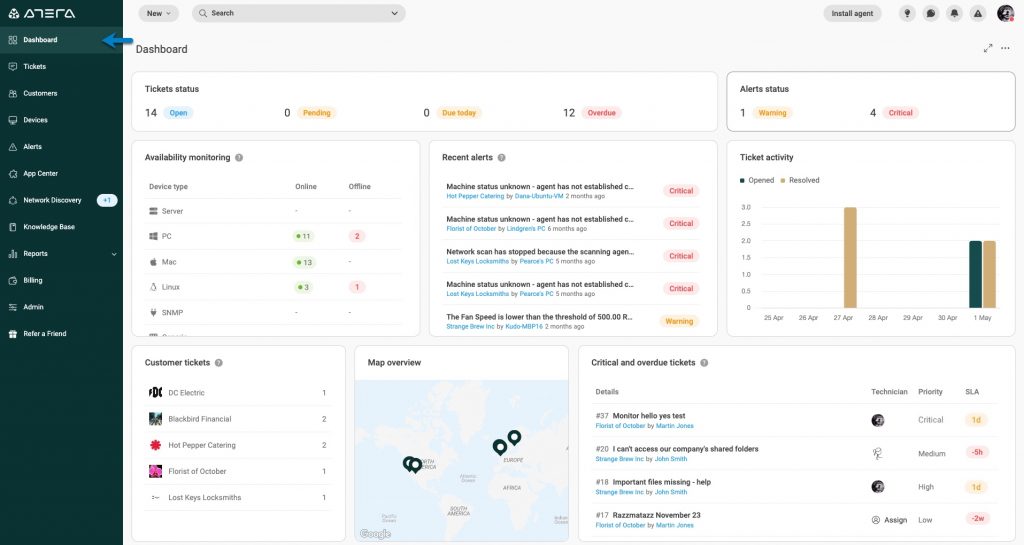
Ideal For: Large FQHC networks and healthcare organizations looking for enterprise-scale patient communication across multiple departments, locations, and care programs.
Artera Overview
Artera is a healthcare communication platform designed to help health systems, hospitals, and large healthcare organizations manage patient conversations across multiple channels. It focuses on creating a unified communication experience by connecting patient interactions through text messaging, automated outreach, and digital engagement workflows.
For larger FQHC organizations operating multiple locations and serving diverse patient populations, Artera provides tools to centralize patient communication and support large-scale engagement initiatives. Its platform is built for organizations that need structured communication workflows across complex healthcare environments.
Artera Key Features
- Unified Patient Communication Platform: Bring patient conversations across multiple communication channels into a centralized platform, helping care teams manage interactions more efficiently.
- Automated Patient Outreach Campaigns: Create targeted outreach programs for appointment reminders, preventive care initiatives, health campaigns, and follow-up communication at scale.
- Two-Way Patient Messaging: Allow patients to communicate directly with healthcare organizations through text-based conversations, reducing dependence on phone calls.
- Patient Access Workflows: Support communication around scheduling, appointment management, and patient access processes to improve healthcare accessibility.
- Digital Patient Engagement: Provide tools that help healthcare organizations create more connected experiences before, during, and after patient visits.
- Care Coordination Communication: Support communication workflows between patients and healthcare teams to improve continuity of care.
- Personalized Patient Journeys: Deliver targeted communication based on patient needs, healthcare interactions, and engagement workflows.
- Enterprise Communication Management: Help large healthcare organizations standardize communication processes across multiple departments and locations.
- Healthcare-Focused Automation: Automate routine patient interactions to reduce administrative burden and allow staff to focus on higher-value activities.
- Analytics and Engagement Insights: Provide visibility into patient communication activity to help organizations measure engagement and improve outreach strategies.
Artera Pros
- Designed for large healthcare organizations with complex communication needs.
- Strong focus on enterprise-level patient engagement workflows.
- Supports communication across multiple departments and care settings.
- Helps organizations standardize patient communication at scale.
- Built specifically for healthcare environments rather than general business messaging.
Artera Cons
- May be more complex than necessary for smaller FQHCs with simpler communication requirements.
- Enterprise-focused capabilities may require more implementation planning.
- Organizations looking for lightweight communication tools may find the platform more extensive than needed.
- May involve longer onboarding processes compared to simpler patient messaging solutions.
When It May Not Be the Best Fit
It may not be the best fit for smaller FQHCs looking for a lightweight communication solution with minimal setup and simpler patient engagement requirements.
Artera Pricing
Custom pricing based on organization size, deployment requirements, and selected modules.
Artera Integrations
- AdvancedMD EHR
- athenaOne
- eClinicalWorks
- Epic
- MEDITECH Expanse
- ModMed
- NextGen
- Oracle Health EHR
- Veradigm EHR
Artera Rating
Capterra: 4.9/5
Artera Support Channels
- Email/Help Desk
- Knowledge Base
- Phone Support
3. Relatient (Best for Patient Engagement Automation & Healthcare Outreach Workflows)
Ideal For: FQHCs and healthcare organizations looking for automated patient engagement workflows focused on outreach, scheduling, and improving patient access.
Relatient Overview
Relatient is a healthcare communication platform designed to help healthcare organizations improve patient engagement through automated outreach, appointment management, and digital communication workflows. The platform focuses on helping providers connect with patients throughout the care journey, from scheduling and reminders to follow-ups and retention efforts.
For FQHCs and community health centers managing large patient populations, Relatient can help streamline communication processes and reduce manual outreach efforts. Its platform supports organizations looking to improve patient access, increase appointment adherence, and create more consistent engagement workflows.
Relatient Key Features
- Automated Appointment Reminders: Send personalized reminders through multiple communication channels to help patients stay informed about upcoming visits and reduce missed appointments.
- Patient Self-Scheduling: Allow patients to schedule appointments digitally, improving access to care while reducing scheduling workload for front-office teams.
- Two-Way Patient Messaging: Enable patients to respond to healthcare communications, ask questions, and interact with care teams without relying solely on phone calls.
- Care Gap Outreach: Support proactive communication efforts to identify and engage patients who need additional care or follow-up.
- Patient Relationship Management: Help healthcare organizations maintain ongoing communication with patients beyond individual appointments.
- Healthcare Workflow Automation: Reduce repetitive administrative tasks by automating routine patient communication activities.
- Multi-Channel Communication: Support patient engagement through channels such as text messaging, voice communication, and digital outreach.
Relatient Pros
- Strong focus on healthcare-specific patient engagement workflows.
- Helps automate outreach and appointment-related communication.
- Supports proactive patient engagement beyond basic reminders.
- Designed to improve patient access and scheduling efficiency.
- Useful for organizations managing large patient populations.
Relatient Cons
- May require configuration and workflow planning for organizations with complex communication needs.
- Some advanced capabilities may be more suited for larger healthcare organizations.
- Organizations looking for extensive AI-powered communication features may need to compare additional platforms.
When It May Not Be the Best Fit
Relatient may not be the best fit for FQHCs looking for a highly customizable communication platform with broader AI automation, voice capabilities, and advanced conversational workflows.
Relatient Pricing
Pricing starts at $99 per month.
Relatient Integrations
- Epic
- athenahealth
- Cerner
- MEDITECH
- eClinicalWorks
- NextGen Healthcare
- Additional healthcare systems
Relatient Rating
Capterra: 4.3/5
Relatient Support Channels
- Email/Help Desk
- Knowledge Base
- Phone Support
- Chat
4. Luma Health (Best for Enterprise Patient Engagement & Care Coordination)
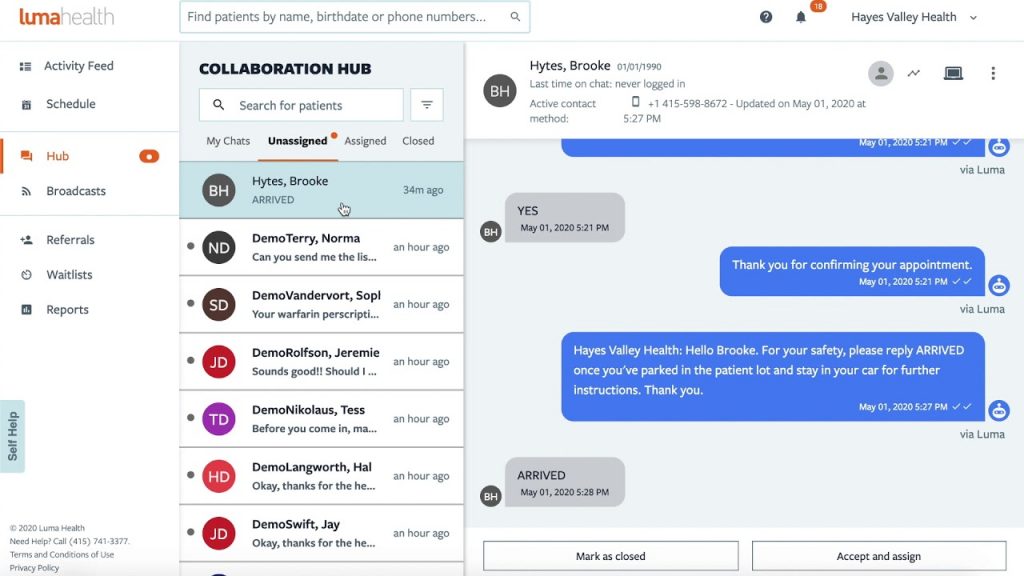
Ideal For: Large FQHC networks and healthcare organizations looking for comprehensive patient engagement, care coordination, and digital health workflows.
Luma Health Overview
Luma Health is a healthcare patient engagement platform designed to connect patients and care teams through automated communication, digital workflows, and care coordination tools. The platform focuses on improving access, streamlining patient journeys, and helping healthcare organizations deliver more connected experiences.
For FQHCs managing complex patient populations and multiple care programs, Luma Health provides tools to support communication across scheduling, outreach, referrals, and ongoing patient engagement. Its enterprise approach makes it suitable for organizations looking to build structured digital patient engagement strategies.
Luma Health Key Features
- Patient Journey Automation: Create automated communication workflows that guide patients through different stages of care, from scheduling and preparation to follow-ups and ongoing engagement.
- Digital Patient Access: Help patients connect with healthcare organizations through online scheduling, communication tools, and self-service options that improve accessibility.
- Automated Appointment Communication: Send reminders, confirmations, and follow-up messages to improve appointment attendance and reduce administrative follow-up.
- Care Coordination Workflows: Support communication between patients, providers, and care teams to improve continuity across different healthcare services.
- Patient Outreach Automation: Launch targeted outreach campaigns for preventive care, screenings, chronic care management, and other population health initiatives.
- Referral Management: Help healthcare organizations coordinate referral communication and improve visibility into patient transitions.
- Two-Way Patient Messaging: Enable secure communication between patients and healthcare teams for questions, updates, and follow-ups.
- Personalized Patient Engagement: Deliver relevant communication based on patient needs, healthcare interactions, and specific care pathways.
- Healthcare Analytics & Insights: Provide visibility into patient engagement activity to help organizations evaluate communication effectiveness.
- Enterprise Healthcare Workflows: Support large healthcare organizations managing multiple departments, locations, and patient populations.
Luma Health Pros
- Strong focus on complete patient journey management.
- Supports complex healthcare engagement workflows.
- Designed for enterprise healthcare organizations.
- Helps connect patient communication with broader care coordination initiatives.
- Supports proactive outreach and population health efforts.
Luma Health Cons
- May involve more implementation complexity compared to lightweight patient communication platforms.
- Smaller FQHCs may find enterprise-level features more extensive than their immediate needs.
- Organizations looking primarily for communication automation may not need the full breadth of its patient engagement capabilities.
When It May Not Be the Best Fit
Luma Health may not be the best fit for smaller FQHCs looking for a simpler patient communication solution focused primarily on messaging, reminders, and administrative automation.
Luma Health Pricing
Custom pricing. Contact Luma health for a personalized quote based on your practice size and requirements.
Luma Health Integrations
- AdvancedMD for Mental Health
- Amazing Charts
- Clarity Wave
- CureMD
- eClinicalWorks
- Epic
- Nextech EHR & PM
- NextGen Office
- NueMD
Luma Health Rating
Capterra: 4.6/5
Luma Health Support Channels
- Email/Help Desk
- FAQs/Forum
- Knowledge Base
- Phone Support
- Chat
5. Klara (Best for Two-Way Patient Communication & Front Office Efficiency)
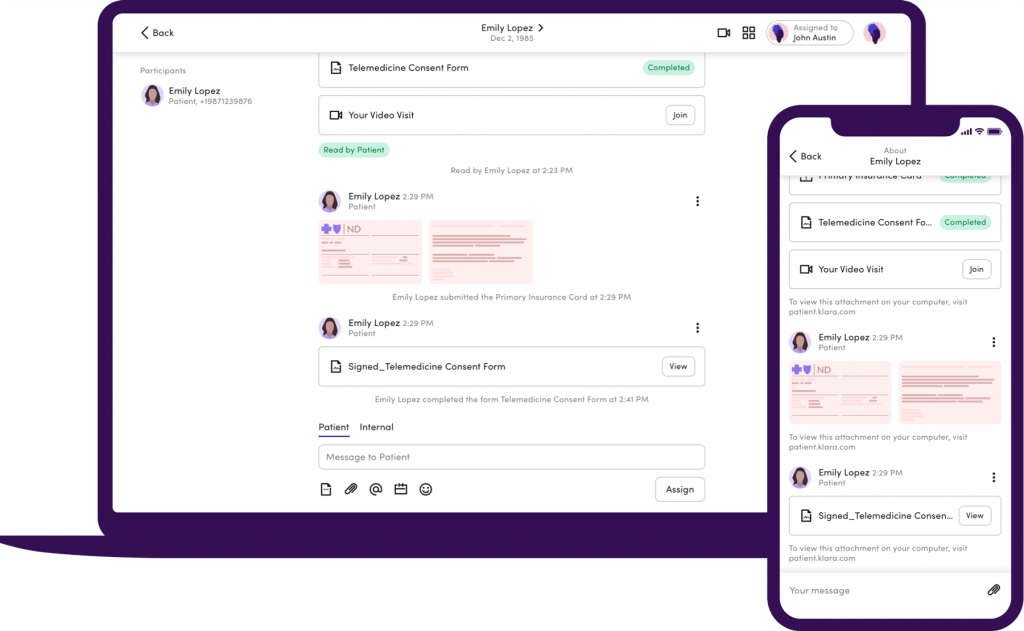
Ideal For: FQHCs and healthcare organizations looking for a simple patient communication platform focused on two-way messaging, scheduling, and reducing administrative workload.
Klara Overview
Klara is a healthcare communication platform that helps providers connect with patients through secure messaging, appointment management, and digital communication workflows. The platform focuses on making patient-provider communication more convenient while helping staff reduce phone-based administrative tasks.
For FQHCs and community health centers, Klara can help improve patient access by enabling faster communication between patients and care teams. Its messaging-first approach makes it useful for organizations looking to replace manual phone calls with more efficient digital conversations.
Klara Key Features
- Two-Way Patient Messaging: Enable secure conversations between patients and healthcare teams, allowing patients to ask questions, receive updates, and communicate without waiting on hold.
- Automated Appointment Reminders: Send appointment notifications and confirmations to help reduce missed visits and improve scheduling efficiency.
- Patient Self-Scheduling: Allow patients to request or schedule appointments digitally, helping reduce front-desk workload and improve access to care.
- Digital Patient Intake: Collect patient information electronically before visits to simplify registration workflows and reduce administrative effort.
- Care Team Communication: Help staff manage patient conversations from a centralized platform, improving visibility and response times.
- Patient Follow-Up Workflows: Support post-visit communication and follow-ups to keep patients engaged after appointments.
- Secure Healthcare Messaging: Provide HIPAA-compliant communication workflows designed for healthcare organizations handling sensitive patient information.
- Appointment Management Tools: Help teams coordinate scheduling-related communication and reduce repetitive administrative tasks.
- Patient Engagement Workflows: Support ongoing communication between healthcare organizations and patients throughout their care journey.
- Communication History Tracking: Maintain visibility into patient conversations to help teams manage interactions more effectively.
Klara Pros
- Simple and user-friendly patient communication experience.
- Strong focus on two-way messaging and patient conversations.
- Helps reduce reliance on phone-based communication.
- Supports digital intake and appointment workflows.
- Suitable for organizations prioritizing patient access and communication efficiency.
Klara Cons
- May have fewer advanced outreach and population health capabilities compared to larger enterprise engagement platforms.
- Organizations looking for extensive AI-powered automation may require additional capabilities.
- May not provide the same level of multi-location complexity management as enterprise-focused solutions.
When It May Not Be the Best Fit
Klara may not be the best fit for FQHCs looking for advanced population health campaigns, extensive care coordination workflows, or enterprise-level patient outreach automation.
Klara Pricing
Custom pricing. Contact Klara for a personalized quote based on your practice size and requirements.
Klara Integrations
- AdvancedMD EHR
- athenaOne
- Intergy
- ModMed
- Nextech EHR & PM
- Veradigm EHR
- Veradigm Practice Management
Klara Rating
Capterra: 4.6/5
Klara Support Channels
- Email/Help Desk
- FAQs/Forum
- Knowledge Base
- Phone Support
- Chat
6. Solutionreach (Best for Patient Retention & Automated Healthcare Communication)
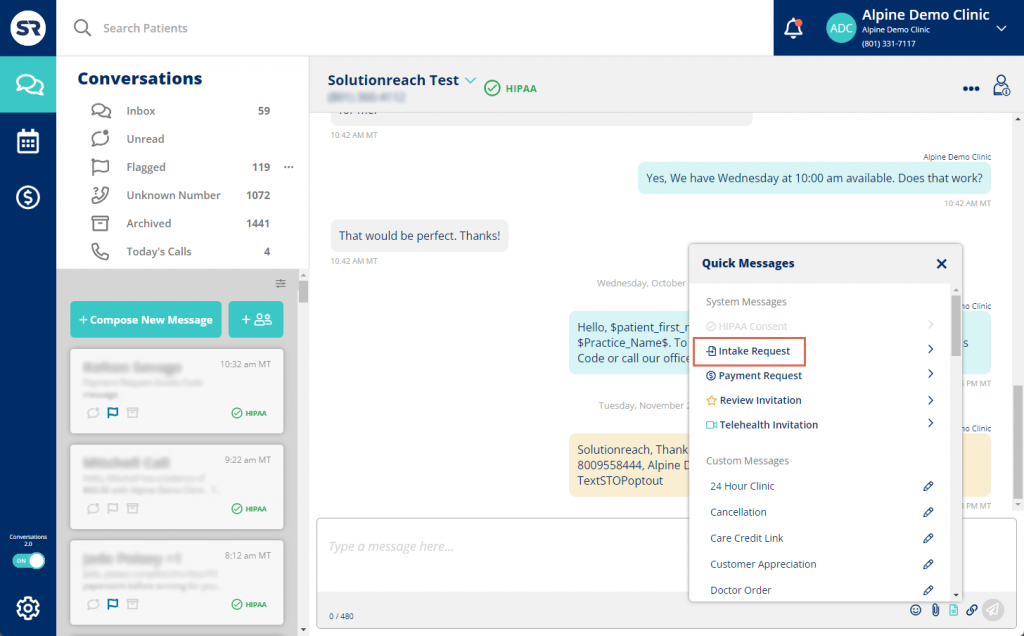
Ideal For: FQHCs and healthcare organizations looking for established patient engagement software with automated reminders, outreach campaigns, and communication management tools.
Solutionreach Overview
Solutionreach is a healthcare patient communication platform designed to help providers improve patient engagement through automated messaging, appointment reminders, surveys, and outreach workflows. It has been used by healthcare organizations to maintain consistent communication with patients before and after appointments.
For community health centers, Solutionreach can help streamline routine communication tasks such as appointment confirmations, recalls, and patient notifications. Its focus on automated engagement makes it useful for organizations looking to improve patient communication consistency while reducing manual outreach.
Solutionreach Key Features
- Automated Appointment Reminders: Send timely reminders through text, email, and voice communication channels to help patients stay informed and reduce missed appointments.
- Patient Recall Campaigns: Automatically reconnect with patients who are due for follow-up visits, preventive services, or recommended care.
- Patient Surveys: Collect patient feedback after visits to understand satisfaction levels and identify opportunities for improvement.
- Automated Outreach Campaigns: Create targeted communication campaigns for healthcare reminders, announcements, and patient engagement initiatives.
- Two-Way Messaging: Allow patients to respond to messages and communicate with healthcare teams through convenient digital channels.
- Appointment Confirmation Workflows: Help organizations confirm visits efficiently and identify scheduling issues before appointments are missed.
- Patient Education Communication: Share relevant healthcare information and updates with patient populations.
- Healthcare Marketing Automation: Support patient engagement efforts through personalized communication and outreach strategies.
- Multi-Channel Communication: Engage patients through multiple communication methods based on organizational preferences and patient needs.
- Patient Engagement Reporting: Provide insights into communication activity and campaign performance.
Solutionreach Pros
- Long-standing presence in healthcare patient communication.
- Strong focus on automated reminders and patient engagement.
- Supports multiple communication channels.
- Helps organizations maintain consistent patient outreach.
- Useful for improving retention and follow-up communication.
Solutionreach Cons
- May feel more focused on traditional patient engagement workflows compared to newer AI-powered platforms.
- Organizations looking for advanced conversational automation may need additional solutions.
- Larger FQHC networks may require more customization for complex workflows.
When It May Not Be the Best Fit
Solutionreach may not be the best fit for FQHCs seeking a modern communication platform with advanced AI automation, deeper care coordination workflows, and highly customizable patient journeys.
Solutionreach Pricing
Custom pricing based on practice size and selected products.
Solutionreach Integrations
- Epic
- athenahealth
- Dentrix
- Eaglesoft
- Open Dental
- eClinicalWorks
- NextGen Healthcare
Solutionreach Rating
Capterra: 3.8/5
Solutionreach Support Channels
- Email/Help Desk
- FAQs/Forum
- Knowledge Base
- Phone Support
7. OhMD (Best for Simple Patient Messaging & Virtual Care Communication)
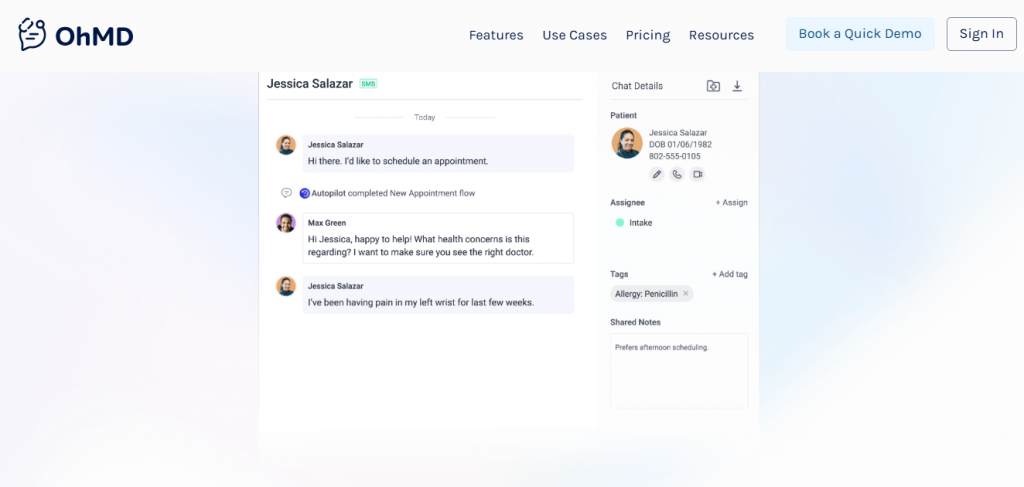
Ideal For: FQHCs and healthcare organizations looking for a lightweight communication platform focused on secure patient messaging, telehealth communication, and improving patient access.
OhMD Overview
OhMD is a healthcare communication platform designed to simplify conversations between patients and healthcare teams through secure messaging, patient engagement tools, and digital communication workflows. The platform focuses on making healthcare communication more accessible by replacing traditional phone-based interactions with convenient text-based conversations.
For FQHCs and community health centers, OhMD can help improve patient access by enabling easier communication with care teams, supporting virtual interactions, and reducing administrative friction. Its simple messaging approach can be useful for organizations looking to improve patient communication without implementing a complex enterprise platform.
OhMD Key Features
- Two-Way Patient Text Messaging: Allow patients and healthcare teams to communicate through secure text conversations, making it easier to answer questions, provide updates, and manage follow-ups.
- Secure Healthcare Communication: Support HIPAA-compliant messaging workflows that help healthcare organizations communicate with patients while protecting sensitive information.
- Patient Self-Scheduling: Allow patients to request or schedule appointments digitally, helping reduce phone volume and improve access.
- Automated Appointment Reminders: Send reminders and notifications to help patients stay informed and reduce missed appointments.
- Digital Patient Intake: Collect patient information electronically before appointments to simplify registration and reduce administrative tasks.
- Virtual Care Communication: Support digital interactions between patients and providers, helping organizations maintain communication during remote care workflows.
- Patient Engagement Campaigns: Help healthcare teams reach patients through targeted messaging for updates, reminders, and follow-up communication.
- Broadcast Messaging: Send communication updates to groups of patients for announcements, outreach efforts, or health-related notifications.
- Patient Communication Management: Organize conversations and interactions in one centralized platform for easier staff management.
- Mobile-Friendly Communication: Enable healthcare teams to communicate with patients conveniently through digital channels.
OhMD Pros
- Simple and easy-to-use patient messaging experience.
- Strong focus on two-way communication between patients and providers.
- Helps reduce dependence on phone calls for routine interactions.
- Supports secure healthcare communication workflows.
- Useful for organizations prioritizing accessibility and patient convenience.
OhMD Cons
- May offer fewer advanced automation capabilities compared to broader patient engagement platforms.
- Population health and large-scale outreach workflows may be more limited.
- Organizations with complex multi-location operations may need additional enterprise capabilities.
When It May Not Be the Best Fit
OhMD may not be the best fit for FQHCs needing comprehensive patient outreach automation, advanced care coordination workflows, or enterprise-level communication management.
OhMD Pricing
Pricing starts at $300 per month.
OhMD Integrations
- Epic
- athenahealth
- eClinicalWorks
- NextGen Healthcare
- Veradigm
- Other leading healthcare systems
OhMD Rating
Capterra: 3.3/5
OhMD Support Channels
- Email/Help Desk
- FAQs/Forum
- Knowledge Base
- Phone Support
- Chat
8. Updox (Best for Integrated Healthcare Communication & Provider Collaboration)
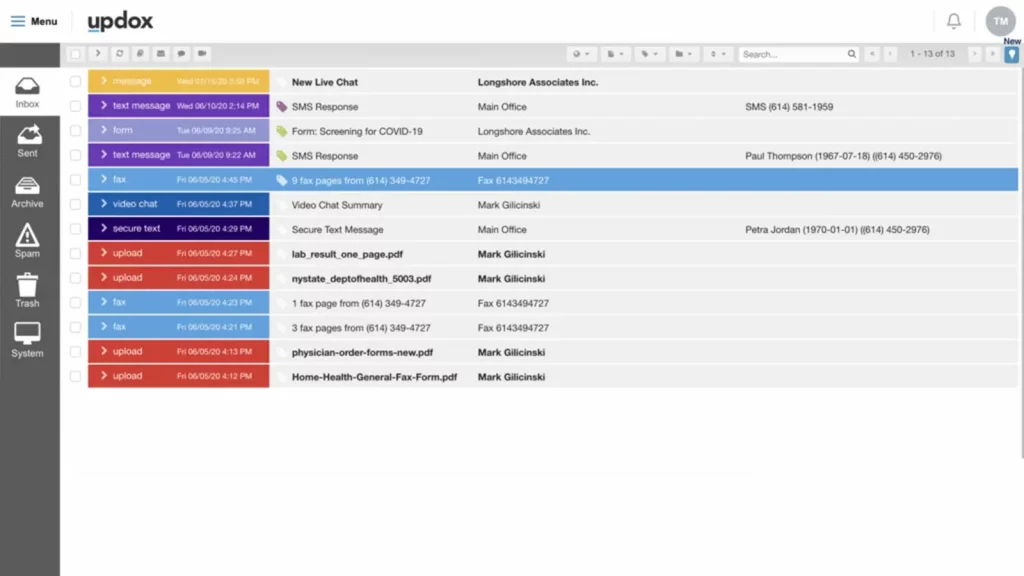
Ideal For: FQHCs and healthcare organizations looking for a healthcare communication platform that combines patient messaging, telehealth, document exchange, and provider collaboration.
Updox Overview
Updox is a healthcare communication platform that helps medical organizations manage patient interactions through secure messaging, telehealth capabilities, document exchange, and digital communication tools. The platform is designed to bring multiple communication workflows together within a healthcare-focused environment.
For FQHCs and community health centers, Updox can support communication between patients and providers while helping teams manage digital interactions more efficiently. Its broader healthcare communication capabilities make it useful for organizations looking to consolidate multiple communication needs into one platform.
Updox Key Features
- Secure Patient Messaging: Enable encrypted communication between patients and healthcare teams for questions, updates, follow-ups, and ongoing engagement.
- Telehealth Communication: Support virtual care interactions by enabling digital communication between providers and patients.
- Document Exchange: Allow healthcare organizations to securely share documents and information with patients and other healthcare stakeholders.
- Patient Notifications: Send important updates, reminders, and healthcare-related communication through digital channels.
- Provider-to-Provider Communication: Support collaboration between healthcare professionals through secure communication workflows.
- Digital Patient Intake: Help streamline administrative processes by collecting patient information electronically.
- Electronic Fax Management: Provide digital fax capabilities to help healthcare organizations manage document workflows more efficiently.
- Patient Portal Communication: Support digital engagement through patient-facing communication tools.
- Healthcare Workflow Integration: Help organizations connect communication processes with broader healthcare operations.
- Secure Communication Infrastructure: Provide healthcare-focused communication tools designed around privacy and compliance requirements.
Updox Pros
- Offers a broad range of healthcare communication capabilities beyond messaging.
- Supports both patient communication and provider collaboration.
- Includes telehealth and document exchange functionality.
- Designed specifically for healthcare organizations.
- Helps consolidate multiple communication workflows.
Updox Cons
- The broader feature set may be more than smaller FQHCs need for basic patient engagement.
- Organizations focused primarily on automated outreach may find other platforms more specialized.
- Some workflows may require additional configuration and implementation planning.
When It May Not Be the Best Fit
Updox may not be the best fit for FQHCs primarily looking for advanced patient outreach automation, AI-driven communication workflows, or large-scale population health engagement tools.
Updox Pricing
Custom pricing based on practice size and selected products.
Updox Integrations
No info available
Updox Rating
Capterra: 4.1/5
Updox Support Channels
- Email/Help Desk
- Knowledge Base
- Phone Support
- Chat
9. Weave (Best for Patient Communication & Front Office Engagement)

Ideal For: Healthcare organizations looking for an easy-to-use communication platform that combines patient messaging, calling, and front-office engagement tools.
Weave Overview
Weave is a patient communication platform designed to help healthcare organizations improve interactions between patients and staff through texting, phone communication, reminders, and engagement workflows. The platform focuses on improving everyday front-office communication by bringing multiple patient touchpoints into one system.
For FQHCs and community health centers, Weave can help streamline routine communication tasks such as appointment reminders, patient follow-ups, and inbound conversations. Its focus on improving administrative efficiency makes it useful for organizations looking to modernize patient communication processes.
Weave Key Features
- Two-Way Patient Text Messaging: Allow patients to communicate with healthcare teams through text, making it easier to answer questions, confirm appointments, and manage follow-ups.
- Appointment Reminders: Send automated notifications to keep patients informed about upcoming visits and help reduce missed appointments.
- Missed Call Text Back: Automatically engage patients who call outside office hours or when staff cannot answer, helping reduce missed communication opportunities.
- VoIP Calling: Provide cloud-based calling capabilities that allow teams to manage patient conversations through a unified communication system.
- Automated Review Requests: Help healthcare organizations collect patient feedback and improve their online reputation through automated outreach.
- Patient Follow-Up Messages: Create communication workflows to reconnect with patients after appointments or important interactions.
- Contact Management: Maintain patient communication details and conversation history to help teams manage interactions more effectively.
- Team Communication Tools: Help staff coordinate patient-related conversations and manage front-office workflows.
- Appointment Communication Workflows: Support scheduling-related interactions to improve patient access and reduce administrative effort.
- Multi-Channel Patient Engagement: Combine calling, texting, and other communication methods to create a more connected patient experience.
Weave Pros
- Easy-to-use interface designed for front-office teams.
- Combines phone, texting, and patient communication in one platform.
- Helps reduce missed patient communication opportunities.
- Strong focus on improving everyday administrative workflows.
- Useful for organizations wanting a simple communication hub.
Weave Cons
- Historically focused on smaller healthcare practices and may require evaluation for complex FQHC environments.
- May not offer the same depth of population health and care coordination workflows as enterprise healthcare platforms.
- Organizations needing extensive outreach automation may require additional capabilities.
When It May Not Be the Best Fit
Weave may not be the best fit for large FQHC networks looking for advanced population health outreach, complex care coordination workflows, and enterprise-level patient engagement capabilities.
Weave Pricing
Pricing starts at $199 per month.
Weave Integrations
- athenahealth
- Dentrix
- Eaglesoft
- Open Dental
- Epic
- eClinicalWorks
- NextGen Healthcare
- Additional healthcare software
Weave Rating
Capterra: 4.3/5
Weave Support Channels
- Email/Help Desk
- FAQs/Forum
- Knowledge Base
- Phone Support
- Chat
10. PatientPop or Tebra (Best for Patient Engagement, Scheduling & Practice Growth Workflows)

Ideal For: Healthcare organizations looking for a broader patient engagement platform that combines communication, scheduling, digital intake, and patient acquisition tools.
Tebra Overview
PatientPop, now part of Tebra, is a healthcare technology platform designed to help providers manage patient engagement, scheduling, online presence, and administrative workflows. The platform combines communication tools with broader practice growth and patient experience capabilities.
For FQHCs and community health centers, Tebra’s patient engagement tools can support communication workflows such as appointment reminders, digital intake, and patient interactions. However, organizations should evaluate whether its broader practice growth focus aligns with the operational needs of community healthcare environments.
Tebra Key Features
- Automated Appointment Reminders: Send notifications to patients about upcoming visits to improve attendance and reduce missed appointments.
- Online Patient Scheduling: Allow patients to request or schedule appointments digitally, helping improve access and reduce administrative workload.
- Digital Patient Intake: Enable patients to complete forms and provide information electronically before visits.
- Patient Communication Tools: Support messaging workflows that help healthcare teams stay connected with patients.
- Patient Reviews & Reputation Management: Help organizations collect feedback and manage online patient experiences.
- Patient Engagement Automation: Automate communication tasks throughout the patient journey to improve consistency.
- Appointment Management Workflows: Support scheduling-related processes to improve operational efficiency.
- Patient Experience Tools: Provide features designed to improve convenience and engagement throughout healthcare interactions.
- Healthcare Practice Management Capabilities: Combine multiple administrative tools into a broader healthcare technology ecosystem.
- Digital Front Door Experience: Help organizations create easier access points for patients through online communication and scheduling options.
Tebra Pros
- Provides a broad set of patient engagement and administrative tools.
- Supports digital scheduling and intake workflows.
- Helps improve patient convenience through online access options.
- Combines multiple practice management capabilities in one ecosystem.
- Useful for organizations focused on improving patient experience.
Tebra Cons
- Some features are designed around practice growth and acquisition rather than FQHC-specific workflows.
- May not provide the same depth of population health and community outreach capabilities required by some health centers.
- Organizations needing highly specialized FQHC communication workflows may require a more healthcare engagement-focused platform.
When It May Not Be the Best Fit
PatientPop (Tebra) may not be the best fit for FQHCs looking primarily for specialized patient outreach automation, community health workflows, and large-scale care coordination capabilities.
Tebra Pricing
Custom pricing based on practice size and selected products.
Tebra Integrations
No info available
Tebra Rating
Capterra: 3.8/5
Tebra Support Channels
- Email/Help Desk
- Knowledge Base
- Phone Support
How to Avoid Choosing the Wrong Patient Communication Software for FQHCs
Selecting patient communication software for an FQHC is a long-term operational decision. The wrong platform can create more work for already stretched teams, introduce workflow gaps, and prevent community health centers from achieving their patient engagement goals.
Many healthcare organizations make the mistake of choosing communication software based on surface-level features like texting capabilities or pricing. However, FQHCs need a platform that understands the complexity of community healthcare delivery, from multilingual patient populations and care coordination requirements to EHR integrations and multi-location management.
Before investing in a patient communication platform, avoid these common mistakes:
Choosing Software That Doesn’t Support Community Health Center Workflows
One of the biggest mistakes FQHCs make is selecting a communication platform designed for traditional medical practices without considering the unique workflows of community health centers.
FQHCs manage a wide range of services, including primary care, behavioral health, dental care, preventive services, and social support programs. A basic appointment reminder tool may not be enough to support these complex patient journeys.
The right patient communication software for FQHCs should support:
- Appointment reminders and confirmations
- Patient intake and onboarding workflows
- Referral follow-ups
- Preventive care outreach
- Care gap communication
- Missed appointment recovery
- Multi-department communication
A platform that only handles one-way reminders forces staff to continue managing manual outreach, phone calls, and disconnected workflows. Instead, FQHCs should look for software that fits into their existing care delivery model and helps teams communicate more efficiently across every patient interaction.
Ignoring Multilingual Communication Needs
FQHCs serve diverse communities where language accessibility plays a critical role in patient engagement. Choosing patient communication software without multilingual support can create unnecessary barriers for patients who already face challenges accessing healthcare.
Without language-friendly communication options, patients may miss:
- Appointment reminders
- Preventive care notifications
- Follow-up instructions
- Outreach campaigns
- Care coordination messages
A strong communication platform should allow FQHCs to communicate with patients in their preferred language through automated reminders, two-way messaging, and outreach campaigns. Ignoring multilingual communication needs can negatively impact patient satisfaction, appointment attendance, and health equity initiatives.
Overlooking Population Health & Care Coordination Capabilities
Many FQHCs are focused on improving outcomes beyond individual appointments. They need communication tools that help identify and engage patients who require ongoing care. A common mistake is choosing software that only focuses on scheduling communication while ignoring population health workflows.
The right platform should support:
- Preventive care reminders
- Chronic condition outreach
- Screening campaigns
- Immunization reminders
- Care gap closure
- Patient follow-ups
- Referral coordination
Without these capabilities, healthcare teams remain dependent on manual lists, spreadsheets, and phone calls to reach patients. For FQHCs managing large patient populations, communication automation is essential for delivering proactive care at scale.
Buying Software Without Automation
A communication platform that simply replaces phone calls with texting is not enough. FQHC staff already manage high patient volumes with limited resources. Choosing software without automation means teams may still spend hours manually sending reminders, tracking responses, and following up with patients.
Effective patient communication software should automate workflows such as:
- Appointment reminders
- Confirmation requests
- No-show follow-ups
- Recall campaigns
- Patient surveys
- Outreach sequences
- Care reminders
Automation allows front-desk and care teams to spend less time on repetitive administrative tasks and more time supporting patients. The goal is not just faster communication; it is reducing operational workload while improving patient engagement.
Poor EHR & PMS Integrations
A communication platform that does not integrate with your EHR or practice management system can quickly become another disconnected tool for staff to manage. FQHCs rely on systems such as eClinicalWorks, NextGen, athenahealth, Epic, and other healthcare platforms to manage patient information and appointments.
Without proper integration, teams may experience:
- Manual data entry
- Duplicate workflows
- Incorrect patient information
- Delayed outreach
- Scheduling communication errors
Before selecting software, FQHCs should evaluate whether the platform can connect with their existing healthcare technology ecosystem. A strong integration ensures patient communication happens automatically using accurate, real-time information from existing systems.
Choosing Based Only on Price
Budget considerations are important for FQHCs, but choosing the lowest-cost option can create bigger operational challenges over time.
A cheaper communication tool may lack important capabilities such as:
- HIPAA compliance support
- EHR integrations
- Automation workflows
- Reporting capabilities
- Multilingual communication
- Scalability
The true cost of patient communication software is not just the subscription price. It includes staff time spent managing manual processes, missed appointments, inefficient outreach, and limited visibility into patient engagement. FQHCs should evaluate the overall value a platform provides, including workflow improvements, staff efficiency, and patient access outcomes.
Failing to Plan for Multi-Location Growth
Many community health centers expand by adding new clinics, services, and care programs. Choosing software that only works for a single location can create limitations as the organization grows.
FQHCs should consider whether a communication platform can support:
- Multiple health center locations
- Centralized administration
- Location-specific workflows
- Organization-wide reporting
- Different user roles and permissions
- Consistent communication standards
A scalable patient communication platform allows growing FQHC networks to maintain operational consistency without rebuilding workflows every time a new location is added.
Why Emitrr Stands Out
FQHCs and community health centers need more than a basic texting platform. They need a patient communication solution that understands the realities of high patient volumes, limited resources, complex care workflows, and the need to improve access across diverse communities.
Emitrr helps FQHCs streamline patient communication, reduce administrative workload, and engage more patients through automated, secure, and scalable communication workflows.
Here is what makes Emitrr different:
Built for FQHC & Community Health Center Workflows
Emitrr is designed to support the unique communication needs of FQHCs and community health centers, from appointment management and patient outreach to care coordination and follow-ups.
Instead of adding another disconnected system, Emitrr works alongside existing healthcare workflows to help teams:
- Reduce manual communication tasks
- Improve patient access
- Keep patients engaged throughout their care journey
- Standardize communication across departments and locations
Whether supporting primary care, behavioral health, dental, or specialty services, Emitrr helps FQHC teams create more consistent patient experiences.
Automated Patient Outreach at Scale
FQHCs often serve thousands of patients, making manual outreach difficult to maintain.
Emitrr enables automated patient engagement workflows for:
- Appointment reminders and confirmations
- No-show prevention and recovery
- Preventive care reminders
- Patient follow-ups
- Recall campaigns
- Care gap outreach
By automating repetitive communication, healthcare teams can spend less time making calls and more time supporting patients who need personal attention.
Multilingual Patient Engagement
Language should never be a barrier to accessing care. Emitrr helps FQHCs communicate with diverse patient populations through multilingual messaging workflows that make outreach more accessible and effective.
Teams can use personalized communication for:
- Appointment reminders
- Patient notifications
- Follow-up messages
- Outreach campaigns
- Care coordination updates
This helps community health centers improve engagement, support health equity initiatives, and reach more patients in the language they understand best.
AI-Powered Administrative Automation
Administrative teams spend significant time handling repetitive communication tasks. Emitrr’s AI-powered capabilities help reduce this workload by automating routine interactions and improving response times.
With AI-driven automation, FQHC teams can:
- Handle common patient questions
- Automate scheduling conversations
- Route inquiries to the right teams
- Reduce front-desk workload
- Improve response availability
This allows staff to focus on more complex patient needs while maintaining efficient communication workflows.
Powerful Two-Way Patient Communication
Patients expect healthcare communication to be simple and convenient. One-way reminders are no longer enough.
Emitrr enables two-way communication through channels patients already use, allowing them to:
- Confirm or reschedule appointments
- Ask questions
- Respond to outreach messages
- Connect with care teams
For FQHCs, this creates a more accessible patient experience while reducing phone congestion and missed connections.
Population Health & Care Coordination Workflows
FQHCs play a critical role in improving population health outcomes, not just delivering individual visits.
Emitrr supports proactive patient engagement workflows that help teams stay connected with patients through:
- Preventive care campaigns
- Chronic care follow-ups
- Health screening reminders
- Referral communication
- Patient outreach initiatives
By enabling more proactive communication, Emitrr helps community health centers close care gaps and improve patient outcomes.
Deep Healthcare Integrations
Healthcare organizations need communication technology that works with their existing systems.
Emitrr integrates with leading EHR and practice management platforms to help FQHCs automate communication using accurate patient and appointment information.
Integration capabilities help teams:
- Trigger automated messages from real-time workflows
- Reduce manual data entry
- Keep communication connected with existing systems
- Improve operational efficiency
Emitrr fits into the technology ecosystem FQHCs already rely on.
Enterprise-Ready for Multi-Site Organizations
Many FQHCs operate across multiple locations, departments, and care programs. Emitrr provides the scalability needed to manage communication consistently across growing healthcare networks.
Organizations can benefit from:
- Multi-location support
- Centralized communication management
- Standardized workflows
- Location-level flexibility
- Scalable reporting and administration
Whether supporting one health center or an expanding network of clinics, Emitrr helps FQHCs maintain reliable patient communication at every level.
Frequently Asked Questions
The best patient communication software for FQHCs depends on your health center’s workflows, patient population, and operational needs. A strong platform should support automated appointment reminders, two-way texting, multilingual communication, etc. Emitrr provides an all-in-one communication platform designed to help FQHCs improve patient engagement and reduce administrative workload.
Patient communication software helps reduce missed appointments through automated reminder sequences, two-way texting, appointment confirmations, rescheduling workflows, and follow-up messages. By keeping patients informed and allowing them to respond easily, FQHCs can improve attendance rates while reducing manual reminder calls.
Yes. Since FQHCs handle protected health information (PHI), their communication platform should support HIPAA-compliant workflows, secure messaging, access controls, audit logs, data protection measures, and Business Associate Agreement (BAA) requirements.
Yes. Multilingual communication is a critical requirement for many FQHCs and community health centers. The right platform should help teams communicate with patients in their preferred language through automated reminders, outreach campaigns, and two-way messaging to improve accessibility and engagement.
Yes. Enterprise-ready patient communication platforms can support multi-site FQHC organizations with centralized management, location-specific workflows, user permissions, reporting, and standardized communication processes across clinics.
Patient communication software helps FQHCs proactively engage patients through preventive care reminders, screening outreach, chronic care follow-ups, referral communication, and care gap campaigns. Automation allows health centers to reach more patients without increasing administrative workload.
Conclusion
Improving patient access and engagement requires more than providing quality healthcare, it requires consistent communication throughout the entire patient journey. From appointment scheduling and reminders to preventive care outreach and follow-ups, every interaction impacts patient attendance, satisfaction, and health outcomes.
The right patient communication software for FQHCs helps community health centers reduce no-shows, automate administrative tasks, improve care coordination, and reach more patients across diverse populations. While different platforms offer different capabilities, the best solution depends on your organization’s workflows, technology ecosystem, and growth plans.
For FQHCs looking for a platform that combines AI-powered automation, two-way texting, VoIP calling, multilingual engagement, patient outreach workflows, and healthcare integrations in one HIPAA-compliant solution, Emitrr provides the tools needed to simplify communication, improve operational efficiency, and deliver better patient experiences at scale.


 4.9 (400+
reviews)
4.9 (400+
reviews)