

Introduction
A GI practice’s calendar is really two calendars fighting for the same resources: office visits and procedure days, where a colonoscopy or endoscopy slot is worth far more per hour than a standard consult but depends on a patient actually showing up prepped and cleared. An EMR for gastroenterology has to manage that procedure-driven economics: prep instructions timed to the appointment date, clearance tracking before a procedure can proceed, and waitlist or last-minute cancellation recovery that can fill an expensive, otherwise-empty slot. A generic ambulatory EMR checklist, built around routine office visits, misses most of what actually drives a GI practice’s schedule and revenue.
The procedure-scheduling layer is where this shows up most sharply. A colonoscopy isn’t booked the way a follow-up visit is: it depends on a multi-step communication sequence (prep instructions, a clearance confirmation, sometimes an anesthesia pre-screen) that has to land correctly relative to the appointment date, and a missed step can mean a cancelled procedure and a wasted slot. Add multi-location GI groups juggling OR or endoscopy suite scheduling, and PHI-sensitive pre-op financial conversations that need a secure channel, and it’s clear why gastroenterology needs its own evaluation framework rather than a repurposed general EMR checklist. This guide covers the blockers specific to GI practices, the features that matter across procedural and office workflows, how leading systems compare, and how to evaluate vendors before committing.

AI Summary
- The defining GI EMR requirement is supporting procedure-date-dependent workflows, prep instructions, clearance tracking, and pre-op sequencing that are timed relative to a scheduled colonoscopy or endoscopy, not a generic appointment reminder.
- The most significant blocker is waitlist and last-minute cancellation recovery: an empty procedure slot is high-value lost revenue, and most EHRs do not automate re-filling it well.
- Procedure scheduling and resource management (endoscopy suite or OR time, equipment, staffing) is the most operationally important feature category, since it directly determines daily procedure throughput.
- Integration diligence should focus on whether the EHR can trigger appointment-date-dependent communication (prep reminders, clearance confirmations) automatically, or whether staff must track these manually against a calendar.
- Practices should weigh procedure-scheduling and prep-workflow depth more heavily than general documentation features, since these areas cause the most revenue and safety risk if they fail.
Which EMR for Gastroenterology Is Right for You? TL;DR
| EMR | Best Suited For | Key Strengths | Potential Consideration |
| ModMed | Tech-forward GI practices wanting specialty-specific charting | Streamlined clinical workflow; documentation, scheduling, and procedure workflows in one system | Best experienced when paired with a dedicated communication tool for reminders and follow-ups |
| EndoSoft | Practices where procedure documentation is central to daily operations | Purpose-built endoscopy reporting; strong GI-specific charting and scheduling | Narrower focus may need extra tools for broader patient communication |
| athenaOne | Practices wanting a scalable, all-in-one platform beyond just charting | Combines EHR, practice management, and patient engagement in one cloud system | Less GI-specific out of the box than dedicated GI EMRs |
| NextGen | Organizations needing a broader ambulatory platform with configurable specialty workflows | Documentation, scheduling, revenue cycle management, and interoperability | GI-specific workflows require setup/configuration |
| PrognoCIS | Specialty practices that want adaptable, customizable workflows | Cloud-based with flexible clinical, billing, and telehealth tools | Customization effort needed to tailor it for GI use |
| DrChrono | Independent or smaller GI practices wanting flexibility without enterprise complexity | Mobile-friendly, customizable templates, straightforward scheduling and billing | Less procedure-depth than GI-specialized platforms |
| ProVation | Practices where procedure documentation/reporting is the top priority | Deep, structured GI/endoscopy procedure documentation | Narrower scope; less focused on full practice management |
Challenges for Gastroenterology Clinics
Deep EHR dependence within larger athenahealth or similar ecosystems
Many GI practices, particularly those affiliated with larger health systems or multi-specialty groups, run on a broad ambulatory EHR like athenahealth rather than a GI-exclusive platform. This can mean strong general interoperability but weaker procedure-specific documentation and scheduling depth compared to an endoscopy-focused platform. Practices in this position should verify what GI-specific templates and procedure scheduling functionality are actually configured in their instance, since a general EHR’s baseline configuration may need significant customization to match GI-specific needs.
Prep instructions and clearance tracking that are not tied to the appointment date
Colonoscopy and endoscopy prep requires patients to follow a specific instruction sequence timed relative to the procedure date, and in many cases the practice needs to confirm medical clearance (from a primary care physician or cardiologist) before the procedure can proceed. If the EMR cannot trigger these communications automatically based on the scheduled date, staff have to manually track and send prep instructions and chase clearance confirmations for every scheduled procedure, which does not scale well as procedure volume grows.
Waitlist automation and last-minute cancellation recovery gaps
A cancelled colonoscopy slot represents meaningful lost revenue and wasted staff and facility time if it goes unfilled. Most general EHRs do not include strong waitlist automation, the ability to instantly notify a list of patients who could take a newly opened slot, which means recovery from cancellations often depends on staff manually calling down a list.
Secure, PHI-sensitive pre-op financial communication without a proper channel
Pre-op conversations often involve discussing out-of-pocket costs, insurance estimates, and financial responsibility for a procedure, information that is both PHI-sensitive and financially sensitive. If this communication happens over an unsecured channel or is not tracked against the patient’s record, it creates both a privacy risk and an operational gap (a patient showing up unaware of their expected cost, leading to day-of confusion or a declined procedure). Practices should verify how pre-op financial communication is handled securely and whether it is tracked against the patient’s scheduled procedure.
Multi-location and resource scheduling gaps for OR or endoscopy suite time
GI groups running procedures across multiple locations or a shared endoscopy suite need scheduling that accounts for physician availability, suite or OR time, and staffing, synchronized across all relevant resources. A scheduling module that only tracks the physician’s calendar without resource-level synchronization risks double-booking suite time or scheduling a procedure without confirming staff availability.
Must-Have EMR Features for Gastroenterology
- Endoscopy Reporting: A strong gastroenterology EMR software should include an endoscopy reporting system for procedures such as colonoscopy and upper endoscopy.
- Gastroenterology-Specific Templates: An EMR for gastroenterology should provide customizable templates for common GI conditions and procedures, including GERD, IBS, liver disease, hepatitis, Crohn’s disease, colon cancer, and endoscopy follow-ups.
- Integrated Lab and Pathology Services: A complete GI EMR should connect with laboratories, pathology systems, and diagnostic facilities for electronic ordering and results management. This reduces manual data entry and keeps important test and pathology results accessible within the patient chart.
- Procedure Documentation: An EMR gastroenterology platform should support detailed documentation for colonoscopies, endoscopies, biopsies, and other GI procedures. Procedure findings, images, pathology, and follow-up requirements should remain connected to the clinical encounter.
- Patient Preparation and Engagement: A good gastro EHR software should support patient engagement throughout complex GI care, particularly for colonoscopy preparation and preventive screening.
- Telemedicine: Telemedicine capabilities allow gastroenterologists to conduct follow-ups and routine consultations without requiring every patient to return to the clinic.
- Prescription and Medication Tracking: Gastroenterology EHR software should provide centralized medication histories, electronic prescribing, allergy checks, drug interaction alerts, and prescription management.
- Clinical Decision Support: Look for an EMR gastroenterology solution with clinical decision support that provides relevant alerts, evidence-based guidance, and medication safety checks within the provider workflow.
- Billing and Coding Optimization: Gastroenterology practices need billing tools that can handle procedure-specific codes, claims, payer requirements, and reimbursement workflows.
- Patient Portal: A patient portal gives GI patients convenient access to appointments, test results, prescription requests, health information, and secure communication. It can also reduce administrative workload by allowing patients to complete routine tasks without calling the practice.
- Cloud-Based Access: Modern gastroenterology practices can benefit from cloud-based access that allows providers to securely review charts, lab results, procedure information, and patient communication from different locations.
Best EMRs for Gastroenterology: Detailed Analysis
- ModMed
- EndoSoft
- athenahealth (athenaOne)
- NextGen
- PrognoCIS
- DrChrono
- ProVation
| EMR | Core Focus | Standout Capability |
| ModMed | A GI-focused gastroenterology EMR software connecting clinical documentation, scheduling, procedure workflows, and practice management in one system | Purpose-built specialty templates that mirror actual GI clinical workflows rather than generic charting |
| EndoSoft | A dedicated GI EMR built around endoscopy reporting, procedure documentation, scheduling, and practice management | Deep endoscopy reporting tools that capture procedure-specific detail with minimal manual entry |
| athenaOne | A cloud-based gastroenterology EHR software combining EHR, practice management, and billing across the whole practice | Strong revenue cycle and billing infrastructure backed by a large connected provider network |
| NextGen | A broad gastro EHR software platform offering documentation, scheduling, revenue cycle management, and interoperability, configurable for GI needs | Robust interoperability and data-sharing capabilities across care settings |
| PrognoCIS | A customizable cloud platform covering documentation, scheduling, billing, and telehealth for GI EMR needs | Highly configurable workflow engine that adapts to varied clinical and admin processes |
| DrChrono | A mobile-friendly EMR gastroenterology platform with customizable templates, scheduling, and billing tools | Strong mobile/tablet-based charting for on-the-go clinical documentation |
| ProVation | A specialized EMR gastroenterology procedure platform focused on structured GI/endoscopy documentation and reporting | Structured procedure note generation built specifically for GI/endoscopy accuracy and consistency |
1. ModMed
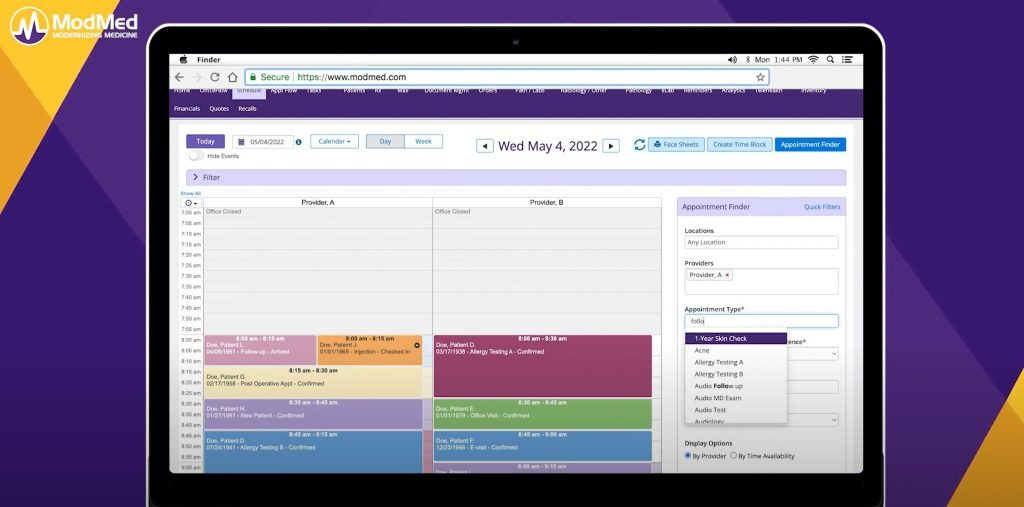
ModMed is a strong choice for tech-forward GI practices that want specialty-specific charting and a streamlined clinical workflow. Its gastroenterology-focused capabilities are designed to support documentation, scheduling, procedure workflows, and practice management in one system. For practices looking for gastroenterology EMR software that can connect clinical documentation with operational workflows, ModMed is a strong option.
Combined with Emitrr, appointment data can trigger automated reminders, confirmations, and follow-up messages. This helps EMR users in gastroenterology reduce manual calls and improve patient communication without adding another disconnected workflow.
2. EndoSoft
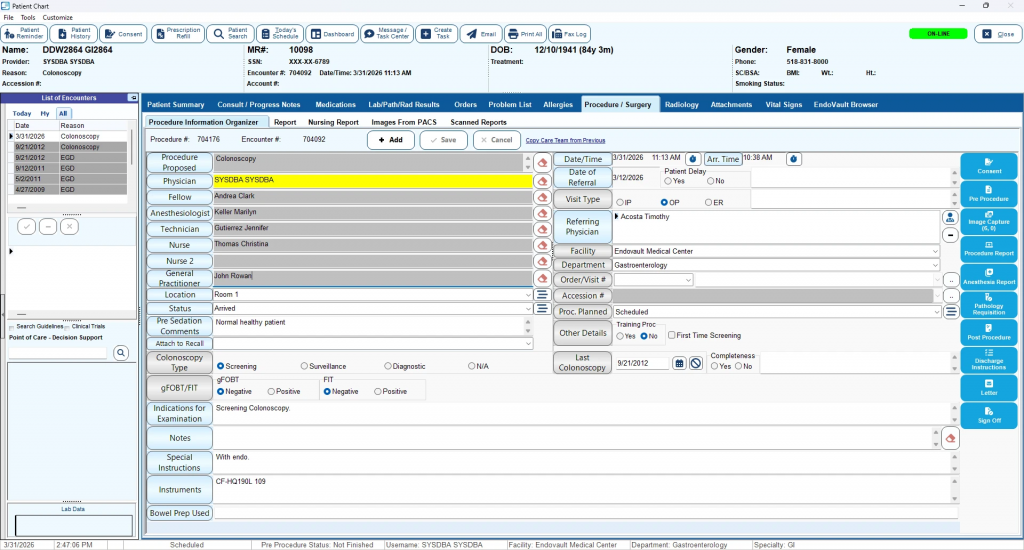
EndoSoft is built specifically around gastroenterology and endoscopy workflows, making it particularly relevant for practices that need strong procedure documentation. Its platform supports endoscopy reporting, clinical documentation, scheduling, and practice management, with tools designed around GI-specific workflows. This makes it a practical GI EMR for practices where procedure documentation is central to daily operations.
With Emitrr, EndoSoft users can automate appointment reminders, procedure-related notifications, and follow-up communication. This extends the EMR gastroenterology workflow beyond documentation and helps staff spend less time managing routine patient calls.
3. Athenahealth (athenaOne)
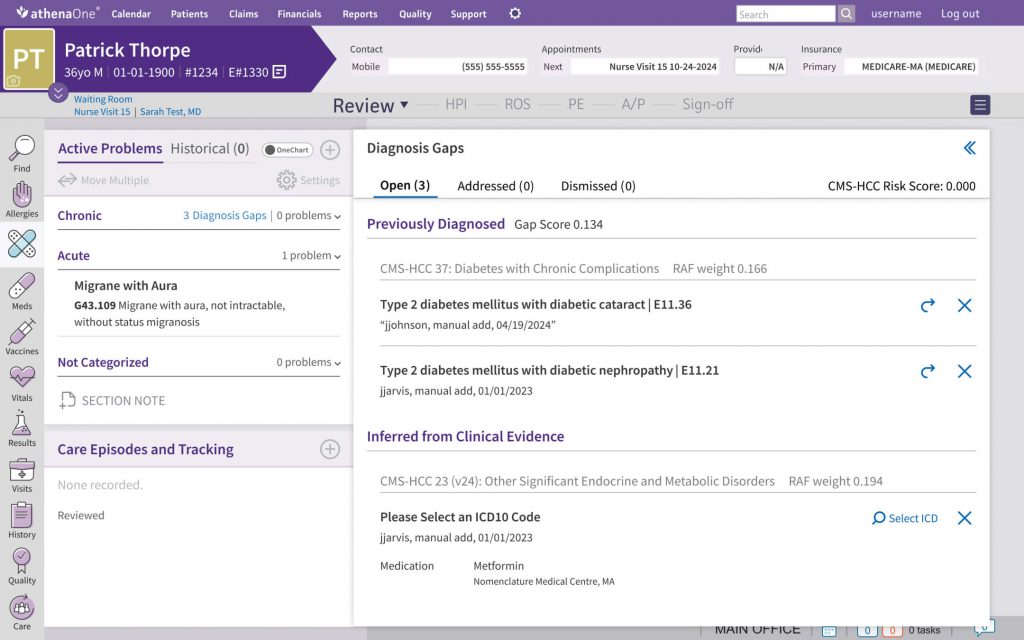
Athenahealth combines EHR, practice management, and patient engagement capabilities in a cloud-based platform. For gastroenterology practices, it can support clinical documentation, scheduling, billing, and patient communication while connecting data across the broader practice workflow. It is a good fit for organizations looking for scalable gastroenterology EHR software rather than a narrowly focused clinical charting system.
When paired with Emitrr, athenaOne can support automated reminders and patient outreach triggered by appointment workflows. Practices can use this combination to reduce no-shows, simplify confirmations, and maintain consistent communication throughout the patient journey.
4. NextGen
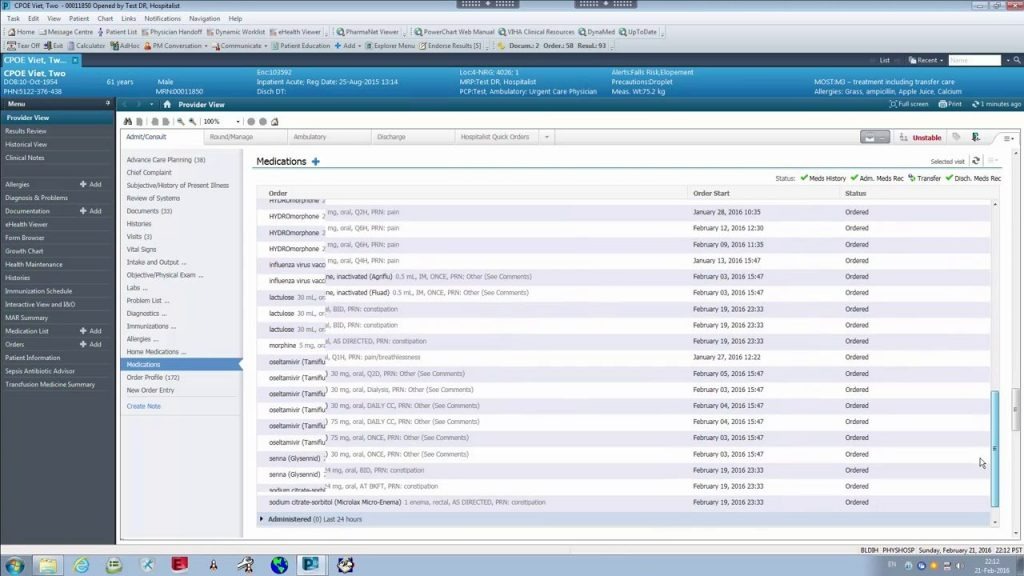
NextGen offers a broad ambulatory EHR and practice management software that can be configured for specialty workflows, including gastroenterology. Its combination of clinical documentation, scheduling, revenue cycle management, and interoperability makes it suitable for practices that need more than basic charting. For organizations evaluating gastro EHR software, NextGen can provide a broader operational platform while allowing specialty workflows to be built around the practice.
With Emitrr, practices can add automated two-way communication to appointment and patient workflows. Reminders, confirmations, patient recalls, and follow-ups can be automated so staff do not have to rely on repetitive phone calls.
5. PrognoCIS
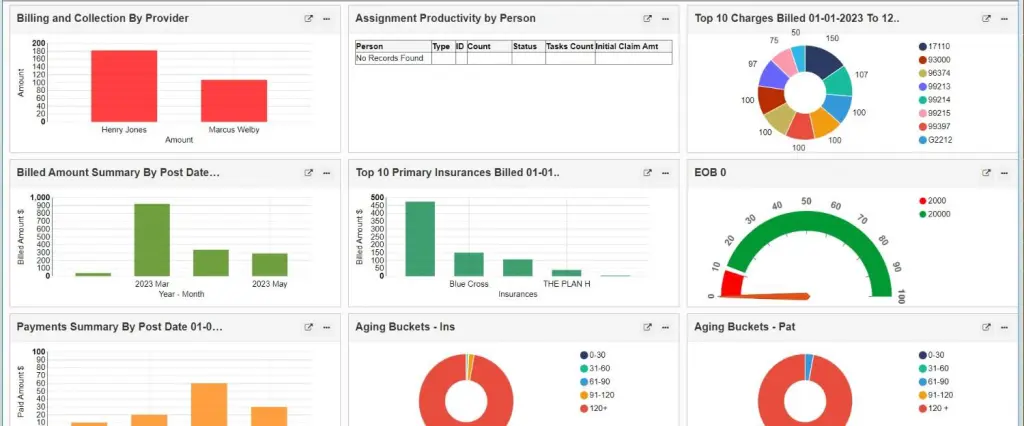
PrognoCIS is a cloud-based EHR and practice management platform with tools covering clinical documentation, scheduling, billing, patient engagement, and telehealth. Its customizable workflows make it useful for specialty practices that need their emr for gastroenterology to adapt to different clinical and administrative processes rather than relying on a rigid workflow.
Combined with Emitrr, PrognoCIS users can automate appointment reminders, confirmations, and patient follow-ups. This helps connect the clinical side of the gastroenterology EMR software with the communication workflows that keep patients informed and engaged.
6. DrChrono
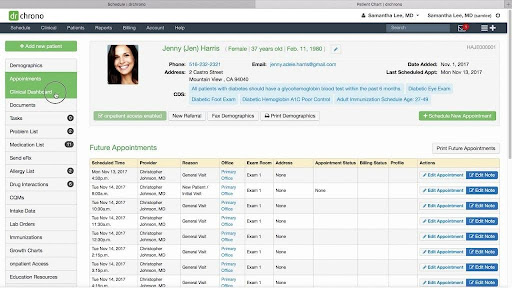
DrChrono provides a cloud-based EHR, practice management, medical billing, and patient engagement platform with a mobile-friendly workflow. Its customizable templates and scheduling capabilities can work well for independent or smaller GI practices looking for a flexible emr gastroenterology solution without the complexity of a large enterprise platform.
With Emitrr, DrChrono can be complemented with automated patient communication across reminders, confirmations, cancellations, and follow-ups. This gives practices a more connected workflow for managing communication around appointments and ongoing care.
7. ProVation
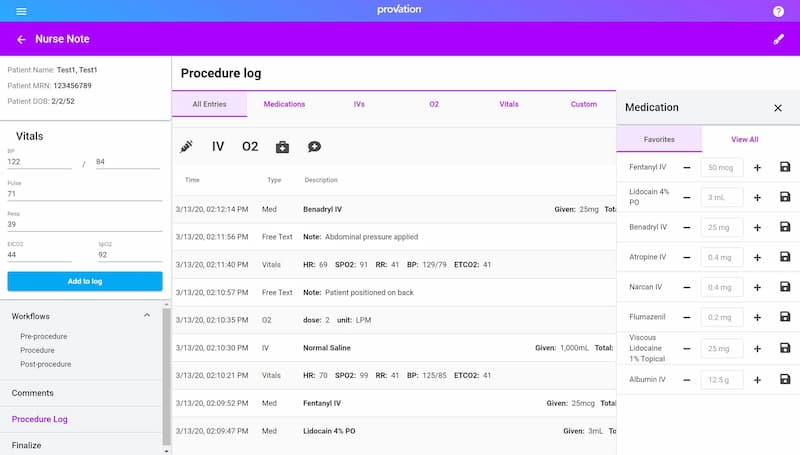
ProVation is particularly strong for gastroenterology and endoscopy because it focuses heavily on procedure documentation and reporting. Its workflow is designed around GI procedures, helping clinicians capture structured information and generate procedure reports efficiently. For practices where the EMR gastroenterology procedure workflow is the primary consideration, ProVation stands out for its specialized approach rather than trying to serve every medical specialty equally.
Paired with Emitrr, ProVation can be complemented by automated communication before and after procedures. Practices can use automated reminders and follow-ups to keep patients informed while reducing the administrative workload associated with procedure-related calls.
How Emitrr Works Alongside Your Gastroenterology EMR
Emitrr is not an EHR and does not replace clinical documentation, procedure scheduling, or billing inside your gastroenterology EMR. Instead, it acts as a communication and workflow automation layer that sits alongside your GI EHR to help close common gaps around prep compliance, clearance tracking, and waitlist recovery. How much of this can be automated depends heavily on the EHR’s API depth, specifically, whether it exposes appointment or procedure-status data, or operates as a closed system.
- Procedure reminders and prep sequencing: Colonoscopy or endoscopy prep instructions can be sent as a multi-step sequence timed to the scheduled procedure date, rather than a single generic reminder.
- Clearance reminders: Patients or referring providers can be prompted for outstanding documentation ahead of a procedure, provided the EHR surfaces clearance status for the workflow to act on.
- Digital patient intake forms: Sent via secure link; responses populate the chart directly where the EHR supports structured field mapping, or arrive as a PDF for staff to enter manually where it doesn’t.
- Waitlist and cancellation recovery: Patients can be notified quickly when a slot opens. Direct rebooking into the EHR depends on whether its API supports appointment creation; otherwise, a scheduling link or staff follow-up completes the booking.
- Secure, PHI-sensitive communication: Secure links, secure chat, and OTP workflows support pre-op and financial conversations without relying on unsecured channels.
- Multi-location support: Communication routes to the correct site, with a shared inbox consolidating texts and calls across locations for staff.
- AI voice for call handling: Helps manage incoming call volume and missed-call recovery, though it shouldn’t be assumed to independently manage complex procedure scheduling if the EHR doesn’t expose the needed scheduling APIs.
- Number and compliance setup: Number porting preserves an existing business line, and 10DLC registration is generally required before SMS can run reliably.
Common Integration Scenarios
| Situation | How Emitrr Adapts |
| EHR is read-only (e.g., certain ECW/Athena configurations) | Emitrr collects structured information through forms and AI collectors, then creates staff tasks or cases instead of writing directly into the EHR — avoiding data conflicts while still eliminating manually lost follow-ups |
| EHR scheduling logic is complex | Emitrr builds custom, practice-specific scheduling logic (provider rules, fees, blocked slots) so automated decisions still follow clinic policy |
| Carriers block texting from hosted numbers | Emitrr manages 10DLC registration and offers hosting, porting, or hybrid forwarding options so SMS can be enabled without disrupting existing voice service |
| Corporate policy limits full integration | Emitrr can run limited pilots, offer hosted texting or per-location deployments, and support reseller/white-label models to fit procurement requirements |
| Consent or compliance pages are missing | Emitrr provides sample privacy/consent language and can temporarily host compliance pages to help unblock carrier verification |
The takeaway: even where an EHR’s API is limited, Emitrr can typically still automate the patient-facing communication side of prep compliance, clearance follow-up, and waitlist recovery — the deciding factor is simply how much of that automation can write back into the EHR versus route through staff.
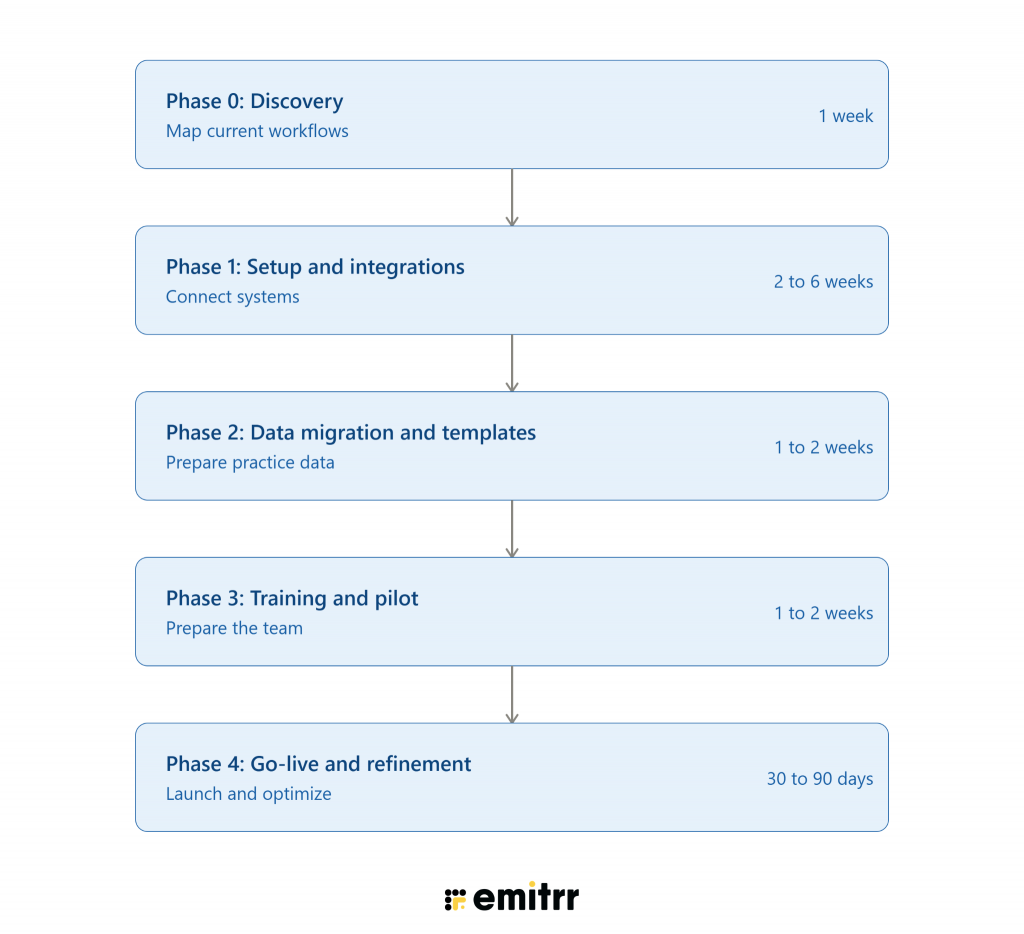
EMR Implementation Roadmap
Key Takeaways
- GI EMR selection should be judged primarily on how well a system supports procedure-date-dependent workflows: prep instructions, clearance tracking, and resource scheduling, not general documentation features.
- Waitlist automation and last-minute cancellation recovery matter more in gastroenterology than in many other specialties, given the high per-slot value of a colonoscopy or endoscopy procedure.
- Practices already running on a broad ambulatory EHR like athenahealth or NextGen should verify how much GI-specific procedure and prep workflow configuration actually exists in their instance.
- API depth for procedure appointment creation, not just viewing, is the most consequential integration detail for GI automation.
- Implementation timelines depend heavily on procedure and clearance history volume and resource scheduling complexity, and should be treated as planning ranges rather than guarantees.
FAQs
An EMR for gastroenterology is a system built or configured specifically for GI workflows — things like endoscopy and colonoscopy documentation, procedure scheduling, and specialty-specific charting templates. A general EHR can technically be used by a GI practice, but it usually needs heavy customization to handle procedure notes, prep protocols, and clearance tracking the way a GI-focused platform does out of the box.
Key things to evaluate include specialty-specific charting templates, strong procedure documentation and reporting tools, scheduling built around procedure workflows (not just office visits), interoperability with labs and referring providers, and how open the system's API is for connecting outside tools like patient communication platforms.
Not really. The right GI EMR depends on practice size, whether procedures or office visits dominate the workload, and how much flexibility versus structure the practice wants. A high-procedure-volume practice may prioritize a platform like ProVation or EndoSoft, while a multi-specialty group may lean toward a broader platform like athenaOne or NextGen.
Yes, in most cases, though the depth of integration depends on the EHR's API. Where the EHR exposes appointment or procedure-status data, tools like Emitrr can automate prep reminders, clearance follow-ups, and waitlist outreach. Where the EHR is more closed or read-only, communication tools typically work alongside it by collecting information and creating staff tasks instead of writing directly into the chart.
Incomplete or poorly timed prep instructions are a common reason for canceled or rescheduled procedures. An EMR gastroenterology procedure workflow that supports multi-step, date-triggered prep communication (rather than a single generic reminder) tends to reduce last-minute cancellations and no-shows.
Not necessarily. Many GI-focused systems (like ModMed or EndoSoft) still include scheduling, billing, and practice management; they're just built with GI workflows as the starting point rather than a generic template. Broader platforms like NextGen or athenaOne take the opposite approach, offering wide practice management capabilities that can be configured for GI use.
Yes, though it depends on complexity and cost tolerance. Larger platforms can be adapted for smaller practices, but many independent GI providers find more flexibility (and simpler setup) in lighter, customizable platforms like DrChrono or PrognoCIS, which don't require enterprise-level implementation resources.
Usually not natively; most EMRs focus on clinical documentation and scheduling rather than automated, multi-channel patient outreach. That's typically handled by a separate communication layer (like Emitrr) that connects to the EMR's appointment data to automate reminders, confirmations, and follow-ups without requiring staff to manage it manually.
Conclusion
An EMR for gastroenterology has to support a fundamentally procedure-driven practice: colonoscopy and endoscopy slots that carry significant revenue, prep and clearance sequences tied to appointment dates, and resource scheduling across procedure rooms and staff. The biggest GI-specific blockers often include prep and clearance workflows that are not date-aware, weak waitlist automation for recovering cancelled slots, and limited API access that provides visibility without enabling real scheduling actions. Evaluate vendors based on procedure documentation depth, scheduling flexibility, and API capabilities rather than broad feature claims, and verify prep automation and waitlist workflows through a live demo. Treat implementation timelines as planning estimates, since actual deployment depends on procedure volume, integrations, and scheduling complexity.
Once the right EMR is in place, patient communication can be the next workflow to optimize. See how Emitrr integrates with your existing EMR to automate reminders, confirmations, prep instructions, and follow-ups. Book a demo to explore it in action.

 4.9 (400+
reviews)
4.9 (400+
reviews)