
Introduction
An orthopedic practice can move from a new injury consultation to imaging, diagnosis, injection or surgery, physical therapy, DME, authorization, and repeated follow-ups without leaving the same patient episode.
That makes EMR for orthopedics a distinct buying decision. The system has to understand musculoskeletal documentation while connecting clinical work with imaging, therapy, referrals, equipment, scheduling, billing, and multiple locations.
A general EHR may document an orthopedic visit adequately but still create operational gaps when an X-ray lives in one system, PT coordination happens by fax, DME documentation is tracked separately, and providers work across several clinics.
The right orthopedic-specific EMR should therefore be evaluated as an operating system for the orthopedic practice, not merely as a digital replacement for paper charts.

AI Summary
- The central orthopedic requirement is continuity between musculoskeletal documentation and the operational steps that follow a diagnosis.
- Imaging, referral, therapy and DME handoffs are common places where an otherwise capable EHR can create manual work.
- The most important feature category is specialty-specific documentation combined with imaging, procedure and treatment-plan workflows.
- Integration testing should focus on provider, department, location, referral and resource mapping, not just patient synchronization.
- Multi-location orthopedic groups should evaluate communication and integration costs at the user, line, location and department levels before selecting a platform.
Which EMR for Orthopedics Is Right for You? TL;DR
| EMR | Best Suited For | Key Strengths | Potential Consideration |
| Spry | Orthopedic and PT practices | Specialty-focused workflows and cloud-based access | May be better suited to practices wanting a specialized platform |
| Epic EHR | Large orthopedic groups and health systems | Enterprise-scale clinical workflows and interoperability | Implementation may be complex for smaller practices |
| ModMed | Specialty-focused orthopedic practices | Specialty-oriented documentation and practice management | Specialty fit should be evaluated before selection |
| NextGen Healthcare | Growing orthopedic practices | Cloud-based EHR, scheduling, and patient engagement | Broad platform may require workflow customization |
| DrChrono | Independent and smaller orthopedic practices | Flexible EHR, scheduling, billing, and telehealth | Less orthopedic-specific than dedicated platforms |
| Phoenix Ortho | Orthopedic practices seeking specialty-focused software | Orthopedic-specific clinical and practice workflows | Evaluate integrations and automation capabilities |
| eClinicalWorks | Orthopedic practices wanting broad EHR functionality | Comprehensive clinical, scheduling, billing, and engagement tools | May require additional configuration for orthopedic workflows |
Challenges for Orthopedic Clinics
Choosing an EMR for orthopedics requires more than finding a system with musculoskeletal templates. Orthopedic practices need connected workflows for imaging, referrals, therapy, DME, procedures, scheduling, and communication across multiple providers and locations.
Generic Musculoskeletal Documentation
An orthopedic practice may need to document injury details, body site, laterality, examination findings, imaging results, procedures, treatment history, functional status, and follow-up plans. A strong orthopedic-specific EMR should make this information easy to capture without forcing clinicians to build every encounter from scratch.
Imaging Disconnected From the Chart
Imaging is central to orthopedic decision-making, but workflows can break when images and reports live outside the EHR. When comparing the best orthopedic EHR options, evaluate PACS connectivity, imaging reports, image viewing, result exchange, and accurate patient matching.
Referral and Therapy Fragmentation
Orthopedic care often involves PT, imaging centers, specialists, and other care partners. An ortho EMR should help track referral destinations, referral status, orders, PT recommendations, returned documentation, missing information, and follow-up requirements rather than leaving staff to manage these steps separately.
DME Workflows
Orthopedic practices may coordinate braces, equipment, supporting documentation, authorizations, and delivery as part of patient care. An emr for orthopedic surgery does not necessarily need to replace dedicated DME software, but it should keep clinical documentation and order history easy to find and connect.
Department and Location Mapping
Larger orthopedic groups may operate across multiple clinics, surgical departments, imaging relationships, PT services, billing entities, and provider groups. A cloud based orthopedic EMR should be evaluated on whether it can accurately map providers, locations, departments, appointment types, and routing rules.
Resource Scheduling
Orthopedic scheduling can involve providers, procedure rooms, imaging resources, specialized equipment, and different appointment durations. When evaluating the best orthopedic surgery emr, verify whether the system can distinguish provider availability, location, procedure type, room, resources, and follow-up requirements.
Complex Referral and Intake Flows
Referrals may arrive through documents, phone calls, or external systems, making manual copying a common source of missing information and patient-matching errors. A top ortho emr should support structured referral intake or provide workflows that alert staff when required information is incomplete.
Shared-Phone and Pricing Challenges
Orthopedic practices often have shared front-desk teams rather than one communication line per employee. Before selecting an orthopedic-specific EHR or communication platform, compare per-user, per-line, per-device, shared-extension, location, integration, and messaging costs to avoid unexpected expenses.
Limited EHR API Access
Having an API does not necessarily mean an EMR orthopedic platform supports two-way automation. Practices should verify whether the API can create appointments, sync structured form fields, access provider availability, update workflow information, and support the actions required by their specific orthopedic workflows.
AI Booking Limitations
AI can collect patient information and preferences without necessarily being able to create the correct appointment inside the EHR. When evaluating the top orthopaedic EMR options, confirm whether AI can distinguish consultations, procedures, follow-ups, and sports medicine appointments and whether it can complete or only recommend the booking.
Communication and Compliance Barriers
SMS automation can be affected by 10DLC registration, consent requirements, number porting, carrier restrictions, and existing VoIP providers. Practices should also evaluate shared-phone economics, SMS and MMS costs, multilingual communication, and human handoffs when implementing patient communication alongside their EMR for orthopedics.
Must-Have EMR Features for Orthopedics
- Orthopedic Templates: Look for an orthopedic-specific EMR with customizable templates for consultations, injuries, procedures, surgical planning, and follow-ups.
- SOAP Notes and Injury Documentation: An EMR for orthopedics should make musculoskeletal documentation quick and consistent while allowing clinicians to customize examination and treatment patterns.
- Imaging Integration: A strong orthopedic-specific EHR should connect imaging directly with the patient record through PACS, radiology interfaces, DICOM support, image viewing, and results tracking. .
- Procedure Documentation: For practices performing injections, casting, minor procedures, or surgery, the EMR should connect procedure documentation directly to the clinical encounter. This makes it easier to maintain complete records and support accurate billing and follow-up.
- PT and Referral Management: A top ortho EMR should support referral creation, tracking, returned documentation, and follow-up requirements. This is especially important when orthopedic care involves physical therapists, imaging centers, specialists, or external providers.
- Provider and Resource Scheduling: Orthopedic appointment scheduling often involves multiple providers, locations, procedure rooms, imaging resources, and different appointment types. A cloud-based orthopedic EMR should allow practices to coordinate these resources while accounting for provider availability and procedure requirements.
- Billing and Revenue Cycle Management: An EMR orthopedic platform should connect clinical documentation with charge creation, CPT coding, insurance verification, claims, and denial workflows.
- Multi-Location Management: Larger orthopedic groups need location-aware scheduling, reporting, permissions, and patient routing. The best EMR for orthopedics should make it possible to manage multiple clinics and providers without creating disconnected workflows.
- Mobile and Tablet Access: A modern sports medicine EMR should provide a mobile-friendly or tablet-optimized experience for consultations, bedside documentation, and provider communication.
- Compliance and Security: A best orthopedic EHR should protect patient information through encryption, role-based access controls, audit trails, backups, and disaster recovery.
- API and Integration Capabilities: The top orthopaedic EMR should provide APIs that support more than basic patient data access. Evaluate whether integrations can work with providers, locations, departments, referrals, scheduling, forms, imaging, and other systems used across the orthopedic practice.
- Patient Communication: An EMR for orthopedic surgery should support reminders, referral communication, follow-ups, and patient-facing forms without creating duplicate data entry.
Best EMRs for Orthopedics: Detailed Analysis
- Spry PT
- Epic EHR
- ModMed
- NextGen Healthcare
- DrChrono
- Phoenix Ortho
- eClinicalWorks
| EMR | Software Overview | Orthopedic Workflow | Patient Engagement & Communication | Integration Focus |
| Spry PT | Cloud-based platform built around orthopedic and PT practices. | Supports specialty-oriented documentation and care workflows. | Supports patient-facing workflows that can be extended through automation. | Evaluate two-way integration and workflow automation capabilities. |
| Epic EHR | Enterprise EHR used by large healthcare organizations and specialty groups. | Supports complex orthopedic and surgical care across large organizations. | Provides extensive patient engagement capabilities. | Strong interoperability, with implementation depending on organizational needs. |
| ModMed | Specialty-focused EHR and practice management platform. | Provides workflows designed around supported medical specialties. | Offers patient engagement capabilities for specialty practices. | Assess specialty-specific integrations and API capabilities. |
| NextGen Healthcare | Cloud-based EHR and practice management platform. | Supports clinical documentation, scheduling, and specialty workflows. | Includes patient engagement and communication capabilities. | Review integration options for orthopedic-specific automation. |
| DrChrono | Cloud-based EHR combining clinical and administrative functions. | Supports documentation, scheduling, billing, and telehealth for orthopedic practices. | Provides patient engagement tools that can be supplemented with automation. | Evaluate API capabilities and external workflow connectivity. |
| Phoenix Ortho | Orthopedic-focused platform designed around specialty practice needs. | Provides orthopedic-specific clinical and practice management workflows. | Can be complemented by external communication automation. | Verify available integrations and data exchange capabilities. |
| eClinicalWorks | Broad EHR platform covering clinical, administrative, and patient-facing functions. | Supports orthopedic documentation and general specialty workflows. | Includes patient engagement, reminders, and digital communication features. | Assess whether integrations support the practice’s specific orthopedic workflows. |
1. Spry PT
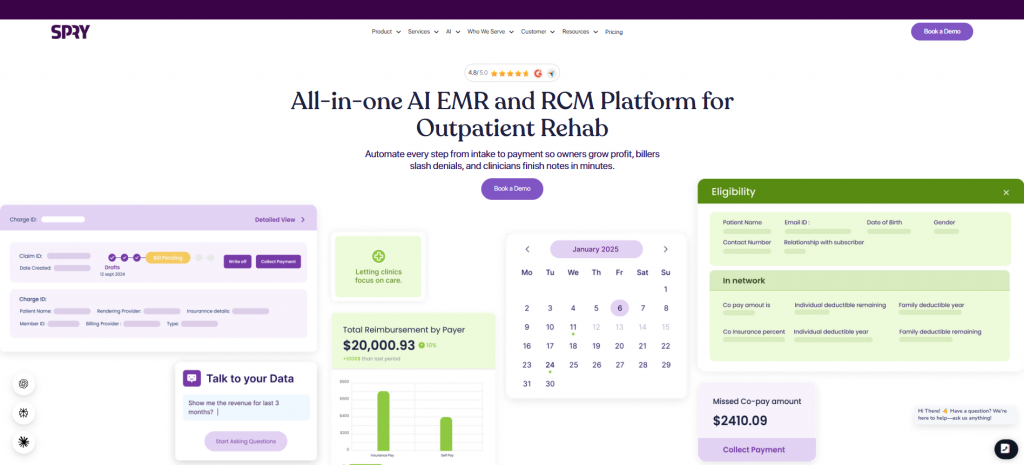
Spry PT is a cloud-based orthopedic EMR designed specifically around the workflows of orthopedic and physical therapy practices. Its specialty-focused approach makes it a strong option for practices looking for an orthopedic-specific EMR with clinical documentation, scheduling, and patient engagement capabilities.
Practices using Spry can integrate tools like Emitrr to automate appointment reminders, follow-ups, patient messaging, and other communication workflows while keeping outreach connected to the orthopedic practice schedule.
2. Epic EHR
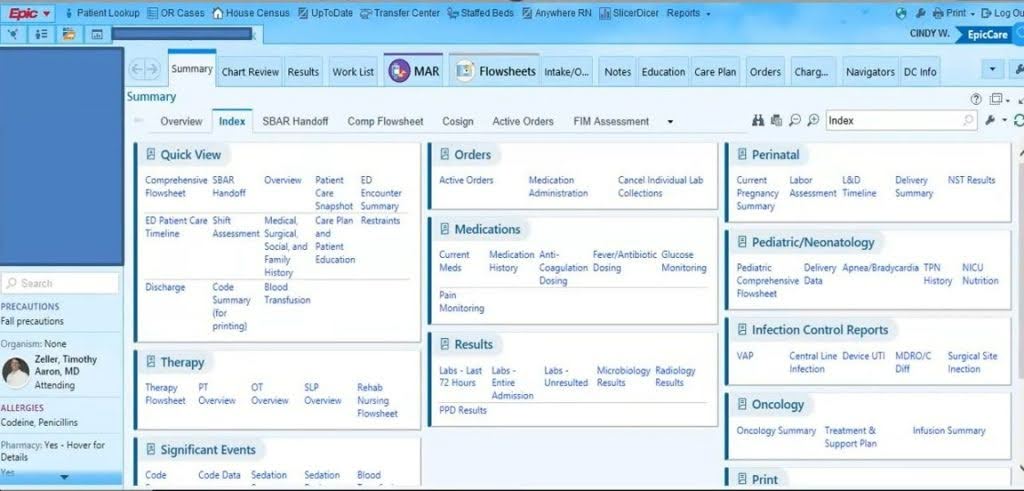
Epic EHR is a comprehensive EHR platform used by hospitals, health systems, and large specialty groups, with extensive clinical, scheduling, interoperability, and patient engagement capabilities. Its scale makes it a potential best EMR for orthopedics for larger organizations managing complex orthopedic and surgical care.
Orthopedic practices can use tools like Emitrr alongside Epic EHR to automate reminders, two-way patient communication, missed-call follow-ups, and post-visit outreach across the patient journey.
3. ModMed
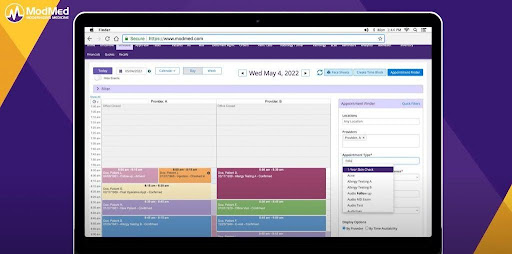
ModMed provides specialty-focused EHR and practice management software built around the workflows of different medical specialties. Its specialty-oriented approach can make it a suitable ortho EMR for practices that want structured clinical workflows alongside scheduling, documentation, and practice management tools.
Practices can pair ModMed with Emitrr to automate appointment reminders, confirmations, patient texting, and follow-up communication without relying entirely on manual outreach.
4. NextGen Healthcare
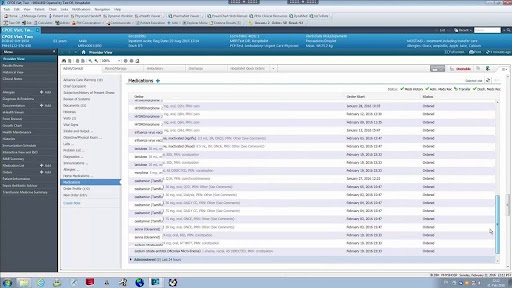
NextGen Healthcare offers cloud-based EHR and practice management solutions with clinical documentation, scheduling, patient engagement, and interoperability capabilities. Its broad functionality makes it an option for orthopedic groups looking for a cloud based orthopedic EMR that can support growing practices.
Orthopedic practices using NextGen can integrate communication tools like Emitrr to automate reminders, confirmations, patient recall campaigns, and patient outreach based on appointment and workflow information.
5. DrChrono
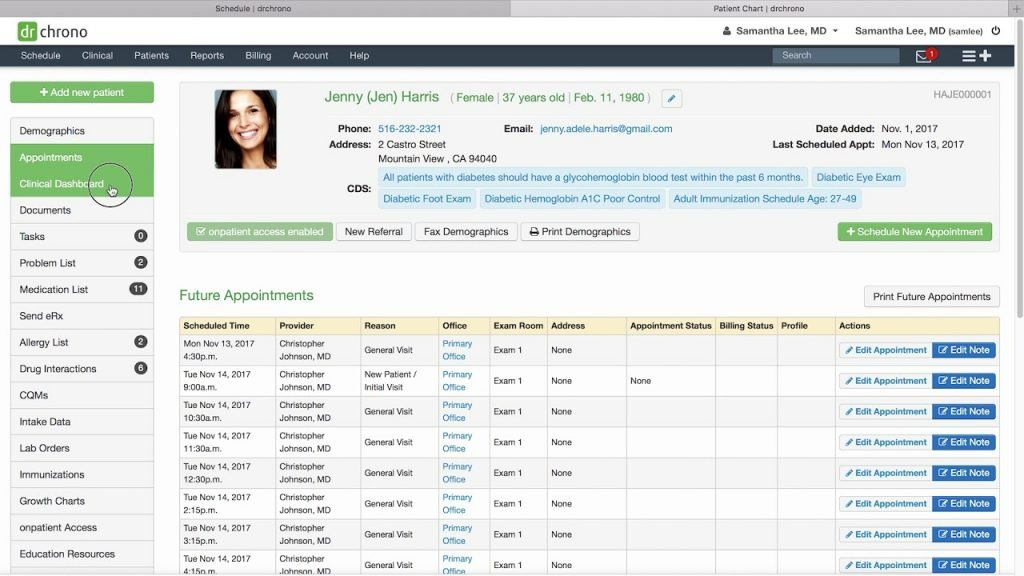
DrChrono is a cloud-based EHR and practice management platform offering clinical documentation, scheduling, billing, telehealth, and patient engagement capabilities. Its flexible platform can work for orthopedic practices looking for an EMR for orthopedic surgery or general orthopedic care without requiring a highly specialized system.
Practices can use Emitrr alongside DrChrono to automate appointment reminders, two-way texting, missed-call follow-ups, and other patient communication workflows.
6. Phoenix Ortho
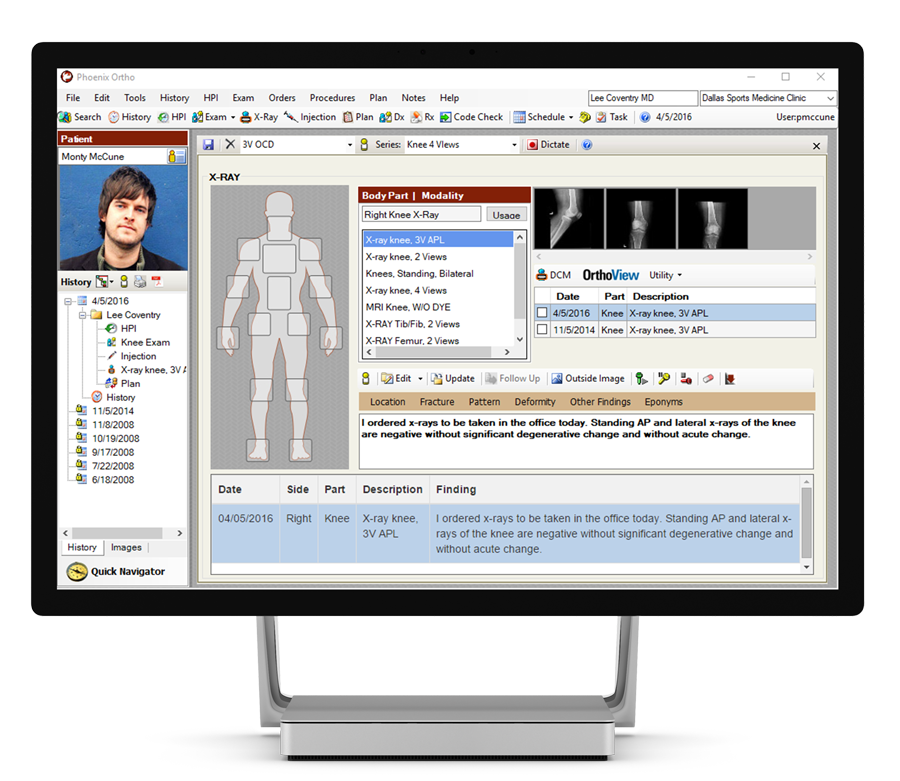
Phoenix Ortho is designed around orthopedic practice workflows, providing specialty-specific tools for clinical documentation, scheduling, and managing orthopedic patient care. Its focused functionality makes it relevant for practices comparing orthopedic specific EHR and other specialty-oriented solutions.
Practices can complement Phoenix Ortho with tools like Emitrr to automate patient reminders, confirmations, follow-ups, and communication workflows throughout the orthopedic care journey.
7. eClinicalWorks
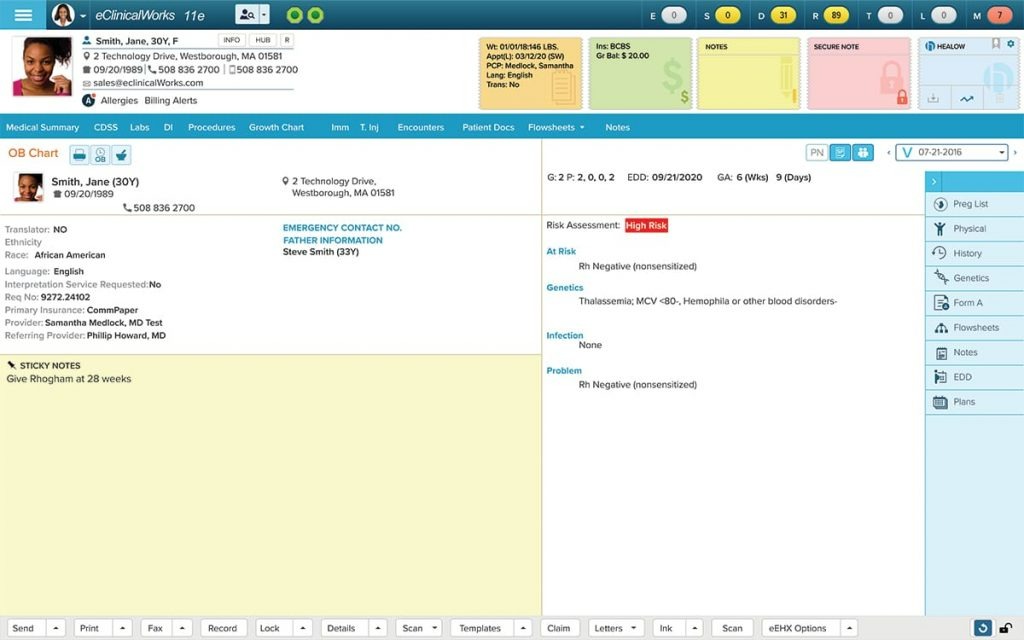
eClinicalWorks is a broad EHR and practice management platform covering clinical documentation, scheduling, telehealth, billing, and patient engagement. Its wide range of capabilities makes it an option for orthopedic practices evaluating an EMR orthopedic solution that can support both clinical and administrative operations.
Practices using eClinicalWorks can integrate Emitrr to automate appointment reminders, two-way patient texting, follow-ups, and recall campaigns while reducing manual communication.
How Emitrr Works Alongside Your Orthopedic EMR
Connect Every Orthopedic Touchpoint
Emitrr can automate appointment reminders, provider-specific messages, location instructions, cancellation follow-ups, and centralized patient conversations. When the EMR provides provider and location data, workflows can use that information to route communication more accurately across multi-location practices.
Simplify Referral Intake
An EMR for orthopedics can be supported with digital forms, messaging, and AI-assisted information collection for referral workflows. Emitrr can collect referral details, request missing information, provide scheduling instructions, and create staff tasks when additional review is needed.
Keep Scheduling Workflows Moving
Where the orthopedic-specific EMR supports scheduling actions, Emitrr can connect communication to appointment, provider, and location information. If direct booking is unavailable, patients can be directed to an approved scheduling path or a staff follow-up task can be created.
Turn Forms Into Actionable Data
An orthopedic-specific EHR can be supported with digital forms for new-patient intake, injury details, procedure preparation, referral information, and PT-related documentation. When structured write-back is available, mapped information can reach the EHR; otherwise, secure document workflows and staff review can be used.
Coordinate Providers, Locations, and Resources
For practices comparing the best orthopedic surgery EMR options, resource coordination becomes important when providers work across clinics or procedures require specific rooms, equipment, or appointment types. Where the EHR exposes these fields, Emitrr can use provider, location, and resource information to support targeted workflows.
Use AI Without Losing Staff Oversight
AI can help collect non-clinical referral information and reduce manual copying from referral systems. When an API is unavailable, workflows can use secure forms, browser-based tools, or CSV/SFTP feeds, depending on the deployment and available integration capabilities.
Automate Follow-Ups at the Right Time
Automate patient follow-up after appropriate appointment types, procedures, or discharge events. For a sports medicine EMR or orthopedic practice managing ongoing therapy, workflows should be configured carefully so review requests or general outreach do not interrupt an active clinical episode.
Work Around EHR Limitations
Not every top ortho EMR supports two-way write-back. Where direct EHR updates are unavailable, Emitrr can use structured forms, secure links, CSV/SFTP feeds, browser-based workflows, or staff-assisted processes so patient responses can be reviewed and finalized in the EHR.
Keep Communication Secure
Emitrr can support healthcare communication workflows with secure texting, role-based access, automated translation, eFax, and document workflows. It can also assist with 10DLC registration and number porting, helping practices transition communication workflows while maintaining appropriate consent and security processes.
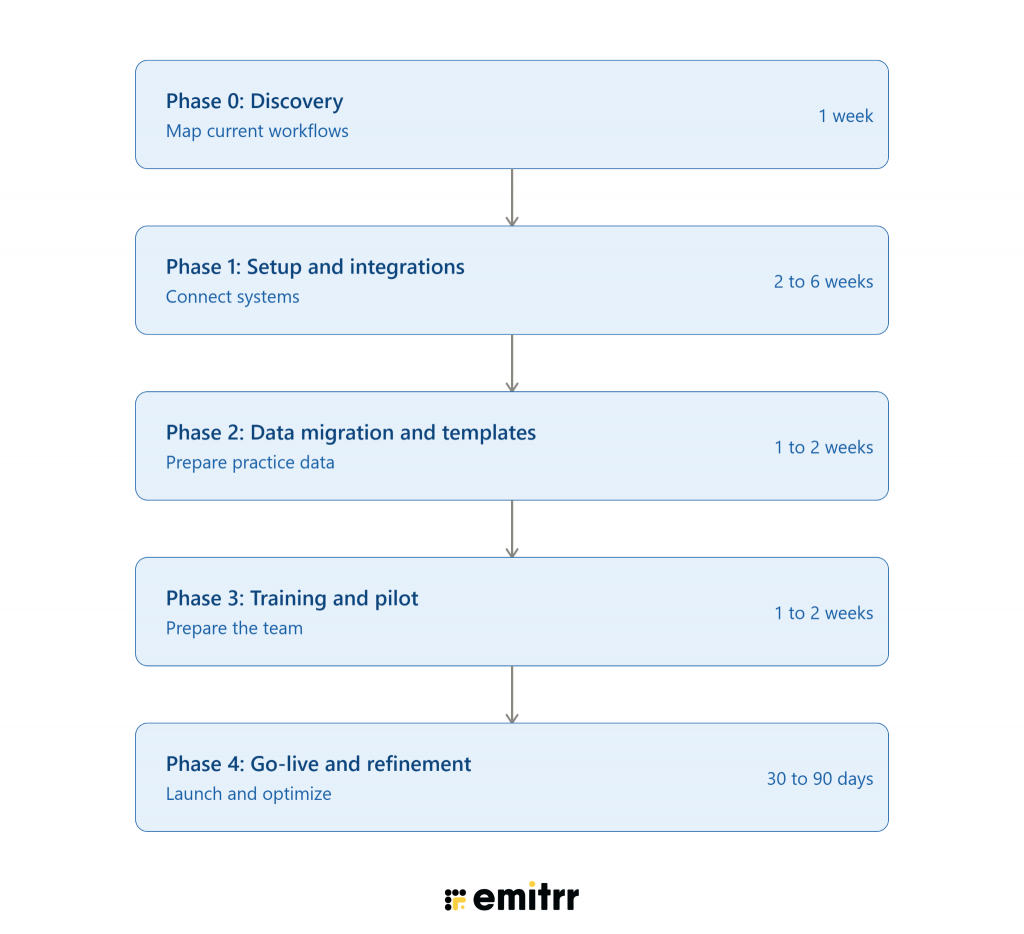
EMR Implementation Roadmap
Key Takeaways
- Choose an orthopedic EMR around the complete musculoskeletal care pathway.
- Treat imaging interoperability as a core selection criterion, not an optional add-on.
- Test referral, PT and DME workflows beyond the point where an order is created.
- Multi-location groups should validate provider, department and location mapping before signing.
- Model communication costs around the actual shared-team structure of the orthopedic practice.
FAQs
A strong orthopedic EMR should support PACS connectivity, DICOM imaging, radiology interfaces, image viewing, patient-image matching, and results tracking. The goal is to let clinicians access relevant X-rays, MRI, and CT studies without repeatedly switching between systems.
Orthopedic EHRs typically need specialty-specific documentation, imaging integration, procedure and surgery workflows, referrals, DME, authorization, and orthopedic billing. A general EHR may cover basic charting but require additional configuration or systems for these workflows.
It can, depending on the platform. Look for referral creation, referral-status tracking, PT recommendations, returned documentation, and follow-up workflows so therapy coordination does not become a separate manual process.
Some orthopedic EMRs provide surgery scheduling and case-management capabilities, but the depth varies significantly. Practices should test whether the system can handle surgeon availability, procedure duration, OR resources, authorization, pre-op requirements, and post-op scheduling rather than treating surgery like a standard office visit.
Beyond cloud access, evaluate mobile usability, imaging access, specialty templates, scheduling, interoperability, security, and whether the system works across multiple locations. Cloud deployment alone does not guarantee that an EMR fits an orthopedic practice's workflow.
Yes, depending on its native capabilities and integrations. Appointment reminders, digital forms, referral communication, post-operative follow-ups, and other patient outreach can be automated when the required scheduling or workflow data is available.
Emitrr can work alongside supported orthopedic EHRs as a communication and automation layer. Depending on the integration, it can support reminders, forms, referral workflows, patient messaging, missed-call handling, and follow-ups while the EMR remains the clinical system of record.
Yes, but the level of support varies. Multi-location orthopedic groups should verify provider, department, location, appointment-type, scheduling, routing, permissions, and reporting capabilities rather than assuming that a system designed for a single clinic will scale cleanly.
Conclusion
Choosing an EMR for orthopedics requires more than finding a system with orthopedic templates. The strongest candidates connect musculoskeletal documentation with imaging, referrals, therapy, DME, procedures, billing, and multi-location operations.
Evaluate these connections during a live workflow demonstration. Test data mappings, scheduling, integrations, and write-back capabilities rather than judging the interface alone. The right orthopedic EHR should make the journey from injury or referral to treatment and follow-up easier without creating new administrative silos.
If patient communication is still handled manually, Emitrr can work alongside your orthopedic EMR to automate reminders, referral follow-ups, forms, missed-call handling, and patient outreach. Book an Emitrr demo to see how these workflows can fit into your existing setup.

 4.9 (400+
reviews)
4.9 (400+
reviews)