

Introduction
Getting children to the doctor on time, helping parents follow care instructions, and keeping families coming back for regular visits are everyday challenges in pediatric practices. These challenges often come down to one thing: how well patients and parents stay engaged.
This blog will walk you through what patient engagement really looks like in a pediatric setting, the common gaps practices face, and ways to improve communication at every step.
Quick Pediatric Patient Engagement Checklist
Use this quick checklist to assess how well your practice supports patient engagement across key touchpoints:
- Appointment booking is simple and available online
- Appointment reminders go out on time via text or call
- Parents can easily reach the clinic without long wait times
- Messages and care instructions are clear and easy to understand
- Follow-up reminders are sent after every visit
- Vaccination schedules are tracked and communicated on time
- Staff interaction at the clinic feels consistent and welcoming
- Response time to parent queries is fast
- Online reviews are monitored and responded to
- Communication channels match parent preferences

Why Patient Engagement Is Crucial in Pediatric Practices
Patient engagement directly influences how consistently families interact with your practice and how closely they follow medical advice. In pediatrics, this impact is even stronger because care involves both the child and the parent or caregiver.
When engagement is low, missed appointments, delayed vaccinations, and incomplete treatments become common. For example, a parent who does not receive timely reminders may forget a follow-up visit, or one who does not fully understand medication instructions may stop treatment too early. Clear communication and timely touchpoints often lead to better adherence and smoother care experiences.
Here’s why patient engagement holds such importance in pediatric practices:
- Nearly 50% of patients do not follow prescribed treatment plans correctly, which affects recovery and outcomes
- No-show rates range between 5% to 30%, but reminders can reduce missed appointments by up to 38%
- Around 70% of patients say communication quality influences their choice of provider and trust level
- Inconsistent follow-ups often lead to lower vaccination and preventive care completion rates
- Engaged families are more likely to return for future visits and recommend the practice to others
- Reduced manual follow-ups and scheduling tasks, lowering the administrative workload for staff
In pediatric practices, patient engagement shapes outcomes, efficiency, and long-term growth. Even small improvements in communication and follow-through can create a noticeable difference in how families experience care.
Understanding the Pediatric Patient Journey
The pediatric patient journey includes every interaction a parent and child have with your practice, from the first search to post-visit care. Each step shapes how families perceive your clinic and whether they return for future visits.
Below is how the journey typically unfolds:
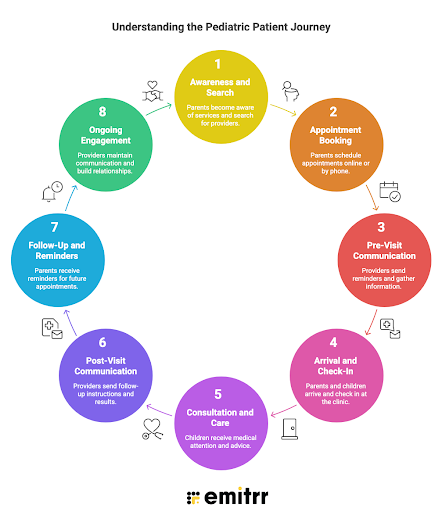
1. Awareness and Search
Parents look for a pediatrician through online searches, reviews, or recommendations when a need arises, such as a fever, a vaccination, or a routine check-up.
2. Appointment Booking
Parents choose a convenient time and method to book, whether through a call, website, or message, based on ease and availability.
3. Pre-Visit Communication
Parents receive appointment confirmations, text reminders, and any instructions, such as documents to carry or pre-visit guidelines.
4. Arrival and Check-In
The front desk experience, wait time, and staff interaction influence the first in-person impression of the practice.
5. Consultation and Care
The doctor interacts with the child and parent, explains the diagnosis, and shares treatment steps in a way that is easy to understand.
6. Post-Visit Communication
Parents receive prescriptions, care instructions, and follow-up details after the visit.
7. Follow-Up and Reminders
The practice sends reminders for follow-up visits, vaccinations, or progress checks to ensure continuity of care.
8. Ongoing Engagement
Parents stay connected through updates, health tips, and easy access to the practice for future concerns.
Each of these steps presents an opportunity to improve engagement. Gaps at any stage can lead to missed appointments, confusion, or drop-offs in care, while smooth and timely communication across the journey creates a better experience for both parents and children.
Patient engagement starts with the first click, not the first appointment. Read our audit of 20 Pediatric practice website homepages, then see how your homepage stacks up using the checklist below.
Common Challenges in Pediatric Patient Engagement
Pediatric practices often face multiple gaps that affect how parents interact with care and how consistently children receive timely treatment. These challenges usually arise across communication, accessibility, and follow-through.
Here are some of the most common ones:
- Missed appointments and no-shows: Parents forget appointments or face scheduling conflicts, which disrupts care continuity and clinic workflows
- Limited communication channels: Practices that rely only on phone calls often miss parents who prefer text or digital communication
- Lack of timely reminders: Without reminders, parents may miss follow-ups, vaccination schedules, or routine check-ups
- Unclear care instructions: Parents may leave consultations unsure about medication dosage, timing, or next steps
- Long wait times and delays: Extended waiting periods create frustration and reduce overall patient satisfaction with the practice
- Difficulty in appointment scheduling: Limited booking options or rigid schedules make it harder for parents to find convenient time slots
- Low follow-up rates: Parents may not return for follow-ups if there is no proactive outreach from the practice
- Language and understanding gaps: Complex medical terms or language barriers can lead to confusion and incorrect care at home
- Digital experience gaps: Outdated systems or a lack of online options create friction in booking, communication, and updates
- Inconsistent patient experience: Variation in staff interaction or communication quality affects trust and long-term relationships
Key Pediatric Patient Engagement Metrics to Track
Tracking the right metrics helps pediatric practices understand where engagement drops and what needs improvement. Here’s a simplified table with clearer descriptions and formulas where applicable:
| Metric | Description | How to Calculate |
| Appointment No-Show Rate | Share of appointments that patients miss | (Missed Appointments ÷ Total Scheduled Appointments) × 100 |
| Appointment Confirmation Rate | Share of parents who confirm after reminders | (Confirmed Appointments ÷ Total Reminders Sent) × 100 |
| Follow-Up Visit Rate | Share of patients who return for advised follow-ups | (Completed Follow-Ups ÷ Recommended Follow-Ups) × 100 |
| Vaccination Adherence Rate | Share of scheduled vaccinations completed on time | (Vaccinations Completed ÷ Vaccinations Scheduled) × 100 |
| Response Time to Queries | Average time taken to reply to parent questions | Total Response Time ÷ Number of Queries |
| Message Open Rate | Share of messages that parents read | (Messages Opened ÷ Messages Sent) × 100 |
| Patient Satisfaction Score | Overall experience rating from parents | Average rating collected from surveys |
| Patient Retention Rate | Share of families who return for future visits | (Returning Patients ÷ Total Patients) × 100 |
| Average Wait Time | Time patients spend before consultation | Total Wait Time ÷ Number of Patients |
| Digital Engagement Rate | Usage of online booking and communication tools | (Digital Interactions ÷ Total Interactions) × 100 |
10 Strategies to Improve Patient Engagement in Pediatric Practices
Improving patient engagement in pediatric practices requires clear communication, simple processes, and timely interactions. Small changes across the patient journey can lead to better attendance, stronger trust, and more consistent care.
The following are 10 practical strategies that work:
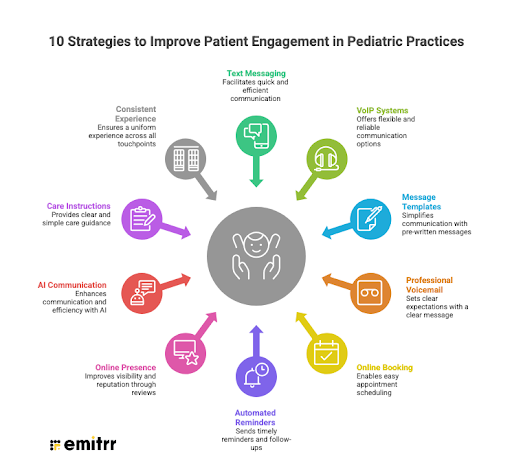
1. Use Text Messaging for Faster Communication
Parents often prefer quick and direct communication over calls. Using texting for Pediatricians allows practices to send reminders, share updates, and answer queries in real time, which increases response rates and reduces delays.
2. Offer Flexible Communication with VoIP Systems
Modern phone systems like VoIP for Pediatricians make it easier to manage high call volumes, route calls efficiently, and ensure parents can reach the clinic without long wait times.
3. Simplify Communication with Pre-Built Message Templates
Standardized messages reduce errors and save time. Using SMS templates for Pediatricians for appointment reminders, vaccination alerts, and follow-ups ensures clear and consistent communication.
4. Set Clear Expectations with Professional Voicemail
Missed calls are inevitable, but how you handle them matters. Using well-structured voicemail greeting examples for Pediatricians ensures parents know when to expect a callback or what steps to take next.
Missed calls lead to missed care, see how AI voicemail changes that
5. Enable Easy Online Appointment Booking
Convenience plays a big role in engagement. Offering online scheduling for Pediatric clinics allows parents to book appointments anytime without needing to call, which improves booking rates and reduces front-desk workload.
6. Send Automated Reminders and Follow-Ups
Timely reminders for appointments, vaccinations, and follow-ups reduce no-shows and ensure continuity of care. Automated systems ensure no patient falls through the cracks.
7. Improve Online Presence and Reviews
Parents often check reviews before choosing a provider. Strong online review and reputation management for Pediatricians helps build trust and attract new patients while reinforcing confidence among existing ones.
8. Use AI to Improve Communication and Efficiency
Modern tools powered by AI for Pediatricians can handle routine queries, send smart reminders, and assist with patient communication. This reduces manual workload while ensuring parents receive quick and accurate responses.
9. Provide Clear and Simple Care Instructions
Parents need easy-to-understand guidance after consultations. Simple language, written instructions, and quick follow-ups reduce confusion and improve treatment adherence.
10. Create a Consistent Experience Across Touchpoints
From booking to follow-up, every interaction should feel smooth and reliable. Consistency in communication, wait times, and service builds long-term trust with families.
How Emitrr Helps Pediatric Practices Drive Better Patient Engagement
Emitrr makes day-to-day communication in pediatric practices feel a lot more manageable and a lot less chaotic. Instead of juggling calls, messages, and follow-ups, everything flows in one place, so your team always knows what needs attention and what has already been handled.
It helps you stay connected with parents in a way that feels natural to them. Whether it’s a quick reply to a concern, a reminder about an upcoming visit, or a follow-up after an appointment, communication feels timely and consistent without extra effort from your staff.
What makes this even more powerful is how AI agents are transforming Pediatric practices by taking over routine conversations and making sure no parent is left waiting for a response. Emitrr builds on this by quietly handling repetitive interactions while your team focuses on in-clinic care.
That’s also why it is seen as one of the best AI chatbots for Pediatricians. It does not just automate messages; it helps create a smoother, more reliable experience for families who expect quick and clear communication.
With Emitrr, patient engagement does not feel like another task to manage. It becomes a natural part of how your practice runs every day.
Below are the key Emitrr features that help pediatric practices improve patient engagement
- Two-way texting for pediatricians: With two-way texting for pediatricians, parents can ask questions, confirm appointments, and get quick responses without waiting on calls, which makes communication faster and more convenient
- Automated appointment reminders and confirmations: Automated appointment reminders and confirmations ensure parents receive timely updates about upcoming visits, which reduces missed appointments and keeps schedules on track
- Smart follow-up messages after visits: Smart follow-up messages send care instructions, medication reminders, and next steps after consultations, so parents know exactly what to do once they leave the clinic
- AI-powered chat support for pediatric practices: AI-powered chat support, driven by AI SMS agents for healthcare, handles common parent queries instantly and ensures every message gets a response, even outside working hours
- Centralized inbox for patient communication: A centralized inbox brings all calls, texts, and messages into one place, which helps staff track conversations easily and respond without confusion or delays
- Easy appointment booking experience: An AI scheduling assistant allows parents to book appointments based on real-time availability, which removes the need for back-and-forth calls and makes the process quick and hassle-free
- Broadcast messaging for pediatric updates: Broadcast messaging helps practices send vaccination reminders, clinic updates, or seasonal alerts to multiple parents at once, ensuring consistent communication
- Customizable SMS templates for pediatricians: Customizable SMS templates for pediatricians make it easy to send clear and consistent messages for reminders, follow-ups, and instructions without rewriting content each time
- Voicemail and missed call text-back feature: This feature automatically sends a text response when a call is missed, so parents receive immediate acknowledgment and know when to expect a callback
- Patient review and feedback collection tools: Review and feedback tools encourage parents to share their experience after visits, which helps build trust and improve the practice’s online reputation
Front desk overload is common, watch how Emitrr brings it under control
Frequently Asked Questions
Patient engagement in pediatric practices refers to how actively parents interact with the clinic, follow care instructions, attend appointments, and stay connected throughout their child’s care.
It ensures children receive timely care, improves treatment adherence, reduces missed appointments, and builds long-term trust with families.
Practices can improve engagement through clear communication, timely reminders, easy appointment booking, quick response to queries, and consistent follow-ups.
Technology enables faster communication, automated reminders, easy scheduling, and instant responses, which makes it easier for parents to stay informed and connected.
Summary
Patient engagement in pediatric practices comes down to clear communication, easy access, and consistent follow-through at every stage of the patient journey. From appointment booking to post-visit care, even small improvements can lead to better attendance, stronger trust, and improved health outcomes for children.
By focusing on the right strategies and tracking key metrics, practices can reduce missed appointments, improve adherence, and create a more reliable experience for parents.
Tools like Emitrr make this process simpler by bringing communication, automation, and AI-driven interactions into one place, so your team can focus more on care and less on manual tasks.If you are looking to improve patient engagement in your pediatric practice, now is a good time to take the next step. Schedule a free demo with Emitrr and see how it can fit into your workflow.

 4.9 (400+
reviews)
4.9 (400+
reviews)