
Introduction
Healthcare is no longer just about treating patients; it’s about engaging them throughout their entire care journey. As patient expectations evolve and digital touchpoints increase, healthcare providers must move beyond reactive communication and adopt structured, proactive systems that keep patients informed, involved, and supported at every stage.
This is where a patient engagement workflow becomes essential. By creating a clear, repeatable process for communication, follow-ups, and personalized interactions, providers can improve patient outcomes, increase retention, and enhance overall satisfaction. In this guide, you’ll learn how to build a patient engagement workflow that is both effective and scalable in today’s healthcare landscape.
Quick Takeaways
- Patient engagement means keeping patients informed, involved, and supported throughout their care journey
- A structured workflow ensures consistent communication and reduces missed follow-ups
- Automation helps save time while improving accuracy and patient experience
- AI for patient engagement enables personalized and timely interactions at scale
- Multi-channel communication (SMS, email, calls) increases response and engagement rates
- Strong engagement leads to better outcomes, higher satisfaction, and improved retention
- Using the right tools, like Emitrr, can simplify and streamline the entire process
Why Is Patient Engagement Important for Healthcare Providers?
Patient engagement is a critical factor in delivering high-quality healthcare and achieving better clinical outcomes. When patients are actively involved in their care, they are more likely to follow treatment plans, attend appointments, and make informed health decisions. Strong patient engagement also builds trust between providers and patients, leading to higher satisfaction and long-term retention.
In today’s connected world, digital patient engagement plays an even bigger role. Tools like patient portals, automated reminders, and mobile health apps make it easier for providers to communicate consistently and at scale. It not only improves accessibility but also ensures patients receive timely information and support, reducing no-shows, improving adherence, and enhancing overall care efficiency.
What Is a Patient Engagement Workflow?
A patient engagement workflow is a structured, step-by-step system that healthcare providers use to communicate, interact, and build relationships with patients throughout their entire care journey. It ensures that every patient receives the right information, support, and follow-up at the right time without relying on manual effort or inconsistent processes.
At its core, a patient engagement workflow connects all patient touchpoints into a cohesive, automated, and personalized experience. Instead of isolated interactions (like a single appointment reminder or discharge call), it creates a continuous loop of engagement from initial inquiry to post-treatment follow-up and long-term care management.
Key Components of a Patient Engagement Workflow
A well-designed workflow typically includes:
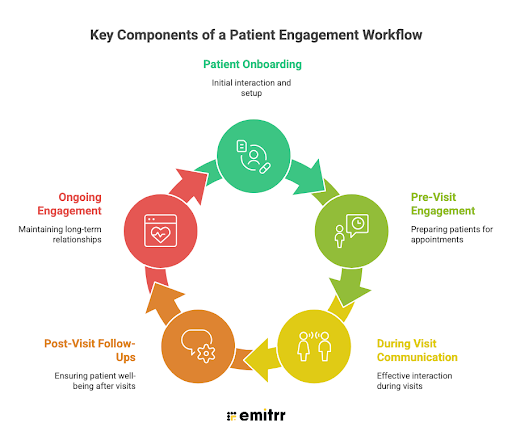
1. Patient Onboarding
- Appointment confirmations
- Intake patient forms and medical history collection
- Welcome messages and instructions
2. Pre-Visit Engagement
- Automated reminders (SMS, email, or calls)
- Preparation guidelines (fasting, documents, etc.)
- Digital check-ins
3. During Visit Communication
- Real-time updates
- In-clinic coordination
- Wait-time notifications
4. Post-Visit Follow-Ups
- Care instructions
- Prescription refill reminders
- Feedback requests
5. Ongoing Engagement
- Preventive care reminders
- Chronic condition management
- Health tips and educational content
How It Works in Practice
A patient engagement workflow uses automation, personalization, and timing to ensure consistent communication. For example:
- A patient books an appointment online
- They receive an instant confirmation message
- Automated reminders are sent before the visit
- After the visit, follow-up instructions and feedback requests are triggered
- The system schedules future reminders based on the patient’s condition
This eliminates gaps in communication and ensures that no patient falls through the cracks.

Why Workflows Matter
Without a defined workflow, patient communication tends to be:
- Inconsistent
- Manual and time-consuming
- Prone to human error
With a workflow in place, healthcare providers can:
- Standardize patient communication
- Save staff time through automation
- Deliver a more personalized patient experience
- Improve adherence and reduce missed appointments
Patient Engagement Workflow vs. Traditional Communication
| Traditional Approach | Engagement Workflow |
| Reactive communication | Proactive communication |
| Manual follow-ups | Automated workflows |
| One-time interactions | Continuous engagement |
| Limited personalization | Highly personalized |
| Higher no-show rates | Reduced no-shows |
In Simple Terms
Think of a patient engagement workflow as a care journey map powered by automation, guiding patients from their first interaction with a provider all the way through treatment and beyond, while ensuring they stay informed, supported, and connected at every step.
12 Steps to Create a Patient Engagement Workflow
Creating an effective patient engagement workflow requires a balance of strategy, technology, and patient-centric thinking. The goal is to design a system that is consistent, scalable, and personalized, while ensuring patients feel supported at every stage of their healthcare journey.
Below is a step-by-step guide to help you build a high-impact patient engagement workflow:
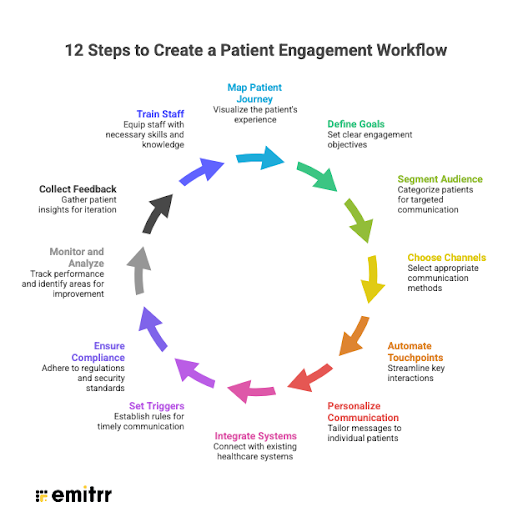
1. Map the Entire Patient Journey
Start by identifying every touchpoint a patient has with your practice, from discovery to post-care follow-ups.
Key stages to map:
- Appointment booking
- Pre-visit communication
- In-visit experience
- Post-visit follow-ups
- Long-term engagement
Understanding this journey helps you uncover communication gaps and opportunities to improve patient experience.
2. Define Clear Engagement Goals
Before building your workflow, determine what you want to achieve.
Common goals include:
- Reducing no-show rates
- Improving treatment adherence
- Increasing patient retention
- Enhancing satisfaction scores
- Streamlining communication
Each goal will shape how your workflow is structured and what messages are included.
3. Segment Your Patient Audience
Not all patients require the same communication. Segmenting your audience allows you to deliver more relevant and personalized interactions.
Segmentation examples:
- New vs. returning patients
- Chronic care vs. routine visits
- Age groups or demographics
- Treatment type or specialty
This ensures your workflow feels tailored rather than generic.
4. Choose the Right Communication Channels
Patients prefer different communication methods, so your workflow should support multiple channels.
Common channels include:
- SMS/ secure text messaging for healthcare
- Voice calls
- Patient portals
- Mobile apps
Using a multi-channel approach increases the likelihood that patients will engage with your messages.
5. Automate Key Touchpoints
Automation is the backbone of a scalable patient engagement workflow. It reduces manual workload while ensuring timely communication.
Automate interactions such as:
- Appointment confirmations
- Reminders and rescheduling links
- Follow-up messages
- Medication reminders
- Feedback requests
Automation ensures consistency and minimizes human error.
Missed appointments, long queues, and manual work, AI is solving it all. Watch how smarter scheduling is transforming healthcare workflows.
6. Personalize Patient Communication
Personalization goes beyond using a patient’s name; it involves delivering relevant, context-aware messages.
Ways to personalize:
- Reference appointment type or condition
- Tailor instructions based on treatment
- Send reminders aligned with patient history
- Provide targeted health tips
Personalized communication builds trust and improves response rates.
7. Integrate with Existing Systems
Your workflow should seamlessly connect with your existing healthcare systems.
Important integrations:
- Electronic Health Records (EHR)
- Practice Management Systems (PMS)
- Scheduling tools
- Billing systems
Integration ensures real-time data flow and prevents duplication or errors.
8. Set Up Triggers and Timing Rules
Define when and how messages are sent based on patient actions or timelines.
Examples:
- Send a reminder 24 hours before the appointment
- Trigger follow-up 2 hours after visit
- Schedule feedback request within 24–48 hours
- Send preventive care reminders monthly or quarterly
Timing plays a critical role in engagement effectiveness.
9. Ensure Compliance and Data Security
Healthcare communication must follow strict regulations to protect patient data.
Key considerations:
- HIPAA compliance (or regional equivalents)
- Secure messaging platforms
- Patient consent for communication
- Data encryption
A secure workflow builds patient trust and avoids legal risks.
10. Monitor, Analyze, and Optimize
A patient engagement workflow is not a one-time setup; it requires continuous improvement.
Track metrics such as:
- Appointment attendance rates
- Response rates to messages
- Patient satisfaction scores
- Retention rates
- Conversion rates
Use these insights to refine your workflow and improve performance over time.
11. Collect Feedback and Iterate
Patient feedback is invaluable for improving engagement.
Ways to gather feedback:
- Post-visit surveys
- SMS feedback requests
- Online reviews
- Direct patient interviews
Use this input to identify pain points and enhance the patient experience.
12. Train Your Staff
Even with automation, your staff plays a crucial role in executing the workflow.
Training should focus on:
- Using engagement tools effectively
- Responding to patient inquiries
- Maintaining a consistent communication tone
- Handling escalations
A well-trained team ensures the workflow runs smoothly.
What Mistakes Should Be Avoided in Patient Engagement?
Even with the right tools and intentions, healthcare providers can fall into common pitfalls that reduce the effectiveness of patient engagement efforts. Avoiding these mistakes is essential to ensure your workflow delivers real value and improves outcomes.
- Lack of Personalization: Sending generic messages that don’t reflect the patient’s condition, history, or preferences can make communication feel impersonal and irrelevant.
- Overcommunication or Message Fatigue: Bombarding patients with too many reminders or updates can overwhelm them, leading to disengagement or ignored messages.
- Inconsistent Communication: Failing to maintain regular and timely communication creates gaps in the patient journey and reduces trust.
- Ignoring Patient Preferences: Not allowing patients to choose their preferred communication channel (SMS, email, call) can lower engagement rates.
- Manual and Unstructured Processes: Relying heavily on manual outreach increases the risk of errors, missed follow-ups, and inefficiencies.
- Lack of Clear Call-to-Action (CTA): Messages without a clear next step (e.g., confirm appointment, complete form) can confuse patients and reduce response rates.
- Poor Timing of Messages: Sending reminders too early, too late, or at inconvenient times can make them ineffective.
- Not Integrating Systems: Disconnected tools (EHR, scheduling, communication platforms) can lead to duplicated efforts and inconsistent data.
- Neglecting Post-Visit Engagement: Failing to follow up after appointments misses opportunities to reinforce care plans, collect feedback, and improve outcomes.
- Ignoring Data and Analytics: Not tracking performance metrics prevents you from identifying what’s working and what needs improvement.
- Lack of Staff Training: Even the best systems fail if staff aren’t trained to use them effectively or communicate consistently with patients.
- Non-Compliance with Regulations: Overlooking data privacy laws (like HIPAA) can lead to serious legal issues and loss of patient trust.
What Are Examples of Effective Patient Engagement Workflows?
To truly understand how patient engagement workflows work, it helps to look at real-world use cases. Below are practical, high-impact workflow examples that healthcare providers can implement to improve communication, outcomes, and retention.
1. Appointment Booking & Reminder Workflow
Goal: Reduce no-shows and streamline scheduling
How it works:
- Patient schedules an appointment online or via phone
- An instant confirmation message is sent
- Reminder messages are triggered (48 hours and 24 hours before)
- Include a rescheduling link for convenience
- Final reminder sent on the day of the appointment
Why it works: Timely reminders and easy rescheduling significantly reduce missed appointments and improve clinic efficiency.
2. New Patient Onboarding Workflow
Goal: Create a smooth and welcoming first experience
How it works:
- Welcome message sent after appointment booking
- Digital medical forms are shared before the visit
- Insurance and documentation instructions provided
- Pre-visit checklist sent 24–48 hours prior
- Introduction to clinic policies and expectations
Why it works: It reduces administrative delays and ensures patients arrive prepared and confident.
3. Post-Visit Follow-Up Workflow
Goal: Improve care adherence and patient satisfaction
How it works:
- Thank-you message sent after the visit
- Care instructions and prescriptions shared
- Medication reminders scheduled
- Follow-up appointment reminders triggered
- Feedback or review request sent within 24–48 hours
Why it works: Keeps patients engaged after leaving the clinic and reinforces treatment plans.
4. Chronic Care Management Workflow
Goal: Support patients with long-term conditions
How it works:
- Regular check-in messages (weekly or monthly)
- Medication adherence reminders
- Symptom tracking prompts
- Educational content tailored to the condition
- Alerts to providers if patient responses indicate issues
Why it works: Continuous engagement helps prevent complications and improves long-term outcomes.
5. Preventive Care & Recall Workflow
Goal: Increase patient retention and preventive care compliance
How it works:
- Automated reminders for annual check-ups
- Vaccination and screening alerts
- Personalized health tips
- Re-engagement messages for inactive patients
Why it works: Encourages proactive healthcare and keeps patients connected to your practice.
6. Missed Appointment (No-Show) Recovery Workflow
Goal: Recover lost appointments and revenue
How it works:
- Automated message sent immediately after a missed appointment
- Easy rescheduling link included
- Follow-up reminder within 24 hours
- Optional staff outreach for high-value patients
Why it works: Quick follow-ups increase the chances of rebooking and reduce revenue loss.
7. Patient Feedback & Reputation Management Workflow
Goal: Improve patient experience and online reputation
How it works:
- Feedback request sent shortly after the visit
- Directly satisfied patients to leave online reviews
- Capture negative feedback privately for resolution
- Notify staff of urgent concerns
Why it works: Helps improve service quality while building a strong online presence.
8. Billing & Payment Reminder Workflow
Goal: Reduce outstanding payments and improve transparency
How it works:
- Billing notification sent after visit
- Payment reminders are scheduled at intervals
- Secure payment links included
- Confirmation message after payment completion
Why it works: Makes it easier for patients to pay on time and reduces administrative workload.
9. Telehealth Engagement Workflow
Goal: Ensure smooth virtual care experiences
How it works:
- Appointment confirmation with telehealth link
- Pre-visit tech instructions
- Reminder messages with access details
- Post-consultation summary and follow-up
Why it works: Reduces technical issues and improves patient confidence in virtual care.
10. Reactivation Workflow for Inactive Patients
Goal: Bring back patients who haven’t visited in a while
How it works:
- Identify inactive patients (e.g., no visit in 6–12 months)
- Send a personalized re-engagement message
- Offer incentives (if applicable)
- Provide easy booking options
Why it works: Re-engaging existing patients is often more cost-effective than acquiring new ones.
Power Your Patient Engagement Strategy with Emitrr AI
Emitrr AI stands out as one of the best patient engagement software solutions that helps practices deliver seamless, automated, and impactful patient experiences.
It leverages AI for patient engagement to help healthcare providers automate communication, reduce manual effort, and create meaningful patient interactions at every stage of the care journey. By combining automation with personalization, Emitrr AI enables providers to improve patient engagement in healthcare without overwhelming their staff. The platform adapts to patient behavior, preferences, and history, delivering the right message at the right time through the right channel.
Here’s how it works:
Centralized Dashboard for All KPIs
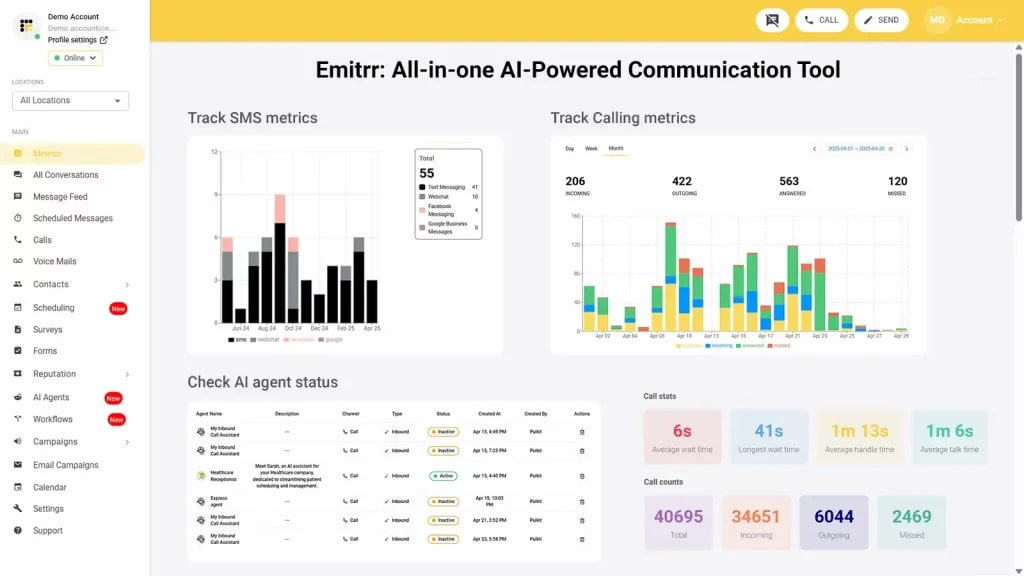
Emitrr AI brings all your patient engagement data into a single, unified dashboard. From appointment confirmations and no-shows to response rates and follow-ups, everything is tracked in one place. This eliminates the need to manually combine data from different systems and gives you a clear, real-time view of patient behavior.
Automated Appointment Reminders and Confirmations
Emitrr uses AI-driven automation to send reminders via SMS, email, or voice. Patients can confirm, cancel, or reschedule with a simple response.
This directly improves:
- Confirmation rates
- Response rates
- Reduction in no-shows
By tracking these interactions automatically, you always have accurate KPI data without manual effort.
Real-Time Engagement Tracking
Emitrr AI tracks patient interactions as they happen, whether it’s a message reply, a link click, or a confirmation.
This allows your team to:
- Identify engagement gaps instantly
- Adjust communication strategies quickly
- Prevent issues before they impact operations
Intelligent Follow-Up Automation
Missed follow-ups are one of the biggest gaps in patient engagement. Emitrr AI automates follow-up reminders based on visit type, treatment plan, or timing. Additionally, the missed-call text back feature ensures that any missed patient calls are instantly followed up with an automated message, helping re-engage patients and capture missed opportunities.
Patients receive timely nudges, which improves:
- Follow-up adherence rates
- Patient retention
- Continuity of care
Two-Way Communication with AI Assistance
Emitrr AI enables seamless two-way communication, allowing patients to respond, ask questions, or reschedule without friction.
AI helps categorize and manage these interactions, ensuring:
- Faster response times
- Better patient experience
- Higher engagement levels
Watch how Emitrr’s AI SMS agent turns texting into effortless automation
Smart Insights and Performance Analytics
Emitrr AI doesn’t just collect data; it turns it into actionable insights. The platform highlights trends such as declining response rates or increasing no-shows, helping you take proactive steps.
Instead of guessing what’s wrong, you get clear signals on:
- Which communication channels work best
- When patients are most responsive
- Where drop-offs are happening
Seamless Integration with Existing Systems
Emitrr AI integrates with your existing EHR and practice management systems, ensuring data flows smoothly without disruption.
This means:
- No duplicate data entry
- Consistent and accurate KPI tracking
- A complete view of patient engagement
Scalable Automation for Growing Practices
As your practice grows, manually tracking KPIs becomes harder. Emitrr AI scales effortlessly by automating workflows and maintaining consistent communication across a larger patient base.
Whether you manage hundreds or thousands of patients, your KPIs remain:
- Accurate
- Up-to-date
- Actionable
Real Impact Across the Patient Journey
With Emitrr, every stage of the patient journey becomes more efficient and engaging:
| Stage | How Emitrr Helps |
| Booking | Instant confirmations and easy scheduling |
| Pre-Visit | Automated reminders and preparation instructions |
| During Visit | Real-time updates and coordination |
| Post-Visit | Follow-ups, medication reminders, and feedback |
| Long-Term | Preventive care reminders and re-engagement |
Frequently Asked Questions
Patient engagement in healthcare refers to how actively patients are involved in their own care. This includes communication with providers, following treatment plans, attending appointments, and making informed health decisions.
AI for patient engagement helps automate communication, personalize messages, and send timely reminders. It ensures patients receive relevant information at the right time, improving responsiveness and overall care experience.
A patient engagement workflow ensures consistent and structured communication throughout the patient journey. It helps reduce no-shows, improve adherence, and enhance patient satisfaction while saving staff time.
Look for features like automation, multi-channel communication (SMS, email), AI-driven personalization, system integrations (EHR/PMS), and two-way messaging. These help streamline operations and improve patient interaction.
Better engagement builds trust and keeps patients connected with your practice. When patients feel supported and informed, they are more likely to return for future care and recommend your services to others.
Summary
A well-designed patient engagement workflow helps healthcare providers deliver timely, personalized communication across the entire patient journey, leading to better outcomes, higher satisfaction, and improved retention. By leveraging automation and AI for patient engagement, practices can improve patient engagement in healthcare while reducing manual effort. Solutions like Emitrr make it easier to automate patient engagement and streamline workflows, and you can book a free demo with Emitrr AI to see how it works in practice.


 4.9 (400+
reviews)
4.9 (400+
reviews)