

Introduction
A mid-sized practice can field anywhere from a handful to a few hundred refill requests a day, arriving as pharmacy renewal transactions, phone calls, portal messages, and the occasional voicemail. Each one carries a small clinical decision buried inside routine administrative work, which is exactly why refill handling is so easy to under-resource and so painful when it backs up.
The software built to help with this doesn’t all do the same job. Some tools carry the electronic prescribing transaction itself. Some capture and route the patient-facing request. A newer set tries to work the queue end-to-end, applying protocol and flagging exceptions before staff ever touch it. Picking the wrong type for your actual bottleneck is the most common mistake practices make when shopping this category.
This guide compares 10 prescription refill and medication management platforms worth knowing about in 2026, what each one is built to do, and how to figure out which category solves the problem you have.
AI Summary
- Prescription refill software falls into three distinct categories: e-prescribing networks that carry the transaction, patient communication platforms that capture requests, and AI-native agents that work the request end-to-end.
- The right tool depends on where your bottleneck actually sits: collecting requests, transmitting them, or reviewing and resolving them.
- E-prescribing platforms like DoseSpot, RXNT, and DrFirst handle the regulated transmission and EPCS requirements but generally leave protocol matching and triage to staff.
- Communication platforms like Klara, Weave, and Updox solve intake and patient visibility but don’t replace the e-prescribing or clinical review step.
- No refill software should approve controlled substances or make clinical decisions on its own; the strongest tools are the ones that make human review faster, not the ones that try to remove it.
Prescription Refill Software Comparison Table
| Platform | Request Capture | EHR/e-Prescribing Integration | Automated Eligibility Checks | Patient Notifications | Notable Strength |
| Emitrr | Phone, SMS, web form | athenahealth, eClinicalWorks, and other major EHRs | Rule-based, protocol-driven | Automated SMS at submission and status change | AI call and text intake that structures the request before staff see it |
| DoseSpot | Pharmacy renewal transaction | Broad EMR/EHR integrations | No | No | Fast, reliable EPCS-certified transmission |
| RXNT | Pharmacy renewal transaction | Part of RXNT’s own practice management suite | No | Limited | E-prescribing bundled with billing and scheduling |
| DrFirst | Pharmacy renewal transaction | Deep EHR partnerships, including iPrescribe mobile | No | No | Mature medication history and clinical alerting |
| Klara | Patient text, web chat, voicemail transcription | Integrates with leading EHRs | No | Yes, conversational | Converts refill calls into structured, trackable text threads |
| Weave | Phone, text | EHR integrations vary by specialty | No | Yes | All-in-one phone and texting built for small practices |
| Updox | Text, fax, patient portal | 150+ EHR/EMR integrations | No | Yes | Combines secure texting, e-fax, and telehealth in one inbox |
| Honey Health | Phone, pharmacy transaction | Works within existing EHR | Yes, autonomous protocol matching | Limited, focused on staff-facing flags | AI agent built specifically to process the refill queue |
| Simbie AI | Phone (Voice AI) | EHR-dependent | Yes, protocol-based | Limited | Clinically-aware voice AI for refill and scheduling calls |
| Tebra | Pharmacy renewal transaction, patient portal | Native, single-suite EHR and practice management | Partial, AI-assisted | Yes | Refills, billing, and scheduling inside one consolidated platform |
What Prescription Refill Management Software Does
It helps to separate two things that sound similar but aren’t: transmitting a prescription and managing a refill request.
E-prescribing is the regulated transaction that sends a prescription to a pharmacy electronically. Every certified e-prescribing platform can do this, and it’s required infrastructure, not a differentiator.
Refill management is everything around that transaction: capturing the request in the first place, verifying the patient and medication details, checking it against clinical protocol, routing it to the right person, and keeping the patient informed while it’s pending. This is the part that varies enormously between tools, and it’s where most of the actual staff time gets spent.
A practice can have excellent e-prescribing and still struggle with prescription refill workflows, because the software handling the transmission was never built to solve the intake and triage problem sitting in front of it.
The Three Types of Prescription Refill Tools (and Why the Distinction Matters)
E-prescribing networks and EHR modules carry the electronic renewal transaction itself. DoseSpot, RXNT, and DrFirst fall here. These are typically already built into or connected to your EHR, and they’re where the pharmacy’s renewal request actually lands. Their strength is regulatory compliance and reliable transmission, including EPCS for controlled substances. What they generally don’t do is decide whether a request should be approved.
Patient communication and intake platforms capture and route requests as they come in from the patient. Klara, Weave, Updox, and Emitrr fit here, though they differ in how much automation sits behind the intake itself. These tools solve the “patient called and left a voicemail with half the details” problem, turning scattered contact into a structured, trackable request.
AI-native refill agents try to work the request itself, matching it against a practice’s documented protocol and flagging only what actually needs a human. Honey Health and Simbie AI represent this newer category. They’re generally not replacing the e-prescribing transaction or the communication layer, but sitting on top of both to reduce the manual review work in between.
Knowing which category a tool belongs to matters more than any individual feature list, because a communication platform and an e-prescribing network are solving different halves of the same problem.

Key Features to Look For in Refill Management Software
- Multi-channel request capture. Can it pull in phone, text, portal, and pharmacy-initiated requests without staff checking four separate places?
- EHR/chart integration. Does patient and medication data flow in and out of your existing system, or does staff still have to re-enter it?
- Protocol-based eligibility checks. Does the tool apply your practice’s own rules consistently, or does every request still need a manual read against a printed policy?
- Controlled substance safeguards. Does it correctly separate Schedule II and other controlled substances from routine refills, and route them for individual review rather than treating them the same way?
- Provider approval workflow. Does the provider see a clean, pre-populated request, or are they still hunting for context?
- Patient status notifications. Does the patient get told what’s happening, or do they have to call to find out?
- Audit and reporting. Can you see turnaround time, request volume, and where things are actually getting stuck?
Your front desk shouldn’t spend the day answering refill calls. See how an AI refill agent can reduce call volume by up to 40%.
10 Best Prescription Refill Management Software to Consider in 2026
1. Emitrr
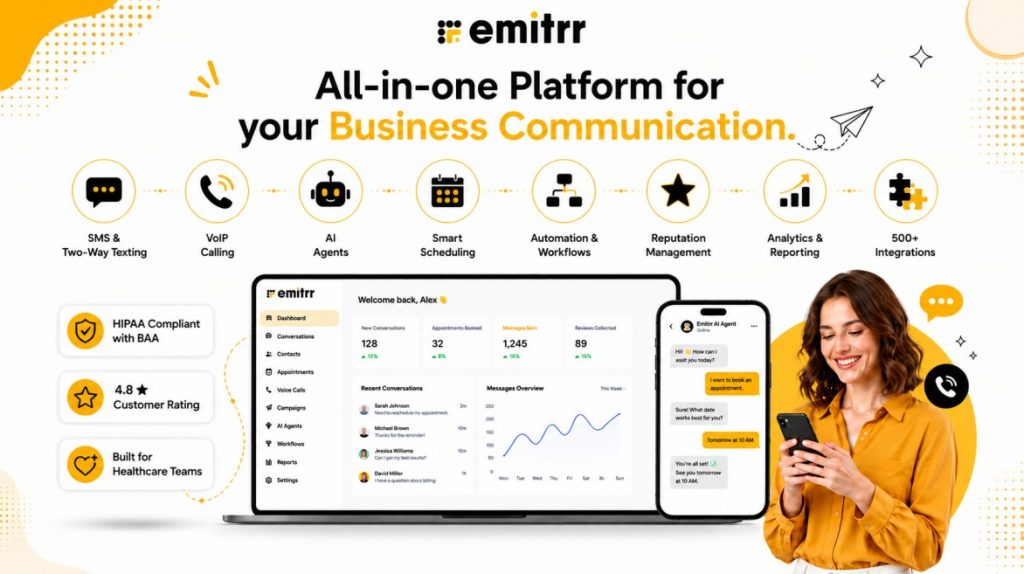
Emitrr is an all-in-one patient communication and workflow automation platform that brings AI agents, calls, texts, and refill workflows into one place. For prescription refills, it can capture requests, collect the required details, route them to the right staff, and automate patient follow-ups from the initial request through resolution.
Key features:
- AI call answering that captures refill requests and collects structured details (medication, dose, pharmacy, urgency) without a staff member on the line
- Rule-based routing that sends requests to the correct queue or provider based on medication type and practice protocol
- Automated eligibility flagging that surfaces missing information or protocol mismatches before a request reaches a provider
- Integration with major EHRs, including athenahealth and eClinicalWorks, for chart lookup and case creation
- Automated patient notifications at submission and once a decision is made
Best for: Practices looking for a unified communication and AI agent platform to automate prescription refill intake, routing, follow-ups, and patient communication without adding another disconnected workflow.
Limitations: Emitrr sits at the communication and intake layer; it works alongside your existing e-prescribing system rather than replacing the transmission itself, and depth of EHR write-back depends on the specific integration in place.
Rating: 4.8/5
2. DoseSpot
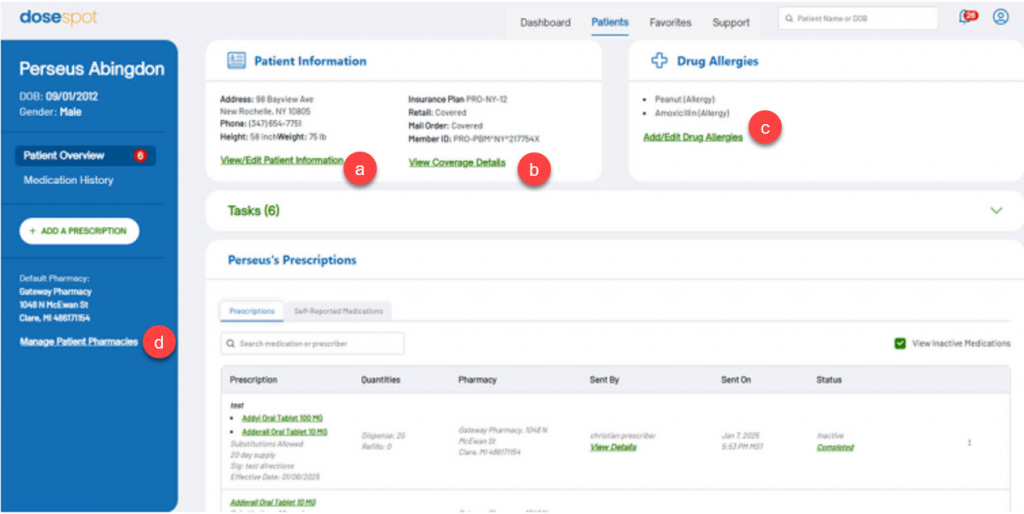
DoseSpot is a cloud-based e-prescribing platform focused specifically on fast, reliable prescription transmission, including EPCS-certified controlled substance prescribing.
Key features:
- Standard e-prescribing plus EPCS for controlled substances
- Centralized dashboard showing pending prescriptions, refills, and RxChange requests in one view
- Drug interaction checks and medication history access
- Broad EMR/EHR integration options
Best for: Practices that need dependable, standards-compliant e-prescribing and refill transmission without requiring a separate clinical workflow layer.
Limitations: DoseSpot handles the transmission reliably but doesn’t apply clinical protocol or triage logic on its own; staff still decide what gets approved before it reaches the platform.
Rating: 4.3/5
3. RXNT
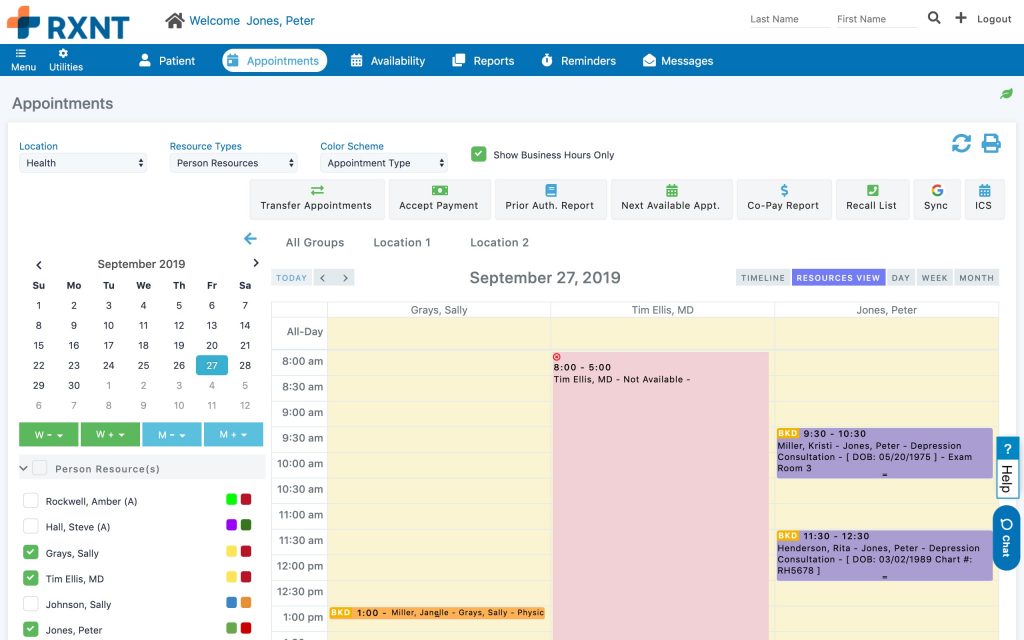
RXNT bundles e-prescribing into a broader practice management and billing suite, making it a fit for practices that want refills handled inside the same system as scheduling and claims.
Key features:
- EPCS-certified e-prescribing with drug interaction and formulary checks
- Medication history and PDMP access
- Bundled with RXNT’s practice management and billing modules
Best for: Small to mid-sized practices that want e-prescribing consolidated with the rest of their administrative software rather than run as a standalone tool.
Limitations: Like other e-prescribing platforms, RXNT handles the renewal transaction well but leaves protocol judgment and patient-facing communication to the practice.
Rating: 4.2/5
4. DrFirst
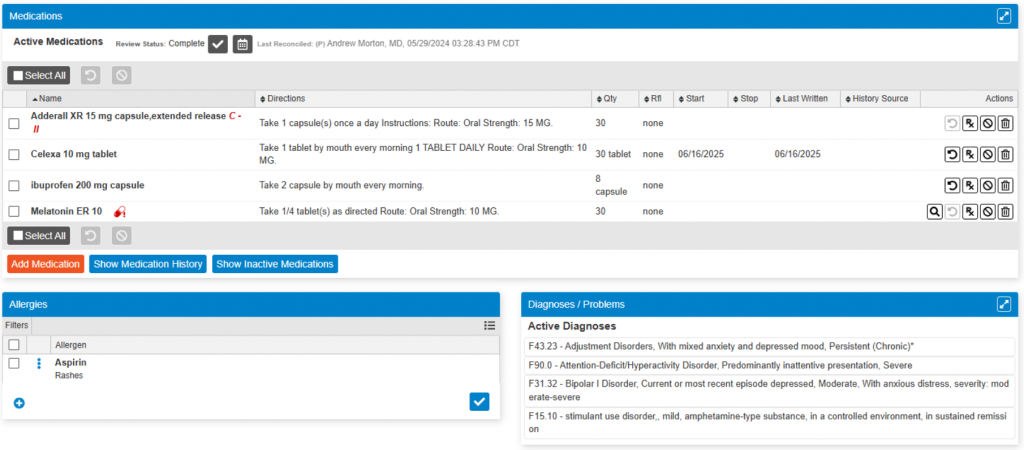
DrFirst is one of the more established names in e-prescribing, known for mature medication history tools and strong interoperability across EHR partners.
Key features:
- EPCS-certified e-prescribing, including a mobile-friendly option through iPrescribe
- Real-time medication cost transparency
- Deep medication history and clinical alerting
Best for: Practices and health systems that prioritize advanced medication safety tools and want a prescribing partner with broad EHR interoperability.
Limitations: DrFirst’s strength is prescribing infrastructure, not refill-specific triage or patient communication, so practices with heavy refill volume typically pair it with a separate intake or automation layer.
Rating: 4.3/5
5. Klara
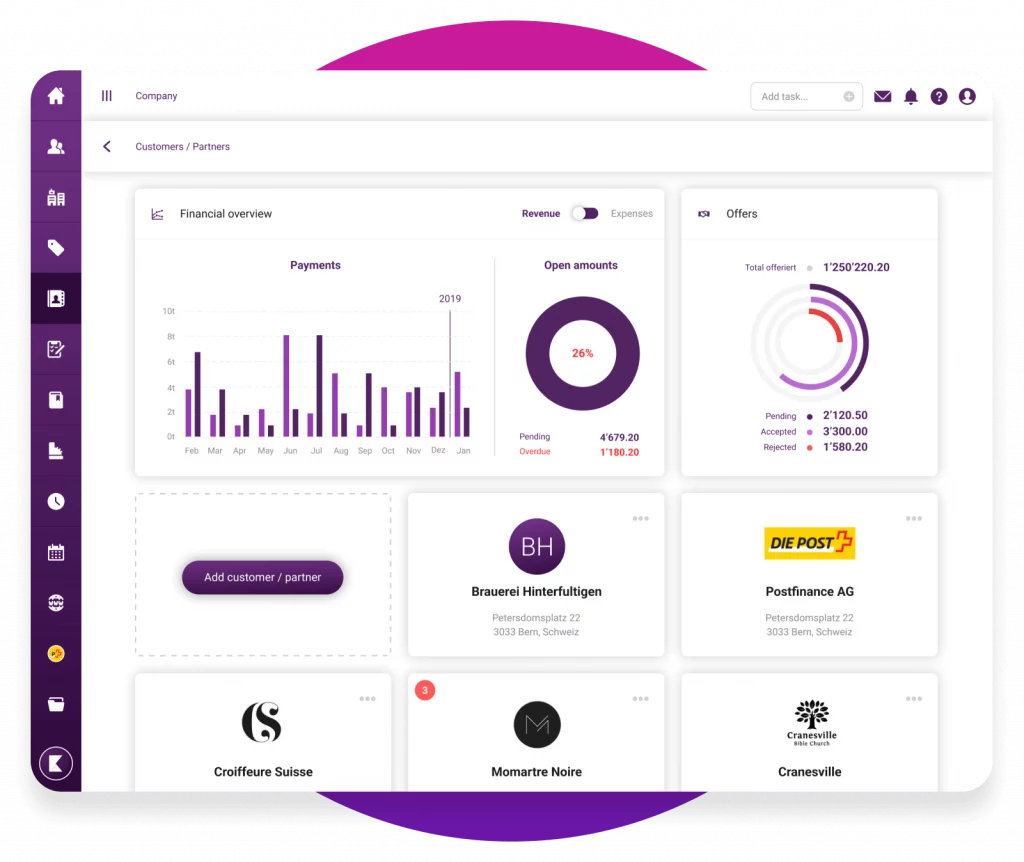
Klara is a patient communication platform that converts phone-based refill requests into structured, trackable text conversations staff can handle asynchronously instead of one call at a time.
Key features:
- Multi-channel patient messaging, including text, web chat, and voicemail transcription
- Structured conversation flows that route a refill request to the right staff member
- Integrates with leading EHRs for documentation
- Can communicate directly with pharmacies for some coordination tasks
Best for: Practices whose main refill pain point is phone volume and want requests captured cleanly as text rather than voicemail.
Limitations: Klara captures and routes the request but doesn’t review it clinically or transmit the renewal itself; those steps still happen in the EHR or e-prescribing tool.
Rating: 4.4/5
Explore more: Considering Klara? Compare it with other Klara alternatives or see what you can expect to pay with Klara pricing.
6. Weave

Weave is an all-in-one communication platform pairing a modern phone system with texting, reminders, and reviews, built with small healthcare and dental practices in mind.
Key features:
- Unified phone and texting system for patient communication
- Automated appointment reminders alongside refill and general messaging
- Reasonably quick setup for small practices
Best for: Small, independent practices that want one straightforward system for phones and texting without a heavy implementation lift.
Limitations: Refill handling in Weave is part of its general communication toolkit rather than a dedicated, protocol-aware refill workflow.
Rating: 4.0/5
Explore Weave further: See how Weave alternatives compare for prescription refill communication, or review Weave pricing before choosing a platform.
7. Updox
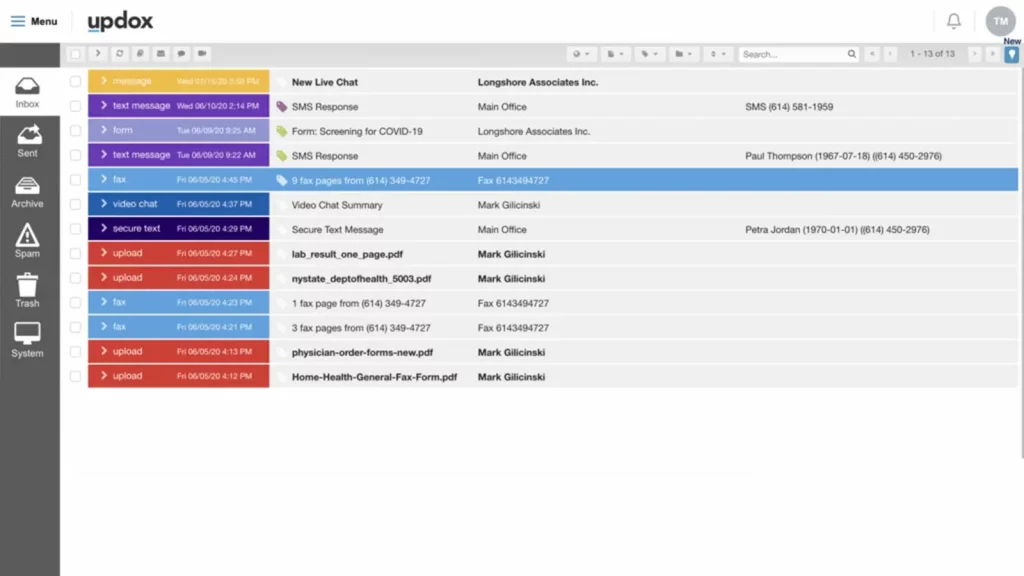
Updox combines secure texting, e-fax, and telehealth in one inbox, which is useful for practices still receiving a meaningful share of refill-related communication by fax.
Key features:
- HIPAA-compliant two-way texting and e-fax in one platform
- Automated appointment reminders and broadcast messaging
- Broad EHR/EMR integration footprint (150+ systems)
Best for: Practices that need to consolidate fax, text, and telehealth communication, particularly those still dependent on fax for pharmacy or referring-provider correspondence.
Limitations: Updox doesn’t apply automated eligibility or protocol logic to refill requests; it’s a communication and document tool rather than a clinical workflow engine.
Rating: 3.9/5
Explore more: Compare Updox alternatives for refill communication and workflow automation, then check Updox pricing to assess the overall investment.
8. Honey Health
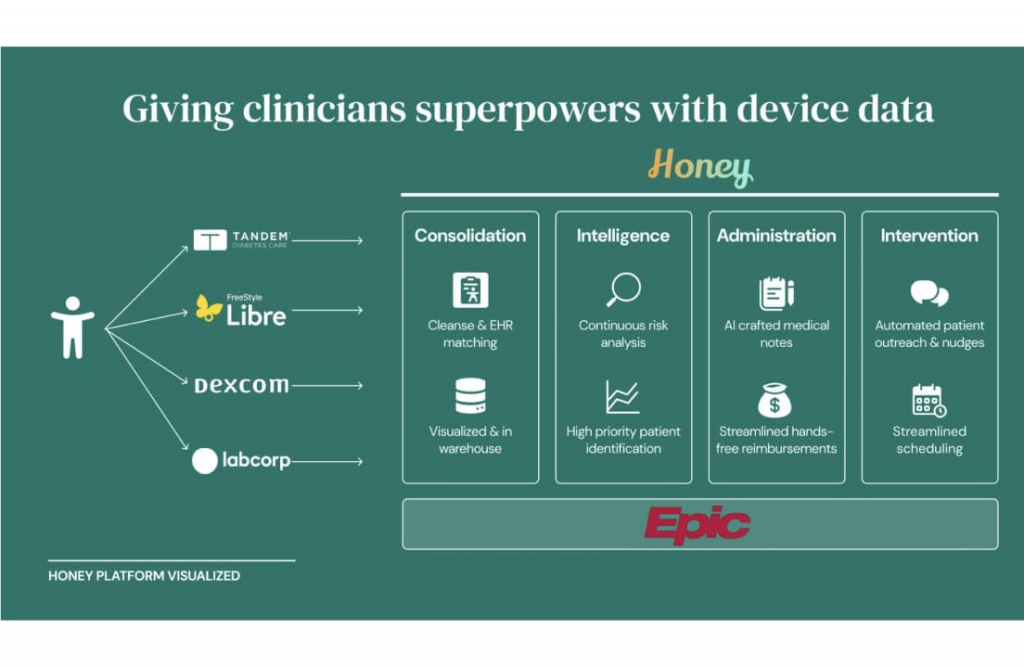
Honey Health is an AI agent built specifically to process refill requests autonomously against a practice’s own clinical protocol, working inside the practice’s existing EHR rather than replacing it.
Key features:
- Autonomous protocol matching that clears routine refills without staff review
- Flags controlled substances, overdue visits, dose changes, and low-confidence chart matches for human review
- Designed to work across systems like athenahealth, eClinicalWorks, and Epic
Best for: Larger independent practices, hospitals, and health systems with high refill volume looking for a dedicated automation engine rather than a general communication tool.
Limitations: As a newer category of tool, the AI-native refill space is still young, and practices should expect a meaningful share of requests to still require human review no matter how well-tuned the automation is.
Rating: 4.4/5
9. Simbie AI
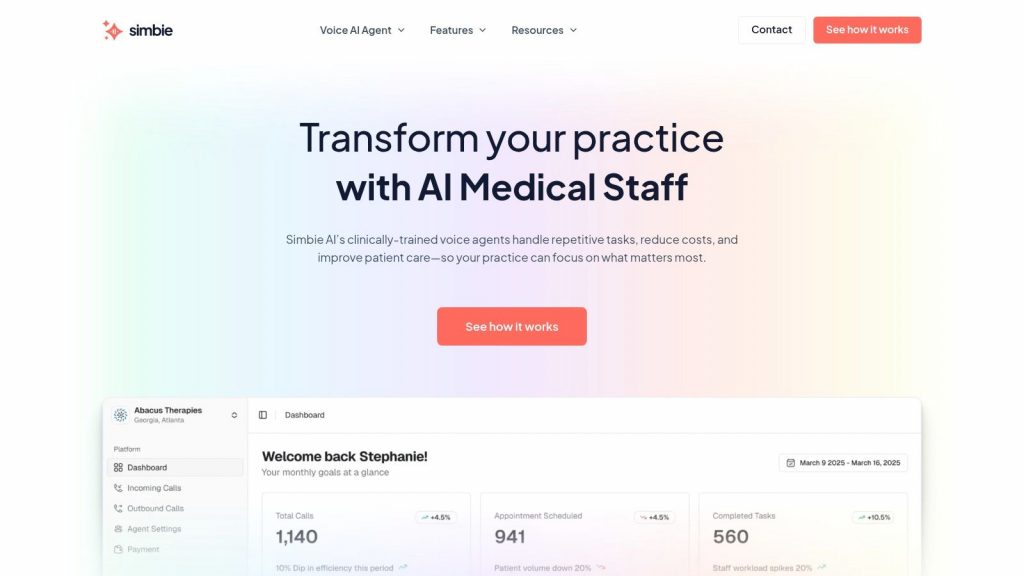
Simbie AI offers a clinically-aware voice AI that can answer patient calls for refills and scheduling directly, logging structured information into the EHR without a staff member picking up.
Key features:
- Voice AI that understands spoken refill requests and asks appropriate follow-up questions
- Cross-references requests against medication list, allergies, and last visit date
- Positioned as part of a broader workflow automation approach, alongside prior authorization and billing tools
Best for: Practices that want phone-based refill and scheduling requests handled by AI voice without adding a texting or portal channel.
Limitations: Simbie’s refill capability depends heavily on EHR integration quality, and like other AI-native tools, exceptions still route to staff rather than being resolved automatically.
Rating: 4.1/5
10. Tebra
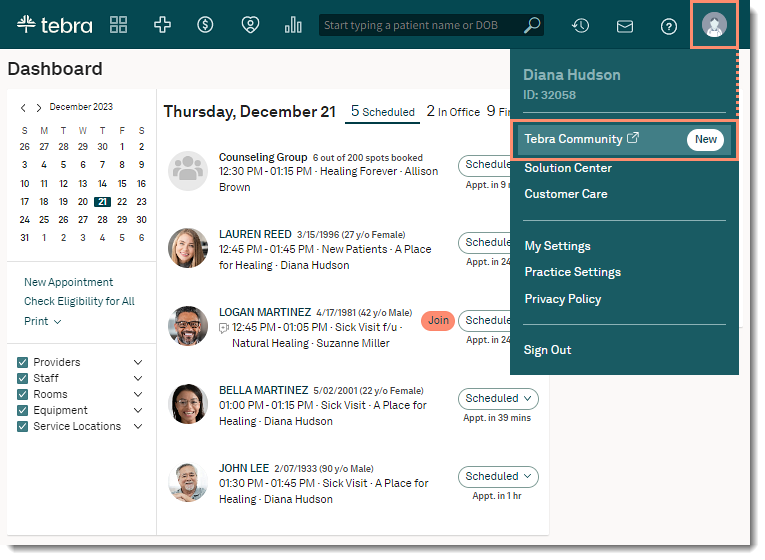
Tebra, formed from the merger of Kareo and PatientPop, is an EHR and practice management platform where refills are handled through a built-in eRx Requests dashboard and a dedicated Renewal Requests tab for pharmacy transactions.
Key features:
- Refills, scheduling, billing, and patient communication in one consolidated system
- Built-in AI that speeds documentation and automates some repetitive admin tasks
- Patient portal support for refill requests alongside other patient-facing features
Best for: Independent practices that want refills handled inside the same all-in-one system they already use for the rest of practice management, rather than adding a separate vendor.
Limitations: Tebra’s AI enhances an established suite rather than functioning as a dedicated, autonomous refill engine, so the renewal workflow still runs as a queue staff manages rather than one that resolves itself.
Rating: 4.0/5
Questions to Ask Before Choosing a Refill Management Tool
Download this free prescription refill management checklist to evaluate your current workflow, compare tools, and identify the features your practice needs to streamline refill requests from intake to follow-up.
Key Takeaways
- Refill software splits into e-prescribing networks, patient communication platforms, and AI-native refill agents, and each solves a different part of the problem.
- E-prescribing tools like DoseSpot, RXNT, and DrFirst handle the regulated transmission but rely on staff for protocol and triage.
- Communication platforms like Klara, Weave, and Updox solve intake and visibility but don’t replace clinical review or transmission.
- AI-native tools like Honey Health, Simbie AI, and Emitrr aim to reduce manual review work directly, though a share of requests will always need a human.
- Controlled substances should always route to a clinician for individual review, regardless of how much of the rest of the workflow is automated.
FAQs
It’s software that helps a practice capture, verify, and process refill and renewal requests, whether they come from patients or from pharmacies, and move them toward a provider decision and pharmacy transmission.
No. E-prescribing software transmits the prescription to the pharmacy and requires certified infrastructure. Refill management software covers everything around that transaction, including intake, verification, protocol checks, and patient communication, and not every e-prescribing tool does all of that.
E-prescribing platforms that are EPCS-certified can transmit controlled substance prescriptions electronically, but the decision to approve one should always go through individual clinician review rather than any kind of automated or bulk approval.
No responsible refill software replaces the provider’s decision. The strongest tools reduce the manual work of gathering information and flag what needs review, but the approval itself remains a clinical decision.
Small practices often benefit most from consolidating communication and refill intake into one simple tool without a heavy implementation. Multi-location groups typically need centralized visibility, consistent protocol enforcement across sites, and deeper EHR integration to avoid inconsistent handling from one location to the next.
Conclusion
There’s no single best prescription refill software, because the category isn’t really one category. The right choice depends on whether your practice needs help transmitting prescriptions, capturing patient requests, or actually working through the queue with less manual effort. Start by identifying where refills genuinely bog your team down, and match the tool to that specific bottleneck rather than the longest feature list.
Book a demo to see how Emitrr handles refill intake and routing for practices like yours.


 4.9 (400+
reviews)
4.9 (400+
reviews)