
Introduction
ENT practices manage a diverse mix of visits and procedures, often within the same day. A schedule may include hearing tests, nasal endoscopy, CPAP compliance checks, routine follow-ups, and same-day appointments, with each workflow requiring different documentation, equipment, and room resources. An EMR for ENT needs to support this variety without forcing practices to rely on separate systems for audiology, procedures, and routine clinical care.
Referral and fax volume adds another layer of complexity. Primary care referrals may arrive with imaging reports, audiology results, and other clinical documents that must be incorporated into the patient record. Device-related workflows, including hearing aid fittings and CPAP follow-ups, also require specialized documentation and ongoing communication. For practices evaluating an ENT EHR, the focus should therefore extend beyond basic charting to specialty templates, testing integration, procedure management, and device workflows.

This guide explores the key ENT EMR requirements, common specialty-specific challenges, must-have features, leading otolaryngology EMR options, and the factors practices should consider when choosing the right system.
AI Summary
- The defining ENT EMR requirement is handling a genuinely mixed visit type roster, audiology testing, in-office procedures, and routine clinic visits, within one system rather than three disconnected tools.
- The most significant blocker is fax-heavy referral intake without structured data extraction, since a meaningful share of new patient information still arrives as an unstructured document that staff must manually transcribe.
- Audiology device integration is the most operationally important feature category specific to ENT, since audiometer and tympanometer data needs to write into the chart rather than live in a separate testing system.
- Integration diligence should focus on whether same-day scheduling openings can be filled automatically, since ENT’s mix of procedure and routine visits creates real scheduling volatility.
- Practices should prioritize vendors with genuine audiology and device workflow depth over generic specialty EHR feature counts, since this is where ENT’s requirements diverge most from other procedural specialties.
Which EMR for ENT Is Right for You? TL;DR
| EMR | Best Suited For | Key Strengths | Potential Consideration |
| AdvancedMD | ENT practices wanting an integrated clinical and practice management platform | Scheduling, EHR, billing, e-prescribing, and patient engagement | Practices should verify ENT-specific customization and workflow depth |
| DrChrono | Small to mid-sized ENT practices | Cloud-based workflows, charting, scheduling, telehealth, and e-prescribing | Evaluate specialty templates and advanced ENT integrations |
| Nextech | Specialty-focused ENT practices | Specialty-oriented EHR, practice management, scheduling, and patient engagement | Confirm the depth of ENT-specific workflows and integrations |
| ChartLogic | Independent specialty practices | Clinical documentation, scheduling, billing, and e-prescribing | May require closer evaluation of ENT-specific functionality |
| eClinicalWorks | Growing ENT practices and larger ambulatory groups | Broad EHR, practice management, telehealth, and patient engagement capabilities | Broad feature set can require more implementation and configuration |
| Practice Fusion | Smaller practices seeking a cloud-based system | Cloud accessibility, charting, e-prescribing, and core ambulatory workflows | Evaluate advanced ENT functionality and scalability |
| Tebra | Independent ENT practices | EHR, billing, scheduling, practice management, and patient engagement | Practices should assess specialty-specific documentation capabilities |
What Makes an EMR Right for ENT?
ENT’s operational reality centers on variety: within a single clinic day, the practice manages testing-heavy audiology visits, procedure-based encounters that need room and equipment coordination, and standard follow-up visits, often with same-day openings created by cancellations that need to be filled quickly. The right EMR treats this variety as the default, not an edge case, with scheduling logic that can represent different visit types and durations, documentation templates specific to each (audiogram results look nothing like a sinus procedure note), and device integration that brings testing equipment output directly into the chart. A system built primarily around a single visit type, whether that’s a generic office visit or a narrowly procedural template, will require constant workarounds for ENT’s actual day-to-day mix.
Key Barriers for ENT Clinics
Mixed visit types and resources that generic scheduling cannot represent
An ENT schedule mixes audiology testing appointments, procedure visits requiring specific rooms and equipment, and standard clinic visits, each with different duration and resource needs. Generic, uniform appointment-slot scheduling forces staff to manually adjust for this variety, increasing the risk of scheduling conflicts on busy procedure or testing days. Practices should verify whether the EHR’s scheduling module actually supports different visit-type templates with appropriate resource allocation.
Audiology device integration gaps requiring manual data transcription
Audiometers, tympanometers, and other testing equipment produce their own data output, and whether that data writes directly into the EHR chart as structured results or requires staff to manually transcribe findings from a separate testing system depends entirely on the specific device-EHR integration. This matters because audiology testing is a core, frequent part of ENT practice, and manual transcription of test results is both slow and introduces transcription risk. Practices should verify current, device-specific integration status directly with both the EHR and device vendors for their specific testing equipment.
Fax-heavy referral and prior-record intake without structured extraction
A significant share of new ENT patients arrive via referral, often with prior imaging, audiology results, or referral letters transmitted by fax. If the EHR cannot ingest faxes with OCR or structured data extraction, staff are stuck manually reading and re-keying this information into the chart, which slows new patient onboarding. Practices should verify whether the EHR or a connected tool supports fax ingestion with data extraction, and understand the accuracy limitations of OCR before relying on it without a review step.
Media and test-result sharing that does not connect cleanly to the patient record
Beyond structured device data, ENT practices often need to share images (endoscopy findings, imaging) and test results with patients or referring providers. If this sharing happens through a disconnected process, email attachments, or printed copies, rather than a secure, chart-integrated channel, it creates both inefficiency and a fragmented record of what was actually shared and when.
Same-day scheduling volatility without a way to fill open slots quickly
ENT practices often experience meaningful same-day scheduling changes, cancellations that open a procedure or testing slot, and urgent add-ons for acute issues. If the EHR or a connected communication tool cannot help fill these openings quickly (through waitlist outreach or targeted campaigns), the practice loses revenue to unfilled, high-value slots. Practices should verify what same-day scheduling and waitlist tools actually exist.
Must-Have EMR Features for ENT
When evaluating an EMR for ENT, practices should look beyond general clinical documentation and prioritize capabilities built around otolaryngology workflows. The right ENT EHR should support procedures, audiology, imaging, communication, and billing within a connected workflow.
- ENT-specific documentation templates: Speeds up charting for the varied visit types, including audiology, procedures, allergies, hearing, vertigo, and sleep-related conditions.
- Audiology device integration: Reduces manual transcription by connecting audiometer, tympanometer, and other hearing-test results with the patient chart.
- Procedure documentation and scheduling: Supports accurate documentation and scheduling for ENT procedures while accounting for rooms, equipment, and provider availability.
- Secure media and test-result sharing: Keeps laryngoscopy images, CT scans, ultrasound results, and other clinical media connected to the patient record.
- Device and dispensing workflows: Supports hearing aid fitting, device management, and CPAP-related follow-up that standard otolaryngology EMR workflows may not cover.
- Fax ingestion and structured data extraction: Reduces manual data entry from referrals, test results, and other documents commonly received by ENT practices.
- Same-day scheduling and waitlist management: Helps practices quickly fill cancellations and open appointment slots.
- Procedure and audiology billing: Supports accurate coding and charge capture for ENT procedures, audiology services, and routine visits.
- Patient portal and education tools: Gives patients access to appointments, prescription refills, messages, test information, and condition-specific educational resources.
- Multi-location scheduling: Coordinates providers, locations, rooms, and appointments for growing ENT groups.
- Cloud-based accessibility: A cloud-based ENT EMR allows authorized teams to access patient information across offices, hospitals, and other care settings.
Best EMRs for ENT: Detailed Analysis
- AdvancedMD
- DrChrono
- Nextech
- ChartLogic
- eClinicalWorks
- Practice Fusion
- Tebra
| EMR | Platform Approach | Primary Workflow Focus | ENT Evaluation Area |
| AdvancedMD | Integrated cloud healthcare platform | Clinical and practice operations | Workflow integration |
| DrChrono | Cloud-based EHR platform | Clinical documentation and patient management | Flexibility and accessibility |
| Nextech | Specialty-oriented healthcare platform | Specialty practice operations | Specialty workflow support |
| ChartLogic | EHR and practice management platform | Documentation and administrative management | Clinical workflow customization |
| eClinicalWorks | Comprehensive ambulatory platform | Connected clinical and practice workflows | Scalability and interoperability |
| Practice Fusion | Cloud-based ambulatory EHR | Core clinical documentation and prescribing | Simplicity and cloud access |
| Tebra | EHR and practice management platform | Independent practice operations | Practice management integration |
1. AdvancedMD
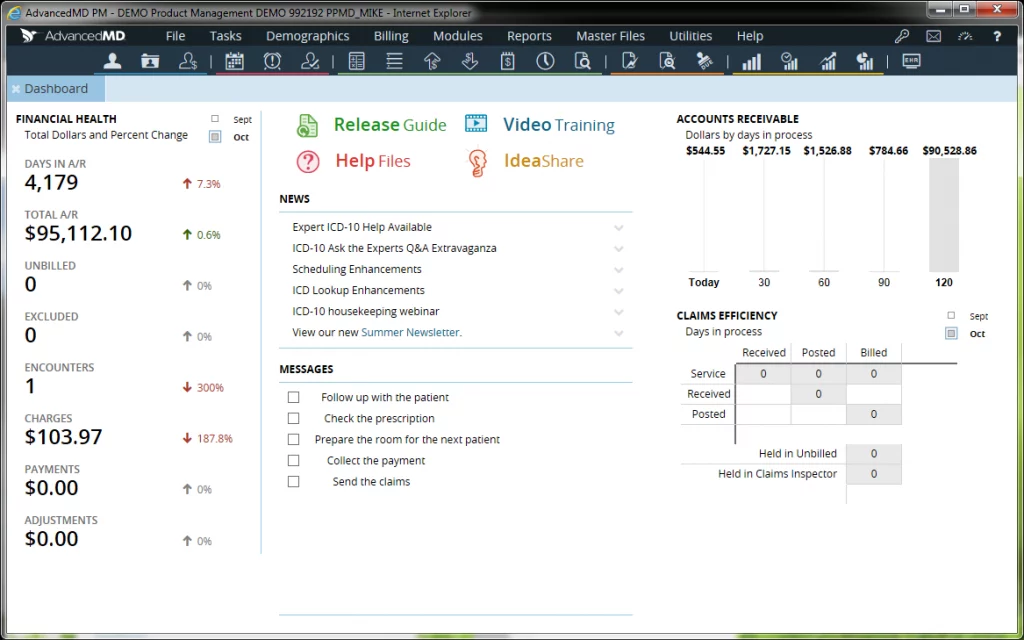
AdvancedMD is a cloud-based EHR and practice management software that combines clinical documentation, scheduling, billing, e-prescribing, and patient engagement tools. Its integrated approach makes it an option for practices evaluating an EMR for ENT that need both clinical and administrative workflows in one system.
ENT practices can use Emitrr alongside AdvancedMD to automate appointment reminders, referral follow-ups, recall campaigns, and patient notifications. This can help teams reduce repetitive outreach while keeping communication aligned with their ENT EMR workflows.
2. DrChrono
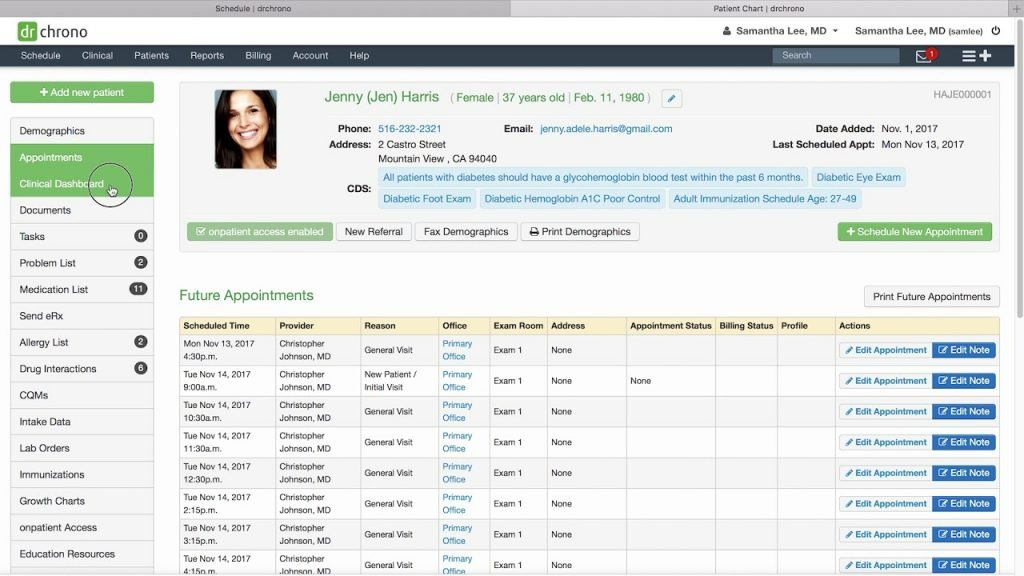
DrChrono is a cloud-based EHR platform that supports clinical documentation, scheduling, e-prescribing, telehealth, billing, and patient engagement. Its flexible workflows can make it suitable for ENT practices looking for an ENT EHR that supports both in-office and remote patient management.
With DrChrono, practices can use Emitrr for two-way texting, appointment confirmations, missed-call follow-up, and automated patient outreach. This can help an otolaryngology EMR support more efficient communication without replacing the clinical record.
3. Nextech
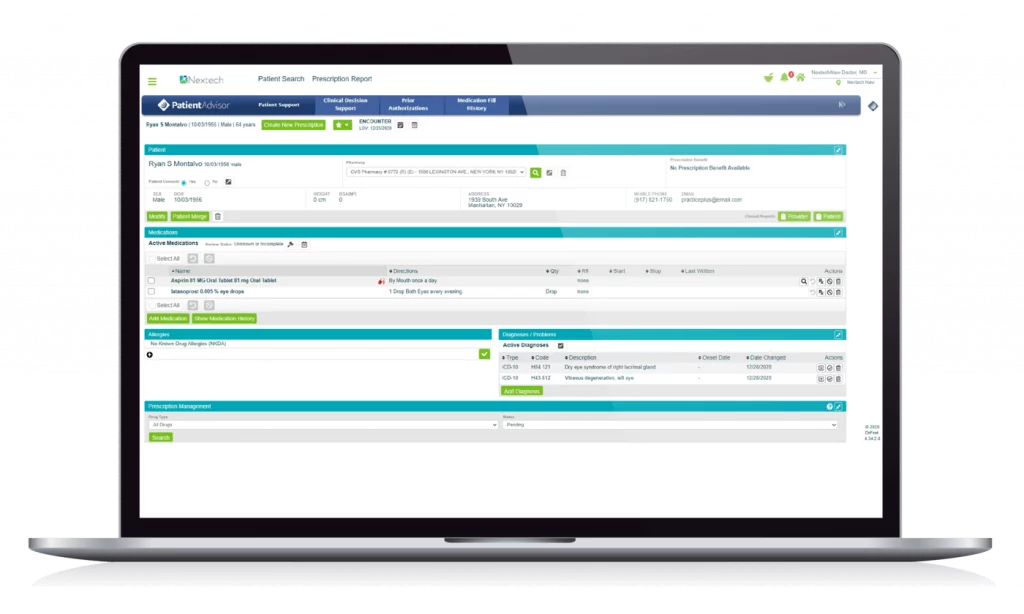
Nextech is a specialty-focused healthcare platform that provides EHR, practice management, scheduling, and patient engagement capabilities for specialty practices. Its specialty-oriented approach makes it worth considering for practices comparing an otolaryngology EHR and looking for workflows that can be adapted to ENT care.
ENT teams using Nextech can pair it with Emitrr to automate appointment reminders, recall campaigns, referral communication, and follow-ups. This gives practices a way to manage high-volume patient communication while keeping outreach connected to their existing workflows.
4. ChartLogic
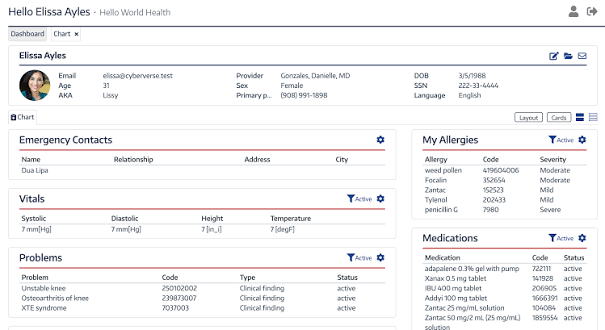
ChartLogic is an EHR and practice management platform designed to support specialty medical practices with clinical documentation, scheduling, billing, and electronic prescribing. Its combination of clinical and administrative capabilities makes it an option for practices researching the best EMR for otolaryngology.
Practices can use Emitrr alongside ChartLogic to streamline appointment reminders, patient follow-ups, referral outreach, and missed-call responses. This can reduce manual communication tasks while allowing staff to keep their primary clinical workflows within the EHR.
5. eClinicalWorks
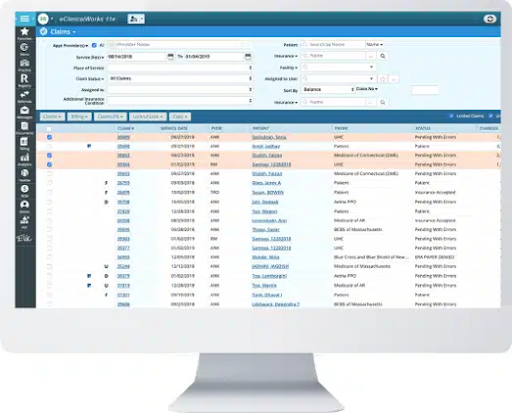
eClinicalWorks is a comprehensive EHR and practice management platform supporting clinical documentation, scheduling, e-prescribing, patient engagement, telehealth, and revenue cycle workflows. Its broad feature set makes it a consideration for ENT practices comparing the best EHR for otolaryngologists across different practice sizes.
Emitrr can complement eClinicalWorks by automating appointment reminders, recalls, referral follow-ups, and two-way patient communication. ENT practices can use these workflows to improve responsiveness while continuing to manage clinical documentation inside their existing ENT EMR.
6. Practice Fusion
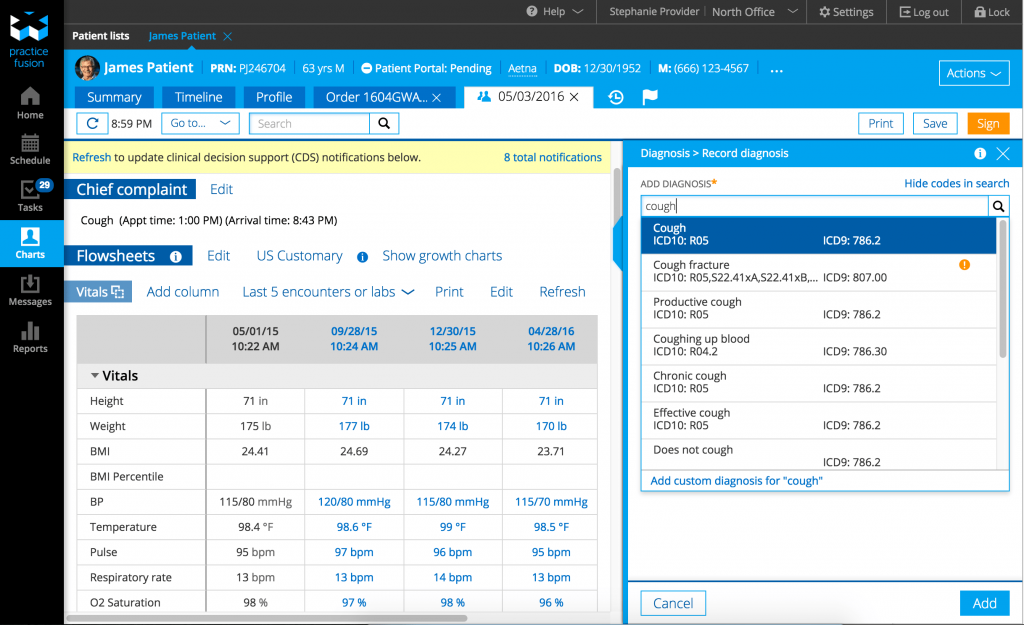
Practice Fusion is a cloud-based EHR designed for ambulatory medical practices, with features for patient records, charting, e-prescribing, scheduling, and clinical workflows. Its cloud-based model can appeal to smaller ENT practices evaluating a cloud-based ENT EMR without wanting an extensive on-premises infrastructure.
Emitrr can work alongside Practice Fusion to handle appointment reminders, follow-ups, patient notifications, and missed-call text-back workflows. This can help an ENT EHR extend its patient communication capabilities without requiring staff to manage every outreach manually.
7. Tebra
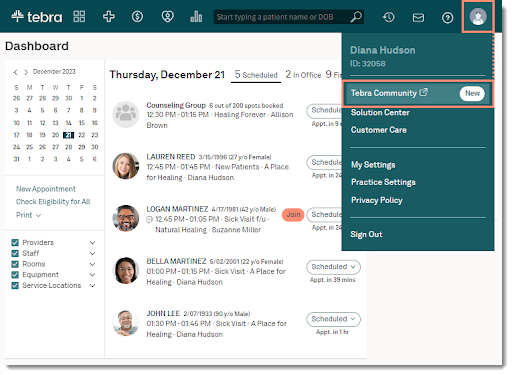
Tebra combines EHR, practice management, billing, scheduling, and patient engagement tools within a platform designed for independent practices. Its focus on combining clinical and business operations makes it an option for ENT practices evaluating a top ENT EHR or best otolaryngology EMR for independent practice settings.
ENT practices using Tebra can use Emitrr for automated reminders, patient recall and reactivation campaigns, referral follow-ups, and two-way texting. This can help reduce repetitive communication work while allowing the practice to continue using Tebra for its core otolaryngology EMR and practice management workflows.
How Emitrr Works Alongside Your ENT EMR
Emitrr is not an EMR and does not replace clinical documentation, audiology testing, or billing within your ENT EHR. It works as a communication and workflow automation layer alongside an EMR for ENT, helping practices manage referrals, appointment openings, patient notifications, and device-related follow-ups.
- Procedure and resource booking: Calendar integrations can trigger reminders and outreach based on specific ENT procedures, providers, or resources.
- Referral and fax handling: eFax and shared inbox tools help route incoming referrals to the right team, while available OCR and fax summarization can reduce manual triage.
- Media and test-result sharing: Secure attachments and portal links allow teams to share audiograms, images, and test-result documents with patients.
- Same-day appointment openings: Bulk texting and missed-call-to-text workflows can quickly notify eligible patients when a procedure or testing slot becomes available.
- Device follow-up: Automated notifications can support hearing aid pickup, fitting follow-ups, CPAP check-ins, and other device-related communication.
- Centralized communication: A shared inbox can bring audiology, procedure, and routine patient conversations into one communication workflow.
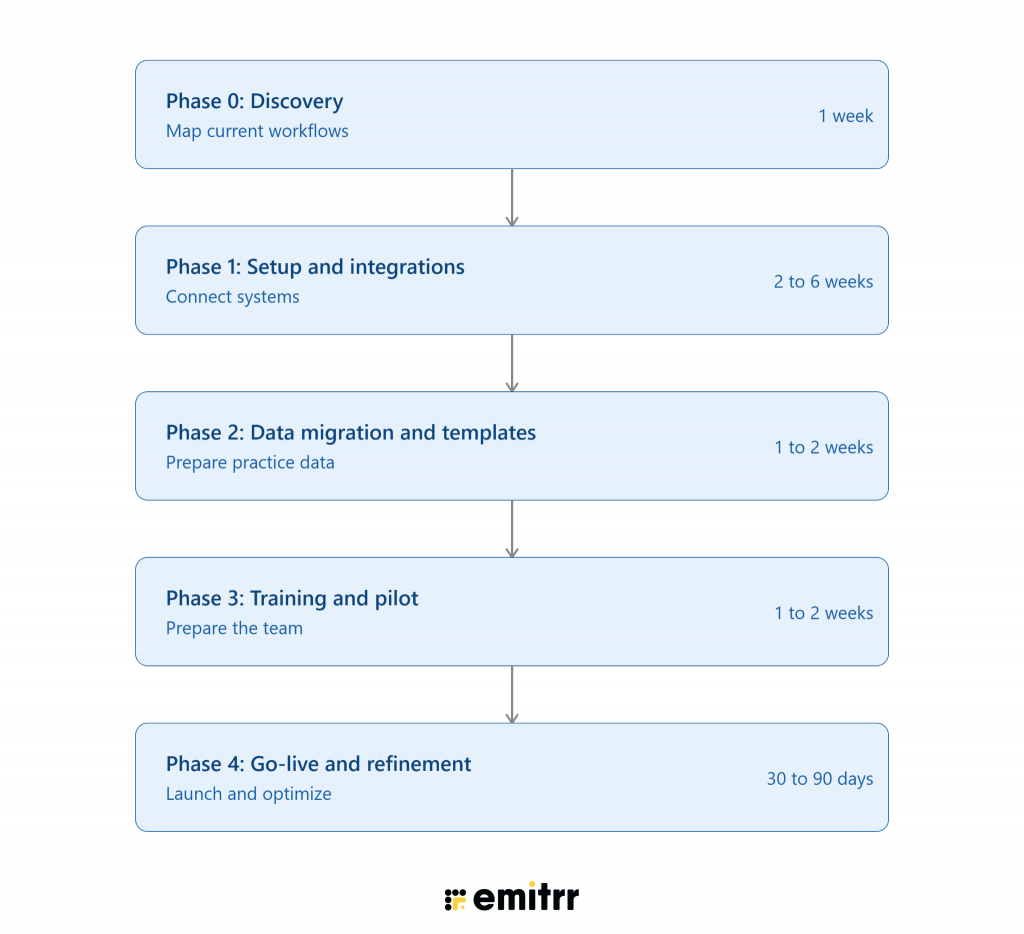
EMR Implementation Roadmap
Key Takeaways
- ENT EMR selection should be judged on how well a system handles a genuinely mixed visit-type roster: audiology testing, procedures, and routine clinic visits, not a single dominant visit type.
- Audiology device integration should be verified device by device, since a general “audiology integration” claim does not guarantee structured data write-back for a practice’s specific testing equipment.
- Fax-heavy referral intake without OCR or structured data extraction is a distinctive administrative burden in ENT that practices should evaluate directly.
- Same-day scheduling volatility makes waitlist and quick-fill tools a meaningful evaluation factor, more so than in specialties with more predictable, appointment-based scheduling.
- Device and dispensing workflow support (hearing aids, CPAP) is a feature category specific to ENT that general ambulatory platforms may not handle with appropriate depth.
FAQs
An ENT EMR is an electronic medical record system designed to support otolaryngology workflows, including clinical documentation, procedures, audiology, scheduling, billing, and patient communication.
Key features include ENT-specific templates, audiology integration, procedure documentation, imaging and media support, scheduling, billing, patient portals, secure messaging, and referral management.
The best EMR for otolaryngology depends on practice size, subspecialty needs, workflow complexity, integrations, and budget. Practices should prioritize ENT-specific documentation and procedure workflows rather than relying only on general EHR functionality.
Some ENT-focused systems can integrate audiology data such as audiograms and tympanometry results into the patient chart. Practices should confirm compatibility with their specific testing equipment before choosing a system.
Many ENT EHR platforms support attaching clinical images, videos, diagnostic reports, and other media to patient records. This is particularly useful for procedures such as endoscopy and for reviewing imaging during ENT visits.
ENT EMR pricing varies based on providers, locations, features, implementation, integrations, and practice management requirements. Practices should compare total cost rather than evaluating subscription fees alone.
A cloud-based ENT EMR can provide easier access across locations and reduce the need for local server infrastructure. However, practices should also evaluate security, uptime, integrations, support, and data access requirements.
Yes. A suitable otolaryngology EMR should connect procedure documentation with coding and billing workflows for services such as endoscopy, laryngoscopy, and other ENT procedures.
Many ENT EHR platforms offer patient portals for appointment requests, prescription refills, secure messaging, forms, and sharing clinical information. These capabilities can reduce administrative calls and improve patient engagement.
Compare ENT-specific templates, audiology and imaging integrations, procedure workflows, scheduling, billing, referral management, patient communication, scalability, and implementation requirements. Most importantly, ask vendors to demonstrate your actual ENT workflows before making a decision.
Conclusion
An EMR for ENT has to manage genuine visit-type variety: audiology testing that depends on device integration, in-office procedures that need resource-aware scheduling, and routine clinic visits, while also handling referral-heavy, fax-dependent intake. The key blockers in otolaryngology EMR selection are often audiology device integration gaps, unstructured fax intake, and scheduling volatility from same-day openings. When evaluating the best EMR for otolaryngology, practices should prioritize audiology device compatibility, mixed-visit scheduling, and fax/referral data extraction capabilities.
Emitrr can complement your ENT EHR as a communication and workflow automation layer for filling same-day openings, managing referrals, and supporting device-related follow-ups. Book a demo with Emitrr to see how it can fit alongside your existing otolaryngology EHR and streamline patient communication.

 4.9 (400+
reviews)
4.9 (400+
reviews)