

Introduction
A family medicine practice can move between very different patient needs in a single day: a child coming in for vaccinations, a teenager needing a sports physical, and an older adult requiring ongoing management for multiple chronic conditions. An EMR for family medicine needs to handle this range without forcing clinicians to switch between disconnected workflows or rely on templates designed for only one patient population.
Family medicine also has a unique household dimension. Parents may manage appointments and communication for children, while adult children may help coordinate care for aging parents, yet each patient still requires an individual medical record with appropriate privacy controls. Alongside this, practices need reliable preventive care tracking, vaccination management, flexible scheduling, and continuity across providers.

These requirements make family medicine different from a standard ambulatory setup. This guide looks at the key challenges, family practice EMR features, leading platforms, and practical criteria practices should consider when choosing a family medicine EMR.
AI Summary
- The defining family medicine EMR requirement is genuine flexibility across the full age spectrum, pediatric, adult, and geriatric, within one system, not a platform optimized for a single life stage with the others bolted on.
- The most significant blocker is caregiver and family-linkage complexity: representing which family member can communicate or make decisions on behalf of another, across multiple linked but distinct patient records, is more nuanced than a single-patient chart model assumes.
- Vaccination and preventive care workflow support is the most operationally important feature category, since it spans the entire age range family medicine serves and carries real compliance and quality-metric weight.
- Integration diligence should focus on whether caregiver communication can be correctly routed and linked across family members without creating privacy or consent confusion.
- Practices should weigh flexibility across patient age groups and family linkage more heavily than deep specialization in any single area, since family medicine’s core value is exactly that breadth.
Which EMR for Family Medicine Is Right for You? TL;DR
| EMR | Best Suited For | Key Strengths | Potential Consideration |
| OmniMD | Small to mid-sized family medicine practices | Broad EHR and practice management functionality | Practices should verify specialty customization and integration depth |
| Practice Fusion | Independent and smaller family practices | Cloud-based workflow with accessible clinical documentation and prescribing | May require additional tools for advanced workflows and automation |
| RXNT | Practices wanting EHR, billing, and practice management in one platform | Integrated clinical and revenue-cycle capabilities | Evaluate whether its workflow depth matches complex family practice needs |
| Athenahealth | Growing practices and larger ambulatory organizations | Strong combination of EHR, practice management, billing, and patient engagement | Broader platform can mean more complexity and implementation considerations |
| Elation Health | Independent primary and family care practices | Primary-care-focused workflows and longitudinal care management | Best fit depends on practice size and required operational integrations |
| OptiMantra | Small to mid-sized family practices | Cloud-based clinical, scheduling, billing, and patient management tools | Practices should assess reporting and integration requirements |
| AdvancedMD | Established practices needing comprehensive operations management | EHR, scheduling, billing, and practice management in one platform | Broader functionality may be more than a smaller practice requires |
What Makes an EMR Right for Family Medicine?
Family medicine’s defining characteristic is breadth: the same practice, sometimes the same physician, manages a newborn’s well-child visits, a working adult’s episodic and preventive care, and an elderly patient’s complex chronic disease management, often within the same family unit. The right EMR treats this breadth as the core requirement, not an edge case to configure around. That means genuinely capable pediatric growth charting and vaccine tracking sitting alongside adult chronic disease templates and geriatric-appropriate documentation, all within the same platform, plus the ability to represent family relationships (a parent linked to a child’s record, an adult child with some visibility into a parent’s care) accurately and with appropriate privacy boundaries. A system that handles one age group well and treats the others as an afterthought is not actually built for family medicine, even if it is marketed that way.
Key Barriers for Family Medicine Practices
Family and caregiver linkage that a single-patient chart model does not represent well
Family medicine practices frequently see multiple members of the same household, and communication or care coordination sometimes needs to reference that relationship, a parent managing a child’s care, an adult child coordinating a parent’s appointments, without collapsing the distinct patients into one blurred record or creating privacy confusion about who is authorized to receive what information. If the EHR only supports a flat, single-patient contact model, staff end up manually tracking these family relationships outside the system. Practices should verify how the EHR represents linked family members and what communication permissions exist per relationship.
Preventive care and vaccination workflows that do not flex across the full age range
Vaccination schedules, growth tracking, and preventive care intervals differ substantially across pediatric, adult, and geriatric populations, and a system built primarily around one life stage often handles the others as a secondary feature. This matters because preventive care compliance carries real quality-metric and revenue weight across the entire panel, not just one age segment. Practices should verify that vaccination and preventive care tools genuinely work well across pediatric, adult, and geriatric templates, not just the age group the vendor markets most heavily.
Multi-provider and multi-location coordination for shared family patients
When different family members see different physicians within the same practice, or when a multi-location group shares staff and scheduling across sites, continuity of care depends on the EHR making relevant family and household context visible across providers. If this information is siloed by individual provider or location, physicians lose useful context (a sibling’s recent illness, a household exposure) that could inform care. Practices should verify how visible family and household relationships are across different providers within the same practice.
Cost versus functionality tradeoffs for practices wanting broad flexibility without enterprise complexity
Platforms built for genuine flexibility across a wide age range sometimes come with enterprise-level cost and implementation complexity, which can be disproportionate for a smaller, independent family medicine practice. Practices should evaluate whether a given platform’s breadth of capability is available at a cost and implementation complexity appropriate to their actual practice size, rather than assuming more features always means more value for a smaller operation.
Must-Have EMR Features for Family Medicine
When evaluating an EMR for family medicine, practices should look beyond basic charting and scheduling. The best family medicine EMR should support patients across age groups while connecting preventive care, chronic disease management, communication, and practice operations.
- Pediatric growth charts and vaccine tracking: Supports well-child visits, growth monitoring, and immunization compliance across the pediatric population.
- Adult preventive care and chronic disease templates: Supports routine screenings and ongoing management of common conditions in adult patients.
- Geriatric-appropriate documentation: Helps document complex conditions, medications, functional needs, and care coordination for older adults.
- Family and caregiver linkage: Connects related family members within the family practice EMR while maintaining appropriate privacy and consent boundaries.
- Flexible scheduling across visit types: Accommodates well-child visits, sports physicals, chronic care, annual exams, and acute appointments in one schedule.
- Vaccination registry reporting: Simplifies immunization reporting and reduces the manual work required to maintain accurate vaccination records.
- Multi-provider continuity tools: Gives providers relevant household and patient history when multiple clinicians care for members of the same family.
- Digital intake and consent capture: Collects patient information and consent efficiently across minors, adults, guardians, and caregivers.
- Patient portal for all age groups: Gives patients and caregivers convenient access to appointments, records, prescription refills, and secure communication.
- Integrated billing and coding: Connects clinical documentation with billing workflows to support accurate claims and reduce administrative work.
- Interoperability with labs and imaging: Makes it easier to exchange test results and clinical information with external healthcare organizations.
- E-prescribing and medication management: Supports electronic prescriptions while helping providers review medication history, allergies, and potential interactions.
- Telehealth integration: Enables virtual visits and follow-ups without requiring a separate platform for routine remote care.
- Clinical decision support: Provides alerts and recommendations for preventive screenings, medication interactions, and other care decisions.
- Multi-location scheduling and reporting: Helps growing family practices coordinate providers, appointments, and performance across multiple locations.
Best EMRs for Family Medicine: Detailed Analysis
- Omni MD
- Practice Fusion
- RXNT
- Athenahealth
- Elation Health
- OptiMantra
- AdvancedMD
| EMR | Clinical Workflow | Practice Operations | Patient Engagement | Integration Focus |
| OmniMD | Supports electronic documentation and prescribing | Combines scheduling and practice management | Patient-facing communication capabilities | Evaluate available third-party integrations |
| Practice Fusion | Streamlines everyday ambulatory documentation | Supports scheduling and administrative workflows | Portal and patient-management capabilities | Cloud architecture supports connected workflows |
| RXNT | Combines EHR and prescribing workflows | Strong focus on billing and revenue-cycle operations | Supports patient-facing administrative interactions | Integrated platform reduces dependence on separate systems |
| Athenahealth | Supports broad ambulatory clinical workflows | Connects EHR, practice management, and revenue-cycle functions | Strong patient engagement and access capabilities | Broad ecosystem and interoperability options |
| Elation Health | Designed around longitudinal primary care | Supports workflows common to independent practices | Supports ongoing patient engagement and care coordination | Assess compatibility with communication and specialty tools |
| OptiMantra | Provides clinical documentation and patient management | Includes scheduling and billing functionality | Supports routine patient-management workflows | Evaluate API and integration capabilities for additional automation |
| AdvancedMD | Combines clinical documentation with practice workflows | Extensive scheduling, billing, and practice management capabilities | Patient engagement tools support routine communication | Broad platform can connect multiple operational functions |
1. OmniMD
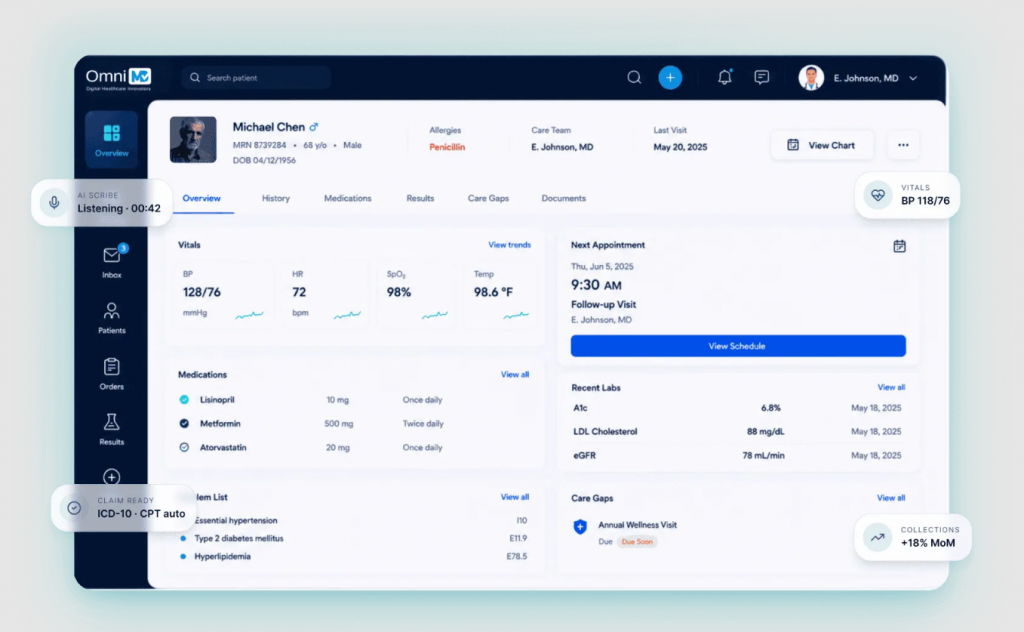
OmniMD is a cloud-based EHR and practice management platform designed to support primary and family medicine workflows, including clinical documentation, scheduling, billing, and patient management. Its broad functionality makes it an option for practices evaluating an EMR for family medicine that need a centralized system for day-to-day operations.
With OmniMD, practices can use Emitrr to support appointment reminders, confirmations, follow-ups, and patient outreach. Automated communication can help family medicine practices reduce manual calls and maintain consistent patient engagement.
2. Practice Fusion
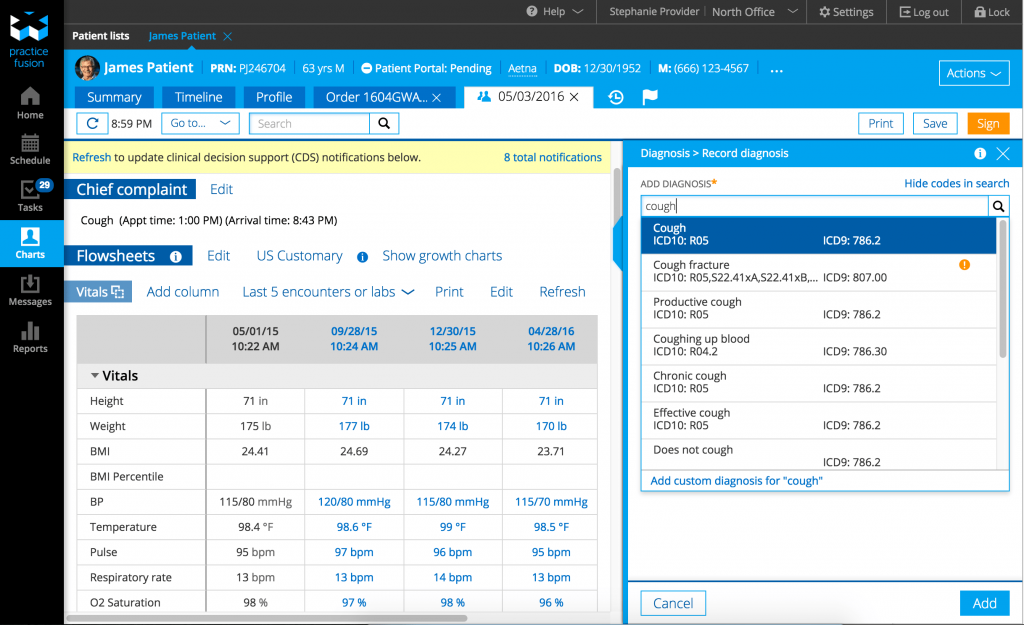
Practice Fusion is a cloud-based EHR platform that provides tools for clinical documentation, e-prescribing, scheduling, and patient management. Its accessible design and broad ambulatory capabilities make it relevant for practices comparing family medicine EMR options.
With Practice Fusion, practices can use Emitrr to automate appointment reminders, recall campaigns, follow-ups, and other patient communication workflows. This can help reduce administrative communication while keeping outreach connected to existing workflows.
3. RXNT
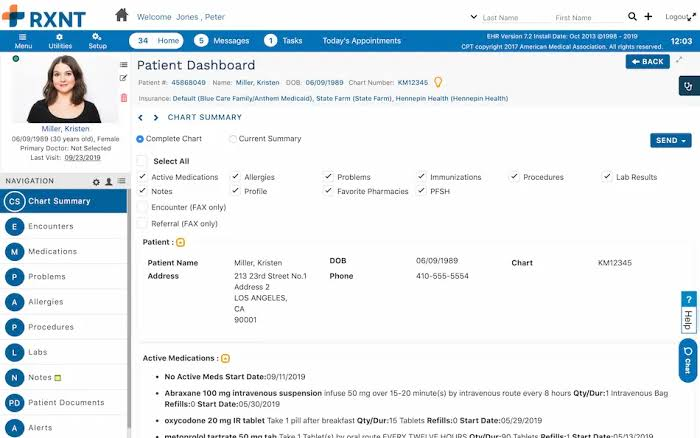
RXNT is a cloud-based healthcare platform that combines EHR, practice management, and medical billing capabilities. Its integrated approach can make it a consideration for practices looking for an EMR for family practice that brings clinical and administrative workflows together.
With RXNT, practices can use Emitrr for appointment confirmations, reminders, reactivation campaigns, and two-way patient communication. This can help family practices manage routine outreach without relying as heavily on manual phone calls.
4. Athenahealth
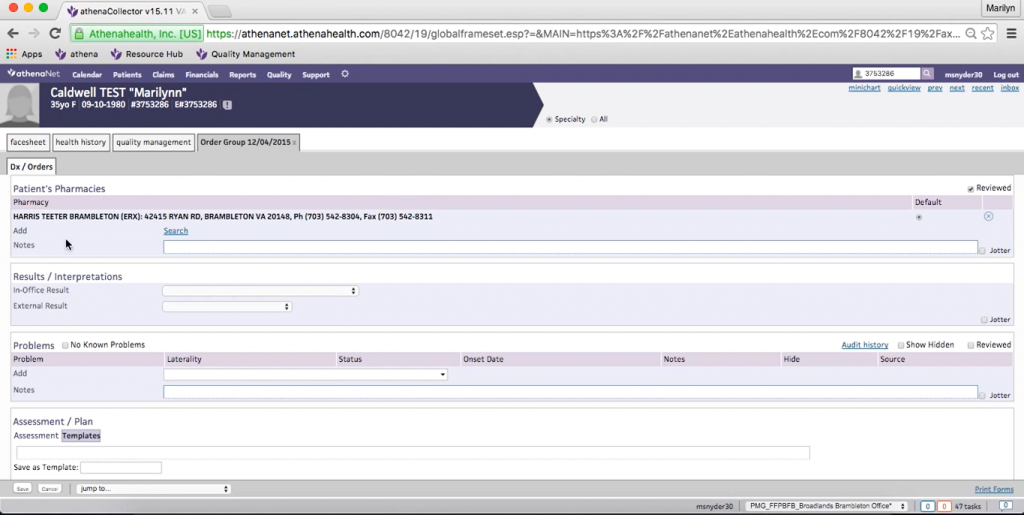
Athenahealth provides cloud-based EHR, practice management, and patient engagement solutions designed for ambulatory healthcare organizations. Its combination of clinical, scheduling, billing, and patient communication capabilities makes it a widely considered option for practices evaluating the best EMR for family medicine.
With Athenahealth, practices can use Emitrr to support appointment reminders, patient recall campaigns, missed-call follow-up, and other communication workflows. This can help family medicine teams extend patient outreach beyond the core EHR workflow.
5. Elation Health
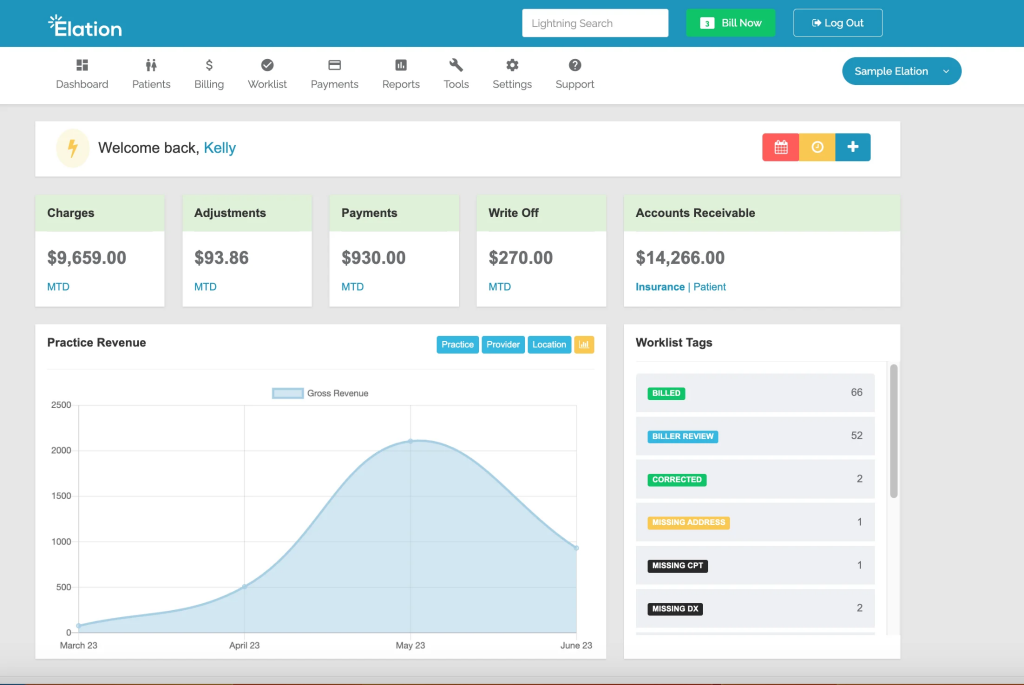
Elation Health is a cloud-based EHR platform built for independent primary care practices, with tools for clinical documentation, care coordination, patient engagement, and practice operations. Its primary-care orientation makes it relevant for practices searching for an EHR for family medicine that supports longitudinal patient relationships.
With Elation Health, practices can use Emitrr to automate appointment reminders, recalls, follow-ups, and two-way patient messaging. This can help family medicine teams maintain consistent communication between visits while reducing repetitive outreach.
6. OptiMantra
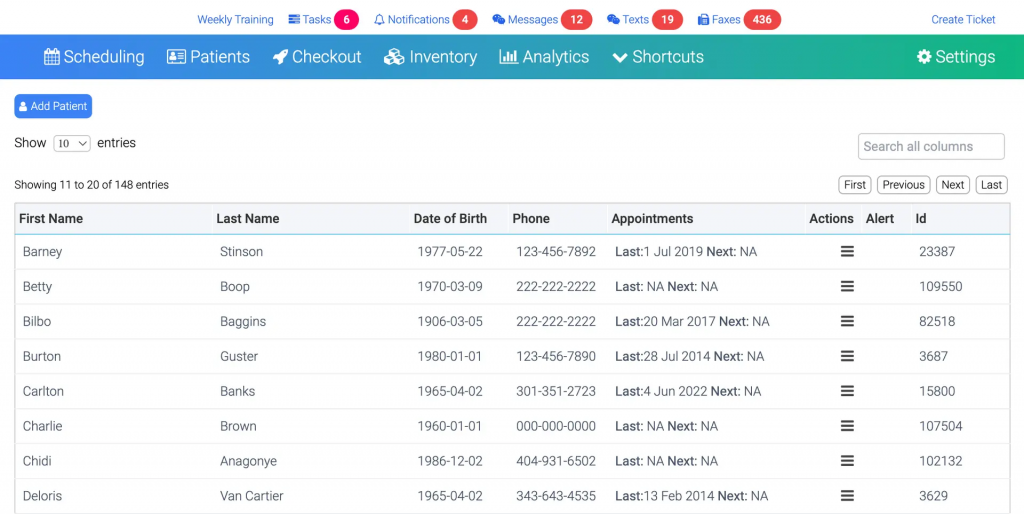
OptiMantra is a cloud-based EHR and practice management software designed to support clinical documentation, scheduling, billing, and patient management. Its combination of clinical and operational tools makes it an option for practices comparing family medicine EHR platforms.
With OptiMantra, practices can use Emitrr to streamline appointment reminders, confirmations, patient follow-ups, and recall communication. Automated workflows can help reduce front-desk workload and improve consistency across routine patient interactions.
7. AdvancedMD
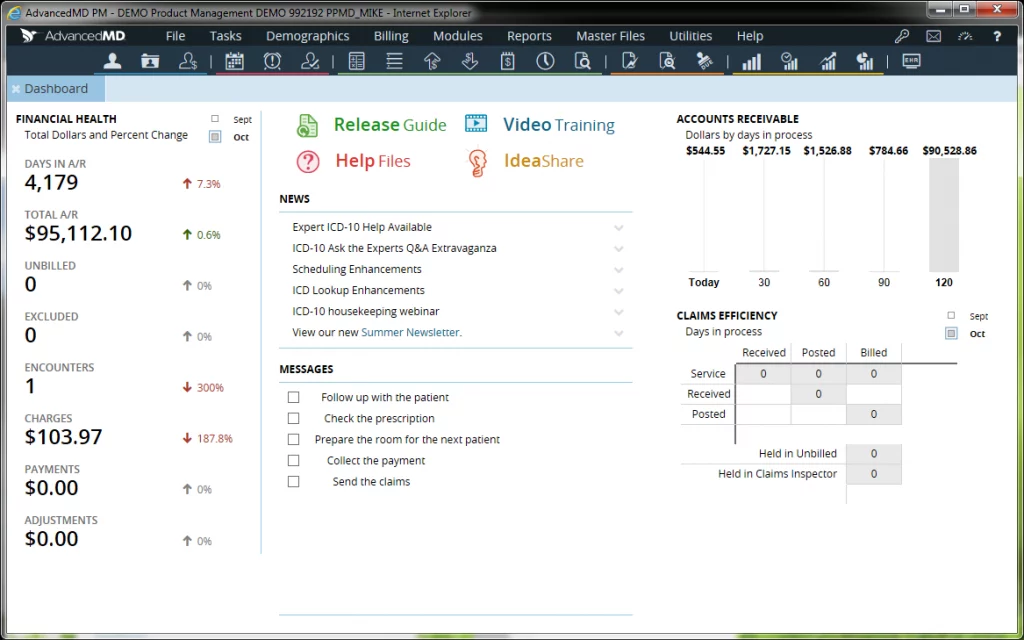
AdvancedMD is a cloud-based healthcare platform that combines EHR, practice management, scheduling, billing, and patient engagement tools. Its broad ambulatory capabilities make it a potential fit for practices evaluating an EMR for family medicine that need both clinical and administrative functionality.
With AdvancedMD, practices can use Emitrr to support appointment reminders, recall and reactivation campaigns, missed-call text-back, and two-way messaging. This can help family medicine practices manage high-volume patient communication while keeping outreach organized around existing workflows.
How Emitrr Works Alongside Your Family Medicine EMR
Emitrr is not an EMR and does not replace clinical documentation, vaccination tracking, or billing inside your family medicine EMR. It works as a communication and workflow automation layer that can support preventive outreach, caregiver communication, and appointment workflows.
- Versatile communication across ages: Flexible forms and templates help an EMR for family medicine support personalized outreach across pediatric, adult, and geriatric patients.
- Preventive care and recall campaigns: EHR-triggered campaigns can automate vaccine, screening, and chronic-care follow-ups, reducing manual recall work for family practice EMR teams.
- Two-way office-number texting: Patients and caregivers can communicate through the practice’s existing number instead of relying on separate EHR messaging channels.
- Caregiver-focused workflows: Family and caregiver communication can help practices route messages to the appropriate parent or caregiver when supported by available patient relationship data.
- Shared staff coordination: Shared inboxes and assignments give family medicine EHR teams visibility into patient and household conversations across providers and front-desk staff.
- Flexible deployment and cost control: Practices can start with texting or combine SMS with existing phone systems, making the setup practical for smaller EMRs in family practice environments.
- Team communication: Unlimited internal team chat and message assignment can help staff coordinate patient outreach without adding internal messaging costs.
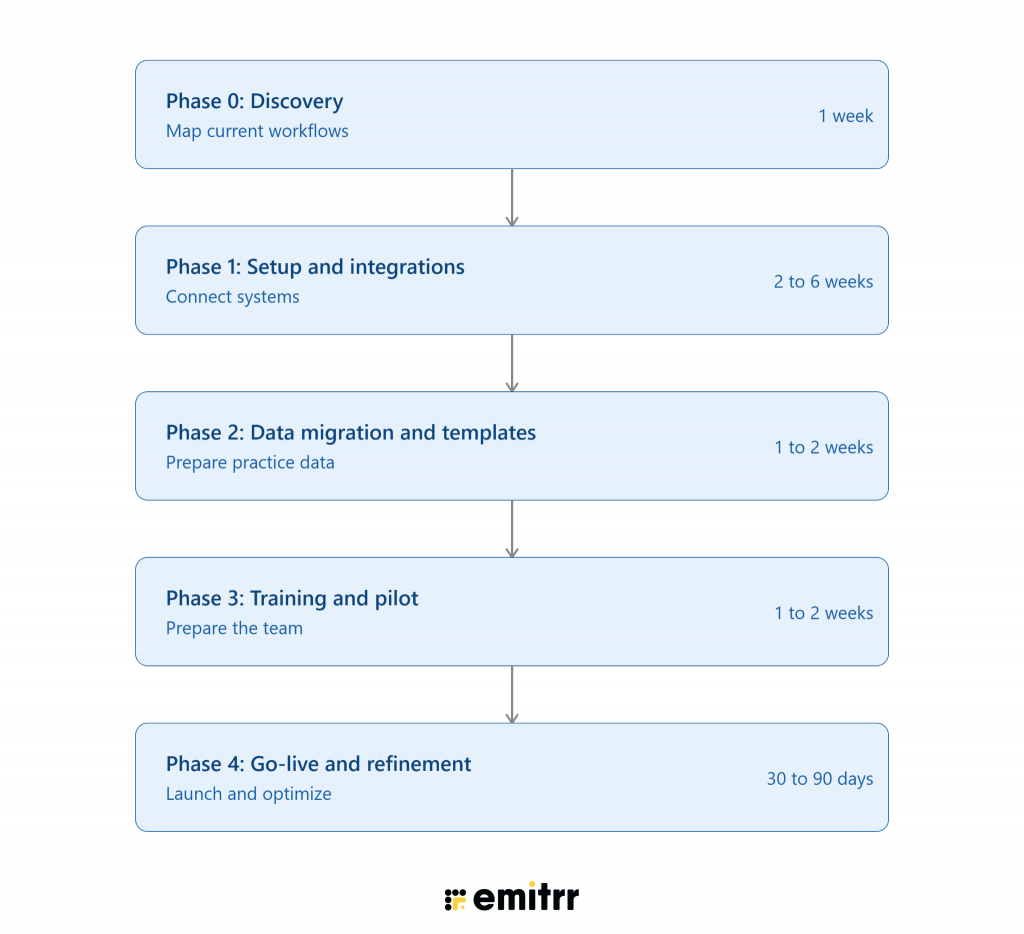
EMR Implementation Roadmap
Key Takeaways
- Family medicine EMR selection should be judged on genuine flexibility across the full pediatric-to-geriatric age range, not strength in just one segment.
- Family and caregiver linkage, representing household relationships accurately with appropriate privacy boundaries, is a distinctive need in this specialty compared to single-age-focus practices.
- Vaccination and preventive care workflows need to work well across the entire age spectrum, since this carries real quality-metric and compliance weight for the whole panel.
- Multi-provider continuity matters specifically when different family members see different physicians within the same practice.
- Smaller, independent family medicine practices should weigh platform breadth against cost and implementation complexity appropriate to their actual size, since enterprise-grade flexibility sometimes comes with enterprise-grade overhead.
Frequently Asked Questions
The best EMR for family medicine depends on practice size, patient population, workflows, and budget. Look for strong all-age documentation, preventive care tracking, scheduling, e-prescribing, billing, and interoperability.
A family medicine EMR should support pediatric and geriatric care, customizable templates, vaccination tracking, preventive care reminders, chronic disease management, e-prescribing, patient portals, lab integration, and billing.
Family medicine EHR pricing varies based on the number of providers, features, implementation requirements, billing services, and integrations. Some vendors charge per provider, while others use different pricing models.
Yes. A well-designed EHR for family medicine should support patients across different age groups, including pediatric, adolescent, adult, and geriatric care. Pediatric growth charts, immunization tracking, and age-specific templates are particularly important.
The terms are often used interchangeably. Both generally refer to an electronic medical record system designed to support the broad clinical and administrative workflows of a family medicine or family practice.
Yes. Many EMR for family practice platforms include preventive care and health-maintenance features for tracking vaccinations, screenings, wellness visits, and other care gaps.
Yes. Patient portals can allow patients to schedule appointments, access health information, request refills, and communicate securely with their care team.
Small practices should prioritize ease of use, fast charting, flexible scheduling, e-prescribing, billing, patient communication, transparent pricing, and simple implementation. The best EMR for family practice should provide the necessary functionality without unnecessary complexity.
Many modern family medicine EHR platforms offer integrated or connected telehealth capabilities. This can make virtual follow-ups and routine consultations easier to manage alongside in-person appointments.
Conclusion
An EMR for family medicine has to flex across the full range of life stages within one system, from pediatric growth and vaccination tracking to adult preventive care and geriatric chronic disease management, often within the same household. The key challenges in family practice EMR selection include family and caregiver linkage, age-specific preventive care workflows, and the ability to support diverse patient needs without adding unnecessary complexity. Evaluate vendors on cross-age flexibility, family-linkage capabilities, preventive care tools, and pricing that fits your practice size.
Emitrr can complement your family medicine EMR as a communication and automation layer for caregiver messaging, appointment reminders, recalls, and preventive care outreach. Book a demo with Emitrr to see how it can work alongside your existing EHR for family practice and simplify patient communication.

 4.9 (400+
reviews)
4.9 (400+
reviews)