
Introduction
A pediatric chart is never just about one person. It has to represent the patient, but nearly every communication, consent, and scheduling decision runs through a parent or guardian, sometimes more than one, sometimes across two households. An EMR for pediatricians has to track growth against age-specific curves, manage a vaccine schedule that shifts by visit and by state registry requirements, and route communication to the right caregiver without confusing who is authorized to receive what information. A general ambulatory EHR configured for pediatrics can technically hold this data, but it rarely handles the caregiver relationship or the immunization workflow with the depth a pediatric practice actually needs. This is true whether a practice is comparing pediatric EMR systems from independent vendors or evaluating pediatric EHR software bundled inside a larger multi-specialty platform.
Research from the American Academy of Pediatrics has noted that only a minority of pediatric offices using EHRs report having full pediatric-specific functionality, which means many practices are working around gaps in growth charting, immunization registry reporting, and caregiver-linked communication even after adopting an EHR. This guide covers the blockers specific to pediatric practices, the features that actually matter, how leading pediatrics EMR software and general systems compare, and how to plan a selection and implementation process that respects the caregiver relationship at the center of pediatric care.

AI Summary
- The defining pediatric EMR requirement is accurately representing the caregiver-to-patient relationship (who can receive what communication and give what consent), not just storing a child’s medical record.
- The most significant blocker is treating the child and caregiver as interchangeable in scheduling and communication, which creates real consent and privacy risk when multiple caregivers or households are involved.
- Immunization management (VFC inventory, state registry reporting, vaccine schedule tracking) is the most operationally important feature category, given how central vaccination is to pediatric visit volume.
- Multi-language caregiver communication is a meaningful integration consideration in many pediatric practices, and accuracy limitations should be understood rather than assumed to be solved by any single tool.
- Practices should prioritize systems with strong pediatric-specific growth charting and immunization workflows over general ambulatory platforms unless they are part of a larger multi-specialty group that requires broader interoperability.
Which EMR for Pediatricians Is Right for You? TL;DR
| EMR | Best suited for | Key strengths | Potential consideration |
| PCC | Pediatric practices looking for a dedicated EMR for pediatricians | Pediatric-specific documentation, growth charts, immunization tracking, lab results, and child-focused workflows | Primarily designed around pediatric practices, so practices wanting a broader multi-specialty platform may prefer a more general EMR |
| eClinicalWorks | Practices looking for versatile pediatric EHR software with broad clinical and administrative capabilities | Clinical documentation, practice management, billing, telehealth, patient communication, and digital workflows | Its broad feature set can require more configuration and training compared with pediatric-focused platforms |
| PrognoCIS | Small practices seeking flexible pediatrics EMR software | Customizable templates, e-prescribing, billing, telemedicine, and adaptable workflows | Pediatric-specific functionality may require more customization than a dedicated pediatric EMR |
| athenahealth | Practices seeking a comprehensive best EHR for pediatrics with connected clinical and administrative workflows | EMR, revenue cycle management, care coordination, analytics, patient engagement, and cloud-based workflows | Its broad platform can be more than smaller pediatric practices need |
| CharmHealth | Independent and small practices looking for user-friendly pediatric EMR systems | Telehealth, billing, patient portal, e-prescribing, inventory management, and streamlined workflows | May be better suited to practices prioritizing simplicity and affordability over highly specialized pediatric functionality |
| Praxis EMR | Pediatricians seeking a customizable best pediatric EMR software | Template-free documentation, e-prescribing, immunization and allergy tracking, lab integration, clinical decision support, and pediatric workflows | Its flexible approach may require more initial customization to match specific practice workflows |
| OmniMD | Pediatric practices looking for a specialized best pediatric EMR | Pediatric templates, growth charts, immunization management, developmental screenings, pediatric dosing, labs, referrals, scheduling, and family portal | Practices should evaluate whether its pediatric-specific capabilities align with their existing systems and workflow requirements |
Key Challenges for Pediatricians
Caregiver and household complexity that a single generic contact field cannot represent
Pediatric patients frequently have more than one caregiver, sometimes across separated households, foster or guardian arrangements, or extended family involved in care. The EMR needs to represent these relationships accurately, including which caregiver is authorized to receive medical information, schedule appointments, or consent to treatment. Treating the child and a single default caregiver as interchangeable creates real risk: a message or form intended for one parent should not automatically go to another if custody or authorization does not allow it.
Multi-language and, where relevant, right-to-left caregiver communication with unverified translation accuracy
Many pediatric practices serve caregivers who are more comfortable communicating in a language other than English, and some serve populations where right-to-left (RTL) languages are relevant. Translation tools, whether native to the EHR or provided through a connected communication platform, should be evaluated for accuracy limitations rather than assumed to produce clinically precise translations, particularly for anything related to medication instructions or informed consent. Practices should ask how translated communication is reviewed or verified, not just whether translation exists.
Age-based scheduling rules and school or after-hours demand clustering
Pediatric scheduling has to account for age-based visit rules (well-child visit intervals differ significantly across infancy, toddler years, and adolescence), multiple providers with different sub-specialties or age focuses, and multiple locations for growing groups. School and after-hours appointment demand also tends to cluster around specific times of day and school breaks, which some scheduling systems handle poorly without pediatric-specific logic.
Consent capture for minors that varies by guardian and by state requirements
Consent workflows in pediatrics are more layered than in adult-only practices: a guardian typically consents on behalf of a minor, but the specific authorized guardian can change, and certain adolescent care areas may involve separate consent or confidentiality considerations depending on state law and practice policy. The EMR should support capturing and tracking guardian authorization clearly, and practices should verify this against their own state’s requirements rather than assuming the EMR’s default consent workflow covers every scenario.
Immunization, school-form, and screening data that does not map into structured chart fields
As with other specialties, many pediatric intake and screening forms (developmental screenings, Bright Futures questionnaires, symptom checklists) are digitized but do not always write into structured chart fields. Vaccine administration also needs to track lot numbers, VFC eligibility separately from privately insured administration fees, and reporting to the relevant state immunization registry, and school forms (physicals, immunization records for enrollment) are a recurring administrative burden if the EMR cannot generate them directly from the chart. Practices should verify current state registry reporting capability and structured form mapping directly, since this varies by vendor and by state.
Must-have EMR Features for Pediatricians
- Pediatric-Specific Documentation Templates: Speeds well-child and sick-visit documentation and supports age-appropriate clinical workflows rather than adapting an adult ambulatory note.
- Growth Charts: Tracks age- and condition-specific growth patterns, including specialized charts where needed, making it easier to monitor development during routine pediatric visits.
- Immunization Management and VFC Inventory Tracking: Helps practices manage vaccination schedules, immunization records, and vaccine inventory while separating VFC-eligible and privately purchased vaccines.
- State Immunization Registry Reporting: Simplifies immunization reporting to state registries and reduces the manual work required to maintain accurate vaccination records.
- Caregiver Workflow and Multi-Caregiver Linkage: Connects multiple parents or caregivers to a child’s record while supporting consent, communication preferences, and privacy requirements.
- Digital Forms with Structured Field Mapping: Supports developmental screenings, Bright Futures questionnaires, school forms, and other pediatric forms while transferring information into structured chart fields.
- Secure Messaging for Caregivers: Enables practices to communicate securely with parents and guardians about appointments, forms, follow-ups, care instructions, and other patient needs.
- Pediatric-Specific Scheduling: Supports age-based visit intervals and sick-versus-well appointment workflows that reflect common pediatric scheduling patterns.
- ePrescribing with Pediatric Dosing Support: Supports weight-based and age-appropriate medication dosing to help pediatricians prescribe safely and efficiently.
- Lab Integration: Connects laboratory workflows with patient records to simplify pediatric testing, result management, and follow-up for screenings such as lead and newborn testing.
- Patient and Family Portal: Gives parents and caregivers convenient access to health records, immunization histories, forms, appointments, and practice communication.
- Immunization and Well-Visit Reporting: Helps practices identify children who are overdue for vaccinations, preventive visits, screenings, or other recommended care.
- Automated Appointment Reminders: Sends timely appointment reminders and confirmations to parents and caregivers, helping pediatric practices reduce missed appointments and improve attendance.
- Pediatric Recall and Follow-Up: Helps practices identify patients due for vaccinations, well-child visits, screenings, or follow-up care and supports proactive outreach.
- Pediatric Billing and Claims Management: Supports billing workflows for preventive visits, immunizations, screenings, vaccine administration, and other services commonly provided by pediatric practices.
Best EMRs for Pediatricians – A Detailed Analysis
- PCC (Physician’s Computer Company)
- eClinicalWorks
- PrognoCIS
- Athena Health
- CharmHealth
- Praxis EMR
- OmniMD
| EMR | Pediatric focus | Key features | Documentation & clinical workflows | Patient & caregiver engagement |
| PCC | Built specifically for pediatric practices | Growth charts, immunization management, lab results, visit documentation, pediatric reporting, and practice management | Supports well-child visits, sick visits, growth tracking, immunization documentation, and other pediatric workflows | Supports communication and follow-up workflows for pediatric patients and caregivers and can be extended through messaging integrations |
| eClinicalWorks | Supports pediatric practices alongside multiple specialties | Clinical documentation, scheduling, billing, telehealth, patient portal, e-prescribing, and practice management | Provides broad ambulatory workflows that can be configured for pediatric documentation and practice needs | Patient portal, digital communication, reminders, and online engagement tools support communication with caregivers |
| PrognoCIS | Adaptable to pediatric practice workflows | Customizable templates, e-prescribing, billing, telemedicine, scheduling, and clinical documentation | Customizable workflows allow practices to adapt documentation and processes to pediatric care | Telemedicine, patient portal capabilities, reminders, and digital communication support patient engagement |
| athenahealth | Supports pediatric practices within a broader ambulatory platform | Clinical documentation, revenue cycle management, care coordination, analytics, scheduling, and patient engagement | Connects clinical, administrative, and financial workflows to support day-to-day pediatric practice operations | Patient engagement tools, communication workflows, scheduling, and automated outreach support caregiver interactions |
| CharmHealth | Suitable for independent pediatric practices | EHR, telehealth, billing, e-prescribing, patient portal, scheduling, digital forms, and inventory management | Flexible workflows and customizable documentation can be adapted to pediatric care | Patient portal, secure messaging, digital forms, telehealth, and appointment communication support caregiver engagement |
| Praxis EMR | Supports pediatric workflows through a highly flexible approach | Template-free documentation, e-prescribing, immunization and allergy tracking, lab integration, clinical decision support, customizable forms, and practice advisories | Its adaptable documentation model allows pediatricians to build workflows around specific clinical requirements | Patient communication can be supported through integrations and automated messaging workflows |
| OmniMD | Designed with dedicated pediatric workflows | Pediatric templates, growth charts, immunization tracking, developmental and behavioral screenings, pediatric dosing, lab and imaging orders, referrals, scheduling, billing, telehealth, and family portal | Supports newborn, well-child, and adolescent care with pediatric-specific documentation and age-based workflows | Patient and family portal, appointment communication, follow-ups, and digital engagement capabilities support caregiver interactions |
1. PCC (Physician’s Computer Company)
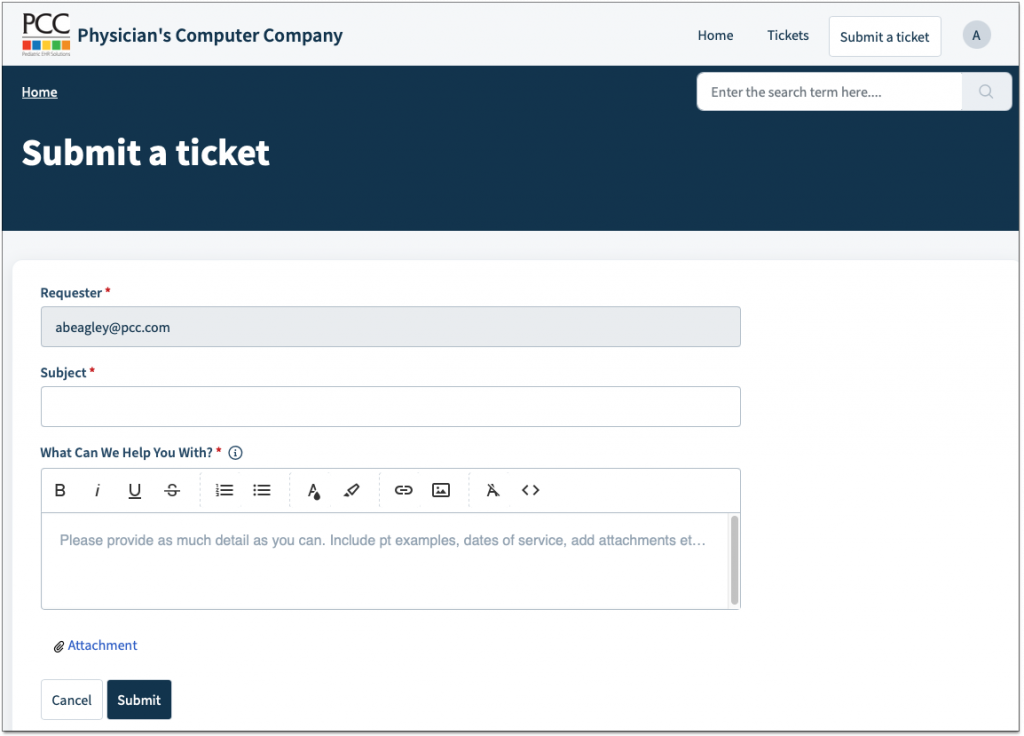
PCC is one of the best pediatric EHRs created specifically for pediatric practices. It supports everything from growth chart tracking and immunization records to lab results and visit notes. Its capabilities are designed with pediatricians’ needs in mind, making it easier to document care, manage follow-ups, and streamline administrative work within child-focused workflows.
Emitrr integrates with PCC by syncing patient and appointment data to enable timely messaging, including appointment reminders, follow-ups, and no-show texts. This enhances the way practices maintain relationships with families and streamlines daily tasks, lowering the need for extra manual labor from the front desk staff.
2. eClinicalWorks
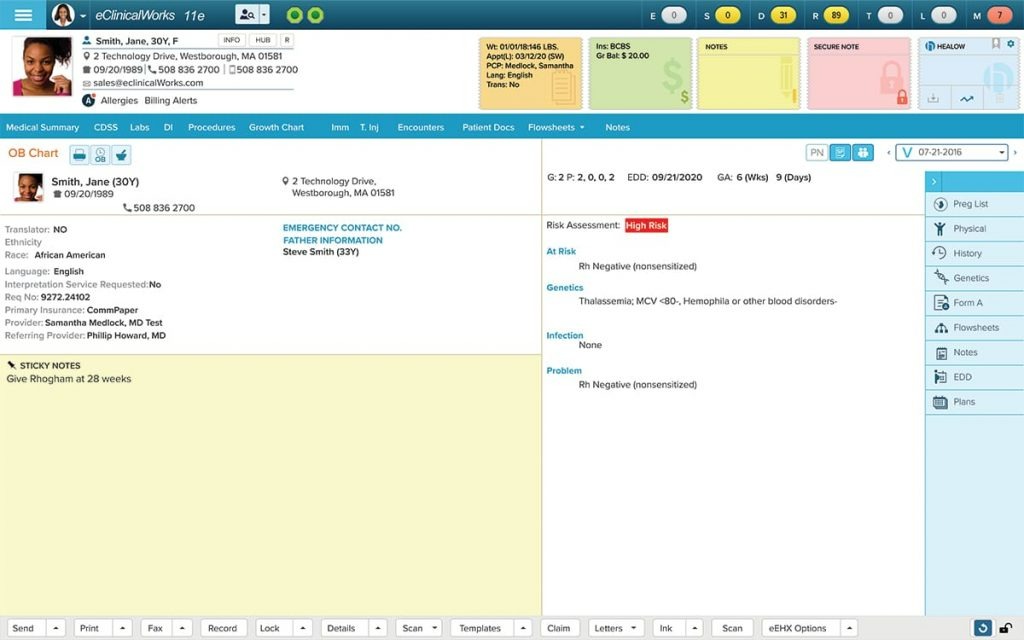
eClinicalWorks is a comprehensive cloud-based EMR platform used by a wide range of practices across the country. It offers powerful tools for documentation, practice management, billing, telehealth, and patient communication. Its versatility makes it a preferred choice for both primary care and specialty practices.
Emitrr connects with eClinicalWorks to allow practices to send automated text messages, collect digital forms, and manage real-time conversations with patients. Data flows between systems, so staff can access communication history easily by switching fewer screens. This keeps workflows smooth for both clinical and admin teams.
3. PrognoCIS
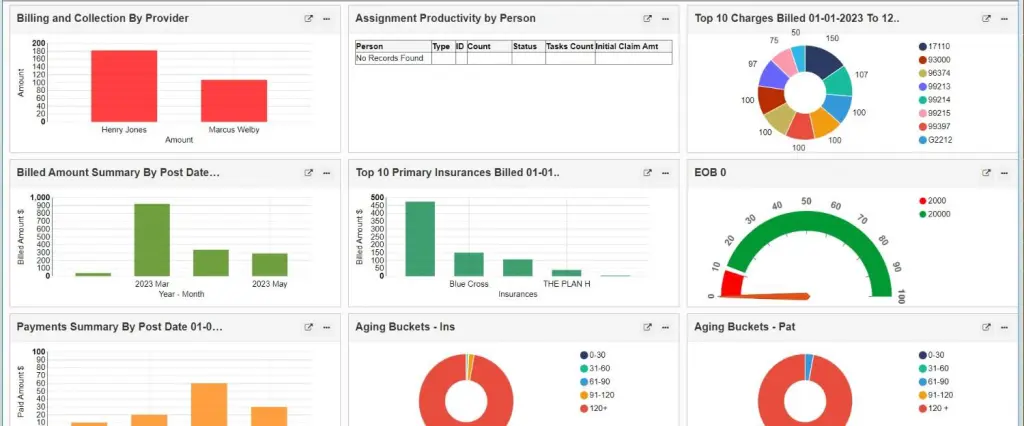
PrognoCIS is a flexible EMR solution that is best for small pediatric practices with tools like customizable templates, e-prescriptions, billing, and telemedicine. Its strength lies in its adaptability and clean interface that reduces the learning curve for staff.
Emitrr complements PrognoCIS by helping practices automate patient outreach through reminders, secure two-way texting, and digital surveys. These features align with appointment data in the system, which allows practices to stay organized and responsive. Staff can communicate with patients, confirm visits, and send post-care instructions without relying on calls or paperwork.
4. Athena Health
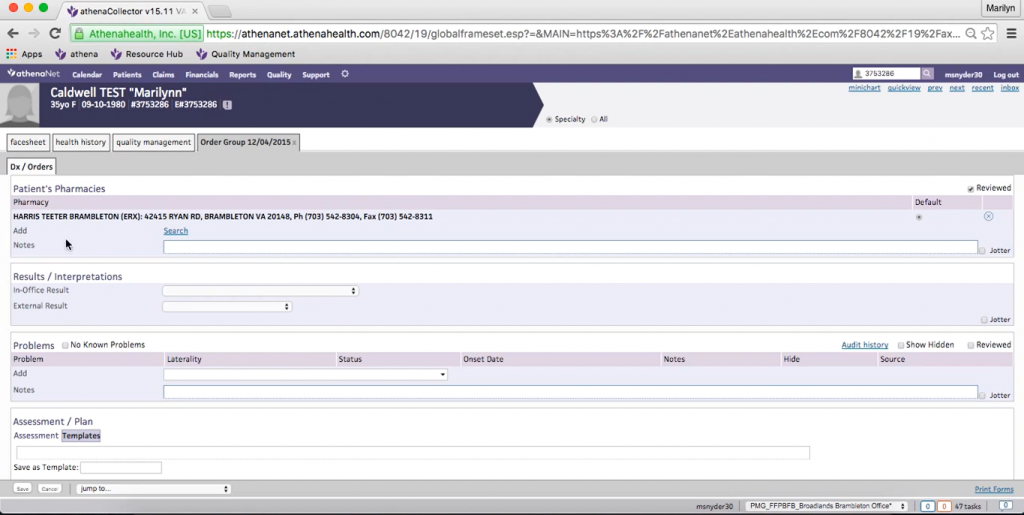
Athenahealth is a well-established cloud-based EMR that offers integrated services such as revenue cycle management, care coordination, analytics, and patient engagement. It serves practices of all sizes and is particularly known for its large network and real-time data sharing capabilities.
Emitrr supports Athena Health users by streamlining communication with patients through HIPAA-compliant messaging, appointment scheduling links, and automated follow-ups. Practices can trigger messages based on appointment activity or custom workflows, as this helps teams reduce no-shows, boost engagement, and save time on repetitive tasks.
5. CharmHealth
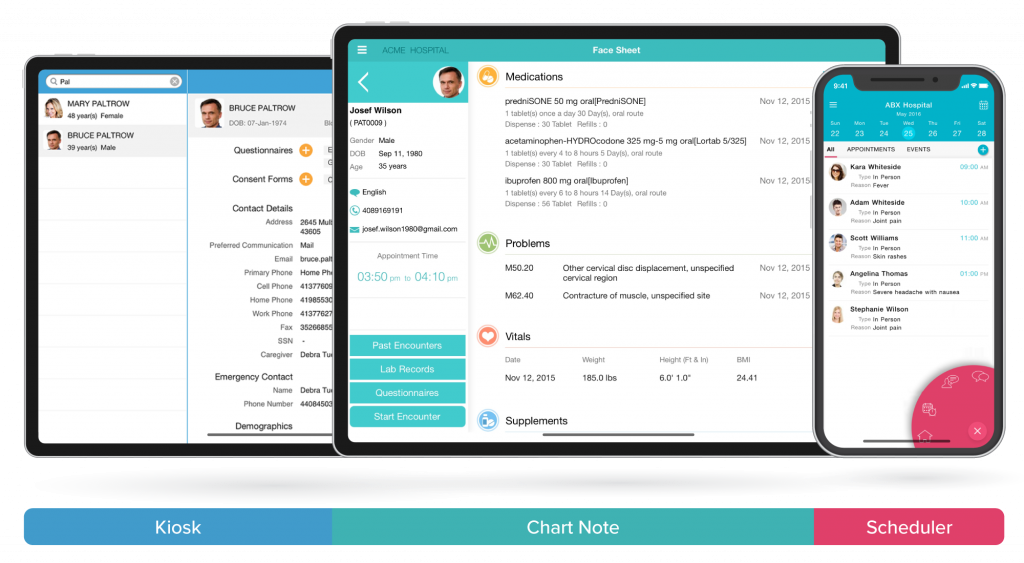
CharmHealth is a modern and intuitive EMR that is widely adopted by independent practices, integrative health providers, and small clinics. It offers a clean interface along with features like telehealth, billing, patient portals, e-prescribing, and inventory tracking. Its affordability and user-friendliness make it ideal for practices looking for simplicity without compromising on functionality.
Emitrr integrates smoothly with CharmHealth by enabling secure patient texting, digital patient intake forms, and appointment reminders directly tied to the practice’s schedule. This makes it easier for patients to stay updated and for your team to work efficiently.
6. Praxis EMR
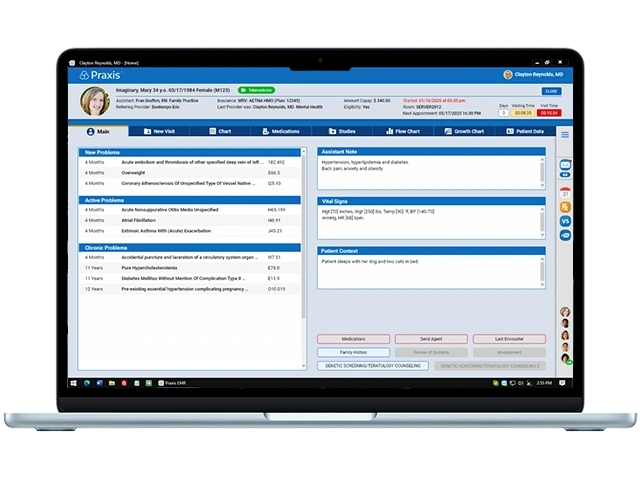
Praxis EMR is a flexible, template-free EMR designed to adapt to different physician workflows, including pediatrics. It supports clinical documentation, e-prescribing, immunization and allergy tracking, lab integration, clinical decision support, customizable forms, and practice advisories that can be triggered by patient age, diagnoses, medications, lab results, and other clinical factors. Praxis also supports pediatric workflows such as immunization registry transmission and weight- and height-related information required for pediatric prescriptions, helping pediatricians manage documentation and care more efficiently.
Emitrr can complement Praxis EMR by enabling automated patient communication around appointments and follow-ups. Practices can use Emitrr to send appointment reminders, confirmations, no-show messages, recall texts, and other timely notifications, helping pediatric offices stay connected with parents and reduce repetitive communication work for front-desk teams.
7. OmniMD
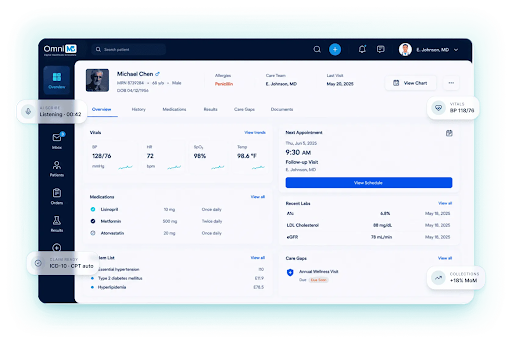
OmniMD is a comprehensive pediatric EMR designed specifically around pediatric workflows, from newborn and well-child visits to adolescent care. It offers pediatric-specific charting templates, growth charts, immunization tracking, developmental and behavioral screening tools, e-prescribing with pediatric dosing, lab and imaging orders, referral management, scheduling, billing, telehealth, and a patient and family portal.
Emitrr integrates with OmniMD by using patient and appointment data to support timely communication, including appointment reminders, follow-ups, patient recall messages, and no-show texts. This helps pediatric practices keep parents informed between visits while reducing the amount of manual outreach required from front-desk staff.
How Emitrr Works Alongside Your Pediatric EMR
Emitrr works alongside your pediatric EMR to extend its patient communication capabilities without replacing the clinical record system. It helps pediatric practices manage caregiver outreach across appointments, follow-ups, forms, and ongoing care while keeping communication workflows organized.
- Two-Way Texting: Enables staff to send and receive messages with parents and caregivers for appointment questions, confirmations, follow-ups, and routine practice communication.
- Multilingual Communication: Helps pediatric practices communicate with families in their preferred language, making appointment and care-related outreach more accessible.
- Secure Messaging: Supports secure communication for sensitive patient and caregiver interactions, helping practices avoid relying on informal messaging channels.
- Digital Forms: Allows practices to send digital intake forms, questionnaires, and other paperwork to caregivers before or after appointments, reducing manual paperwork and front-desk workload.
- Consent Capture: Helps practices collect and manage caregiver consent through digital workflows where supported, making it easier to complete required forms before care.
- Appointment Reminders: Automates appointment reminders and confirmations based on scheduling information, helping families stay informed and reducing avoidable no-shows.
- Follow-Up Workflows: Supports automated follow-ups after visits, procedures, referrals, or other pediatric care activities, helping practices maintain communication beyond the appointment.
- Shared Inbox: Gives staff a centralized place to manage incoming and outgoing caregiver conversations instead of relying on individual phones or disconnected communication channels.
- Multi-Location Communication: Helps pediatric groups with multiple locations manage caregiver communication across different offices while maintaining organized workflows for each practice location.
- AI Voice Where Appropriate: Can support voice-based communication workflows for appropriate use cases, such as appointment-related outreach, helping practices handle routine calls without adding more work for front-desk staff.
- Caregiver-linked contact organization: Caregiver contact information can be organized within Emitrr and associated with the correct patient workflow where the underlying EHR integration supports it, which can help reduce the risk of a message intended for one caregiver reaching the wrong household.
- Well-visit and immunization follow-up: Follow-up workflows can help flag caregivers who need to be reminded about an overdue well-child visit or immunization, depending on what visit and immunization-due data the EHR exposes to trigger the reminder.
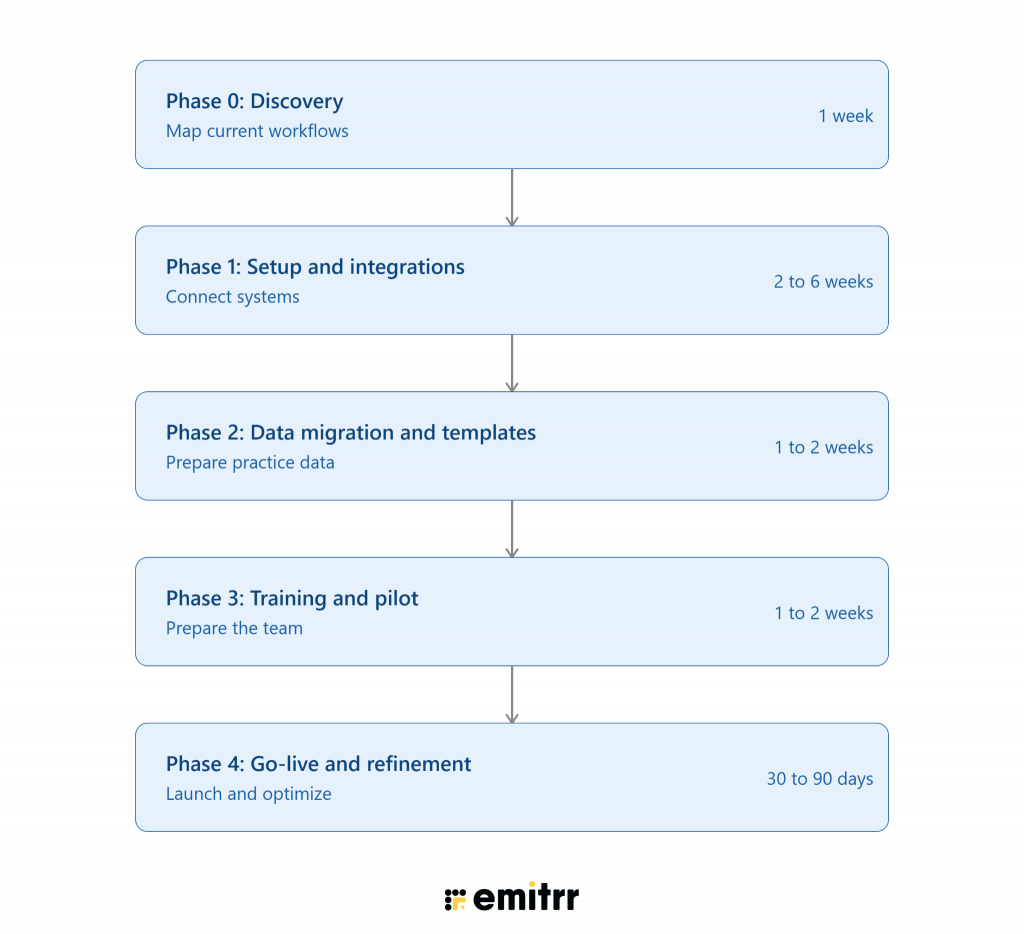
Implementation Roadmap
Key Takeaways
- Pediatric EMR selection should be judged on how accurately and safely the system represents the caregiver-to-patient relationship, not just on general documentation quality, and this is the standard to apply when comparing pediatric EMR systems against each other.
- Immunization management, including VFC inventory tracking and state registry reporting, is one of the most operationally important feature categories in pediatrics.
- Pediatric-exclusive systems like PCC, Office Practicum, and Develo generally offer deeper pediatric-specific workflows than general ambulatory platforms configured for pediatrics, though multi-specialty groups may still prioritize broader interoperability.
- Multi-language caregiver communication is valuable but should be evaluated with realistic expectations about translation accuracy, especially for clinical instructions.
- Caregiver communication should never be assumed to automatically become part of the clinical chart unless the specific EHR integration is confirmed to support that behavior.
FAQs
An EMR for pediatricians is an electronic medical record system designed to support the clinical and administrative needs of pediatric practices. It typically includes pediatric documentation templates, growth charts, immunization management, developmental screenings, e-prescribing, and caregiver communication tools.
The best pediatric EMR systems should support pediatric-specific documentation, growth charts, immunization tracking, state registry reporting, caregiver management, digital forms, pediatric scheduling, e-prescribing with dosing support, lab integration, and family portals.
The best pediatric EMR software depends on the practice's size, workflows, budget, and pediatric-specific requirements. Platforms such as PCC, OmniMD, eClinicalWorks, athenahealth, PrognoCIS, CharmHealth, and Praxis EMR offer different combinations of pediatric and general practice capabilities.
The best EHR for pediatrics should make it easy to manage well-child visits, immunizations, growth tracking, developmental screenings, clinical documentation, and caregiver communication. Practices should compare pediatric functionality, customization, integrations, usability, and pricing before choosing a platform.
The cost of pediatric EHR software varies by vendor, practice size, number of providers, features, implementation requirements, and integrations. Some vendors charge per provider per month, while others use customized pricing based on practice requirements.
Pediatric EMR software primarily manages a patient's digital medical records within a practice, while EHR systems are generally designed to support broader information sharing and coordination across healthcare providers and organizations. In practice, the terms are often used interchangeably.
Pediatric EMR software can automate or simplify documentation, scheduling, billing, immunization tracking, prescription management, digital forms, reporting, and patient communication. Integrating communication tools can further reduce manual calls and follow-up work for front-desk teams.
The best EMR pediatrics platforms are designed around child-specific workflows such as growth tracking, immunization management, developmental screenings, age-based scheduling, pediatric dosing, and caregiver linkage. These features reduce the need to adapt adult-focused workflows for pediatric care.
Conclusion
Choosing the right EMR for pediatricians can help practices streamline clinical documentation, manage immunizations and growth tracking, simplify administrative workflows, and provide better communication with parents and caregivers. The right best pediatric EMR should fit the practice’s workflows while supporting pediatric-specific needs such as well-child visits, developmental screenings, and proactive follow-ups.
However, an EMR alone may not cover every patient communication need. Emitrr complements pediatric EMR systems with automated appointment reminders, two-way texting, no-show follow-ups, recall campaigns, digital forms, and other patient communication workflows. This helps pediatric practices stay connected with families while reducing repetitive work for front-desk teams.
Want to simplify pediatric patient communication? See how Emitrr can work alongside your EMR to automate reminders, follow-ups, and two-way conversations. Book a demo today.


 4.9 (400+
reviews)
4.9 (400+
reviews)