
Introduction
A canceled appointment costs a practice twice: once when the slot goes empty, and again when staff spend the next twenty minutes calling down a list trying to fill it. Waitlist management software exists specifically to close that gap, matching a canceled slot to a waiting patient and getting a confirmation back before the opening goes to waste.
Not every tool that claims to offer a “waitlist” does this the same way. Some genuinely watch the live schedule and fill gaps automatically. Others are closer to a tagged list inside a messaging inbox that still needs a staff member to work it. The difference matters more than the marketing copy usually lets on.
This guide compares 10 waitlist management platforms worth knowing in 2026, what each one automates versus what still depends on staff, and how to tell the two apart before you commit to one.
AI Summary
- Waitlist management software ranges from fully automated, schedule-triggered fill systems to simpler tagged lists that still require manual outreach.
- The strongest platforms sync with the EHR or practice management system in real time, match patients by provider, visit type, and availability, and confirm through two-way text or a similar fast channel.
- Emitrr, NexHealth, Luma Health, and Relatient lead on automated matching and real-time schedule sync, while OhMD and Weave lean toward simpler, more manual waitlist workflows.
- WaitWell stands apart for walk-in-heavy settings that need waitlist backfill alongside live queue management, while Kyruus Health focuses more on provider search and self-scheduling at enterprise scale than on cancellation fill specifically.
- The right choice depends on whether a practice needs a dedicated, standalone waitlist tool or a waitlist module built into a broader patient communication platform it already uses.
What to Look for in Waitlist Management Software
Waitlist tools vary most in what happens automatically versus what still lands back on staff. A few criteria separate the platforms that save time from the ones that just digitize the same manual process.
- Real-time, bidirectional EHR/PM sync. The system needs to see a cancellation the moment it happens and write a confirmed booking straight back into the live schedule, not just alert staff that something changed.
- Depth of matching logic. Matching by provider and visit type is table stakes. Stronger platforms also factor in insurance, location, and urgency so patients aren’t offered slots that don’t actually fit them.
- Multi-channel outreach. Text and email cover most patients; phone or voice options matter for practices with an older patient base less likely to respond to a text.
- Confirmation and slot-locking mechanics. The system needs a clean way to close an offer the instant one patient confirms, so two patients can’t both believe they got the same slot.
- Multi-location support. For groups with more than one site, waitlist visibility and rules need to hold consistently across locations, not just work well for a single front desk.
- Pricing transparency and HIPAA compliance. Most vendors quote custom pricing, but a signed BAA and clear security posture shouldn’t be something you have to ask twice for.
Waitlist Management Software Comparison Table
| Platform | Best For | EHR/PM Integration | Matching Logic | Outreach Channels | Multi-Location Support | Standout Strength |
| Emitrr | Independent and multi-location outpatient practices | athenahealth, eClinicalWorks, and other major EHRs | Rule-based: provider, visit type, insurance, urgency | SMS, email, AI-driven voice calls | Yes, centralized | Automates the full waitlist fill workflow, from cancellation-triggered patient outreach and matching to AI-assisted scheduling and confirmation. |
| NexHealth | Dental and medical groups wanting real-time sync | Deep sync via NexHealth’s Synchronizer | Provider, appointment type, availability | SMS, email | Yes | Real-time, bidirectional sync that prevents double-booking |
| Solutionreach (ASAP Waitlist) | Practices already using Solutionreach for reminders and recall | 400+ EHR/PM integrations | Rule-based by appointment type | Two-way text | Yes | Waitlist bundled into an established, broad communication suite |
| DoctorConnect (ARIA) | Practices wanting an AI receptionist that also runs the waitlist | 150+ integrations | AI-assisted, priority and availability based | Text, email, voice | Yes | Waitlist automation bundled with a full AI answering service |
| Luma Health | Health systems tying waitlist to referral and access management | Broad, including Epic, Oracle Health, eClinicalWorks | Appointment type, provider, location match | SMS | Yes | Named “Smart Waitlist” product with published fill-rate benchmarks |
| Relatient | Practices wanting waitlist bundled with self-scheduling | Broad EHR/PM support | Visit type and provider match | SMS | Yes | Waitlist included as part of the Dash self-scheduling platform |
| Weave | Small practices wanting phone, text, and waitlist in one system | Broad but generally shallower per-EHR depth | Basic list-based matching | SMS, phone | Limited | Simple waitlist bundled into an all-in-one communication platform |
| OhMD | Solo and small practices wanting a lightweight workflow | Limited native depth | Manual, staff-driven via tagging and saved replies | Two-way text | Limited | Simple to set up, though it leans more manual than automated |
| WaitWell | Walk-in-heavy settings like urgent care and outpatient labs | API-based, configured per practice | Rule-based “waitlist backfill” | SMS, kiosk, QR code | Yes, per-location dashboards | Combines live queue management with appointment waitlist backfill |
| Kyruus Health | Large health systems focused on provider search at scale | Enterprise-level | Clinically validated provider-patient matching for search and scheduling | Limited dedicated waitlist channel | Yes, enterprise | Provider directory accuracy and self-scheduling at health-system scale |
The 10 Best Waitlist Management Software Platforms
1. Emitrr
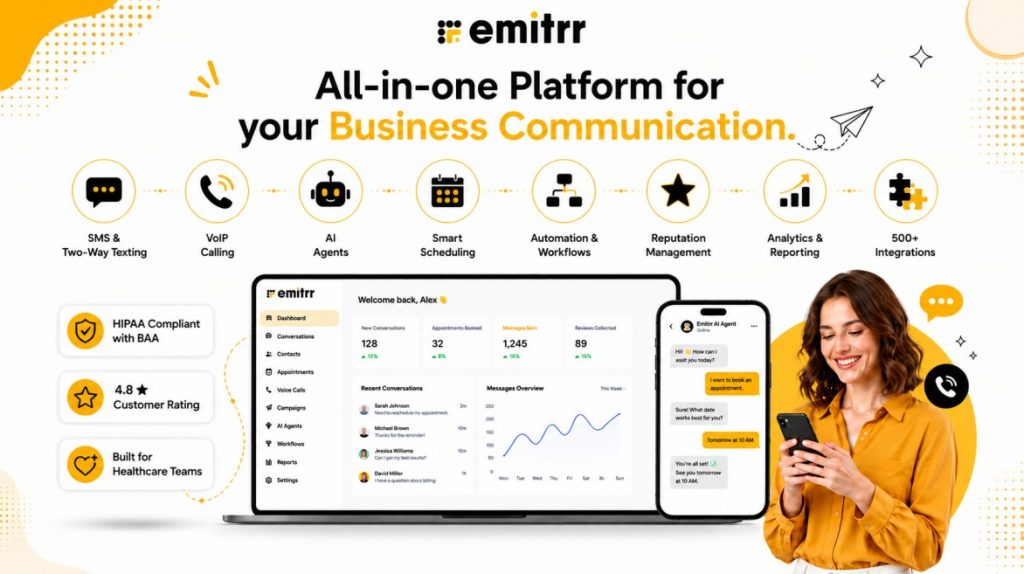
Emitrr is a patient communication and workflow automation platform for outpatient practices, with waitlist management built around the same AI-driven scheduling and two-way communication layer it uses for the rest of patient outreach, rather than a bolted-on list feature.
Key features:
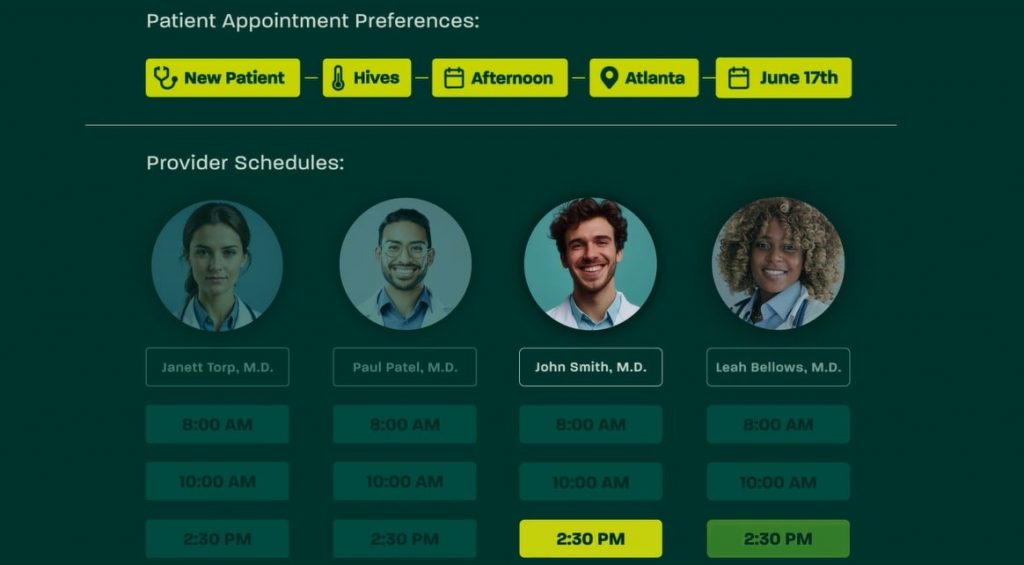
- Automated patient matching that filters the waitlist by provider, visit type, insurance, and priority the moment a cancellation is detected, instead of surfacing every waiting patient for every opening
- Real-time appointment availability pulled directly from the connected EHR, so an offer only ever reflects what’s still open
- Automated outreach through SMS and email with a one-tap confirmation, plus an AI-driven voice call option for patients who don’t respond to text or prefer to talk
- Two-way patient communication that lets a patient confirm, decline, or ask a question about the offer without calling the front desk
- An AI scheduling assistant that completes the booking once a patient confirms, writing it back to the live schedule and updating the patient’s waitlist status automatically
- Automated follow-ups that check in with patients still waiting and clear out stale entries on a set cadence, so the list doesn’t quietly grow unmanageable
Best for: Healthcare practices seeking an end-to-end solution for automating waitlist matching, patient outreach, and appointment booking when slots become available.
Limitations: Depth of EHR write-back depends on which integration is in place, so practices should confirm exact availability and booking behavior for their specific EHR during setup.
Rating: 4.8/5
2. NexHealth

NexHealth built its waitlist feature around its Synchronizer, a real-time, bidirectional connection to the practice’s EHR or practice management system that keeps availability and bookings accurate on both sides.
Key features:
- Automated waitlist blasts sent the moment a cancellation is logged, with patients confirming by replying to a text or clicking a link
- Matching by provider, appointment type, and preferred availability window
- Direct write-back into the practice’s calendar through the Synchronizer, which helps prevent double-booking if a slot is claimed twice
- Works alongside NexHealth’s online booking and recall features
Best for: Dental practices and multi-location medical groups that want real-time schedule accuracy as the core of their waitlist workflow.
Limitations: Some matching and note-reading features are only available for a subset of supported EHR/PM systems, so depth varies depending on which system a practice runs.
Rating: 4.5/5
Explore more: Get a closer look at NexHealth by comparing NexHealth alternatives and reviewing NexHealth pricing before making a decision.

3. Solutionreach (ASAP Waitlist)

Solutionreach‘s ASAP Waitlist is one module inside a much broader patient communication suite that also covers reminders, recall, and two-way texting.
Key features:
- A maintained list of patients wanting an earlier appointment, with automated messages pushed out when a matching slot opens
- Two-way texting for patients to confirm or decline an offer
- Broad EHR and practice management integration, reported at over 400 systems including major platforms like Epic and athenahealth
- Bundled with the rest of Solutionreach’s reminder, recall, and survey tools
Best for: Practices already using Solutionreach for reminders and recall that want waitlist fill as an extension of a tool they’ve already adopted.
Limitations: Some user reviews note that pricing can run higher for larger practices, and fee transparency has been a recurring point of feedback.
Rating: 4.2/5
Explore more: Considering Solutionreach? Compare it with other Solutionreach alternatives or explore Solutionreach pricing to see how it fits your practice’s needs.
4. DoctorConnect (ARIA)
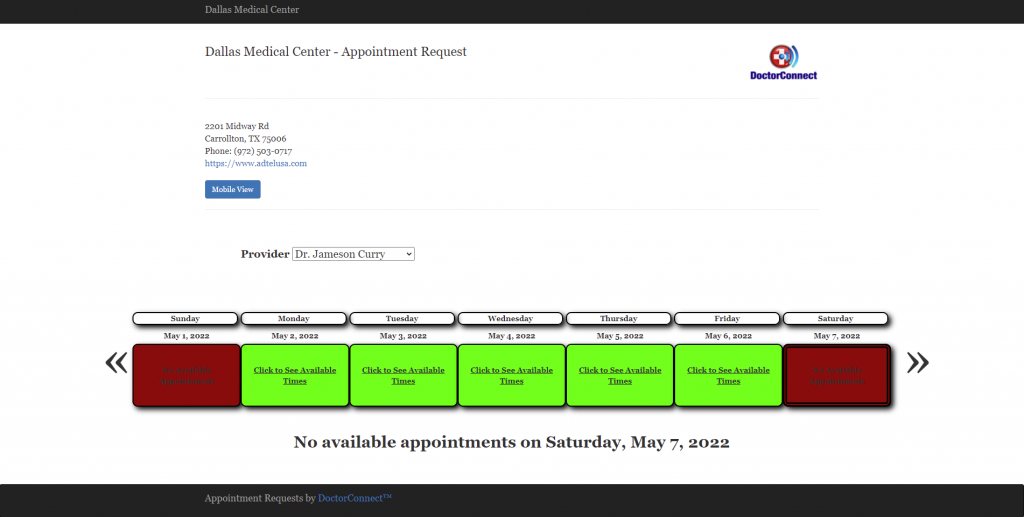
DoctorConnect’s waitlist automation is part of ARIA, its AI receptionist product, which also handles call answering, reminders, recall, and digital intake from the same platform.
Key features:
- Self-service waitlist with first-come, first-served offer automation tied to real-time schedule data
- Reported integration with 150-plus EHR and practice management systems
- Waitlist notifications delivered alongside ARIA’s broader AI-driven call handling and messaging
- Long-standing HIPAA compliance track record, with the company citing zero violations since 1992
Best for: Practices that want waitlist automation bundled with a full AI answering and scheduling assistant rather than a standalone messaging tool.
Limitations: Pricing is fully custom and not publicly listed, so cost comparison requires a direct quote; as with any vendor-published compliance record, the underlying claim should be independently verified during due diligence.
Rating: 4.3/5
5. Luma Health

Luma Health markets a specifically named “Smart Waitlist” product, positioned as one part of a larger patient access and engagement platform used broadly across health systems.
Key features:
- Automated matching by appointment type, provider, and location when a slot opens
- Patients can self-join the waitlist, and stale entries are removed automatically after a default period if they go unclaimed
- Published fill-rate benchmarks from customer case studies, including specific figures on same-day cancellations recovered
- Broad EHR integration, including Epic, Oracle Health, and eClinicalWorks
Best for: Health systems and larger multi-specialty groups that want waitlist management connected to referral conversion and broader patient access workflows.
Limitations: As a large, full-featured platform, implementation and per-provider licensing costs tend to run higher than smaller, more focused waitlist tools.
Rating: 4.6/5
Explore more: If Luma Health is on your shortlist, see how it stacks up against other Luma Health alternatives or dig into Luma Health pricing to understand the investment.
6. Relatient
Relatient bundles its waitlist feature directly into Dash, its patient self-scheduling platform, rather than selling it as a separate product.
Key features:
- Automated text outreach to waitlisted patients when a matching cancellation occurs
- Staff can choose to auto-approve waitlist bookings or require manual confirmation
- Integrates with Relatient’s own appointment reminder product for a consistent patient communication thread
- Recently expanded self-scheduling and waitlist support specifically for behavioral health scheduling workflows
Best for: Practices that want waitlist fill built into the same self-scheduling flow patients already use to book directly.
Limitations: Waitlist functionality is tied to adopting the broader Dash scheduling product rather than available as a fully independent module.
Rating: 4.3/5
7. Weave

Weave is an all-in-one phone, text, and payments platform for small healthcare and dental practices, with a waitlist feature included as part of its scheduling toolset.
Key features:
- A maintained patient waitlist that staff can notify in bulk or individually when a cancellation opens a slot
- Automated appointment reminders with sentiment analysis to flag confirmations versus cancellations
- Combines phone system, texting, and payment collection in one platform
Best for: Small, independent practices that want a single, easy-to-adopt system for phones, texting, and a basic waitlist rather than a dedicated scheduling engine.
Limitations: Waitlist matching is simpler than platforms built specifically around automated, criteria-based fill, and voice outreach is a paid add-on rather than a core feature in every plan.
Rating: 4.0/5
Explore Weave further: See how Weave alternatives compare for prescription refill communication, or review Weave pricing before choosing a platform.
8. OhMD

OhMD keeps its waitlist workflow deliberately simple, built around tagging patients and using saved replies inside its two-way texting platform rather than a dedicated automated matching engine.
Key features:
- Patients are tagged and filtered manually by staff, then messaged with a saved, reusable reply when a slot opens
- Two-way texting so patients can respond directly to claim an opening
- Straightforward setup with minimal configuration required
Best for: Solo providers and small practices that want a basic, low-lift waitlist workflow without a lot of configuration overhead.
Limitations: The workflow depends more on staff manually tagging and filtering patients than on automated criteria-based matching, and the platform doesn’t include native digital intake forms.
Rating: 3.8/5
Explore more: Get a clearer picture of OHMD by comparing OHMD alternatives and reviewing OHMD pricing to evaluate your options.
9. WaitWell
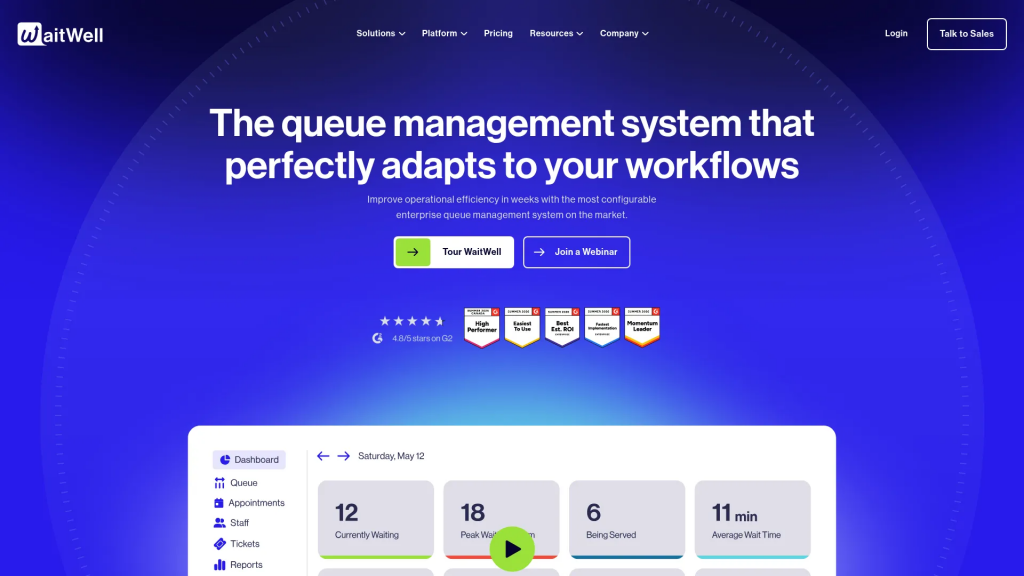
WaitWell is a queue and scheduling platform built for settings where walk-ins and booked appointments happen side by side, such as urgent care, labs, and hospital outpatient departments, with waitlist backfill as one part of that broader queue view.
Key features:
- Waitlist backfill that automatically offers canceled slots to other patients to recover otherwise lost revenue
- A single dashboard combining booked appointments, virtual queue check-ins, and kiosk-based walk-ins
- QR code, SMS, and kiosk check-in options that don’t require a patient to download an app
- Per-location configuration manageable from one central dashboard for multi-site organizations
Best for: Practices and departments that need to manage a live walk-in queue and an appointment waitlist together, not just one or the other.
Limitations: Its core strength is queue and walk-in flow management; practices whose primary need is purely appointment-based cancellation fill, with no walk-in component, may find more specialized waitlist depth elsewhere.
Rating: 4.1/5
10. Kyruus Health

Kyruus Health is a care access platform built around provider search, directory accuracy, and self-scheduling for large health systems, rather than a tool designed primarily around filling individual cancellations.
Key features:
- Kyruus Connect combines a provider search directory, a self-scheduling module, and a digital check-in flow
- Clinically validated matching logic pairs patient needs with the right provider at the point of search and booking
- Enterprise-level integration intended for large, multi-facility health systems
Best for: Large health systems whose priority is accurate provider search and self-scheduling across a wide network, where waitlist fill is a secondary consideration rather than the primary need.
Limitations: Dedicated cancellation-driven waitlist automation isn’t the platform’s core focus the way it is for the other tools on this list; practices whose main problem is filling canceled slots quickly may find that need better served elsewhere. Kyruus Health was also acquired by RevSpring in September 2025, which is worth factoring into any long-term roadmap discussion.
Dedicated Waitlist Tools vs. All-in-One Patient Engagement Platforms
Waitlist software generally falls into one of two categories, and the right one depends less on price and more on what else the practice needs solved at the same time.
Standalone waitlist or queue tools focus narrowly on one job: matching openings to waiting patients as fast as possible. WaitWell’s queue-plus-backfill model and OhMD’s lightweight, tag-based waitlist both fit here, doing one thing without requiring a practice to adopt a much larger platform.
Waitlist as one module inside a broader patient engagement platform treats cancellation fill as one piece of a larger communication and scheduling system that also handles reminders, recall, patient intake, and ongoing patient outreach. This is where Emitrr fits, and it’s worth being specific about why that combination matters for waitlist management in particular rather than just calling it convenient.
A waitlist only works as well as the data and communication feeding it. Emitrr’s waitlist automation draws on the same real-time EHR connection, automated patient matching, and two-way texting infrastructure used across its broader patient communication workflows, so a canceled slot isn’t handled in isolation from everything else going on with that patient. The same AI-driven outreach that can text a waitlisted patient about an opening can also place a follow-up call if the text goes unanswered, and the same scheduling assistant that completes a waitlist booking is the one already handling the practice’s day-to-day appointment scheduling. For a practice that also wants to reduce phone volume, keep referral and recall workflows connected, and manage all of that patient communication from one place, that shared infrastructure means the waitlist isn’t a separate system staff has to check on top of everything else, it’s one more workflow running on the same connected data.
Which approach fits which practice: A single-location practice with a narrow, well-defined need, like managing a walk-in queue or running a simple manual waitlist, can do well with a standalone tool and avoid paying for capability it won’t use. A multi-location group, or any practice already juggling reminders, recall, intake, and referral follow-up across separate tools, generally gets more consistent results consolidating waitlist fill into the same platform already handling that broader communication load, since it’s one less system to keep in sync.
Questions to Ask Before Choosing a Waitlist Management Platform
A good waitlist management platform should fit your workflow, not add another layer of work. This checklist covers the key questions around matching, scheduling, patient communication, automation, integrations, reporting, compliance, and pricing. Download the free checklist and use it to assess each platform against your practice’s needs.
Key Takeaways
- The biggest differentiator in waitlist software isn’t the feature list, it’s how much of the fill process is genuinely automated versus how much still depends on staff.
- Real-time EHR/PM sync and criteria-based matching are what separate a fast, reliable fill from a system that offers slots that are already gone.
- Platforms like Emitrr, NexHealth, Luma Health, and Relatient lead on automated, criteria-based matching tied to live schedule data.
- Simpler tools like OhMD and Weave suit practices with lower volume or a preference for a lighter, more manual workflow.
- Whether a standalone tool or an all-in-one platform fits better depends on how much of a practice’s other patient communication is already centralized, or needs to be.
FAQs
Waitlist management software automatically matches canceled or newly opened appointment slots to patients already waiting for an earlier visit, then reaches out and confirms a new booking, often without a staff member having to place a call.
Some EHRs offer a basic waitlist field, but it typically doesn’t include automated matching, multi-channel outreach, or real-time confirmation locking. Practices relying on manual follow-up from an EHR-native list often still end up doing the outreach by hand.
Pricing varies widely by vendor and is often custom-quoted based on practice size, message volume, and number of locations. A few platforms, like WaitWell, publish a starting price per location, but most require a direct quote for an accurate figure.
Most platforms on this list integrate with major EHR and practice management systems, but integration depth varies significantly, some offer full bidirectional sync, others only a lighter connection. Confirm exactly what’s supported for your specific system before assuming full compatibility.
Appointment reminder software reduces no-shows for appointments already booked. Waitlist software works in the opposite direction, filling appointments that don’t yet have a patient in them. Many platforms offer both, but they solve different problems.
Conclusion
The best waitlist management software for a given practice comes down to how automated the fill process actually needs to be and whether that automation should live inside a broader patient communication system or stand alone. Practices looking for cancellation fill tied directly into the same scheduling and communication workflow they already rely on tend to get the most consistent results from a connected platform rather than a separate, single-purpose tool.
Book a demo to see how Emitrr’s waitlist automation could work for your practice’s schedule.


 4.9 (400+
reviews)
4.9 (400+
reviews)