

Introduction
A pain management practice lives and dies by three things happening in sync: a steady flow of incoming referrals actually converting into scheduled patients, prior authorizations clearing before a procedure day arrives, and medication refill requests getting triaged without swamping the clinical staff. An EMR for pain management has to hold all three together, because a system that documents injections beautifully but cannot track an authorization’s status, or cannot tell staff which of forty voicemails is a refill request versus a new referral, creates real bottlenecks in a practice that runs on procedure volume and controlled substance oversight.
There is no pain-management-exclusive EHR the way there is for, say, ophthalmology or dermatology. Pain management sits inside general and multi-specialty EHR platforms configured with pain-specific templates, anatomical diagrams, and injection tracking, which means the evaluation question is less “which system is built only for pain” and more “which general platform handles referral conversion, authorization tracking, and high outbound call volume well enough to run a procedure-driven practice.” This guide covers the challenges that are specific to pain management, the features that matter most, how leading platforms compare, and how to evaluate vendors before committing.

AI Summary
- The defining pain management EMR requirement is connecting referral intake, prior authorization status, and procedure scheduling into one visible workflow, not three disconnected tracking systems.
- The most significant blocker is prior authorization and pharmacy workflow complexity, since a scheduled procedure or medication refill that lacks documented authorization creates both a compliance and a revenue risk.
- Procedure and room scheduling (injections, follow-ups, anesthesia coordination) is the most operationally important feature category, since generic single-slot scheduling cannot represent the resource complexity of a procedure day.
- Integration diligence should focus on whether the EHR can support high-volume outbound referral follow-up and structured intake, since pain practices typically manage a larger referral pipeline than many other specialties.
- Practices should weigh EHR write-back for scheduling and referral status more heavily than generic feature checklists, since pain management’s economics depend on converting referrals and filling procedure slots efficiently.
Which EMR for Pain Management Is Right for You? TL;DR
| EMR | Best Suited For | Key Strengths | Potential Consideration |
| OmniMD | Multi-specialty practices looking for a cloud-based EHR with integrated clinical and administrative workflows | Clinical documentation, scheduling, billing, telehealth, and patient engagement capabilities | Practices should evaluate how well its general workflows support pain-specific documentation, procedures, and controlled-substance management |
| Praxis EMR | Physicians wanting adaptive clinical documentation | Concept Processor, learning-based documentation, and flexible note creation | Its broader specialty approach may require more workflow configuration for highly specialized pain practices |
| ModMed | Growing and established pain management practices | Specialty-specific EHR, MIPS, PDMP, e-prescribing, analytics, practice management, and patient engagement | The broader all-in-one platform can involve more components and implementation considerations |
| CureMD | Practices seeking a broad cloud-based EHR and practice management platform | Clinical documentation, scheduling, billing, and practice management capabilities | Practices with highly specialized pain workflows should assess specialty-specific functionality |
| PrognoCIS EHR | Practices wanting an integrated clinical and administrative platform | Cloud-based EHR, practice management, billing, scheduling, and patient engagement | Its broad functionality may require customization for specialized pain medicine workflows |
| WRS Health Pain EHR | Pain-focused practices seeking specialty-specific workflows | Pain medicine focus, clinical documentation, scheduling, and practice management | Practices should assess integration options and whether its feature set fits their specific size and workflow needs |
| ChartLogic | Practices seeking combined EHR and practice management functionality | Clinical documentation, scheduling, billing, and patient management | Less pain-specific positioning may make specialty workflow depth an important evaluation point |
What Makes an EMR Right for Pain Management?
Pain management practices operate on a rhythm that most general EMR evaluation frameworks miss: referrals arrive constantly (often from primary care or orthopedics), each new patient needs an authorization determination before a procedure can be scheduled, and existing patients generate a steady stream of refill requests and follow-up visits between procedures. The right EMR treats these as connected workflows rather than separate modules. A referral that sits unconverted for two weeks is lost revenue and a frustrated referring provider; an authorization that lapses before a scheduled procedure is a same-day cancellation; a refill request that goes untracked risks both patient safety and compliance exposure around controlled substances. An EMR evaluation for this specialty should center on whether the system actually connects these dots, not just whether it has an injection diagram template.
Key Barriers in Pain Management Practices
Complex procedure and room scheduling that a generic calendar cannot represent
A pain management schedule mixes short medication-management follow-ups with longer interventional procedures that need a specific room, equipment, and sometimes anesthesia coordination. Generic, uniform appointment-slot scheduling forces staff to manually adjust block lengths and track room availability outside the system, which increases the risk of overbooking procedure days. Practices should verify whether the EHR supports procedure-specific, resource-aware scheduling templates and ask for a live demonstration of how a typical procedure day is actually built in the calendar.
High referral volume without structured conversion tracking
Pain practices often receive a large number of referrals relative to their size, and a referral that is not tracked from intake through scheduled first visit represents lost revenue and a damaged relationship with the referring provider. If the EHR treats referrals as a simple fax or document attachment rather than a trackable record with status (received, contacted, scheduled, no-response), staff lose visibility into where referrals are stalling.
Prior authorization and pharmacy workflow gaps that create procedure and refill delays
Interventional procedures and many pain medications require prior authorization, and the authorization process often runs on its own timeline separate from the clinical visit. If the EHR does not clearly surface authorization status alongside the scheduled procedure or refill request, staff risk proceeding without approval or, more commonly, cancelling a procedure day-of because an authorization did not clear in time.
Clinical telephone decisions that require documentation but often go unrecorded
Pain management generates a high volume of phone-based clinical decisions: a patient calling about breakthrough pain, a pharmacy calling to verify a prescription, a patient requesting an early refill. These calls often carry real clinical and compliance weight, but if they are not documented in a structured, searchable way tied to the patient record, the practice loses an audit trail that matters for controlled substance oversight. Practices should verify how call documentation integrates with the chart, not just whether a call log exists somewhere.
Integration cost pressure for practices wanting communication or referral automation
Because most pain management EHRs are general or multi-specialty platforms rather than a pain-exclusive system, connecting outside communication or referral-automation tools often depends on that general platform’s API access, which varies considerably by vendor and contract tier. Practices should ask directly about current integration fees, since costs for custom connections or higher-tier API access are not always included in a base subscription.
Must-Have EMR Features for Pain Management
The right EMR for pain management should support more than basic charting. Pain practices need tools that handle procedures, controlled substances, authorizations, referrals, and ongoing patient communication. When evaluating pain management EMR software, prioritize features that reduce administrative work while supporting safe, compliant care.
- Pain-specific documentation and anatomical diagrams: Speeds up charting for injections and procedures with structured, detailed documentation.
- Procedure and room scheduling: Helps coordinate providers, procedure rooms, equipment, and appointment types without treating every visit as the same slot.
- Prior authorization tracking: Keeps authorization status visible alongside procedures and medications to reduce delays and prevent avoidable cancellations.
- Referral intake and tracking: Gives staff visibility into incoming referrals and where each patient stands in the referral-to-appointment process.
- Controlled-substance prescribing and PDMP integration: Supports compliant prescribing with EPCS, prescription tracking, and access to required PDMP information.
- Integrated pain assessment tools: Captures pain scores, functional limitations, treatment responses, and changes over time to support better clinical decisions.
- Treatment history and outcome tracking: Maintains a complete record of previous treatments, procedures, medications, and patient outcomes for continuity of care.
- Clinical decision support: Flags potential drug interactions, allergies, and other risks to help providers make safer treatment decisions.
- Procedure coding and claims management: Supports accurate coding and billing for complex interventional procedures while helping reduce claim errors and denials.
- Structured call documentation: Creates an organized record of clinical calls, medication discussions, refill requests, and other patient interactions.
- Patient portal and secure messaging: Makes it easier for patients to communicate, request refills, and complete pre-procedure communication without relying on phone calls.
- Multi-provider and multi-location scheduling: Helps growing practices coordinate providers, procedure sites, rooms, and resources across locations.
Best EMRs for Pain Management: Detailed Analysis
- OmniMD
- Praxis EMR
- ModMed
- CureMD
- PrognoCIS EHR
- WRS Health Pain EHR
- Chart Logic
| EMR | Overall Positioning | Pain Management Fit | What to Evaluate |
| OmniMD | Cloud-based, multi-specialty EHR and practice management platform | Moderate | Pain-specific documentation, procedure workflows, medication management, and integration capabilities |
| Praxis EMR | Flexible, AI-driven EMR | Moderate to Strong | Documentation flexibility and customization |
| ModMed | Specialty-focused EHR and practice management platform | Strong | Pain-specific tools and integrated operations |
| CureMD | Broad cloud-based EHR platform | Moderate | Specialty customization and workflow coverage |
| PrognoCIS EHR | Comprehensive cloud EHR and practice management system | Moderate | Clinical, administrative, and billing workflows |
| WRS Health Pain EHR | Pain medicine-focused EHR | Strong | Specialty functionality and practice workflows |
| ChartLogic | General EHR and practice management platform | Moderate | Adaptability to pain-specific requirements |
1. OmniMD
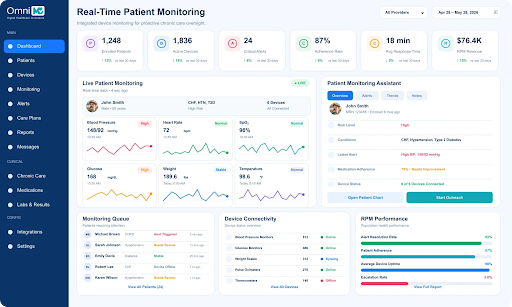
OmniMD is a cloud-based EHR and practice management software designed to support clinical documentation, scheduling, billing, telehealth, and patient engagement across medical specialties. Its broad functionality makes it an option for practices evaluating an EMR for pain management that need both clinical and administrative workflows in one platform.
Practices using OmniMD can integrate tools like Emitrr to automate appointment reminders, follow-ups, patient notifications, and other communication workflows. This can help pain management teams reduce repetitive outreach while keeping patient communication connected to their existing EMR pain management workflows.
2. Praxis EMR
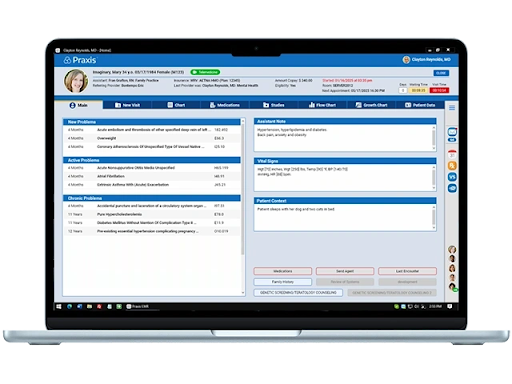
Praxis EMR is an AI-powered electronic medical record platform designed to support physicians across different specialties, including pain management. Its adaptive approach to clinical documentation can help providers create notes based on their individual workflows rather than relying entirely on rigid templates. This makes it worth considering for practices looking for an EMR pain management solution that offers flexibility in documentation.
Emitrr can complement Praxis EMR by helping practices handle communication tasks such as appointment confirmations, reminders, follow-up messages, and patient outreach. Teams can use automated workflows to stay connected with patients without adding repetitive communication tasks to staff workloads.
3. ModMed
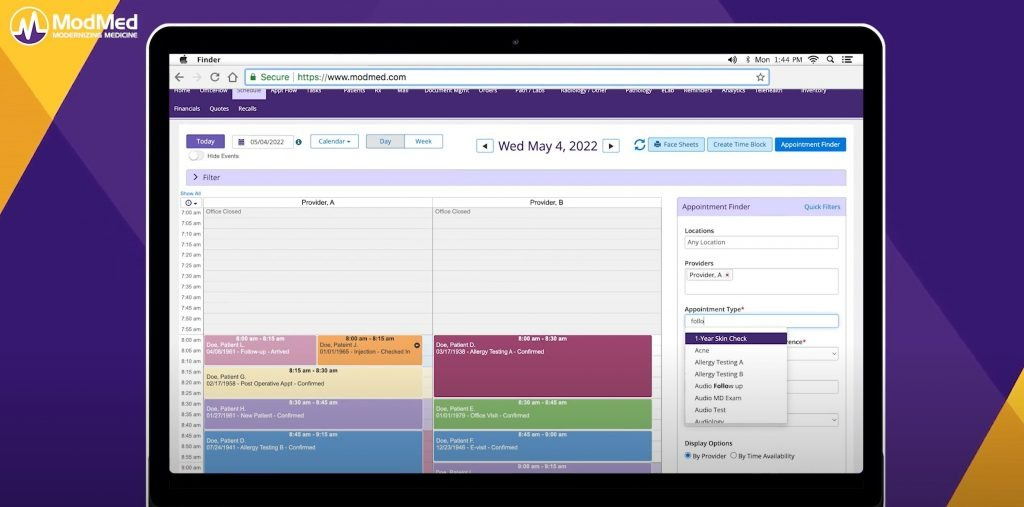
ModMed is a specialty-focused EHR platform that provides clinical, scheduling, billing, and practice management capabilities for medical practices. Its integrated approach can help practices manage patient information and administrative workflows within a connected system. For organizations comparing the best EMR for pain management, ModMed can be considered when broader practice management and clinical workflow capabilities are priorities.
When ModMed manages the clinical side of the practice, Emitrr can support the patient communication layer with automated text messages and outreach. Practices can use these workflows for reminders, appointment-related updates, follow-ups, and other routine patient interactions.
4. CureMD
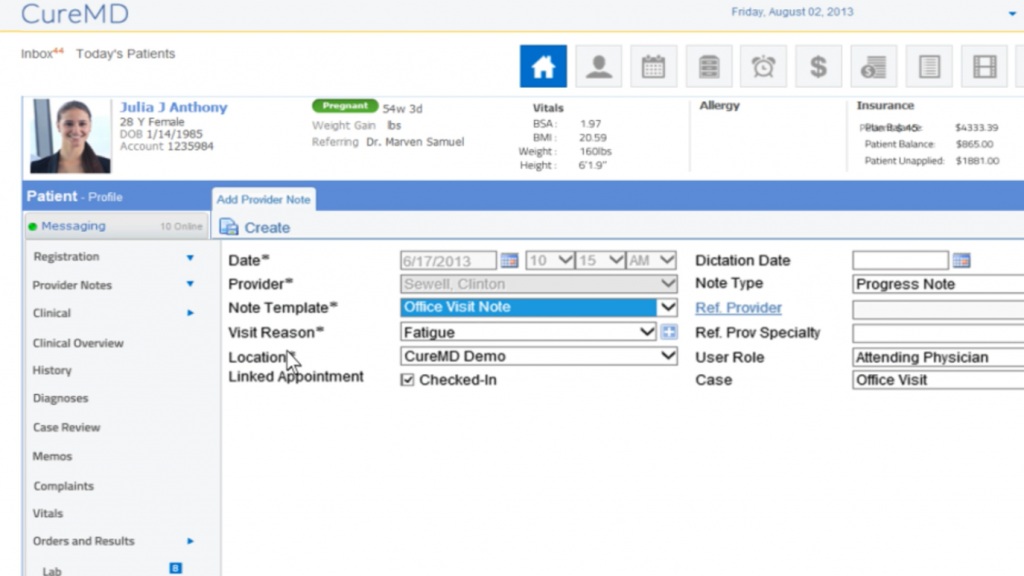
CureMD is a cloud-based EHR and practice management platform that supports clinical documentation, scheduling, billing, and patient engagement. Its cloud-based architecture allows practices to access patient and practice information across workflows without relying on an on-premise system. For practices evaluating pain management EMR software, CureMD can be an option for combining clinical and administrative workflows in one platform.
Practices can pair CureMD with Emitrr to make routine communication more efficient, from notifying patients about appointments to sending follow-up and reactivation messages. This gives staff a way to maintain consistent patient outreach while spending less time on manual texting.
5. PrognoCIS EHR
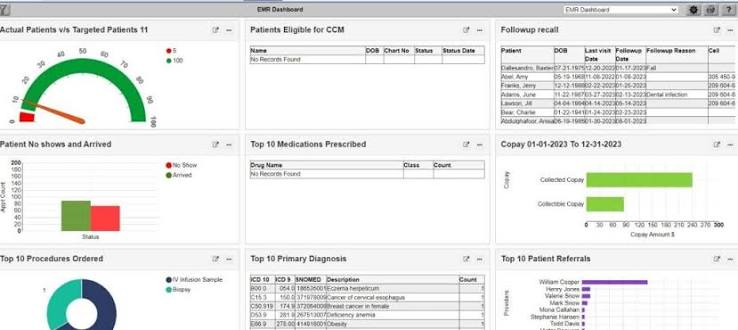
PrognoCIS EHR is a cloud-based EHR platform that combines clinical documentation, practice management, billing, scheduling, and patient engagement capabilities. Its broad functionality can support practices that want to manage both clinical and administrative operations through a single platform. For organizations comparing an EHR for pain management, PrognoCIS can be considered when they need a comprehensive system that supports multiple areas of practice operations.
Emitrr can extend the communication capabilities around PrognoCIS by automating patient-facing workflows. Pain practices can use it to send timely reminders, post-visit messages, follow-ups, and other notifications based on their communication needs.
6. WRS Health Pain EHR
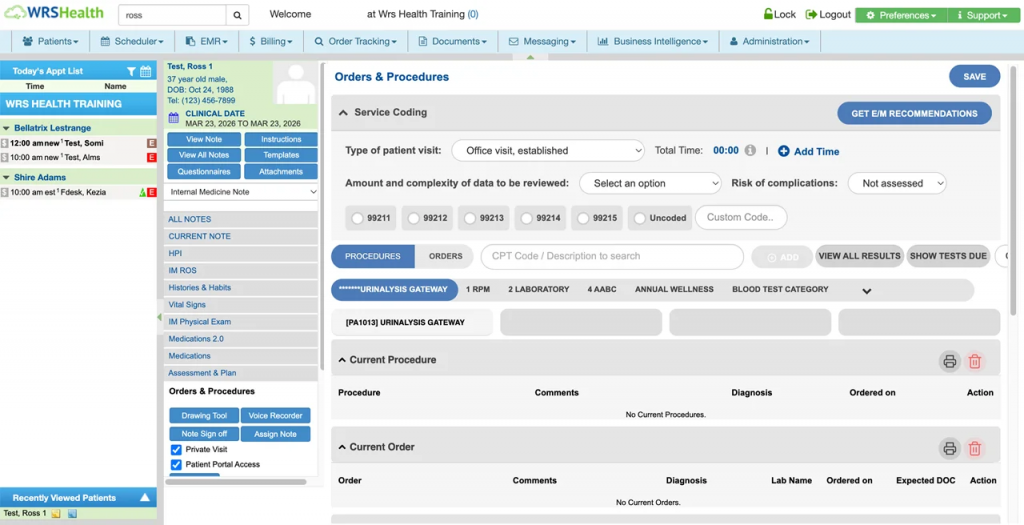
WRS Health Pain EHR is a specialty-focused EHR designed specifically for pain management practices. Its focus on pain medicine workflows can help providers manage clinical documentation, patient records, scheduling, and practice operations within a specialized environment. For practices searching for the best EHR for pain management, WRS Health is particularly relevant because its platform is built around the needs of pain management providers.
WRS Health users can leverage Emitrr for communication-heavy tasks that happen before and after appointments. Automated patient texts can help practices improve attendance, follow up with patients, and maintain engagement without requiring staff to manually contact every patient.
7. ChartLogic
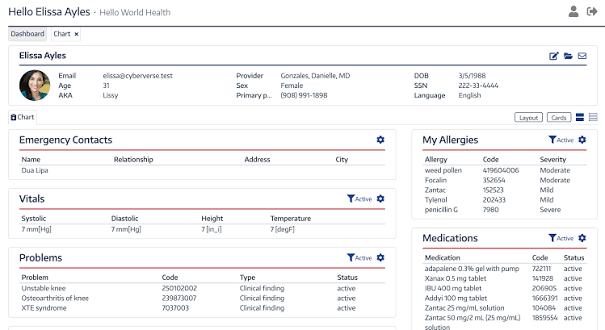
ChartLogic is an EHR and practice management platform that provides tools for clinical documentation, scheduling, billing, and patient management. Its combination of clinical and administrative functionality can help practices streamline everyday workflows and maintain patient information in a centralized system. For practices researching ehr pain management solutions, ChartLogic can be considered as a general-purpose platform that can support pain management workflows.
Using Emitrr alongside ChartLogic can help practices simplify everyday patient communication. Automated messaging can be used for appointment reminders, confirmations, follow-ups, and re-engagement campaigns, helping staff maintain regular communication with patients.
How Emitrr Works Alongside Your Pain Management EMR
Emitrr is not an EMR and does not replace clinical documentation, prescribing, prior authorization, or billing within your pain management EHR. Instead, it works as a communication and workflow automation layer around your existing system. This allows practices to automate repetitive patient communication while keeping the EMR as the clinical system of record.
- Referral follow-up: AI-assisted outbound calls and SMS can follow up with new referrals, collect basic patient and scheduling information, and route responses to staff for review. Where the EMR supports the required integration, structured information can be passed toward appointment creation; otherwise, staff can complete the booking manually.
- Procedure scheduling: Emitrr can connect with available EMR scheduling data to support appointment reminders, confirmations, and scheduling workflows. For practices evaluating an EMR for pain management, this can help reduce the communication workload around procedure-heavy schedules.
- Prior authorization and intake: Digital forms and structured patient intake workflows can collect referral, authorization, pharmacy, and appointment information before staff action is required. In supported integrations, this information can be routed into the EHR, reducing duplicate data entry.
- Clinical call documentation: VoIP can record, transcribe, and summarize patient calls such as refill requests or breakthrough pain conversations. Depending on the EHR’s write-back capabilities, call documentation can be attached to the patient record or provided to staff for manual entry.
- Patient reminders and notifications: Bulk texts and automated workflows can support pre-procedure instructions, appointment reminders, follow-ups, and other recurring outreach without requiring staff to contact patients individually.
- Missed-call recovery: Missed-call-to-text can automatically engage patients who call when staff are unavailable, helping practices capture scheduling requests and reduce lost communication opportunities.
- EMR integration flexibility: Whether a practice uses a pain EMR, an EHR for pain management, or broader pain management EMR software, integration depth depends on the system’s available APIs and write-back capabilities. Where APIs are limited, Emitrr can collect and structure information for staff rather than attempting to write directly into the chart.
- Communication infrastructure: Number porting and 10DLC registration can help practices establish reliable SMS communication at scale. Modular options for SMS, VoIP, AI calling, and integrations also allow practices to start with the workflows that matter most.
EMR Implementation Roadmap
Key Takeaways
- Pain management EMR selection should center on how well a system connects referral tracking, prior authorization status, and procedure scheduling, not on a generic feature checklist.
- Referral conversion tracking is a distinctive need in this specialty given the high referral volume most pain practices depend on for growth.
- Prior authorization visibility tied to the procedure calendar is one of the most consequential features for avoiding costly day-of cancellations.
- Structured documentation of clinical phone calls matters more in pain management than in many specialties, given the compliance weight of controlled substance decisions.
- No EHR on the market is pain-management-exclusive, so practices should evaluate general and multi-specialty platforms specifically against pain-specific workflow depth rather than assuming specialty support automatically means procedure and authorization depth.
- Integration costs for referral and communication automation vary by vendor and contract tier and should be confirmed directly rather than assumed to be included.
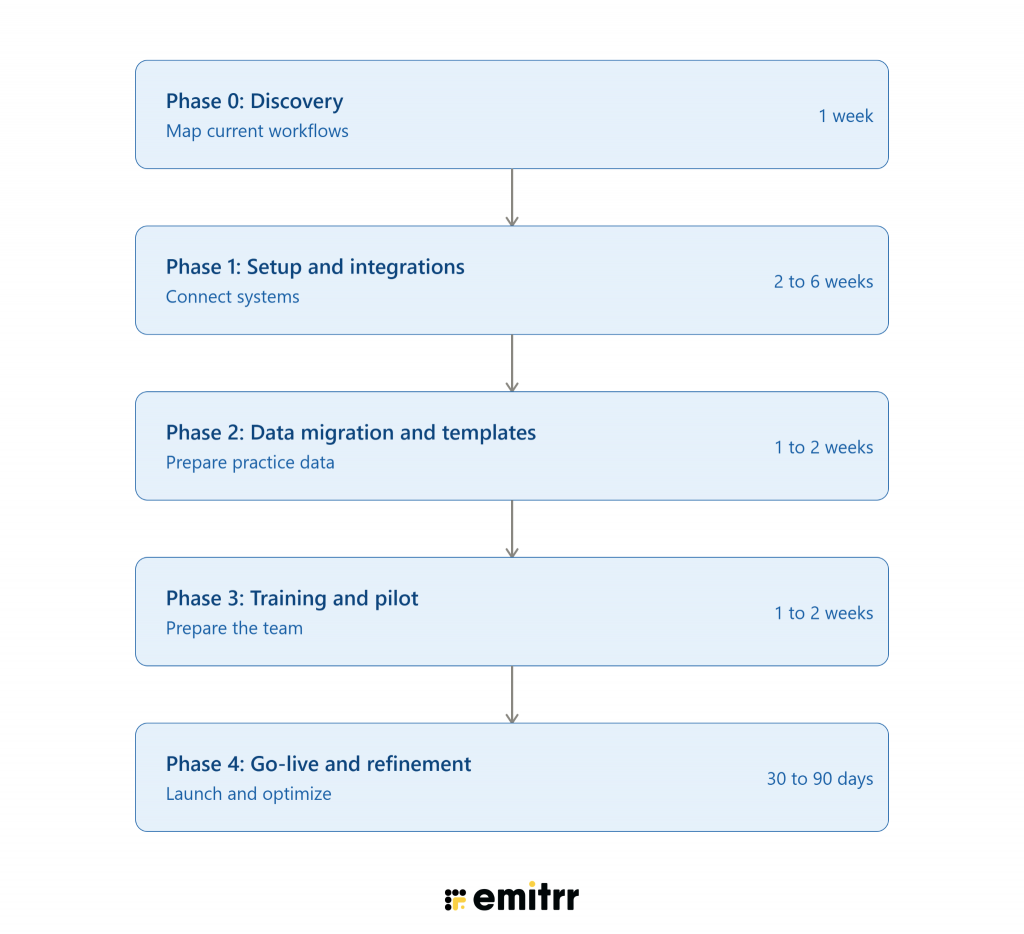
- Implementation timelines depend heavily on the volume of open referrals and authorizations being migrated.
FAQs
A pain management EMR should support specialty documentation, anatomical diagrams, procedure scheduling, prior authorization tracking, EPCS and PDMP integration, procedure billing, patient messaging, and treatment history.
Yes. Many EHR systems support scheduling for different visit types and procedures. Practices should look for systems that can account for providers, procedure rooms, resources, and authorization status.
A suitable EMR can track authorization requests, approval status, required documentation, and expiration dates. This gives staff better visibility and can help prevent procedure delays caused by missing authorizations.
Yes. EHRs can support electronic prescribing of controlled substances, medication history, prescription monitoring, and PDMP access to help providers manage medications more safely and efficiently.
Practices should evaluate specialty workflow support, ease of documentation, procedure scheduling, integrations, billing capabilities, compliance tools, patient communication, reporting, scalability, and implementation requirements.
Yes. Emitrr can work alongside an existing pain management EHR as a communication and workflow automation layer. It can support appointment reminders, referral follow-ups, intake, missed-call text-back, patient outreach, and other repetitive communication workflows without replacing the EHR.
Conclusion
An EMR for pain management has to hold together three interdependent workflows: referral conversion, prior authorization tracking, and procedure scheduling, none of which a generic ambulatory EMR checklist addresses directly. Because no EHR is built exclusively for this specialty, practices should evaluate general and multi-specialty platforms specifically against how well they track referral status, surface authorization gaps before a procedure day, and support the high-volume outbound and phone-based communication pain management depends on.
Emitrr works alongside your existing EMR as a communication and workflow automation layer, helping reduce the manual work behind referral follow-ups, reminders, and outbound outreach. Book an Emitrr demo to see how it can fit into your pain management workflows and work alongside your existing EMR.

 4.9 (400+
reviews)
4.9 (400+
reviews)